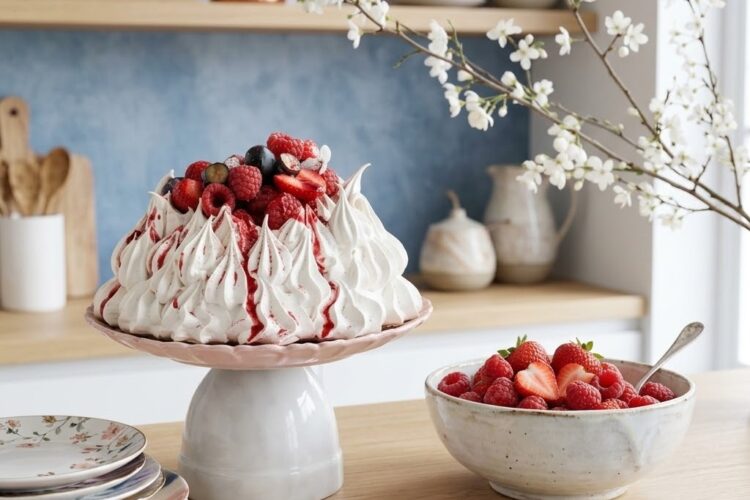
Making pavlova in an air fryer is a surprisingly simple way to create a beautiful meringue dessert at home. This air fryer pavlova has a crisp, delicate outside and a soft, marshmallow-like center that pairs wonderfully with lightly whipped cream, lemon curd, and fresh berries.
Although pavlova is often associated with traditional oven baking, an air fryer can produce excellent results when the temperature is kept low and the meringue is given plenty of time to dry. The finished dessert looks impressive enough for celebrations but requires only a handful of basic ingredients.
Why Make Pavlova in an Air Fryer?
An air fryer is useful for much more than crispy snacks and quick dinners. With careful temperature control, it can also be used for delicate desserts such as meringue. This air fryer pavlova recipe is especially appealing when you want to make a smaller dessert without heating a large oven. The circulating warm air helps the meringue shell gradually dry while keeping the inside soft and light. The key is patience because pavlova is not a dessert that should be rushed. A gentle cooking temperature gives the sugar and egg whites enough time to develop the right texture.
What Makes a Good Pavlova?
A successful pavlova depends on the contrast between its textures. The outside should become dry and crisp, while the middle should remain soft, airy, and almost marshmallow-like. The meringue should also have a smooth, glossy appearance rather than looking dull or grainy. This texture comes from properly whipped egg whites combined with sugar that has been thoroughly dissolved. Lemon juice adds a little acidity, while vanilla gives the meringue a pleasant aroma. Once baked, the neutral sweetness of the pavlova provides an ideal base for cream, fruit, and optional citrus curd.
Preparing the Egg Whites
Egg whites are the foundation of this easy pavlova recipe, so they need a little attention before whipping. Separate the eggs carefully and make sure there is absolutely no yolk mixed with the whites. Even a small amount of egg yolk can make it difficult for the whites to develop the volume needed for a stable meringue. Cold eggs are generally easier to separate, so you can separate them while chilled and then proceed with the recipe. Use a completely clean, dry mixing bowl and whisk because traces of grease or moisture can interfere with the whipping process.
Dissolving the Sugar
One of the important steps in this pavlova recipe is warming the egg whites, sugar, and lemon juice over a saucepan of simmering water. This gentle double-boiler method helps the sugar dissolve before the mixture is whipped. Place the mixing bowl over the saucepan without allowing the bottom of the bowl to touch the water. Stir with a balloon whisk and occasionally check the mixture between your fingers. If it feels gritty, the sugar has not completely dissolved and needs more time. A smooth mixture helps create a glossy meringue with a refined texture.
Whipping the Pavlova Meringue
After the sugar has dissolved, dry the outside of the bowl thoroughly before attaching it to the stand mixer. Add the vanilla bean paste or extract and begin whipping the mixture at high speed. This stage can take ten minutes or longer, depending on the mixer. Do not stop simply because the mixture has increased in volume. The meringue should hold firm peaks and look thick, smooth, and glossy. When the whisk is lifted, the peak should remain standing rather than folding over. Properly whipped meringue is essential because it provides the structure needed for the pavlova shell.
Shaping the Pavlova for the Air Fryer
Once the meringue is ready, prepare the air fryer basket with a liner. A piping bag fitted with a large star tip can be used to create a neat ring, although the meringue can also be shaped carefully according to the size of the basket. Pipe or spoon a circular base and build up the sides, leaving enough space in the center for the whipped cream and fruit. Avoid making the pavlova too large for the basket because good air circulation is important. The shape does not have to be perfectly symmetrical; the rustic appearance of pavlova is part of its charm.
How to Cook Pavlova in an Air Fryer
The cooking temperature is especially important when making an air fryer pavlova. Begin at 120°C for 20 minutes, then reduce the temperature to 95°C and continue cooking for another 70 minutes. This gives a total cooking time of 90 minutes. The purpose is not to brown the meringue but to slowly dry it. If the temperature is too high, the exterior can become overly colored or crack badly before the interior has developed the desired texture. After cooking, turn off the air fryer but leave the pavlova inside the basket so it can cool gradually.
Why Pavlova Needs to Cool Slowly
Cooling is almost as important as baking when making pavlova. Once the cooking period is complete, resist the temptation to remove the meringue immediately. Keeping it inside the switched-off air fryer allows the temperature to decrease gradually and gives the shell additional time to dry. Sudden changes in temperature can encourage cracks or cause the pavlova to collapse. It is perfectly practical to leave the cooled pavlova inside the air fryer overnight if you are preparing it ahead. This makes the dessert particularly convenient for dinner parties and special occasions.
Making the Whipped Cream
The topping for this pavlova is deliberately simple because the meringue already provides plenty of sweetness. Place the heavy or double cream, powdered sugar, and vanilla bean paste in a clean mixing bowl. Whip on a medium-low setting until soft peaks form. Avoid over-whipping the cream because it should remain smooth and soft enough to spread easily over the pavlova. The lightly sweetened cream balances the crisp meringue and creates a creamy contrast with the fresh berries. Using powdered sugar also helps the cream remain smooth while adding sweetness without a gritty texture.
Choosing the Pavlova Toppings
Fresh berries are a classic topping for pavlova because their natural freshness balances the sweetness of the meringue. Strawberries, raspberries, and blueberries provide different colors and textures, making the finished dessert look vibrant and inviting. Lemon or orange curd can also be added for a bright citrus flavor. The curd is optional, so the pavlova can be served with just cream and fruit if preferred. For the best presentation, add the toppings shortly before serving. This keeps the crisp meringue shell from becoming unnecessarily soft from prolonged contact with moist toppings.
How to Serve Air Fryer Pavlova
Once the pavlova has cooled completely, carefully transfer the meringue shell to a cake stand or serving plate. Add the softly whipped cream to the center, followed by the optional curd and fresh berries. Because the shell is delicate, handle it gently when moving it from the air fryer basket. Some cracks are completely normal and do not mean the dessert has failed. In fact, the rustic cracks can make the pavlova look homemade and inviting. Serve the dessert soon after adding the toppings so you can enjoy the contrast between crisp meringue, soft center, creamy topping, and juicy fruit.
Make-Ahead Pavlova
One of the biggest advantages of pavlova is that the meringue shell can be prepared before you need the dessert. Once it has finished cooking and cooling, it can remain in the air fryer basket until required, including overnight. This makes it a useful dessert when entertaining because the most time-consuming part can be completed ahead of time. Prepare the whipped cream and toppings separately and keep them ready until serving. Assemble everything at the last moment. This approach helps preserve the texture of the meringue while allowing you to serve a dessert that looks freshly prepared.
Common Pavlova Problems
If your pavlova does not turn out exactly as expected, there are several possible reasons. Meringue can fail to whip properly if the bowl or whisk contains grease, if egg yolk enters the whites, or if the sugar has not dissolved properly. Excessive heat can cause the shell to brown or crack, while removing the pavlova too quickly after cooking can contribute to structural problems. Cracking itself is not necessarily a serious issue. Pavlova naturally has a fragile structure, and small cracks are easily hidden beneath cream and fruit. Focus on achieving a crisp shell and soft center rather than expecting a perfectly smooth surface.
Notes for the Best Results
Be especially careful when separating the eggs because even a small amount of yolk can prevent the whites from whipping properly. Cold eggs are easier to separate, so this step can be done before beginning the rest of the preparation. The mixing bowl and whisk must also be spotless and completely dry. Grease is one of the biggest enemies of meringue and can prevent the egg whites from becoming light and voluminous. When checking whether the sugar has dissolved, rub a little of the mixture between clean fingers. If it feels gritty, continue heating and stirring gently.
Another important point is to allow enough time for both cooking and cooling. This is not a quick air fryer dessert, even though the air fryer itself is compact and convenient. The pavlova requires approximately 90 minutes of gentle cooking followed by around an hour of cooling. Planning ahead will make the process much easier. Do not increase the temperature simply to shorten the cooking time because pavlova needs slow, controlled drying. Keeping the finished shell inside the turned-off air fryer also gives it a protected place to cool without unnecessary handling.
Pavlova for Dinner Parties and Special Occasions
This air fryer pavlova makes an excellent dessert for entertaining because it combines an elegant appearance with straightforward preparation. The crisp white meringue, fluffy cream, colorful berries, and optional citrus curd create a dessert that immediately looks festive. It works well after a family meal, for afternoon gatherings, birthdays, holidays, or dinner parties. Because the meringue can be prepared ahead of time, there is less work to do when guests arrive. Simply whip the cream, prepare the berries, assemble the pavlova, and serve. The result is light enough to finish a meal while still feeling special.
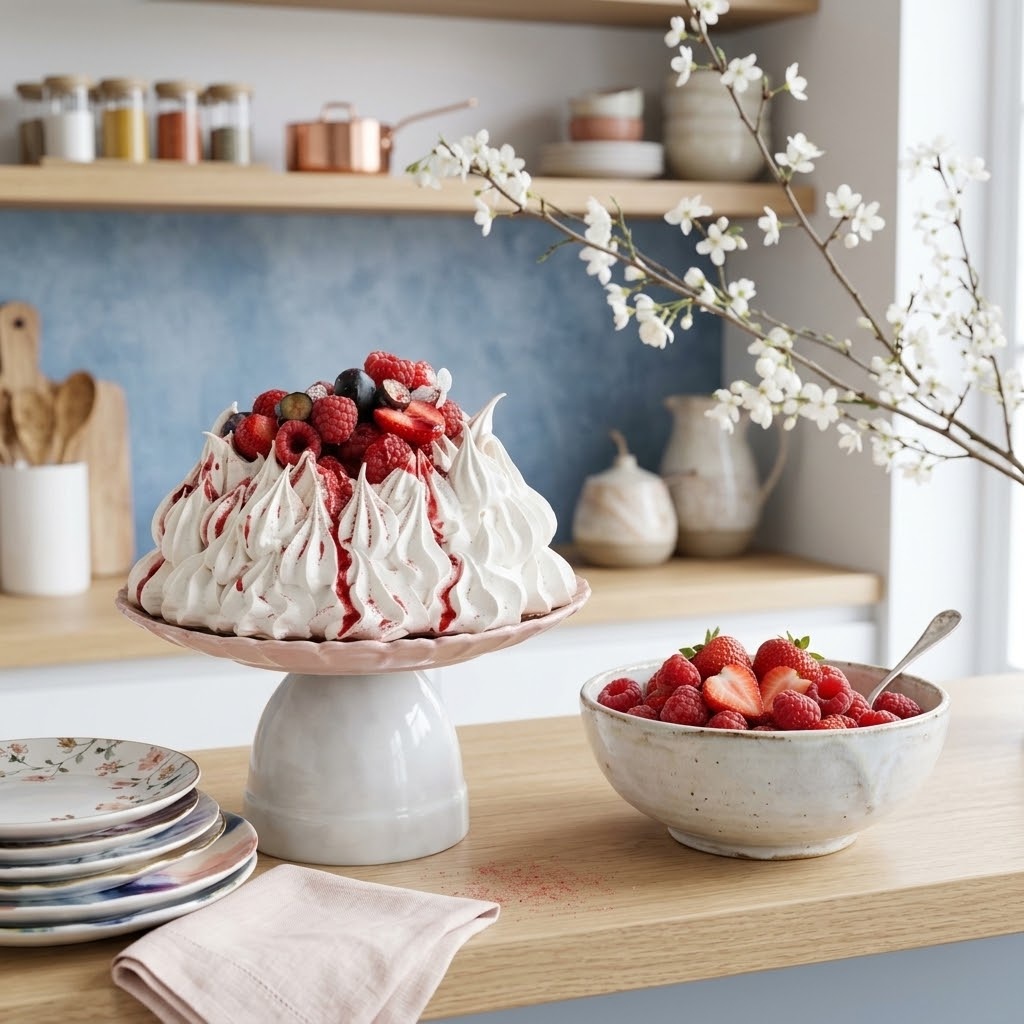
Air Fryer Pavlova
A light and elegant air fryer pavlova made with a crisp meringue shell and soft marshmallow-style center, finished with softly whipped cream, optional lemon or orange curd, and fresh berries.
4-6
servings20
minutes1
hour30
minutes543
kcal1
hour2
hours50
minutesIngredients
- For the Pavlova
3 large egg whites only
1 cup (200g) caster or granulated sugar
1 tsp lemon juice
1 tsp vanilla bean paste or extract
- For the Whipped Cream
1 cup (230ml) heavy / double cream
½ cup (60g) powdered / icing sugar
1 tsp vanilla bean paste
- To Fill
2 tbsp lemon, orange, or other curd (optional)
1 cup (150–180g) fresh berries, such as strawberries, raspberries, and blueberries
Directions
- Make the Pavlova
- Separate the eggs carefully, placing the egg whites into the bowl of a stand mixer. Add the sugar and lemon juice.
- Place the mixing bowl over a saucepan of simmering water, ensuring that the bottom of the bowl does not touch the water.
- Stir the egg whites and sugar with a balloon whisk for several minutes to help the sugar dissolve. Rub a little mixture between your fingers to check the texture. If it feels gritty, continue stirring and heating gently until smooth.
- Carefully dry the outside and bottom of the mixing bowl. Attach it to the stand mixer fitted with the whisk attachment.
- Add the vanilla bean paste or extract and whisk on high speed until the meringue becomes thick, glossy, and capable of holding firm peaks. This can take ten minutes or longer.
- Place a liner inside the air fryer basket. Transfer the meringue to a piping bag fitted with a large star tip.
- Cook in the air fryer at 120°C for 20 minutes.
- Reduce the temperature to 95°C and continue cooking for another 70 minutes, giving a total cooking time of 90 minutes.
- Turn the air fryer off and leave the pavlova inside the basket while it cools. It can remain there overnight or until you are ready to assemble the dessert.
- Make the Whipped Cream
- Add the cream, powdered sugar, and vanilla bean paste to a clean mixing bowl.
- Using a stand mixer with the whisk attachment or a hand mixer, whisk on medium-low speed until the cream forms soft peaks.
- Assemble and Serve
- Carefully remove the cooled pavlova shell from the air fryer basket and place it on a cake stand or serving plate.
- Spoon the softly whipped cream into the center.
- Add the lemon or orange curd if using.
- Finish with the fresh berries.
- Serve immediately after adding the toppings for the best contrast between the crisp meringue, soft center, cream, and fruit.
Notes
- Take care when separating the eggs. If any egg yolk gets into the whites, the meringue may not whip properly. Cold eggs are easier to separate, making this step a little more manageable.
- The mixing bowl and whisk attachment should be completely clean and dry. Even a small amount of grease can interfere with the egg whites and prevent them from becoming properly whipped.
- Do not rush the cooling process. Leaving the pavlova inside the switched-off air fryer allows it to cool gradually and helps maintain its delicate structure.
Nutrition Facts
- Total number of serves: 1
- Calories: 543kcal
- Fat: 26g
- Carbohydrates: 73g
- Fiber: 1g
- Sugar: 71g
- Protein: 7g
