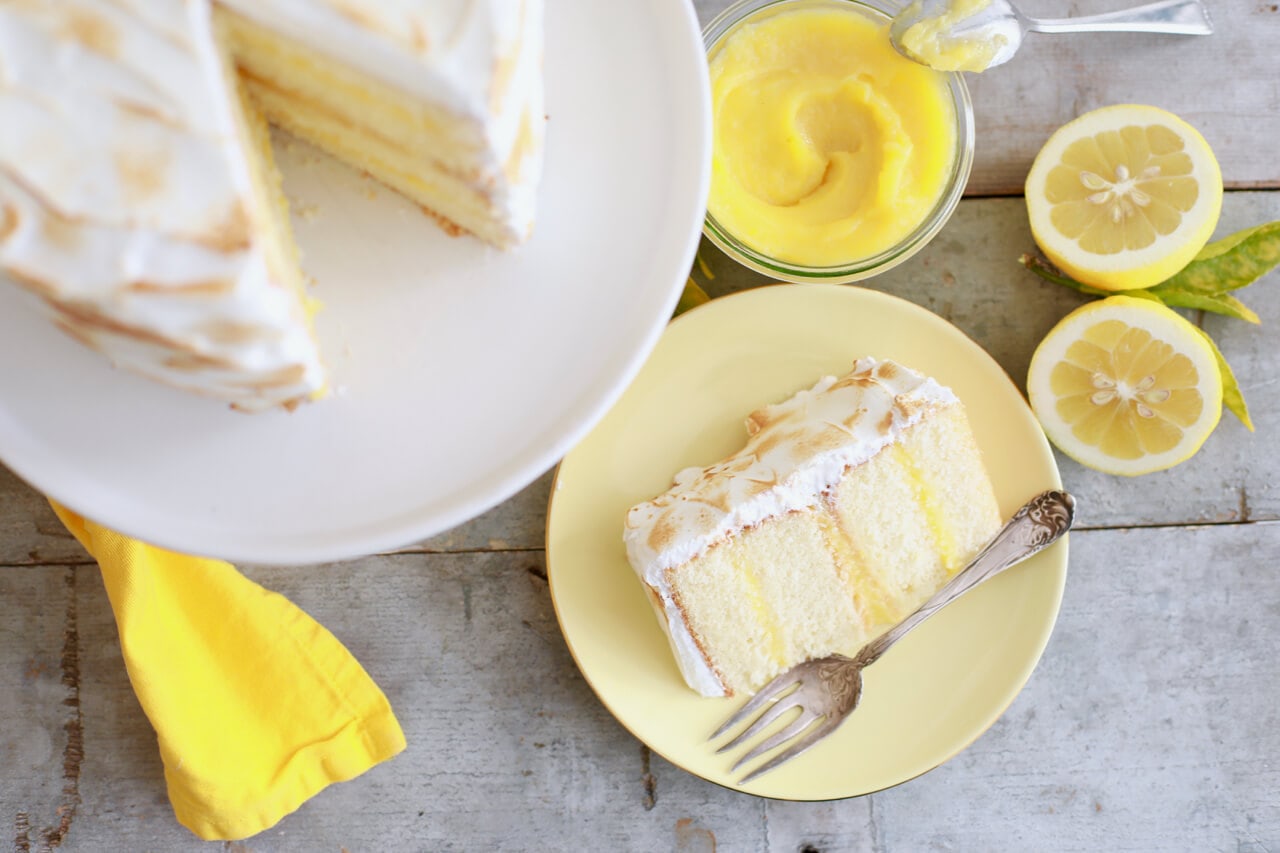
Lemon Meringue Cake is a sophisticated, multi-component dessert that transforms the beloved flavor structure of lemon meringue pie into a layered cake format. While the original pie is known for its crisp crust, tangy lemon filling, and pillowy meringue topping, this cake version replaces the crust with a soft sponge while preserving the essential identity of the dessert.
This transformation is more than aesthetic—it is structural. A cake introduces new variables:
- Moisture balance between layers
- Structural integrity to support fillings
- Controlled sweetness across multiple components
Historically, lemon-based desserts have been prized for their ability to cut through richness. In European pastry traditions, especially in French patisserie, lemon curd became a cornerstone filling because of its intense brightness and smooth, custard-like consistency. Meringue, developed through advancements in sugar and egg-white whipping techniques, added an airy sweetness that contrasted beautifully with citrus acidity.
Lemon Meringue Cake sits at the intersection of these traditions, combining:
- Sponge cake (structure)
- Lemon curd (flavor core)
- Meringue (aerated sweetness)
The result is a dessert that feels light yet complex, refreshing yet indulgent, and technically precise while still comforting.
Chef’s Philosophy & Deep Culinary Framework
This cake is not about richness—it is about contrast, control, and balance.
The central philosophy is:
Every layer must perform a specific role without overpowering the others.
In many desserts, components blend into a single dominant flavor. In Lemon Meringue Cake, separation is key:
- The cake must remain neutral and supportive
- The lemon curd must remain sharp and vibrant
- The meringue must remain airy and sweet
If any one component dominates:
- Too much lemon → harsh acidity
- Too much meringue → overly sweet
- Too dense cake → heavy mouthfeel
The goal is harmony through contrast.
Core Culinary Systems (Ultra Deep Breakdown)
1. Sponge Cake Structural Engineering System
The sponge serves as the load-bearing base of the dessert.
It must achieve three key characteristics:
- Elastic softness → allows slicing without crumbling
- Moisture retention → prevents dryness when layered
- Neutral flavor profile → supports lemon without competing
This is controlled through:
- Fat balance (butter or oil)
- Proper egg incorporation
- Limited gluten development
Overmixing leads to dense cake, while undermixing leads to weak structure.
2. Lemon Curd Emulsion & Coagulation System
Lemon curd is one of the most technically sensitive components.
It is a hybrid between:
- Custard (egg-based thickening)
- Emulsion (butter incorporated into liquid base)
During cooking:
- Egg proteins unfold and thicken mixture
- Sugar stabilizes proteins
- Butter emulsifies into silky texture
Critical control points:
- Heat must remain low
- Constant stirring prevents curdling
- Final consistency must be thick but spreadable
Proper lemon curd should:
- Coat the back of a spoon
- Hold shape without being stiff
- Taste bright, not bitter
3. Meringue Foam Stability System
Meringue is a protein foam stabilized by sugar.
When egg whites are whipped:
- Air bubbles are trapped inside protein structure
- Sugar strengthens and stabilizes foam
- Acid (cream of tartar) improves elasticity
There are different stability levels:
- Soft peaks → light but unstable
- Stiff peaks → structured and stable
- Overwhipped → dry and grainy
For this cake, the meringue must:
- Hold peaks firmly
- Spread easily
- Resist collapse after browning
Swiss or Italian meringue offers superior stability due to partial cooking of egg whites.
4. Thermal Finishing & Caramelization System
The final browning of meringue is not just visual—it adds flavor complexity.
When exposed to heat:
- Sugar on surface caramelizes
- Light Maillard reactions occur
- Flavor shifts from simple sweetness to toasted depth
This creates:
- Slight crispness on peaks
- Soft marshmallow-like interior
- Golden color contrast
5. Moisture Migration & Layer Interaction System
One of the most overlooked aspects is how moisture moves between layers.
Over time:
- Lemon curd can seep into cake
- Meringue can release water (weeping)
- Cake can absorb too much moisture
To control this:
- Cake must be fully cooled before assembly
- Curd must be thick and stable
- Meringue must be properly whipped
Difficulty, Timing & Yield
Difficulty Level: Medium–Advanced
Preparation Time: 40–50 minutes
Baking Time: 25–30 minutes
Cooling Time: 30–40 minutes
Assembly Time: 20–25 minutes
Total Time: ~2–2.5 hours
Servings: 8–12 slices
Ingredients (Full Functional Breakdown)
Sponge Cake Base
- 1 1/2 cups all-purpose flour
- 1 cup sugar
- 1/2 cup butter (or oil for softer crumb)
- 2 large eggs
- 1/2 cup milk
- 1 teaspoon baking powder
- 1/2 teaspoon salt
- 1 teaspoon vanilla extract
Function:
- Structural base
- Moisture carrier
- Neutral flavor support
Lemon Curd Core
- 3 egg yolks
- 1/2 cup sugar
- 1/2 cup fresh lemon juice
- 1 tablespoon lemon zest
- 1/4 cup butter
Function:
- Primary flavor highlight
- Acidic contrast
- Smooth creamy layer
Meringue Topping
- 3 egg whites
- 1/2 cup sugar
- 1/4 teaspoon cream of tartar
Function:
- Aerated sweetness
- Light texture
- Visual and structural finish
Step-by-Step Method (Ultra Detailed Execution)
Step 1: Cake Batter Formation Phase
Cream butter and sugar until light and fluffy.
Add eggs one at a time.
In a separate bowl, combine dry ingredients.
Alternate adding dry ingredients and milk into batter.
Mix gently until smooth.
This creates a balanced batter with proper structure.
Step 2: Baking Phase
Pour batter into prepared pan.
Bake at 180°C for 25–30 minutes.
Check doneness using toothpick.
Cool completely before further steps.
Cooling is critical to prevent layer instability.
Step 3: Lemon Curd Cooking Phase
Whisk yolks, sugar, lemon juice, and zest in saucepan.
Cook on low heat, stirring constantly.
Once thickened:
- Remove from heat
- Add butter gradually
Stir until smooth.
Cool completely.
Step 4: Meringue Formation Phase
Whip egg whites until foamy.
Add cream of tartar.
Gradually add sugar while whipping.
Continue until stiff peaks form.
Meringue should be glossy and stable.
Step 5: Assembly Phase
Spread cooled lemon curd evenly over cake.
Add meringue on top.
Use spoon to create peaks and texture.
Do not press too heavily.
Step 6: Browning Phase
Use oven broiler or torch.
Lightly toast meringue until golden.
Rotate for even coloring.
Avoid burning.
Texture & Flavor Profile
A perfectly executed Lemon Meringue Cake delivers:
- Soft, tender sponge base
- Smooth, tangy lemon layer
- Light, airy meringue topping
- Balanced sweet-acid flavor
- Slight toasted caramel notes
The eating experience should feel layered and dynamic.
Advanced Techniques
- Use Swiss meringue for extra stability
- Strain lemon curd for ultra-smooth texture
- Chill cake slightly before slicing
- Use offset spatula for even layering
- Add thin syrup soak to cake for extra moisture
Common Mistakes & Solutions
Curdled Lemon Curd
Cause:
High heat
Fix:
Cook gently and stir constantly
Weeping Meringue
Cause:
Humidity or improper whipping
Fix:
Use stabilized meringue
Dense Cake
Cause:
Overmixing
Fix:
Mix gently
Layer Collapse
Cause:
Warm assembly
Fix:
Cool components fully
Storage & Shelf Life
- Refrigerate up to 2–3 days
- Best consumed fresh
- Keep covered to prevent drying
Serving Suggestions
Serve with:
- Fresh berries
- Light whipped cream
- Mint leaves
- Lemon zest garnish
Final Thoughts
Lemon Meringue Cake is a masterclass in balancing multiple culinary systems into one cohesive dessert.
It delivers:
- Bright citrus intensity
- Airy sweetness
- Soft structural base
- Elegant layered texture
At its core, this cake demonstrates one of the most important principles in baking:
True excellence comes not from adding more, but from balancing every element with precision so each one shines.
