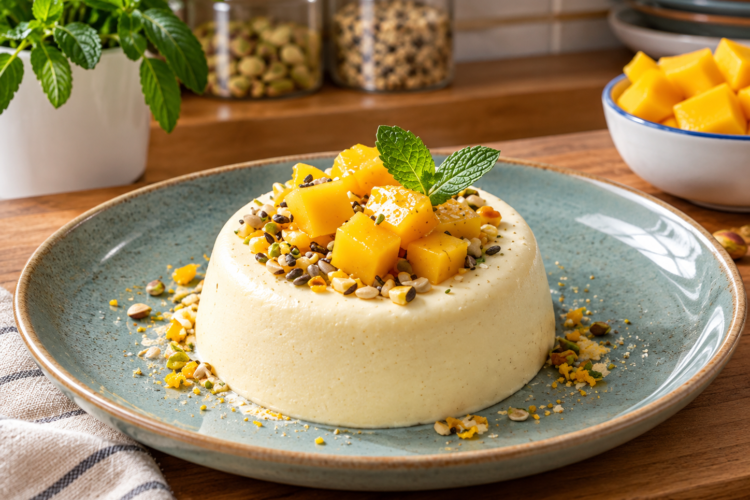
Mango mousse is one of those desserts that feels special without requiring complicated baking or a long list of equipment. This High Protein Mango Mousse brings together ripe mangoes, creamy Greek yogurt, vanilla protein powder, honey, and whipped cream to create a smooth and airy dessert with a bright tropical flavor.
A small amount of gelatin helps the mousse hold its shape after chilling, making it suitable for serving in individual glasses or ramekins. With its combination of creamy texture and fruity sweetness, this recipe is an appealing choice when you want a dessert that feels indulgent while offering a generous amount of protein.
Why You’ll Enjoy This Mango Mousse
This high-protein dessert is designed for people who enjoy sweet treats but also want something that fits more easily into a balanced eating routine. Ripe mango provides natural tropical sweetness and a beautiful golden color, while unsweetened Greek yogurt contributes a creamy consistency and protein. Vanilla protein powder adds another layer of protein along with a gentle vanilla flavor that works especially well with mango. Honey rounds everything out with a soft sweetness, while whipped cream gives the mousse its characteristic light and velvety finish.
Another advantage is how little preparation is required. The mangoes simply need to be peeled, chopped, and blended into a smooth puree. The gelatin is bloomed separately and gently dissolved before being incorporated into the mango mixture. Once the cream is whipped and folded through the base, the mousse only needs time in the refrigerator to set. This makes it an excellent make-ahead dessert for a family meal, weekend gathering, or simple evening treat.
Choosing the Best Mangoes
The quality of the mangoes has a noticeable effect on the final dessert because they provide much of its flavor and sweetness. Choose mangoes that are ripe, fragrant, and soft enough to give slightly when gently pressed. A properly ripe mango should have juicy flesh with a strong fruity aroma. Depending on the variety, the skin may be green, yellow, orange, or red, so color alone is not always the best indication of ripeness.
For the smoothest mango mousse, use mangoes with soft, non-fibrous flesh. If the fruit contains many tough fibers, the puree may not be quite as silky. Once peeled, cut the flesh away from the pit and chop it into manageable pieces before blending. A high-speed blender can produce a very smooth puree, but an ordinary blender or food processor can also work well.
The Role of Greek Yogurt
Unsweetened Greek yogurt gives this dessert its creamy body while contributing protein without requiring a large amount of additional ingredients. Its naturally thick consistency works particularly well in mousse recipes because it creates a substantial base that can support the whipped cream and gelatin. Since the yogurt is unsweetened, the sweetness of the finished dessert comes primarily from the mango and honey.
Greek yogurt also provides a pleasant slight tang that balances the richness of the cream. This contrast is important because mango has a naturally sweet, tropical character. Instead of making the dessert taste overly heavy, the yogurt keeps the flavor fresh and rounded. When combining the ingredients, mix thoroughly enough to distribute the protein powder and yogurt evenly throughout the mango puree.
Adding Vanilla Protein Powder
Vanilla protein powder is an important part of this protein-packed treat. It increases the protein content while contributing a subtle vanilla note that complements the fruit. For the best texture, add the protein powder directly to the mango and Greek yogurt mixture and stir until it is evenly incorporated.
Different protein powders can behave differently when mixed with liquids. Some blend very smoothly, while others may leave small lumps if added too quickly. For a smooth mousse, sprinkle the protein powder into the mixture and whisk or stir thoroughly. Avoid adding extra liquid to compensate for a thick mixture because doing so would change the balance of the original recipe.
Preparing the Gelatin Properly
Gelatin is responsible for helping the mousse become firm enough to hold its shape after refrigeration. The process begins by combining the gelatin powder with cold water. This step, commonly called blooming, allows the gelatin granules to absorb moisture before they are heated. Giving the gelatin about five minutes to bloom helps it dissolve more evenly.
After blooming, the gelatin should be warmed gently over low heat until completely dissolved. There is no need to bring it to a vigorous boil. Once the gelatin has dissolved, remove it from the heat and allow it to cool slightly before adding it to the mango mixture. Stirring it in thoroughly ensures that the setting agent is distributed throughout the mousse rather than concentrated in one area.
Creating a Light and Creamy Texture
The whipped cream is what gives this dessert its airy character. Heavy cream should be whipped until soft peaks form. Soft peaks are firm enough to hold their shape briefly but still have a smooth, flexible texture. This stage is ideal for folding into the mango mixture because the cream can be incorporated without losing all of its air.
When folding the cream into the mango base, use gentle movements rather than vigorous stirring. The objective is to combine the two mixtures while retaining as much air as possible. This creates the light texture that makes mousse different from a traditional pudding or thick yogurt dessert. Take your time during this stage, especially around the bottom and sides of the bowl, so that the mixture becomes evenly combined.
How to Assemble the Dessert
Once the mousse mixture is ready, spoon it into four individual serving glasses or ramekins. Individual portions make this dessert particularly attractive because each serving can be chilled and presented separately. Use the back of a spoon to gently smooth the surface if desired, although a naturally textured finish can also look appealing.
The mousse needs at least two hours in the refrigerator to set properly. Chilling is not simply a way to make the dessert cold; it gives the gelatin enough time to stabilize the mixture. For the best result, avoid rushing this stage. The mousse should feel softly firm when ready, with a creamy texture that can be eaten easily with a spoon.
Serving the High Protein Mango Mousse
Serve this dessert cold, preferably straight from the refrigerator. Fresh mint leaves make a simple garnish and provide a pleasant visual contrast against the golden mango mousse. The mint also adds a fresh aroma without overwhelming the tropical fruit flavor.
This healthy dessert recipe works well after lunch or dinner, but it can also be prepared ahead of time for entertaining. Because the mousse is divided into individual portions before chilling, there is very little work required when it is time to serve. Simply take the glasses from the refrigerator, add the mint garnish, and present them.
Why This Recipe Works as a High-Protein Dessert
Many desserts are centered around sugar, butter, flour, or chocolate, while protein is often secondary. This recipe takes a different approach by incorporating both Greek yogurt and vanilla protein powder into the main mixture. According to the provided nutritional information, one serving contains 21.8 grams of protein, making it considerably more protein-focused than many conventional fruit mousse desserts.
The recipe also provides a combination of textures. Mango puree supplies a smooth fruit base, Greek yogurt adds creaminess, gelatin gives the dessert structure, and whipped cream introduces airiness. These elements work together rather than competing with each other. The result is a dessert that feels rich and satisfying while retaining the fresh character of ripe mango.
Making the Recipe Successfully
One of the most important details is making sure the mango puree is completely smooth before combining it with the other ingredients. Any larger pieces of fruit can interfere with the delicate texture of the finished mousse. It is also important to allow the gelatin to bloom properly before heating it. Skipping or shortening this step can make it more difficult for the gelatin to dissolve evenly.
The temperature of the gelatin mixture also matters. It should be dissolved and slightly cooled before it is mixed with the mango base. Adding extremely hot gelatin directly to the other ingredients can affect their consistency. At the same time, the gelatin should remain liquid enough to blend smoothly. Working carefully through each stage helps produce a more consistent result.
Notes for Better Results
For the best texture, use ripe mangoes with naturally sweet, soft flesh. Unsweetened Greek yogurt should be used as specified so the mango and honey remain the main sources of sweetness. When preparing the gelatin, use cold water for blooming and gentle heat for dissolving. Once the gelatin has been incorporated, mix well before folding in the whipped cream.
The cream should be whipped only to soft peaks rather than stiff peaks. Over-whipped cream can become difficult to fold smoothly into the mango mixture. Gentle folding is preferable because it preserves the air created during whipping. Finally, allow the mousse to remain refrigerated for at least two hours so the gelatin has enough time to set.
Storage and Preparation Notes
This mousse is particularly convenient when prepared in advance. Once portioned into glasses or ramekins, cover the servings appropriately and keep them refrigerated until ready to serve. The dessert should remain chilled because its creamy structure and texture are best when cold.
If you are preparing the mousse for guests, making it ahead of time can make serving much easier. The main preparation can be completed before the meal, leaving only the fresh mint garnish for the final presentation. This approach also gives the mousse sufficient time to set properly instead of trying to serve it before it has reached the desired consistency.
Frequently Asked Questions
Can I use frozen mango?
Fresh ripe mangoes are used in the original recipe and provide the intended flavor and texture. If frozen mango is used as an alternative, it should be completely thawed before blending. However, changing the fruit may affect the sweetness, water content, and final consistency, so fresh ripe mangoes are the preferred choice when following the recipe exactly.
How long does the mousse need to chill?
The mousse should be refrigerated for at least two hours, allowing the gelatin to set the mixture. The chilling time is separate from the preparation and cooking time listed on the recipe card. Waiting until the mousse has properly set gives it a more stable texture and makes it easier to serve.
Can I prepare it ahead of time?
Yes. This is a convenient make-ahead dessert because the mousse needs refrigeration before serving anyway. Prepare the individual portions, refrigerate them, and add the fresh mint garnish shortly before serving. Keeping the dessert chilled until presentation helps preserve its creamy texture.
Is this suitable as a post-workout dessert?
The recipe is specifically designed as a high-protein dessert, and the provided nutrition information lists 21.8 grams of protein per serving. Greek yogurt and vanilla protein powder provide the main protein sources. Whether it fits your individual nutritional needs depends on your overall diet and personal goals.
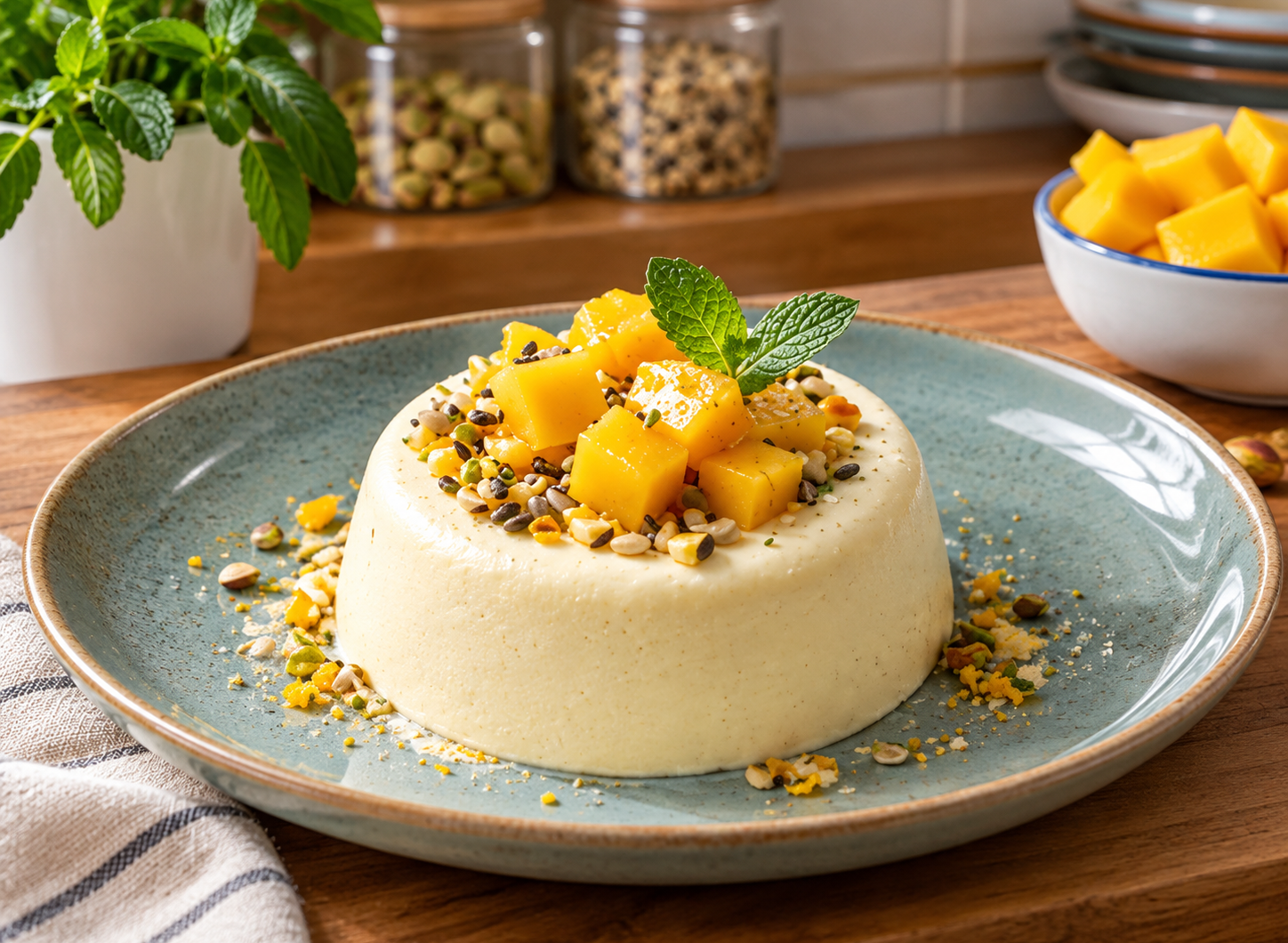
High Protein Mango Mousse
A smooth, creamy, and refreshing mango mousse made with ripe mangoes, unsweetened Greek yogurt, vanilla protein powder, honey, heavy cream, and gelatin.
4
servings20
minutes5
minutes398
kcal30
minutesIngredients
2 whole ripe mangoes
1 cup unsweetened Greek yogurt
2 scoops vanilla protein powder
2 tablespoons honey
1 cup heavy cream
1 tablespoon gelatin powder
3 tablespoons cold water
2 tablespoons fresh mint leaves
Directions
- Peel the ripe mangoes and remove the flesh from around the pits. Cut the mango flesh into cubes and place the pieces in a blender.
- Blend the mango until completely smooth. The finished puree should have a creamy consistency without noticeable chunks of fruit.
- Place the cold water in a small bowl. Sprinkle the gelatin powder evenly over the water and allow it to stand for about 5 minutes so the gelatin can bloom.
- Transfer the bloomed gelatin to a small saucepan and warm it gently over low heat. Stir as needed until the gelatin has completely dissolved. Remove the pan from the heat and allow the mixture to cool slightly.
- Add the smooth mango puree, unsweetened Greek yogurt, vanilla protein powder, and honey to a large mixing bowl. Stir thoroughly until the ingredients are evenly combined.
- Pour the dissolved gelatin into the mango mixture. Mix well so the gelatin is distributed throughout the mousse base.
- In a separate bowl, whip the heavy cream until soft peaks develop. Carefully fold the whipped cream into the mango mixture using gentle movements until the mousse is smooth and evenly blended.
- Divide the mousse between four individual serving glasses or ramekins. Place them in the refrigerator and chill for at least 2 hours, or until the mousse has set.
- Before serving, garnish each portion with the fresh mint leaves. Serve the mousse chilled.
Nutrition Facts
- Total number of serves: 1
- Calories: 398kcal
- Fat: 21.4g
- Carbohydrates: 27.7g
- Fiber: 1.6g
- Sugar: 24.6g
- Protein: 21.8g
