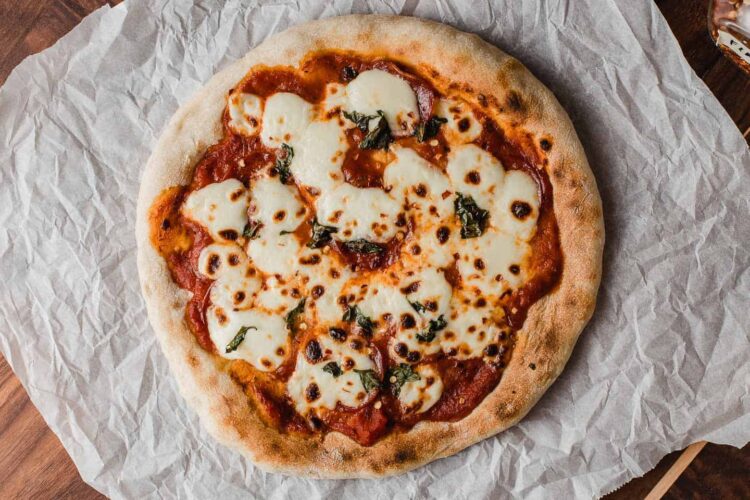
Gluten-Free Sourdough Pizza Crust – Recipe
Introduction & Background
Gluten-Free Sourdough Pizza Crust is one of the most technically fascinating evolutions in modern baking—a recipe that merges ancient fermentation techniques with contemporary dietary needs. Traditional pizza dough relies heavily on gluten, the protein network found in wheat that gives dough its elasticity, stretch, and chew. Removing gluten fundamentally changes how dough behaves.
At the same time, sourdough is one of the oldest fermentation systems in human history, built on wild yeast and beneficial bacteria rather than commercial yeast. It contributes:
- Complex flavor
- Improved digestibility
- Natural leavening
- Slight tangy acidity
Combining gluten-free baking with sourdough fermentation creates a unique challenge: how to build structure, elasticity, and rise without gluten, while still allowing fermentation to develop flavor.
This recipe is not just a substitute—it is a complete reengineering of pizza dough, designed to deliver:
- Crisp edges
- Soft interior
- Slight chew (without gluten)
- Deep fermented flavor
Chef’s Philosophy & Deep Culinary Framework
The philosophy behind gluten-free sourdough pizza is:
Structure must be built, not assumed.
In traditional dough:
- Gluten forms a natural elastic network
- Gas from fermentation gets trapped easily
- Dough stretches and holds shape
In gluten-free sourdough:
- There is no natural gluten network
- Structure must be recreated using alternative systems
- Fermentation must be controlled to avoid collapse
This recipe relies on:
- Flour blending (to mimic gluten behavior)
- Hydration control (for flexibility)
- Binding agents (to hold structure)
- Fermentation timing (to develop flavor without weakening dough)
Core Culinary Systems (Ultra Deep Breakdown)
1. Gluten-Free Structural Matrix System
Without gluten, structure must be built artificially using a blend of flours and starches.
Typical components:
- Rice flour → neutral base
- Tapioca starch → elasticity and stretch
- Potato starch → softness and moisture retention
These create a composite structure that mimics gluten’s function.
2. Sourdough Fermentation System
Sourdough starter provides:
- Wild yeast → natural rise
- Lactic acid bacteria → flavor and tang
- Improved digestibility
Fermentation must be controlled carefully because gluten-free dough is more fragile.
3. Hydrocolloid Binding System
Binders like:
- Psyllium husk
- Xanthan gum
Are critical because they:
- Trap water
- Create gel-like structure
- Improve elasticity
Psyllium husk is especially powerful because it forms a flexible gel network, similar to gluten.
4. Hydration Control System
Gluten-free dough requires higher hydration than wheat dough.
Water:
- Activates binders
- Softens flour particles
- Enables shaping
Too little → crumbly dough
Too much → sticky, unmanageable dough
5. Gas Retention & Rise System
In sourdough:
- Yeast produces carbon dioxide
- Dough must trap this gas
Without gluten:
- Gas escapes easily
Binders and hydration help trap gases and create light texture.
6. Thermal Baking Transformation System
During baking:
- Water evaporates
- Starches gelatinize
- Structure sets
This creates:
- Crisp exterior
- Soft interior
High heat is essential for proper crust formation.
Difficulty, Timing & Yield
Difficulty Level: Medium–Advanced
Preparation Time: 20–30 minutes
Fermentation Time: 6–12 hours
Baking Time: 12–15 minutes
Total Time: Up to 12 hours
Servings: 2 medium pizza crusts
Ingredients (Ultra Detailed Functional Breakdown)
Gluten-Free Flour Blend
- 1 cup rice flour
- 1/2 cup tapioca starch
- 1/2 cup potato starch
Function:
- Forms base structure
- Mimics gluten network
Sourdough Starter
- 1/2 cup active gluten-free sourdough starter
Function:
- Provides fermentation
- Adds flavor
- Creates rise
Binding System
- 1 tablespoon psyllium husk OR 1 teaspoon xanthan gum
Function:
- Creates elasticity
- Holds dough together
- Prevents crumbling
Hydration System
- 1 to 1 1/4 cups warm water
Function:
- Activates binders
- Softens dough
- Enables fermentation
Flavor & Stability System
- 1 teaspoon salt
- 1 tablespoon olive oil
Function:
- Enhances flavor
- Improves texture
- Adds softness
Step-by-Step Method (Ultra Detailed Execution)
Step 1: Psyllium Gel Formation Phase
Mix psyllium husk with warm water.
Let sit for 5–10 minutes.
This creates a thick gel.
This step is critical because it replaces gluten structure.
Step 2: Dry Ingredient Integration Phase
In a bowl, combine:
- Rice flour
- Tapioca starch
- Potato starch
- Salt
Mix thoroughly.
This ensures even structure distribution.
Step 3: Dough Formation Phase
Add:
- Psyllium gel
- Sourdough starter
- Olive oil
Mix until dough forms.
Texture should be:
- Soft
- Slightly sticky
- Elastic (from psyllium)
Step 4: Fermentation Phase
Cover dough and let ferment for 6–12 hours.
During this time:
- Yeast produces gas
- Flavor develops
- Dough becomes slightly airy
Do not over-ferment to avoid weakening structure.
Step 5: Shaping Phase
Divide dough into portions.
Shape into pizza rounds using hands or rolling.
Use parchment paper to prevent sticking.
Step 6: Pre-Bake Phase
Pre-bake crust at 220–240°C for 8–10 minutes.
This step:
- Sets structure
- Prevents soggy base
Step 7: Topping & Final Bake Phase
Add toppings.
Bake again for 5–7 minutes until:
- Edges crisp
- Bottom firm
- Cheese melted
Texture & Flavor Profile
A successful gluten-free sourdough crust delivers:
- Crisp edges
- Slightly chewy interior
- Light, airy structure
- Tangy sourdough flavor
- Stable base for toppings
Advanced Techniques
- Use pizza stone for better crust
- Preheat oven thoroughly
- Handle dough gently
- Use wet hands to shape sticky dough
- Adjust hydration based on flour type
Common Mistakes & Fixes
Crumbly Dough
Cause:
Low hydration or insufficient binder
Fix:
Increase water or psyllium
Dense Crust
Cause:
Under-fermentation
Fix:
Allow more fermentation time
Sticky Dough
Cause:
Too much water
Fix:
Add small amount of flour
Flat Flavor
Cause:
Inactive starter
Fix:
Use active, bubbly sourdough starter
Storage & Reuse
- Refrigerate dough up to 2 days
- Freeze baked crusts up to 1 month
- Reheat in oven for best texture
Serving Suggestions
Top with:
- Tomato sauce and mozzarella
- Vegetables
- Grilled chicken
- Fresh herbs
Final Thoughts
Gluten-Free Sourdough Pizza Crust is a powerful example of how traditional baking can be reimagined through technique and understanding rather than simple substitution.
It delivers:
- Authentic sourdough flavor
- Gluten-free accessibility
- Balanced texture and structure
- A satisfying pizza experience
At its core, this recipe proves a deeper culinary truth:
When natural systems like fermentation are combined with smart structural design, even the absence of gluten can be transformed into an opportunity rather than a limitation.
