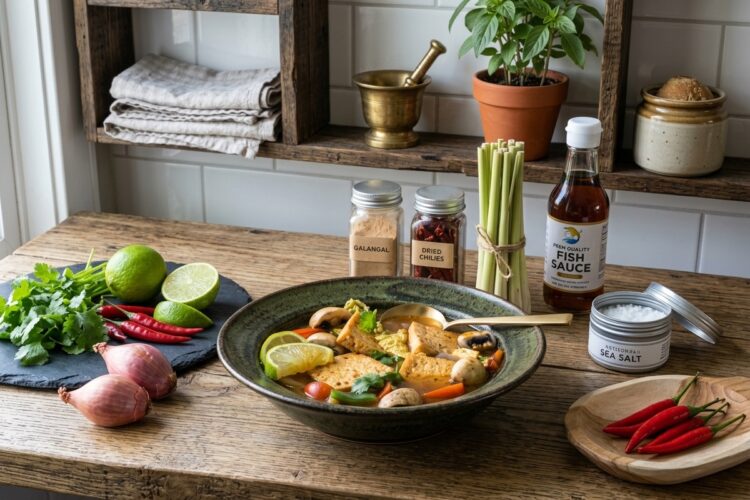
Tom Yum Soup is one of Thailand’s most recognizable dishes, loved for its bright combination of spicy, sour, salty, and lightly sweet flavors. This easy Thai soup is especially satisfying when made with prawns or shrimp, fresh herbs, aromatic ingredients, mushrooms, tomatoes, and plenty of lime juice.
The broth may look light and simple, but it develops an impressive depth of flavor as the prawns, lemongrass, galangal, kaffir lime leaves, garlic, and chilies gently simmer together.
What makes this Tom Yum recipe particularly useful is that the same flavorful broth can be used to prepare either a traditional clear Tom Yum Goong or a creamy Tom Yum soup. The clear version is fresh, sharp, and aromatic, while the creamy variation has a richer texture and deeper chili flavor.
Both styles begin with the same aromatic prawn broth, so you can choose the finish according to your preference without preparing two completely different recipes.
Why This Thai Soup Is So Popular
Thai cuisine is famous for balancing contrasting flavors in a single dish, and Tom Yum Soup is an excellent example of that approach. Instead of relying on heavy cream or a thick base, the soup gets much of its character from fresh aromatics and carefully balanced seasoning. Lime juice supplies acidity, fish sauce contributes savory saltiness, chilies provide heat, sugar rounds everything out, and the herbs create the unmistakable fragrance associated with authentic Thai cooking.
Tom Yum Goong, the prawn-based version of the soup, is particularly popular because the shells and heads of whole prawns can be used to build the broth. As they simmer with lemongrass, galangal, kaffir lime leaves, garlic, and Thai chilies, they release flavorful juices that give the soup a naturally savory foundation. This makes the broth taste considerably more complex than its clear appearance might suggest.
The Secret to Flavorful Tom Yum Broth
The most important stage of this recipe is preparing the broth. If you are using whole prawns with heads and shells, do not discard those parts before making the stock. The prawn heads and shells contribute valuable flavor and help create a naturally rich seafood base. The reserved prawn meat is added later, which prevents it from becoming overcooked while allowing the shells plenty of time to flavor the liquid.
The aromatics also need a little preparation before they go into the pot. Lightly bashing the lemongrass, garlic, and chilies helps break them open and allows their natural oils and juices to move into the broth. Kaffir lime leaves can be torn by hand before being added. These small preparation steps make a noticeable difference because Tom Yum depends heavily on aromatic ingredients rather than a long cooking process.
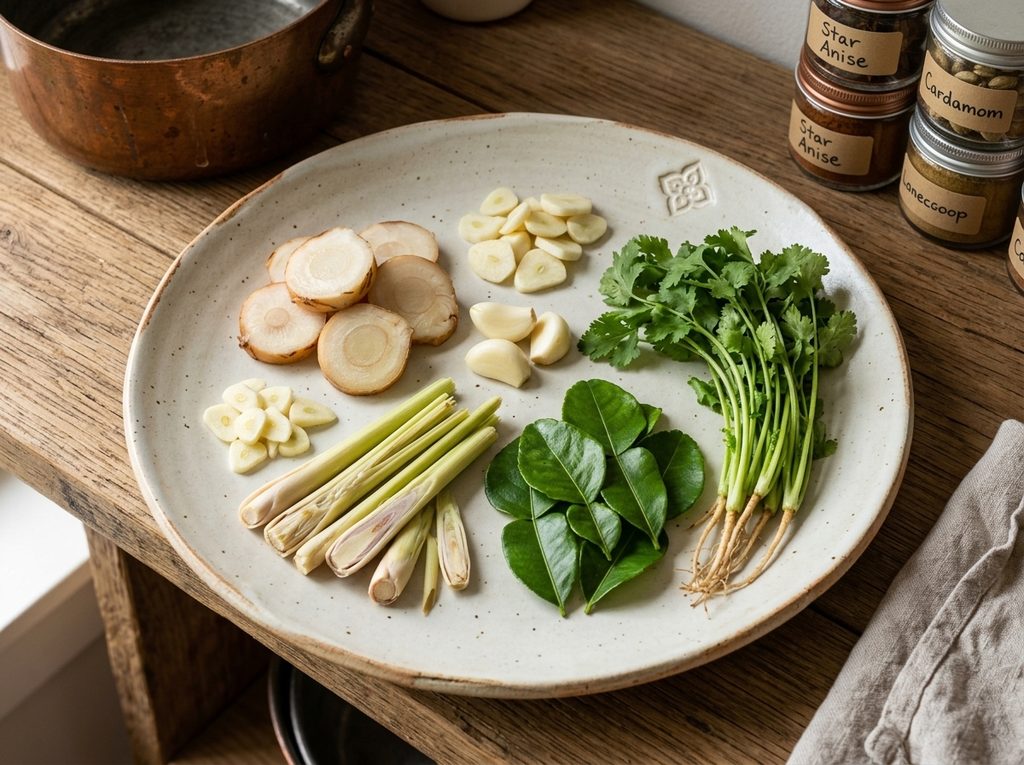
Lemongrass, Galangal, and Kaffir Lime Leaves
Three ingredients give Tom Yum much of its characteristic Thai fragrance: lemongrass, galangal, and kaffir lime leaves. Lemongrass contributes a fresh citrus aroma, while galangal has a distinctive earthy, peppery quality that is different from ordinary ginger. Kaffir lime leaves bring a highly fragrant citrus note that helps define the flavor of traditional Thai soups.
These ingredients may not be regular pantry staples in every kitchen, which means ingredient shopping can be the most challenging part of preparing this recipe. Asian grocery stores are often a reliable place to find them, although some larger supermarkets may also carry fresh or frozen Thai ingredients. Once you have everything ready, however, the actual cooking process is straightforward and requires relatively little hands-on work.
How to Prepare the Prawns
Whole prawns are ideal for this recipe because their heads and shells can be used to flavor the broth. Begin by peeling the prawns and keeping the meat separate. Place the heads and shells into the cooking pot because these will be used during the first stage of broth preparation. Keeping the prawn meat aside until later ensures that it stays tender and cooks only for the short time needed.
If you are working with frozen peeled prawns, they can also be used when whole prawns are unavailable, although the broth will not receive the same shell-based seafood flavor. Regardless of which prawns you use, avoid cooking them for too long. Prawns cook quickly, and adding them near the end of the process helps maintain a juicy, tender texture rather than producing tough or rubbery seafood.
Building the Aromatic Broth
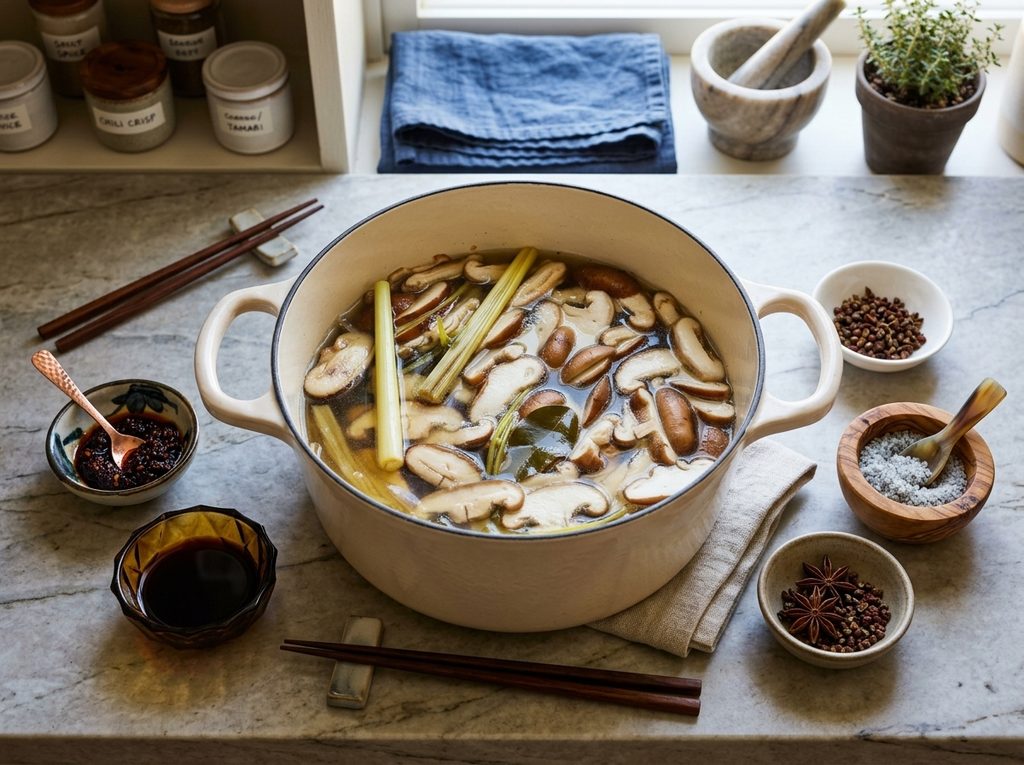
Once the prawn shells and heads are in the pot, add the lightly bashed garlic, chilies, and lemongrass. Tear the kaffir lime leaves with your hands and add them along with the sliced galangal, chicken stock, and water. Bring the mixture to a simmer over high heat, cover the pot, then lower the heat to medium and allow the broth to cook gently for about ten minutes.
This short simmer is enough to extract plenty of flavor from the aromatics and prawn shells. There is no need for an extended cooking period because the ingredients are naturally aromatic and the broth is designed to remain light and fresh. After simmering, strain the liquid carefully and discard the shells and aromatics. Return the fragrant broth to the same pot so the soup can be finished with the remaining ingredients.
Adding Mushrooms, Onion, and Tomato
The vegetables should be added in stages because they require different amounts of cooking time. Start with the onion and oyster mushrooms, allowing them to simmer for approximately three minutes. This gives the vegetables time to soften slightly while absorbing some of the aromatic broth without becoming excessively tender.
The tomato goes in afterward and needs only about one minute of simmering. Cooking it briefly helps preserve its shape and fresh character. The combination of oyster mushrooms, tomato, and onion also gives the finished soup a pleasant contrast of textures. Because the broth remains clear, these colorful ingredients become visible in the bowl and make the finished Tom Yum look as appealing as it tastes.
Balancing the Four Main Flavors
A good bowl of Tom Yum should have a lively balance rather than one overwhelming taste. Fish sauce brings saltiness and savory depth, lime juice delivers the characteristic sour note, chilies provide heat, and sugar softens the sharper edges. The exact balance can be adjusted according to personal taste, which is one of the advantages of preparing Tom Yum at home.
Add the sugar and fish sauce before finishing the soup with lime juice. Once the lime juice has been stirred in, taste the broth and decide whether it needs more sweetness, saltiness, or acidity. Lime juice is particularly important because adding it at the end keeps its fresh citrus character much more noticeable than if it were boiled for an extended period.
Clear Tom Yum Goong
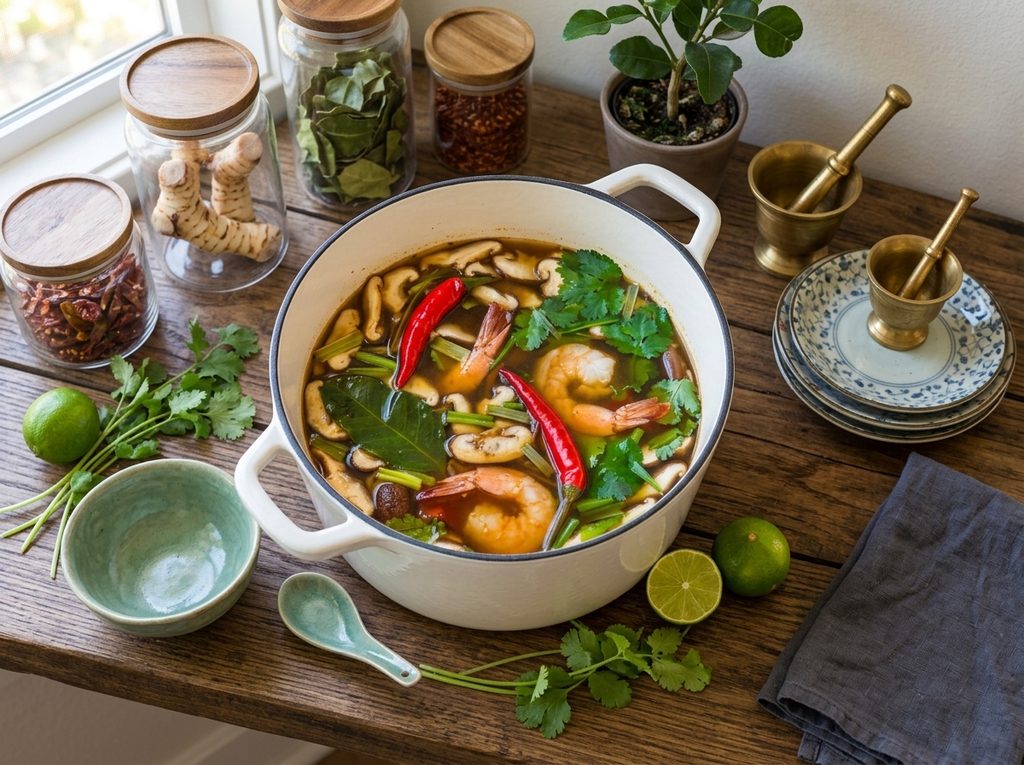
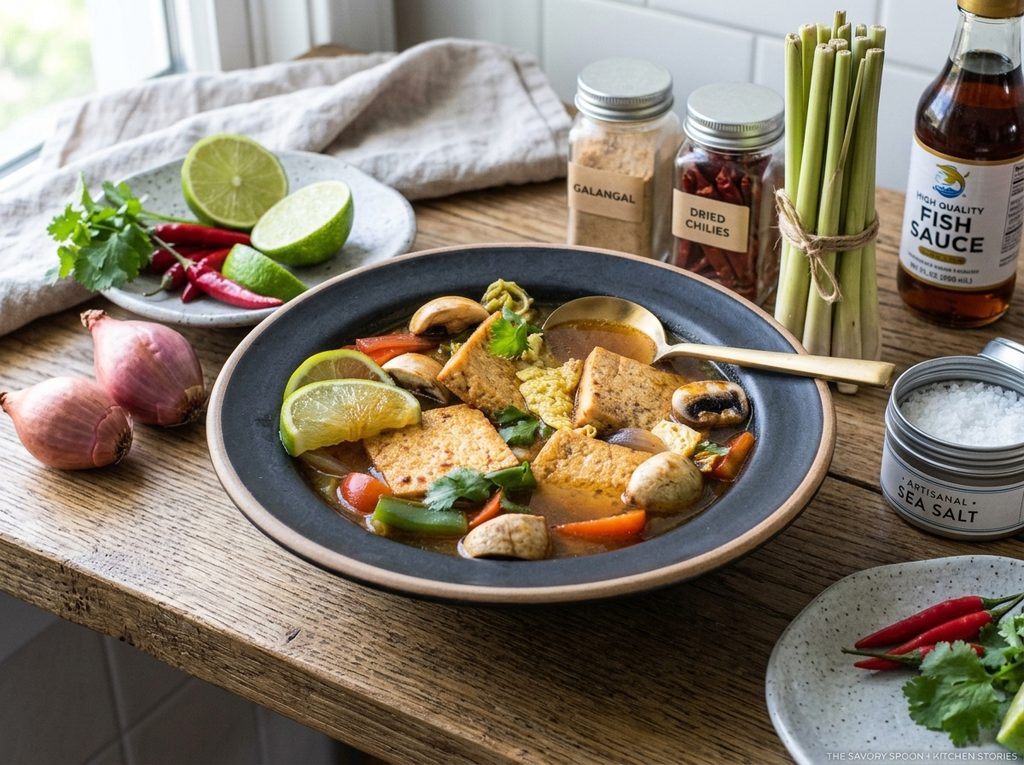
The clear version, commonly known as Tom Yum Goong, is an excellent choice if you enjoy a light, intensely aromatic soup. It has a transparent broth filled with prawns, mushrooms, onion, and tomato, with fresh coriander added just before serving. The flavor is bold despite the broth being light, making it suitable as a starter or a satisfying main dish.
For the best presentation, ladle the soup into serving bowls while it is hot and distribute the prawns and vegetables evenly. Finish with fresh coriander and, if desired, fresh chili. The combination of fragrant broth, tender prawns, earthy mushrooms, juicy tomato, and sharp lime makes every spoonful different while maintaining the signature Thai hot-and-sour character.
Creamy Tom Yum Variation
If you prefer a richer soup, the same base can be transformed into creamy Tom Yum. The creamy version uses Thai roasted chili sauce and evaporated milk, creating a fuller texture and a more rounded chili flavor. It is still distinctly Tom Yum because the lemongrass, galangal, kaffir lime leaves, fish sauce, and lime juice remain central to the flavor profile.
The creamy variation is especially appealing when you want something more substantial while still retaining the fresh acidity associated with Thai cuisine. Add the Thai roasted chili sauce and evaporated milk at the same stage as the sugar, then continue with the recipe. Taste the finished soup before serving and make any final seasoning adjustments needed to achieve your preferred balance.
How to Make Tom Yum Soup at Home
Although the ingredient list may appear long at first glance, the cooking technique is quite simple. The process essentially involves preparing the aromatic broth, straining it, cooking the vegetables, adding the prawns, and finishing the soup with the seasonings. Most of the work happens naturally in the pot, which makes this a practical recipe for a flavorful homemade Thai dinner.
For the best result, prepare all ingredients before turning on the stove. Peel and reserve the prawns, trim and bash the lemongrass, slice the galangal, tear the kaffir lime leaves, prepare the vegetables, and measure the seasonings. Having everything ready makes the cooking process smooth because several ingredients are added within a short period near the end of cooking.
Notes for the Best Results
Fresh lime juice is particularly valuable in Tom Yum because it provides a cleaner, brighter sour flavor. Add it after the main cooking process rather than allowing it to boil for several minutes. The same principle applies to the final tasting stage: do not assume the soup needs a fixed amount of seasoning beyond the listed quantities. Taste it and adjust the sweet, salty, and sour elements according to your preference.
When using whole prawns, keep the shell and head pieces for the broth and add the reserved meat only near the end. This creates a more flavorful seafood base while protecting the texture of the prawns. Also, avoid excessive simmering after the prawns are added. They need only a short cooking period, generally around two minutes, depending on their size.
Serving Suggestions
Tom Yum Soup works beautifully as a starter for a Thai-inspired meal, but it can also be served as a light main course. Fresh coriander makes a simple garnish that complements the aromatic broth, while fresh chili can add extra heat for people who enjoy a stronger kick. Serve the soup immediately while the broth is hot and the prawns are tender.
For a complete Thai-style meal, Tom Yum can be paired with steamed rice and other savory dishes. However, the soup itself already contains seafood and vegetables, so it does not require complicated accompaniments. Its strong flavor makes it particularly useful at the beginning of a meal because the sour, spicy broth can awaken the palate without feeling overly heavy.
Why This Recipe Works
This recipe succeeds because each component has a specific role. Prawn shells create the seafood foundation, lemongrass and kaffir lime leaves add citrusy fragrance, galangal contributes warmth and depth, chilies bring heat, fish sauce supplies savory saltiness, lime provides acidity, and sugar balances the sharper flavors. Mushrooms, tomato, and onion add texture and substance without turning the soup into a heavy dish.
The result is a bowl of Thai hot and sour soup that tastes vibrant, aromatic, and satisfying. Whether you choose the clear Tom Yum Goong or the creamy variation, the basic cooking method remains easy to follow. Once the specialty ingredients are gathered, this homemade Tom Yum recipe becomes a practical way to bring authentic Thai-inspired flavor to the dinner table.
Nutritional Information
Based on the supplied recipe information, one serving contains approximately 156 calories, making this a relatively light soup option. It provides around 21 grams of protein and 2 grams of fat, with approximately 15 grams of carbohydrates. The recipe also contains vitamin C, iron, calcium, fiber, and other nutrients from the prawns, vegetables, herbs, and citrus ingredients.
The listed nutritional values should be considered estimates because actual nutrition can vary depending on the exact size of the prawns, brands of stock and fish sauce, preparation methods, and serving portions. The sodium content is relatively high at approximately 2,821 milligrams per serving, largely because fish sauce and chicken stock contribute substantial sodium. Anyone monitoring sodium intake should take this into consideration when planning the meal.
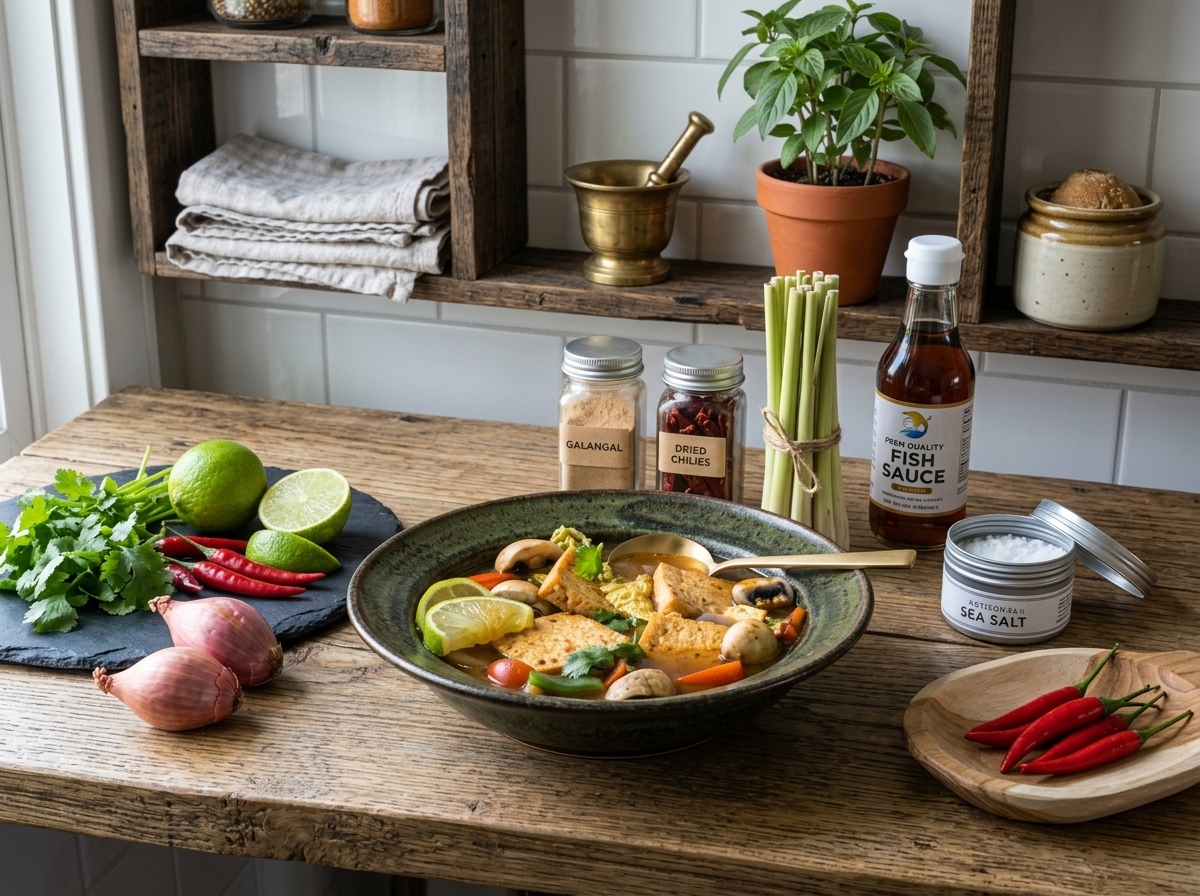
Tom Yum Soup (Thai soup)
A flavorful Thai hot and sour prawn soup made with an aromatic broth of prawns, lemongrass, galangal, kaffir lime leaves, garlic, and chilies.
2
servings15
minutes20
minutes156
kcal35
minutesIngredients
- Prawns
300g / 10oz whole prawns / shrimp with heads and shells on
- For the Broth
3 cup (750 ml) water
1/2 cup (125 ml) chicken stock/broth, low sodium
2 stalks of lemongrass, outer layers peeled
1.5 cm / 3/5″ piece of galangal, cut into 4 slices
5 kaffir lime leaves, torn roughly
2 Thai or birdseye chillies
3 garlic cloves
- For Finishing the Soup
120g / 4oz oyster mushrooms
1 roma tomato, cut into wedges
1/2 white onion (medium sized), cut into wedges about 1 cm thick
1 tsp sugar
3 tbsp fish sauce
3 tbsp lime juice
Coriander/cilantro, for garnish
- For the Creamy Tom Yum Option
1 1/2 tbsp Thai roasted chili sauce (Nam Prik Pa)
1/3 cup (75 ml) evaporated milk
Directions
- Peel the prawns and separate the meat from the heads and shells. Keep the prawn meat refrigerated or covered while preparing the broth, and reserve the heads and shells for the stock.
- Lightly bash the garlic, Thai chilies, and lemongrass using a meat mallet or another suitable kitchen tool. The goal is simply to bruise and open the ingredients so their flavors can escape into the broth.
- Add the prawn heads and shells, bashed aromatics, and roughly torn kaffir lime leaves to a pot. Add the sliced galangal, chicken stock, and water. Bring the mixture to a simmer over high heat.
- Cover the pot, reduce the heat to medium, and simmer the broth for 10 minutes. Strain the liquid carefully, removing and discarding the prawn shells, heads, and aromatics.
Return the strained broth to the same pot and place it over low heat. - Add the onion and oyster mushrooms to the broth. Allow them to simmer for approximately 3 minutes.
Add the tomato wedges and continue simmering for about 1 minute. - Add the reserved prawns to the pot and simmer for approximately 2 minutes, or until they are just cooked through. Avoid overcooking because prawns can become firm and rubbery when left in the heat for too long.
- Stir in the sugar and fish sauce and simmer for 1 minute. Add the lime juice after cooking and taste the broth carefully.
Adjust the balance according to your preference by adding more sugar for sweetness, fish sauce for saltiness, or lime juice for additional sourness. - Ladle the hot soup into bowls and garnish with fresh coriander/cilantro. Fresh chili can also be added if you prefer extra heat. Serve immediately for the best flavor and texture.
- For the creamy variation, add the Thai roasted chili sauce and evaporated milk at the same time as the sugar. Stir well to combine, then continue following the remaining steps of the recipe.
Nutrition Facts
- Total number of serves: 1
- Calories: 156kcal
- Fat: 2g
- Carbohydrates: 15g
- Fiber: 2g
- Sugar: 7g
- Protein: 21g
