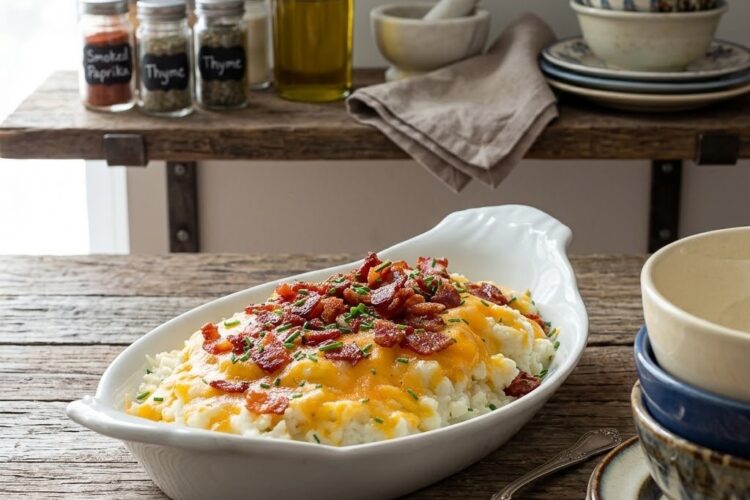
Loaded cauliflower is one of the easiest ways to turn an everyday vegetable into a rich, satisfying side dish. This loaded cauliflower mash combines tender cauliflower with butter, sour cream, cheddar cheese, bacon, chives, and a touch of garlic powder.
The result is creamy, cheesy, savory, and comforting, with the familiar flavors of loaded potato skins but far fewer carbohydrates. It is an excellent choice when you want a hearty side dish without relying on potatoes.
This recipe is especially useful for anyone following a keto or low-carb diet. Traditional loaded baked potatoes can contain a significant amount of carbohydrates, while cauliflower provides a lighter base that still works beautifully with rich toppings.
When cooked until tender and blended with butter and sour cream, cauliflower develops a smooth texture that makes it a practical alternative to mashed potatoes. The finished dish is filling enough to serve alongside grilled meat, roasted chicken, steak, or other favorite main courses.
Why Loaded Cauliflower Works So Well
Cauliflower has become a popular ingredient in low-carb cooking because it is remarkably versatile. Its mild flavor allows it to take on the character of the ingredients around it, which makes it particularly well suited to creamy and strongly seasoned recipes. In this dish, the cauliflower provides the base while butter and sour cream create richness, cheddar brings a sharp cheesy flavor, bacon contributes a smoky savory element, and fresh chives add a mild onion-like freshness.
The texture is another reason this recipe works so well. Properly cooked cauliflower becomes soft enough to process into a smooth mash. Once the butter, sour cream, and garlic powder are incorporated, the mixture becomes creamy and spoonable. The addition of shredded cheddar gives it even more body and a familiar cheesy finish. Topped with additional cheese, bacon, and chives, the humble vegetable becomes a much more indulgent-tasting side dish.
A Simple Keto Side Dish
If you are looking for an easy keto side dish, this recipe deserves a place in your regular meal rotation. It requires only a small number of ingredients and can be prepared in about 20 minutes. The cauliflower can be cooked in the microwave, making this particularly convenient on busy evenings, although steaming is also an option if you prefer a more traditional cooking method.
The preparation is straightforward. First, the cauliflower is cooked until completely tender. Removing excess moisture is important because watery cauliflower can make the mash thin rather than creamy. After cooking, the cauliflower is processed with butter, garlic powder, and sour cream. Cheddar and chives are then folded into the mixture before the remaining toppings are added. A short final heating step melts the cheese and brings everything together.
Choosing and Preparing the Cauliflower
Fresh cauliflower is ideal for this recipe because it becomes tender quickly and produces a pleasant texture when processed. Look for a firm head with compact florets and no obvious signs of spoilage. The cauliflower should be cut into manageable florettes so that they cook evenly. Smaller pieces generally become tender faster, which is helpful when using a microwave.
Frozen cauliflower can also be convenient in many cauliflower recipes, but the supplied recipe specifically calls for one pound of cauliflower, so the key consideration is moisture rather than whether the vegetable is fresh or frozen. Whatever cooking method you use, make sure the cauliflower is thoroughly tender before processing. If it retains too much water, allow it to sit uncovered after draining, or remove additional moisture as needed.
How to Make Loaded Cauliflower Mash
Start by cutting the cauliflower into florettes and placing them in a microwave-safe bowl. Add two tablespoons of water, then cover the bowl with cling film. Microwave the cauliflower for approximately five to eight minutes, adjusting the time according to the strength of your microwave. The goal is to make the cauliflower completely tender rather than simply softened.
Once cooked, drain the excess water carefully. Leave the cauliflower uncovered for a minute or two so steam can escape. This small step can make a noticeable difference in the finished texture. If you choose to steam the cauliflower using a conventional method, you may need to squeeze out some of the moisture after cooking. The drier the cooked cauliflower, the thicker and creamier the final mash will be.
Transfer the tender cauliflower to a food processor and process it until fluffy. Add the butter, garlic powder, and sour cream, then continue processing until the mixture reaches a consistency similar to traditional mashed potatoes. Avoid overthinking the texture at this stage; the cheese and toppings will add additional richness and structure.
Move the cauliflower mash into a bowl and stir in most of the snipped chives, keeping some aside for the topping. Add half of the grated cheddar cheese and mix it through by hand. Season the mash with salt and pepper according to your taste. At this point, the mixture should already be creamy, savory, and rich, with the cheese beginning to blend into the warm cauliflower.
The final step gives the dish its signature loaded finish. Scatter the remaining cheddar cheese, reserved chives, and crumbled cooked bacon over the top. Place the bowl back into the microwave long enough to melt the cheese, or put it under the broiler for a few minutes. The result is a warm, cheesy cauliflower side with crisp bacon and fresh chives on top.
What Makes It Taste Like Loaded Potato Skins
The appeal of this recipe comes from combining familiar loaded-potato flavors with cauliflower. Butter provides richness, sour cream contributes tang and creaminess, and cheddar cheese gives the dish the unmistakable flavor associated with classic loaded potatoes. Bacon adds a salty, smoky contrast, while chives bring a fresh finishing note.
Cauliflower itself has a relatively mild flavor, which allows these ingredients to take center stage. Rather than trying to disguise the vegetable completely, the recipe uses its creamy texture as a foundation for ingredients that are already known to work well together. This makes the dish satisfying without requiring potatoes or other high-carbohydrate ingredients.
Serving Suggestions
Loaded cauliflower makes a flexible accompaniment for a wide range of meals. Serve it alongside grilled steak for a hearty dinner, or pair it with roasted or pan-cooked chicken for an easy weeknight meal. It can also work well with other roasted meats when you want a creamy side that balances a savory main course.
Because the dish is rich, it pairs particularly well with simple main dishes and vegetables. A fresh green salad, roasted vegetables, or lightly seasoned greens can provide contrast to the creamy cauliflower. For a keto meal, you can combine it with a protein and another low-carbohydrate vegetable to create a filling dinner without needing bread, rice, or potatoes.
Making the Recipe Smooth and Creamy
The biggest factor in achieving a good cauliflower mash is controlling moisture. Cauliflower naturally holds water after cooking, and excess liquid can prevent the mash from becoming thick and creamy. Drain it thoroughly and allow steam to escape before placing it in the food processor. If you steam the cauliflower, removing additional moisture may be necessary.
The cooking time also matters. Undercooked cauliflower will not process into a smooth mash easily and may leave small firm pieces throughout the dish. Cook it until it is completely tender. At the same time, avoid adding unnecessary water during processing. The butter and sour cream already provide the moisture and richness required for a creamy consistency.
Notes for the Best Results
For the most flavorful result, allow the cooked cauliflower to drain well before processing. This is especially important if your cauliflower seems particularly watery after cooking. A few extra minutes of uncovered resting can help release steam and improve the final texture. When processing, work until the cauliflower reaches the smoothness you prefer, keeping in mind that it should resemble mashed potatoes rather than becoming completely liquid.
The cheese is divided between the mash and the topping for a reason. Adding half of the cheddar directly into the warm cauliflower gives the interior a cheesy flavor, while reserving the rest for the top creates a melted layer that makes the finished dish look and taste more indulgent. Keep some chives for the topping as well so the final presentation has a fresh green contrast.
Notes for Preparation and Storage
This recipe is quick enough to prepare immediately before serving, which is ideal because the melted cheese and bacon topping are at their best while warm. If preparing components ahead of time, keep the cooked cauliflower well drained and refrigerate it until you are ready to finish the mash. The final topping can then be added shortly before serving.
If you have leftovers, store them in a covered container in the refrigerator and reheat them gently. Because the recipe contains dairy and cheese, avoid overheating for an extended period. A short reheating time followed by stirring can help restore the creamy consistency. The bacon topping may lose some of its original crispness after refrigeration, but the overall dish can still make a convenient leftover side.
Is Loaded Cauliflower Keto-Friendly?
This recipe is well suited to a keto and low-carb eating pattern because cauliflower replaces the higher-carbohydrate potato base. The supplied nutritional information lists approximately 7.4 grams of carbohydrates and 3 grams of fiber per serving, which works out to roughly 4.4 grams of net carbohydrates per serving when calculated by subtracting fiber from total carbohydrates. Individual nutritional values can vary depending on the exact products and ingredients used.
For people carefully tracking carbohydrates, it is always sensible to calculate nutrition using the specific ingredients and brands used in their own kitchen. Sour cream and cheddar can vary slightly in their nutritional composition. Even so, the ingredient combination makes this a practical option when you want a creamy, cheesy side while keeping the meal substantially lower in carbohydrates than a traditional loaded potato.
Why This Recipe Belongs in Your Meal Plan
A good low-carb recipe does not have to feel restrictive, and this loaded cauliflower is a strong example. Instead of treating cauliflower as a plain vegetable, the recipe turns it into a creamy, flavorful side that brings together several classic comfort-food ingredients. The combination of butter, sour cream, cheddar, bacon, and chives gives every spoonful plenty of flavor.
It is also an efficient recipe for busy cooks. The ingredient list is short, the cauliflower cooks quickly, and the food processor handles most of the texture work. The final cheese-and-bacon topping takes only moments to assemble. That combination of convenience and comfort makes this recipe useful for weeknight dinners, weekend meals, holiday side dishes, and keto meal planning.
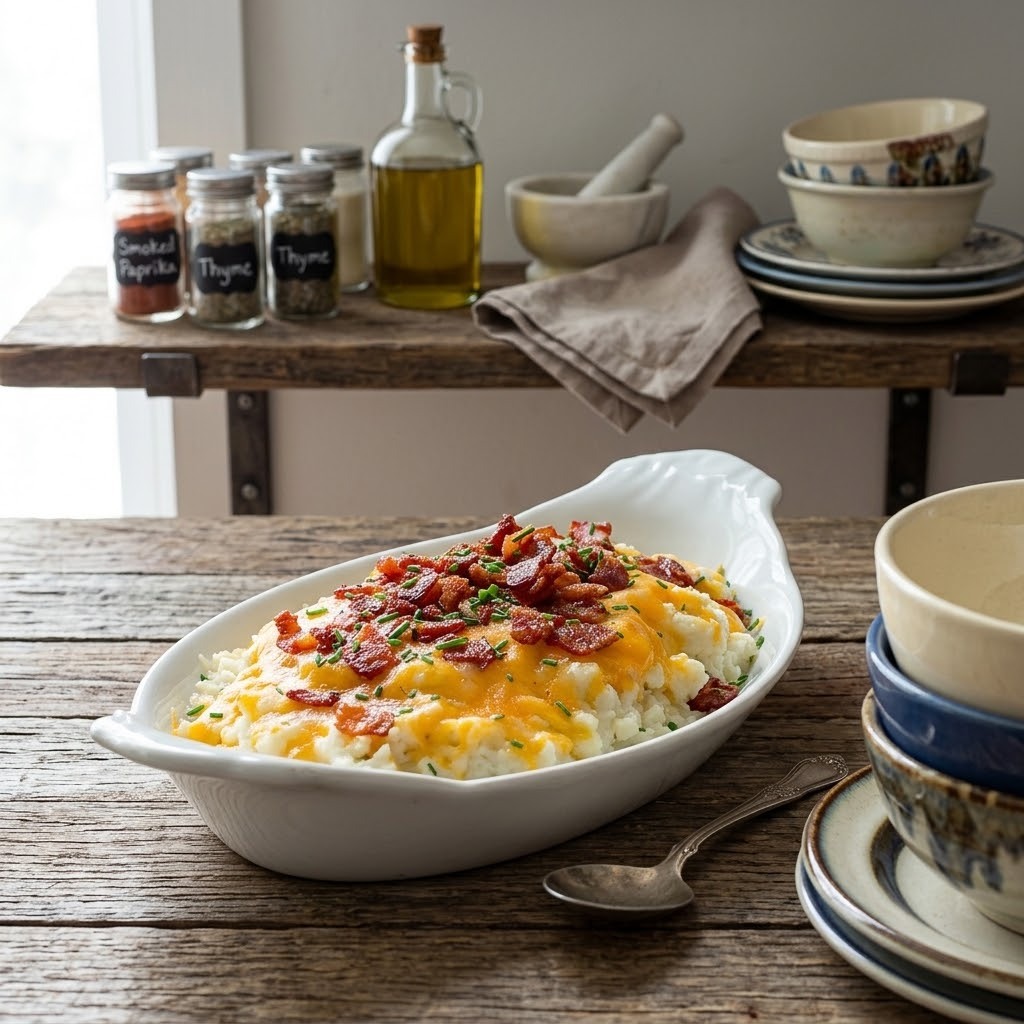
Loaded Cauliflower (low carb, keto)
Creamy loaded cauliflower made with butter, sour cream, cheddar cheese, bacon, chives, and garlic powder.
4
servings10
minutes10
minutes298
kcal20
minutesIngredients
1 pound cauliflower
4 ounces sour cream
1 cup grated cheddar cheese
2 slices bacon, cooked and crumbled
2 tablespoons chives, snipped
3 tablespoons butter
¼ teaspoon garlic powder
Salt and pepper to taste
Directions
- Cut the cauliflower into florettes and place them in a microwave-safe bowl. Add 2 tablespoons of water and cover the bowl with cling film.
- Microwave for 5–8 minutes, depending on your microwave, until the cauliflower is completely cooked and tender. Drain the excess water and leave the cauliflower uncovered for a minute or two. Alternatively, steam the cauliflower using a conventional method and remove or squeeze out excess moisture if necessary.
- Place the cooked cauliflower in a food processor and process until fluffy. Add the butter, garlic powder, and sour cream.
- Continue processing until the cauliflower reaches a smooth consistency similar to mashed potatoes.
- Transfer the cauliflower mash to a bowl. Stir in most of the snipped chives, reserving some for the topping.
- Add half of the grated cheddar cheese and mix it through by hand. Season with salt and pepper to taste.
- Finish the dish with the remaining cheddar cheese, reserved chives, and crumbled bacon.
- Return the bowl to the microwave to melt the cheese, or place the cauliflower under the broiler for a few minutes until the cheese is melted and the topping is hot.
Nutrition Facts
- Total number of serves: 1
- Calories: 298kcal
- Fat: 24.6g
- Carbohydrates: 7.4g
- Fiber: 3g
- Sugar: 3.85g
- Protein: 11.6g
