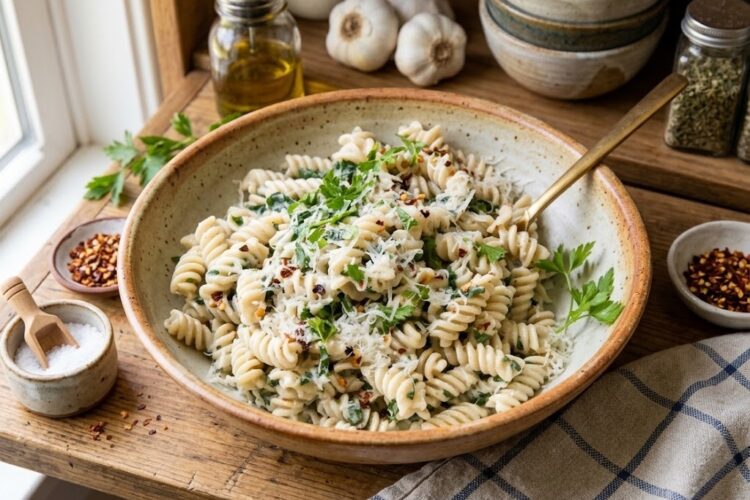
If you want a quick, creamy pasta dinner that brings plenty of protein to the table, this high-protein cottage cheese pasta is worth adding to your weekly meal plan. With 37 grams of protein per serving, this vegetarian pasta recipe turns a simple bowl of noodles into a more satisfying and balanced meal.
The sauce is made with low-fat cottage cheese, skim milk, Parmesan cheese, garlic, and a little pasta water, creating a smooth texture without relying on heavy cream.
This easy protein pasta recipe takes only about 25 minutes from start to finish, making it especially useful on busy weeknights. The preparation is straightforward, the ingredients are easy to find, and most of the cooking happens while the pasta is boiling.
Fresh spinach is stirred into the warm sauce for an extra serving of greens, while garlic and Parmesan give the dish a savory flavor that makes it feel much more indulgent than the ingredient list suggests.
Why This Protein Pasta Is Worth Making
Traditional pasta can be delicious, but it does not always provide enough protein to keep a meal satisfying for very long. This recipe takes a different approach by using protein pasta and cottage cheese as the foundation. Together, they create a creamy vegetarian pasta dish with a substantial amount of protein while still keeping the preparation simple.
Cottage cheese works particularly well in pasta sauce because it can be blended until smooth. Once combined with skim milk, Parmesan, and garlic, it becomes a creamy mixture that coats the noodles beautifully. There is no need to prepare a complicated cheese sauce or spend a long time standing over the stove. The blender does most of the work, and the sauce only needs gentle warming before the remaining ingredients are added.
The addition of spinach makes this more than just a high-protein pasta recipe. The leafy greens bring color, texture, and nutrients to the dish without making the cooking process complicated. Since spinach wilts quickly, it can be added directly to the warm sauce while the pasta finishes cooking. This makes the recipe especially convenient when you want a complete vegetarian dinner without preparing several separate side dishes.

What Makes the Sauce Creamy
The creamy texture in this pasta does not come from heavy cream. Instead, cottage cheese provides the main base. Blending the cottage cheese with skim milk, Parmesan, and garlic creates a smooth sauce that can be warmed gently in a skillet. This approach gives the finished pasta a rich mouthfeel while keeping the ingredient list relatively short.
One important detail is the cooking temperature. The blended sauce should be warmed over low heat and whisked regularly. Keeping the heat gentle helps maintain the smooth consistency of the sauce. Once the spinach has wilted, reserved pasta water is gradually incorporated before the cooked pasta is added.
Pasta water plays a useful role here because it contains starch released from the noodles during cooking. Adding a small amount slowly helps loosen the sauce and allows it to spread evenly around the pasta. The sauce can initially look slightly thinner than expected, but it thickens as the pasta sits and cools. This final resting period is part of what gives the dish its creamy consistency.
How to Make High-Protein Pasta
Start by cooking the protein pasta according to the instructions on the package. While the pasta cooks, prepare the creamy cottage cheese sauce. Add the low-fat cottage cheese, skim milk, Parmesan, and minced garlic to a blender. Blend until the mixture is smooth and creamy, with no obvious lumps of cottage cheese remaining.
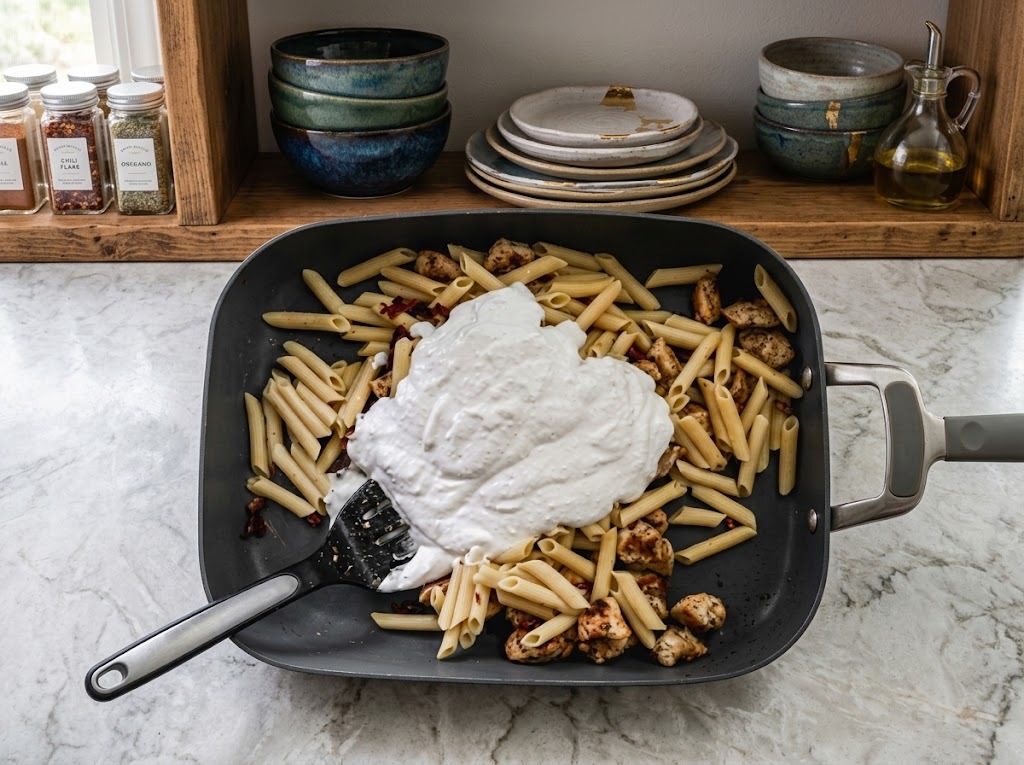
Pour the blended mixture into a non-stick skillet and place it over low heat. Whisk the sauce frequently as it warms. Avoid using high heat because the goal is to gently bring the sauce to temperature rather than aggressively boil it. Once the sauce is warm, add the chopped spinach and stir until the leaves soften and wilt into the mixture.
Before draining the pasta, remember to reserve the required amount of pasta water. This small step is important because the water will be used to adjust the consistency of the sauce. Drain the cooked pasta and rinse it with cold water, then set it aside briefly so it can cool slightly.
The pasta should not be added to the very hot sauce immediately. Instead, slowly whisk the reserved pasta water into the sauce. Once incorporated, gradually add the cooked pasta to the skillet. Turn off the heat and continuously stir everything together for one to two minutes. During this time, the sauce will cling to the noodles and gradually become thicker.
Finish the pasta with additional freshly cracked black pepper and Parmesan cheese. Serve it while warm for the best texture and flavor. Because the sauce continues to thicken as it cools, serving the pasta soon after combining everything gives you a particularly creamy result.
The Best Pasta to Use
This recipe specifically calls for protein pasta, which helps deliver the high protein content highlighted in the recipe. Different protein pastas can vary in their cooking time and texture, so it is best to follow the package directions rather than relying on a fixed boiling time.
The pasta should be cooked according to the package instructions but should still have enough structure to hold the creamy sauce. Overcooking can make the noodles soft and less pleasant once they are combined with the sauce. Since the finished pasta is stirred in the skillet for another one to two minutes, cooking it appropriately from the beginning helps maintain a better texture.

Why Cottage Cheese Works So Well
Cottage cheese has become a popular ingredient in high-protein recipes because it can be used in both sweet and savory dishes. In this pasta recipe, its mild flavor makes it a natural match for Parmesan, garlic, and black pepper. Blending it also changes its texture, transforming the curds into a smooth base for the sauce.
The result is a creamy pasta sauce that feels comforting without requiring a long list of ingredients. Cottage cheese also adds protein to the dish, making it particularly useful for people who want a more protein-rich vegetarian meal.
If you normally associate cottage cheese with breakfast recipes or snacks, this pasta is a good example of how versatile the ingredient can be. The garlic and Parmesan provide enough savory flavor to make the cottage cheese blend seamlessly into the sauce.
Adding Spinach for a Balanced Meal
Spinach is an easy way to add greens to this creamy pasta without creating extra cooking work. The chopped spinach is added directly to the warm sauce and stirred until wilted. Because spinach cooks quickly, there is no need to sauté it separately or prepare another pan.
The spinach also adds a pleasant contrast to the pale, creamy sauce. Its mild flavor works well with garlic, Parmesan, and black pepper, while its tender texture blends naturally with the pasta. This makes the finished dish feel more complete while keeping the preparation to a minimum.
For a weeknight meal, convenience matters. Adding vegetables directly to the sauce means fewer dishes, fewer cooking steps, and less time spent in the kitchen. It is a simple technique that can make a pasta dinner more balanced without changing its comforting character.
Important Cooking Notes
The most important technique in this recipe is gentle heating. Keep the cottage cheese sauce over low heat and whisk it regularly. The sauce should become warm and smooth rather than reach a rapid boil. This helps preserve the texture and gives you better control over the final consistency.
Another important step is adding the pasta water slowly. Rather than pouring it all in at once, whisk it into the sauce gradually. This allows you to control the consistency while helping the sauce remain smooth. The amount specified in the recipe should be reserved before draining the pasta.
The cooked pasta is also allowed to cool slightly before it is added to the skillet. This helps make the final mixing process easier to control. Once the pasta is added, turn off the heat and keep stirring for one to two minutes. The sauce will coat the noodles and continue thickening as the dish cools.
Freshly cracked black pepper and Parmesan can be added at the end according to the recipe. They provide a simple finishing touch without requiring another sauce, garnish, or complicated preparation.

Easy Weeknight Dinner Idea
One of the biggest advantages of this recipe is its speed. With only five minutes of preparation and approximately 20 minutes of cooking, it can be on the table in about 25 minutes. That makes it suitable for evenings when you want something homemade but do not have the time or energy for an elaborate dinner.
The recipe also keeps the cooking process organized. The pasta can cook while the sauce ingredients are blended, and the spinach can wilt in the skillet while the pasta finishes. By overlapping these steps, you can get dinner ready efficiently without rushing through any individual part of the recipe.
For busy households, this kind of meal can become a useful staple. It offers a creamy pasta experience while incorporating protein and spinach, and the short ingredient list makes it relatively easy to keep the necessary items available in the kitchen.
Serving Suggestions
This creamy protein pasta can be served on its own as a satisfying vegetarian main course. Since the recipe already contains protein pasta, cottage cheese, Parmesan, and spinach, there is no requirement for a complicated side dish.
A simple serving of the pasta with extra cracked black pepper and Parmesan is enough to finish the meal. Serve it immediately after mixing for the creamiest texture because the sauce naturally becomes thicker as it cools.
The recipe provides a generous serving size of approximately two cups. With 37 grams of protein per serving, it can work particularly well for people looking for a higher-protein vegetarian dinner while still wanting the familiar comfort of creamy pasta.
Storage and Reheating Notes
If you have leftovers, remember that the sauce will become thicker as it cools. This is normal for the recipe and does not mean the pasta has lost its creamy character. When reheating, use gentle heat and stir regularly so the sauce warms evenly.
Because the sauce is dairy-based, avoid aggressively heating the leftovers. Gentle reheating is generally better for maintaining a smooth texture. A small amount of liquid can be useful if the pasta has become especially thick after refrigeration, although the original recipe itself specifies only the reserved pasta water during preparation.
For the best texture, the pasta is most enjoyable when served fresh. The combination of warm noodles, creamy sauce, wilted spinach, garlic, and Parmesan is at its best immediately after cooking.
Notes for Making the Recipe Successfully
There are a few details that can make a noticeable difference in the finished dish. First, blend the cottage cheese, milk, Parmesan, and garlic thoroughly until smooth. Second, warm the sauce slowly rather than using high heat. Third, reserve the pasta water before draining the noodles, since it is an important part of the sauce consistency.
Do not skip the final stirring stage. Once the pasta is added, turning off the heat and stirring continuously for one to two minutes gives the sauce time to cling to the noodles. The sauce may look slightly loose at first, but it will continue to thicken as it cools.
Finally, finish the dish with cracked black pepper and Parmesan. These simple additions reinforce the savory flavor of the sauce and make the finished pasta more appealing without adding unnecessary complexity.
Frequently Asked Questions
Is this a high-protein pasta recipe?
Yes. The recipe provides 37 grams of protein per serving according to the supplied nutritional information. Protein pasta and low-fat cottage cheese are the main ingredients contributing to its protein content, while Parmesan and skim milk provide additional protein.
Can I make this pasta without heavy cream?
Yes. This recipe does not use heavy cream. The creamy sauce is made by blending low-fat cottage cheese with skim milk and Parmesan. The result is a smooth, savory sauce that coats the pasta without requiring traditional cream-based ingredients.
How long does this cottage cheese pasta take to make?
The listed preparation time is 5 minutes, while cooking takes approximately 20 minutes. The total time is about 25 minutes, making it a practical option for a quick weeknight dinner.
Why is pasta water added to the sauce?
Reserved pasta water contains starch from the cooking pasta. Adding it gradually helps adjust the sauce consistency and allows the creamy mixture to coat the noodles more effectively.
Can I use spinach in this pasta recipe?
Yes. Chopped spinach is already part of the original recipe. It is added directly to the warm sauce and stirred until wilted, so there is no need to cook it separately.

Protein Pasta Recipe
A creamy, savory vegetarian protein pasta made with protein pasta, low-fat cottage cheese, skim milk, Parmesan, garlic, and spinach.
2
servings5
minutes20
minutes432
kcal25
minutesIngredients
12 ounces protein pasta
16 ounces low-fat cottage cheese
1/2 cup skim milk
1/3 cup Parmesan
1/2 tablespoon minced garlic, or 2 garlic cloves, minced
1 teaspoon salt
1 teaspoon freshly cracked black pepper
2 cups chopped spinach
1/4 cup pasta water
Directions
- Prepare the protein pasta according to the cooking directions provided on the package.
- Add the low-fat cottage cheese, skim milk, Parmesan, and minced garlic to a blender. Blend until the mixture becomes smooth and creamy.
- Transfer the blended sauce to a non-stick skillet. Warm it gently over low heat, whisking regularly to help maintain a smooth consistency.
- Once the sauce is warm, add the chopped spinach. Stir until the spinach has wilted and blended into the sauce while the pasta continues cooking.
- Before draining the pasta, reserve 1/4 cup of the cooking water. Drain the pasta, rinse it with cold water, and set it aside briefly to cool slightly.
- Very gradually whisk the reserved pasta water into the warm sauce. Add it slowly rather than all at once.
- Slowly add the cooked, slightly cooled pasta to the skillet with the sauce.
- Turn off the heat and stir the pasta continuously for 1–2 minutes. This allows the sauce to coat the noodles and thicken. The sauce will continue to become thicker as it cools.
- Finish with additional freshly cracked black pepper and Parmesan cheese. Serve warm and enjoy.
Nutrition Facts
- Total number of serves: 1
- Calories: 432kcal
- Fat: 6g
- Carbohydrates: 60g
- Fiber: 8g
- Sugar: 6g
- Protein: 37g
