
Chicken Stroganoff is a comforting, creamy dinner that brings together tender chicken, golden mushrooms, onions, sour cream, and Dijon mustard in a rich savory sauce. It has the familiar character of classic Beef Stroganoff but uses chicken for a quicker and easier meal.
The entire dish can be ready in about 20 minutes, making it a practical choice for busy weeknights when you want something warm, filling, and flavorful without spending hours in the kitchen.
What Makes Chicken Stroganoff So Good
Chicken Stroganoff works because each ingredient has an important role in building the final flavor. The chicken is lightly seasoned and browned until golden, while the mushrooms and onions are cooked in the same skillet. Those browned pieces left behind from the chicken and mushrooms add depth to the sauce. Butter, flour, beef broth, Dijon mustard, and sour cream then come together to create the creamy Stroganoff gravy that coats every piece of chicken beautifully.
One of the best things about this chicken Stroganoff recipe is how little preparation it requires. Instead of cutting the chicken into lots of small pieces before cooking, boneless skinless chicken thighs are cooked whole. This saves time and makes it easier to develop a deep golden color on the surface. Once the chicken has browned, it is removed from the pan while the mushroom sauce is prepared. The chicken then returns to the skillet briefly before serving.
Chicken thighs are particularly suitable for this recipe because they stay juicy while cooking. Their slightly higher fat content also gives the finished dish a tender texture that works especially well with creamy sauce. However, chicken breast or chicken tenderloin can also be used if that is what you have available. The cooking time may need a little attention depending on the thickness of the chicken, since lean breast meat can become dry if overcooked.
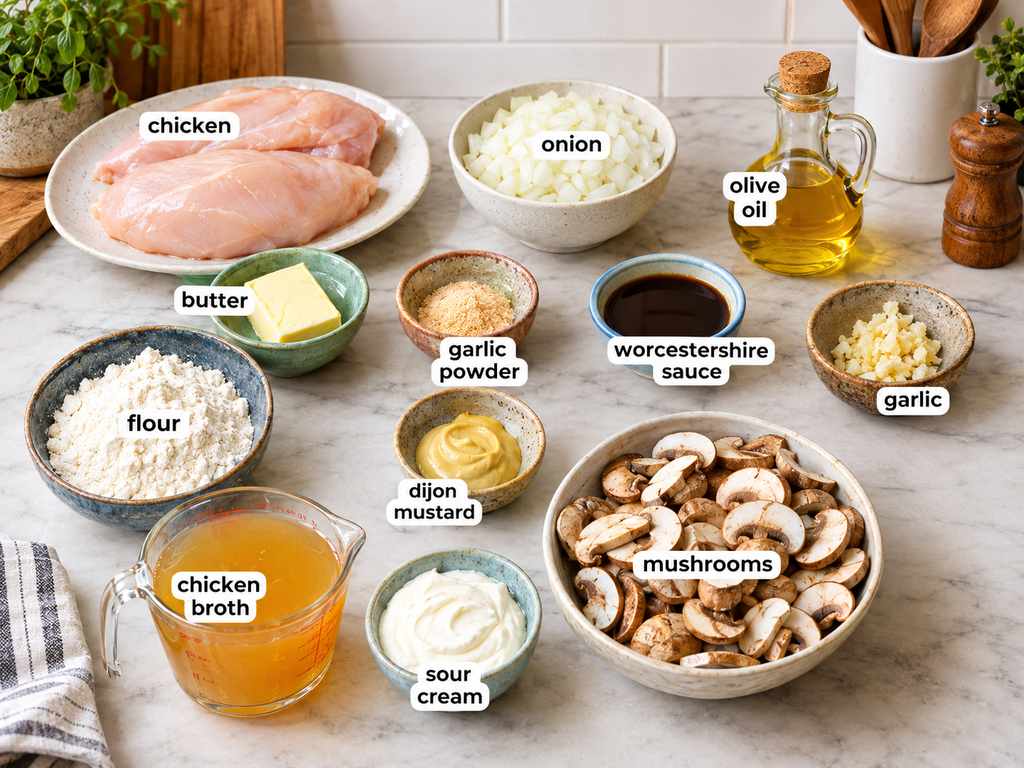
How to Get Golden, Flavorful Chicken
The first important step is seasoning the chicken evenly with garlic powder, salt, and pepper. The seasoning is intentionally simple because the creamy mushroom sauce provides most of the character in this dish. Once seasoned, the chicken goes into a large skillet with olive oil over medium heat. Place the smooth side down first and press the chicken gently with a spatula so that it makes good contact with the hot pan.
Allow the chicken to cook without constantly moving it around. This gives the surface time to develop a golden-brown crust. After about four minutes, turn the chicken and cook the other side for another two minutes. At this point, the chicken does not necessarily need to be completely cooked through because it will return to the skillet later. Remove it to a plate and keep the flavorful juices that collect there.
The browned bits remaining on the bottom of the skillet are especially valuable. These small pieces, sometimes called fond, contain concentrated flavor created during browning. Rather than washing the pan or starting with a clean skillet, use those flavorful bits as the foundation of the Stroganoff sauce. Scraping them into the sauce while cooking the mushrooms and broth gives the finished gravy a much deeper and more satisfying taste.
Building the Creamy Mushroom Sauce
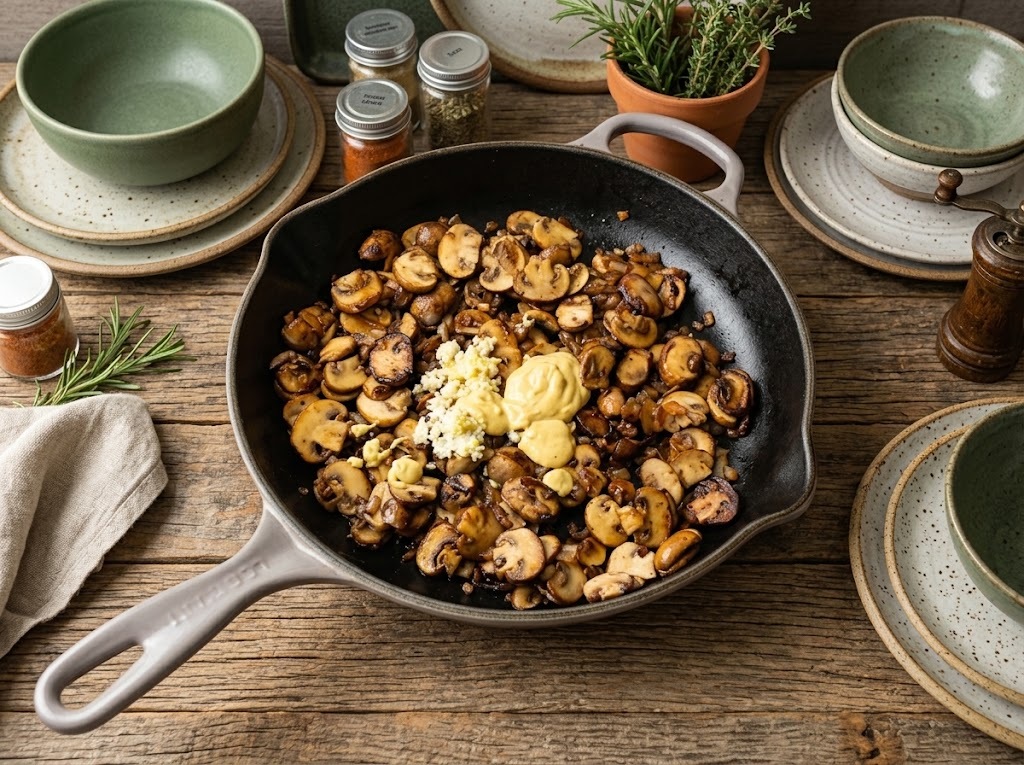
Once the chicken has been removed, increase the heat to medium-high and add the butter. The chopped onion goes into the melted butter first, followed by the sliced mushrooms. Avoid slicing the mushrooms too thin because they can shrink considerably as they cook. Larger slices retain more texture and give the finished Stroganoff a hearty appearance.
Let the mushrooms cook until they become golden. This step is worth taking seriously because pale, lightly cooked mushrooms will not provide the same depth of flavor. As they cook, scrape the bottom of the skillet to loosen the browned chicken and mushroom pieces. Those pieces dissolve into the developing sauce and help transform a basic mushroom gravy into something much richer.
After the mushrooms have browned, sprinkle in the flour and cook it for about one minute while stirring. Flour helps thicken the broth and sour cream mixture, giving the Stroganoff sauce a smooth, spoon-coating consistency. Cooking the flour briefly before adding the liquid also helps remove its raw taste while allowing it to blend naturally with the butter and mushrooms.

Adding the Broth, Mustard, and Sour Cream
The beef broth is added gradually rather than all at once. Pour in half of the broth while stirring, allowing the flour mixture to dissolve smoothly. Once incorporated, add the remaining broth and continue stirring. This method helps prevent lumps and creates a more even gravy. Reduced-salt beef broth is useful because the chicken, butter, mustard, and other ingredients already contribute their own flavors.
Dijon mustard is one of the ingredients that gives Stroganoff its recognizable flavor. It adds a gentle sharpness that balances the richness of the sour cream and butter. The sauce should taste creamy and savory rather than strongly mustardy. Sour cream provides the characteristic tang and creamy texture associated with Stroganoff, while also giving the gravy its lighter appearance.
When the sour cream and mustard are stirred into the hot broth, the mixture may look slightly unusual at first. There is no need to worry if the sour cream appears separated or uneven. As the sauce warms and is stirred, it blends into the gravy. Once everything is incorporated, bring the sauce to a gentle simmer and reduce the heat to medium-low.
Getting the Right Stroganoff Consistency
The sauce should thicken until it reaches approximately the consistency of pouring cream. This usually takes around three minutes after reducing the heat. Keep an eye on the skillet and stir as needed so the sauce does not stick to the bottom. The goal is a creamy gravy that is thick enough to cling to the chicken and noodles without becoming excessively heavy or paste-like.
Seasoning should be adjusted near the end of cooking. Taste the sauce before adding more salt or pepper because the beef broth and Dijon mustard already contain seasoning. If you prefer a stronger pepper flavor, freshly ground black pepper can give the dish a little extra warmth. Once the sauce tastes balanced, return the chicken to the skillet along with any juices that have collected on the plate.
The chicken only needs about one minute in the sauce at this stage. This final step allows the chicken to absorb some of the creamy mushroom gravy while keeping the cooking process short. Once heated through, remove the skillet from the stove. Keeping this final simmer brief is particularly useful when using chicken breast or tenderloin because it reduces the chance of overcooking the meat.
The Best Way to Serve Chicken Stroganoff
Chicken Stroganoff is traditionally served over pasta or egg noodles, and both options work wonderfully with the creamy sauce. The noodles provide a neutral base that allows the mushroom gravy and tender chicken to remain the stars of the meal. Spoon plenty of sauce over the pasta so every serving has a good balance of chicken, mushrooms, onions, and creamy gravy.
For a fresh finishing touch, chopped parsley or chives can be scattered over the top. The herbs are optional, but their fresh flavor provides a pleasant contrast to the rich sauce. They also add color to the finished plate, making this simple skillet dinner look more inviting without requiring extra preparation.
Although the recipe is designed to be served with pasta or egg noodles, the creamy chicken and mushroom mixture can also be enjoyed as the main component of a broader meal. The important thing is to choose a serving base that can hold the sauce. Because the gravy is one of the main attractions of this recipe, foods that allow you to enjoy every spoonful are especially suitable.
Useful Notes for Better Results
For the most flavorful chicken Stroganoff, use a large skillet rather than a small crowded pan. Giving the chicken and mushrooms enough room encourages browning instead of steaming. If the skillet is overcrowded, moisture can collect around the ingredients and prevent them from developing the golden color that contributes so much flavor to the dish.
If using chicken thighs, choose boneless and skinless pieces of reasonably similar size so they cook at a similar rate. Chicken breast and tenderloin are also suitable alternatives, but they are leaner than thighs. Pay close attention to their cooking time and avoid leaving them in the skillet longer than necessary. The final minute in the sauce is enough to bring the cooked chicken back to temperature.
The mushrooms should not be sliced paper-thin. Medium slices give them enough substance to remain noticeable in the sauce. They also develop a better browned surface during cooking. Scraping the skillet as the mushrooms cook is another small but important step because the browned bits contain concentrated flavor that would otherwise be left behind.
Sour cream is essential to the classic Stroganoff character of this dish, while yogurt is listed as an alternative. Whichever option is used, stir it thoroughly into the broth and mustard mixture. The sauce may look slightly separated initially, but gentle heating and stirring help everything come together into a creamy gravy.

Why This Is an Easy Weeknight Dinner
With only five minutes of preparation and around fifteen minutes of cooking, this chicken Stroganoff fits comfortably into a busy evening. There is no complicated marinating process, lengthy oven cooking, or extensive ingredient preparation. The chicken, sauce, and noodles can all be coordinated so that dinner reaches the table while everything is still hot and creamy.
Another advantage is that most of the cooking happens in one skillet. The same pan is used to brown the chicken, cook the mushrooms and onions, and prepare the sauce. This not only concentrates the flavors but also reduces the amount of cleanup afterward. For a quick family dinner, that combination of speed, flavor, and minimal washing-up makes this recipe especially practical.
Chicken Stroganoff is also flexible enough to suit different preferences. Chicken thighs provide the juiciest result, while breast and tenderloin offer leaner alternatives. Pasta or egg noodles can be selected according to personal preference, and parsley or chives can be added when available. Despite these small variations, the essential creamy mushroom and mustard sauce remains the defining feature of the dish.
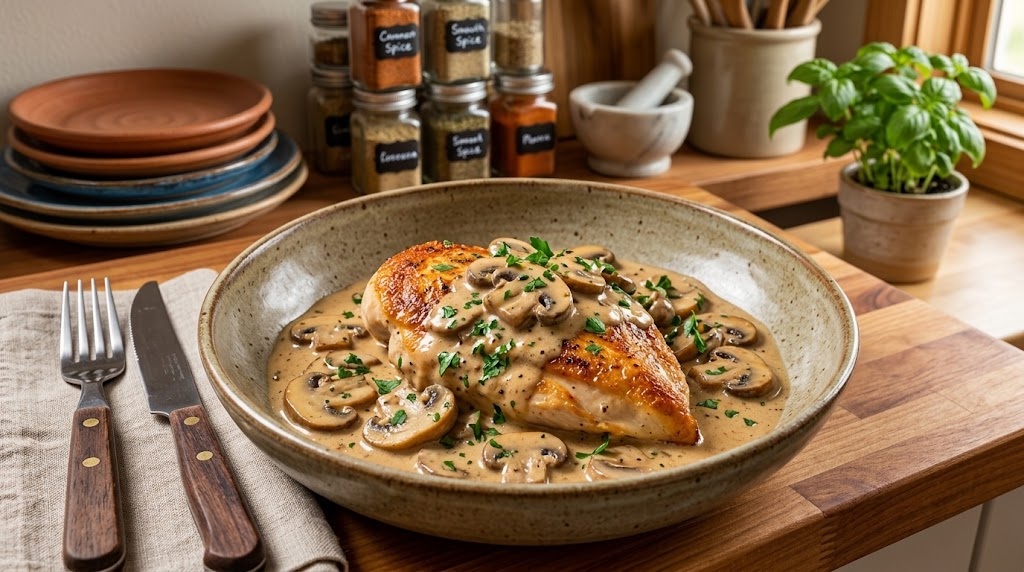
Chicken Stroganoff
Tender golden-seared chicken cooked with onions and mushrooms in a creamy Stroganoff sauce made with beef broth, Dijon mustard, and sour cream.
4
servings5
minutes15
minutes389
kcal20
minutesIngredients
- For the Chicken
600g / 1.2 lb boneless, skinless chicken thighs (4–5), or chicken breast/tenderloin
1 teaspoon garlic powder
Salt and pepper
1 tablespoon olive oil
- For the Gravy
1 large onion, chopped
300g / 10 oz mushrooms, sliced—not too thin
40g / 3 tablespoons butter
2 tablespoons flour
2 cups / 500 ml reduced-salt beef broth or stock
1 tablespoon Dijon mustard
2/3 cup (150g) sour cream or yogurt
Directions
- Season both sides of the chicken thighs with garlic powder, salt, and pepper.
- Heat the olive oil in a large skillet over medium heat. Place the chicken into the hot skillet with the smooth side facing down.
- Press the chicken gently with a spatula to encourage good contact with the pan. Cook for approximately 4 minutes, or until the underside is golden brown.
- Turn the chicken over and press lightly again. Continue cooking for about 2 minutes.
- Increase the skillet heat to medium-high. Add the butter and allow it to melt.
- Add the chopped onion and cook for approximately 1 minute. Add the sliced mushrooms.
- Cook the mushrooms until they become golden. While they cook, scrape the bottom of the skillet to loosen the browned bits left behind by the chicken. These browned pieces add important flavor to the sauce.
- Sprinkle the flour over the mushrooms and onions. Stir continuously and cook for about 1 minute.
- Sprinkle the flour over the mushrooms and onions. Stir continuously and cook for about 1 minute.
- Slowly add half of the beef broth while stirring. Once it has blended into the flour mixture, pour in the remaining broth.
- Add the sour cream and Dijon mustard. Stir until the ingredients are incorporated into the sauce. The sour cream may look slightly separated at first, but it will blend into the gravy as it heats.
- Bring the sauce to a gentle simmer, then lower the heat to medium-low. Continue cooking for approximately 3 minutes, or until the sauce thickens to a pouring-cream consistency.
- Taste the sauce and adjust the salt and pepper as needed.
- Return the chicken to the skillet, including any juices from the plate. Simmer for approximately 1 minute.
- Remove the skillet from the heat.
- Serve the Chicken Stroganoff over cooked pasta or egg noodles. Finish with chopped parsley or chives if desired.
Nutrition Facts
- Total number of serves: 1
- Calories: 389kcal
- Fat: 9g
- Carbohydrates: 8g
- Fiber: 1g
- Sugar: 3g
- Protein: 23g
