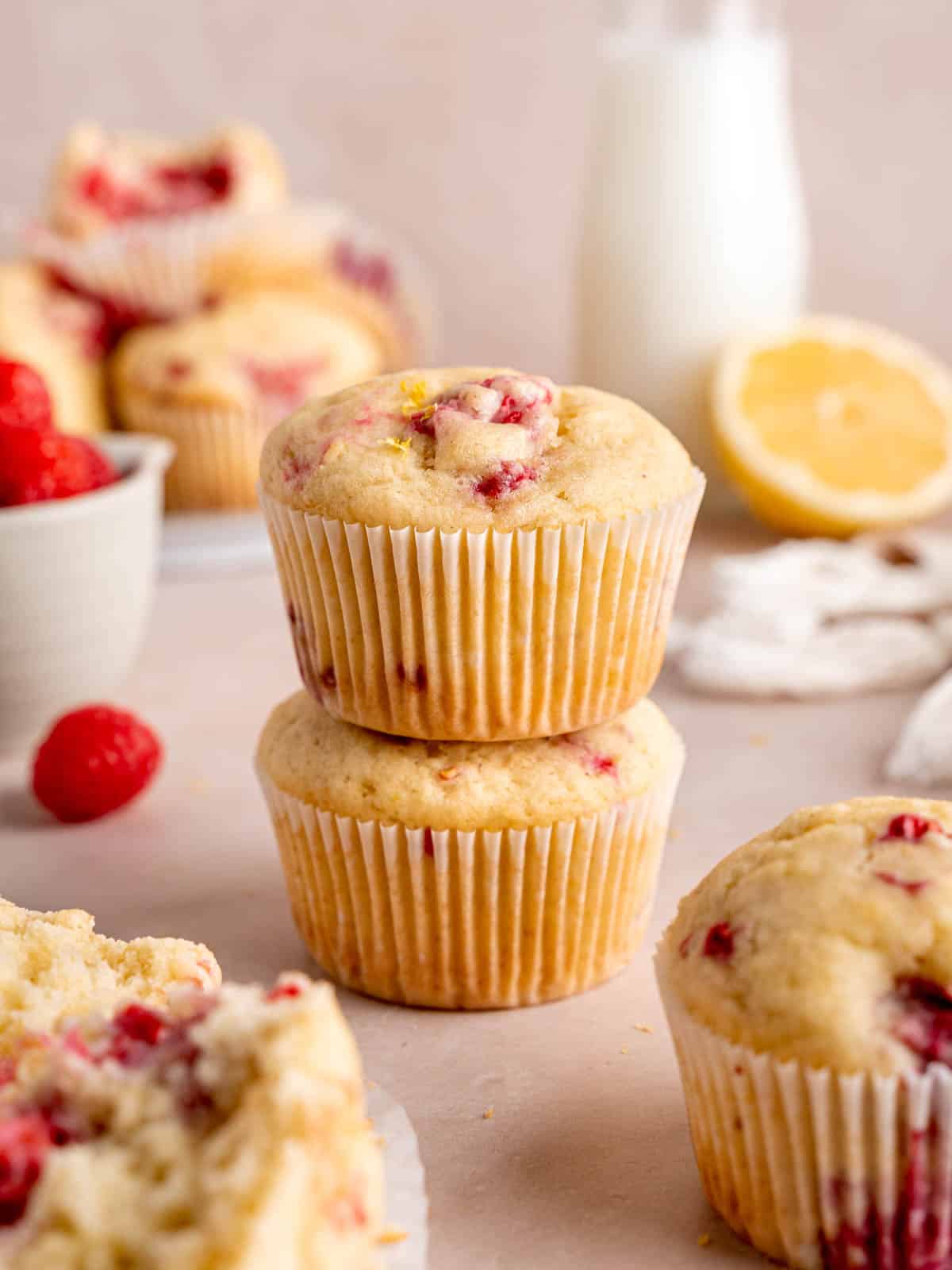
Lemon Raspberry Protein Muffins sit at the intersection of classic bakery tradition and modern functional nutrition design. Muffins themselves originated as a “quick bread” category, meaning they were built to avoid yeast fermentation entirely and instead rely on chemical leavening for instant rise. Over time, muffins evolved from simple household baking items into commercial bakery products, often becoming overly sweet, calorie-dense, and low in protein density.
This recipe reimagines the muffin as a nutritionally structured food system rather than just a sweet baked snack. Instead of focusing only on flavor and softness, it integrates protein behavior, moisture retention physics, and fruit acidity balance to create a muffin that supports satiety, muscle recovery, and sustained energy release while still tasting like a bakery dessert.
The combination of lemon and raspberry is also scientifically intentional in flavor design. Lemon introduces high-volatility aromatic compounds and acidity, while raspberries contribute tart fruit sugars, moisture bursts, and soft texture disruption, preventing flavor monotony.
The result is a muffin that is:
- Soft and fluffy like a bakery muffin
- Bright and aromatic like a citrus dessert
- Juicy and slightly tart from fruit pockets
- High in protein and filling for longer satiety
- Balanced between indulgence and functionality
Chef’s Philosophy & Culinary Framework
The philosophy behind Lemon Raspberry Protein Muffins is:
Protein integration + moisture engineering + flavor polarity balance = functional bakery transformation system
Traditional muffins are built on flour and sugar dominance. This system shifts the structure logic entirely.
Instead of:
- Flour = structure
- Sugar = sweetness
We now use:
- Protein = structural support + satiety
- Fruit acids = flavor activation system
- Controlled fat = moisture stabilization
The key principle is:
“A muffin should not just rise—it should perform nutritionally while it rises structurally.”
This recipe is built on three core design intentions:
- Maintain soft bakery crumb without gluten overload
- Preserve juicy fruit structure without collapse
- Embed protein into texture rather than mixing it in superficially
Core Culinary Systems (Ultra Deep Technical Breakdown)
1. Protein Structural Integration Matrix System
Protein powder behaves very differently from flour. When heated, it:
- Denatures (unfolds structure)
- Re-binds into a gel-like network
- Traps moisture inside matrix
In this recipe, protein is not an addition—it is a co-structural element.
It contributes to:
- Crumb firmness
- Moisture retention
- Bite stability
- Satiety delay effect (slower digestion perception)
If improperly balanced, protein can make baked goods dry or rubbery. This system prevents that by pairing protein with moisture-rich ingredients like yogurt or eggs.
2. Moisture Equilibrium Distribution System
Muffins require extremely precise hydration control because they are:
- Small
- Fast-baked
- Highly sensitive to water imbalance
This system balances moisture across:
- Eggs (internal binding hydration)
- Yogurt or milk (external softness hydration)
- Lemon juice (acidic liquid phase hydration)
- Raspberry juice (fruit burst hydration)
During baking:
- Water evaporates partially
- Some moisture becomes steam lift
- Some remains trapped in crumb structure
This creates a layered moisture profile:
- Soft interior
- Slightly firm crumb structure
- Juicy fruit pockets
3. Acid-Base Leavening Activation System
This recipe uses baking powder as the primary leavening agent, but its performance is enhanced by acidic components:
- Lemon juice
- Yogurt (if used)
- Raspberry acidity
This triggers:
- Carbon dioxide gas production
- Rapid batter expansion
- Air pocket formation
Unlike yeast fermentation, this reaction is immediate and heat-driven, making muffins a fast-rise baked system.
4. Fruit Burst Structural Integrity System
Raspberries are fragile fruit structures composed of multiple small drupelets. When exposed to heat:
- Cell walls break
- Juice releases into batter
- Flavor diffuses into surrounding crumb
If uncontrolled, this can collapse structure. To prevent this:
- Raspberries are lightly coated in flour
- Evenly distributed in batter
- Suspended within thick protein-stabilized matrix
This creates controlled “burst zones” instead of structural failure zones.
5. Lemon Aromatic Volatility System
Lemon flavor exists in two chemically different forms:
- Juice → acidic, reactive liquid component
- Zest → essential oil-based aromatic compound
Zest is more important structurally because:
- It is heat-stable
- It releases aroma during baking
- It does not weaken structure like excess juice
This creates a layered citrus experience:
- Bright acidity (juice)
- Aromatic freshness (zest)
6. Crumb Formation Protein-Starch Hybrid System
Muffin crumb is formed through:
- Egg protein coagulation under heat
- Flour starch gelatinization
- Protein powder gel integration (if used)
Together, these form a hybrid structural matrix that is:
- Soft
- Stable
- Slightly springy
- Non-crumbly
This is what differentiates bakery-style muffins from dense homemade ones.
7. Maillard Browning Dome Formation System
The muffin top dome forms due to:
- Heat expansion at center first
- Surface crust formation later
- Sugar-protein reaction (Maillard reaction)
This produces:
- Golden top surface
- Slight crisp dome edge
- Deep baked aroma notes
Protein presence intensifies browning due to increased amino acid content.
8. Sugar Flavor Modulation and Balance System
Sugar in this recipe is not just sweetness—it functions as:
- Moisture stabilizer
- Browning enhancer
- Flavor buffer between lemon and raspberry acidity
Without sugar balance:
- Lemon becomes too sharp
- Raspberry becomes too tart
- Protein taste becomes noticeable
Sugar smooths all flavor edges into a unified profile.
Difficulty, Timing & Yield
Difficulty Level: Easy–Medium
Preparation Time: 15–20 minutes
Baking Time: 18–22 minutes
Cooling Time: 15 minutes
Total Time: ~50–60 minutes
Yield: 10–12 muffins
Ingredients (Ultra Detailed Functional Breakdown)
Dry Structural System
- 1 1/2 cups flour (all-purpose or oat flour)
- 1/2 cup protein powder (vanilla or neutral)
- 1 teaspoon baking powder
- 1/4 teaspoon baking soda
- Pinch of salt
Function:
- Flour → base structure scaffold
- Protein powder → functional density + satiety
- Baking powder → rise mechanism
- Baking soda → acidity reaction support
- Salt → flavor amplifier
Wet Structural Emulsion System
- 2 large eggs
- 1/2 cup Greek yogurt or milk
- 1/4 cup honey or sweetener
- 1/4 cup melted butter or oil
- 2 tablespoons lemon juice
- Zest of 1–2 lemons
- 1 teaspoon vanilla extract
Function:
- Eggs → binding + structure formation
- Yogurt → moisture + tenderness
- Butter/oil → softness + crumb lubrication
- Lemon juice → acidity activation
- Lemon zest → aromatic oil release
- Vanilla → flavor rounding
Fruit Structural System
- 1 cup raspberries (fresh or frozen)
Function:
- Moisture bursts
- Tart flavor pockets
- Texture contrast
Step-by-Step Method (Ultra Detailed Execution System)
Step 1: Dry System Integration Phase
Mix:
- Flour
- Protein powder
- Baking powder
- Baking soda
- Salt
Ensure even distribution to avoid structural weak zones.
Step 2: Fruit Stabilization Phase
Lightly coat raspberries in flour.
This prevents:
- Sinking
- Excess juice pooling
- Structural collapse
Step 3: Wet Emulsion Phase
Whisk together:
- Eggs
- Yogurt or milk
- Butter/oil
- Lemon juice
- Lemon zest
- Vanilla
- Sweetener
Mix until smooth and fully emulsified.
Step 4: Batter Formation Phase
Combine wet and dry mixtures.
Mix gently until just combined.
Do NOT overmix.
Overmixing causes:
- Dense texture
- Protein toughness
- Reduced rise
Step 5: Fruit Folding Phase
Gently fold raspberries into batter.
Maintain fruit integrity and even distribution.
Step 6: Portioning Phase
Fill muffin tray 75–85% full.
This allows controlled dome expansion.
Step 7: Baking Phase
Bake at 175–180°C for 18–22 minutes.
During baking:
- Batter rises rapidly
- Protein sets structure
- Fruit releases controlled juice
- Dome browns and stabilizes
Step 8: Cooling Stabilization Phase
Cool for 10–15 minutes.
This ensures:
- Internal structure stabilizes
- Moisture redistributes evenly
- Muffins firm up without drying
Texture & Flavor Profile
Perfect Lemon Raspberry Protein Muffins deliver:
- Soft, airy bakery crumb
- Bright lemon aroma lift
- Juicy raspberry bursts
- Light tangy sweetness balance
- Slight golden muffin dome crust
Advanced Variations
Double Lemon Protein Muffins
- Extra lemon zest and juice
Stronger citrus profile.
High Fiber Version
- Add chia or flax seeds
Improves digestion and texture density.
Lemon Glaze Protein Muffins
- Lemon + yogurt glaze on top
Adds bakery-style finish.
Chocolate Raspberry Protein Muffins
- Add cocoa powder
Creates dessert hybrid version.
Advanced Tips
- Do not overmix batter
- Always coat berries lightly
- Use fresh lemon zest for aroma power
- Avoid overbaking to maintain softness
- Let muffins rest before eating
Common Mistakes & Fixes
Dry Texture
Cause:
Too much protein or overbaking
Fix:
Reduce bake time or add more moisture
Dense Muffins
Cause:
Overmixing batter
Fix:
Mix only until ingredients combine
Soggy Center
Cause:
Excess fruit moisture
Fix:
Coat berries properly and balance flour
Collapsed Tops
Cause:
Weak leavening or underbaking
Fix:
Use fresh baking powder and proper oven temp
Storage & Reheating
- Store up to 3 days at room temperature
- Refrigerate for longer shelf life
- Warm slightly before serving for softness
Serving Suggestions
Serve with:
- Greek yogurt
- Protein shake
- Honey drizzle
- Coffee or tea
When protein is structurally integrated into baking systems, muffins stop being just snacks and become functional nutritional architecture.
