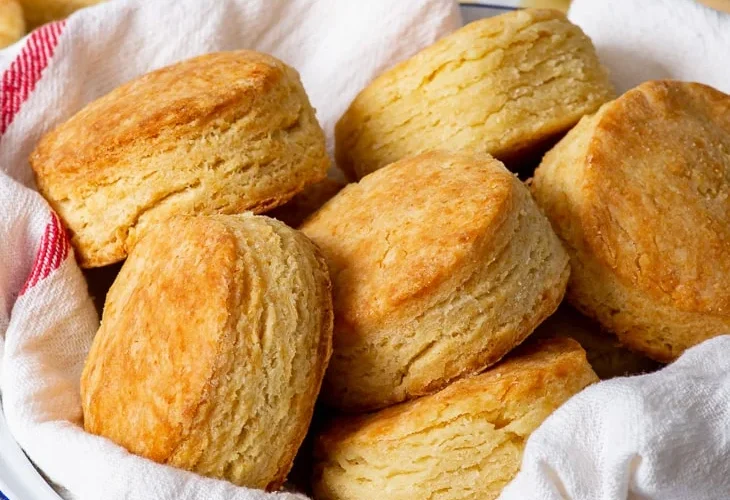
Buttermilk Biscuits – Recipe
Introduction & Background
Buttermilk Biscuits are one of the most iconic baked goods in American comfort food history, especially rooted in Southern cooking traditions. Unlike yeast breads that depend on fermentation, biscuits rely on chemical leavening and fat layering systems to create their signature height, flakiness, and soft interior.
Historically, biscuits evolved as a quick bread solution—made in homes where time, fuel, and ingredients were limited. Instead of waiting for dough to rise, bakers used baking powder or baking soda combined with acidic buttermilk to create instant lift. This made biscuits fast, reliable, and deeply adaptable across generations.
Buttermilk itself was originally a byproduct of butter churning. Over time, it became a key baking ingredient due to its acidity, tenderness effect on dough, and ability to activate leavening agents.
Modern Buttermilk Biscuits are not just simple bread—they are a layered fat-and-flour structure system designed for controlled flakiness and internal steam expansion.
Chef’s Philosophy & Culinary Framework
The philosophy behind Buttermilk Biscuits is:
Layered fat distribution + acidic activation + steam expansion = structured flakiness without yeast
Unlike yeast bread, biscuits do not build structure over time. Instead, they rely on instant transformation during baking.
The core idea is:
“Flakiness is not mixed in—it is layered and released under heat.”
This recipe is built around three essential principles:
- Cold fat creates layers
- Acidic liquid activates rise
- Heat converts moisture into steam lift
Together, these systems create tall, tender, flaky biscuits.
Core Culinary Systems (Ultra Deep Technical Breakdown)
1. Fat Lamination Layer System
The most important structural element in biscuits is fat distribution.
Cold butter is cut into flour so that:
- Small fat pockets remain intact
- Flour coats fat particles
- Layers form inside dough
During baking:
- Butter melts
- Steam is released
- Layers separate and lift
This creates flaky texture without rolling or folding like pastry.
2. Acid-Base Leavening Activation System
Buttermilk plays a chemical role, not just a flavor role.
It contains lactic acid which reacts with:
- Baking powder
- Baking soda (if used)
This reaction produces:
- Carbon dioxide gas
- Instant rise during baking
Unlike yeast, this happens immediately under heat.
3. Steam Expansion Lift System
Biscuits rise primarily through steam.
Inside dough:
- Butter melts → creates vapor pockets
- Buttermilk moisture heats → expands rapidly
- Air pockets enlarge under heat
This creates vertical lift and soft interior structure.
4. Gluten Control Tenderization System
Unlike bread, biscuits must NOT develop strong gluten.
This is controlled by:
- Minimal mixing
- Cold fat coating flour proteins
- Acid in buttermilk weakening gluten formation
Result:
- Soft bite
- Tender crumb
- No chewiness like bread
5. Starch Gelatinization Structure Lock System
During baking:
- Starch absorbs moisture
- Swells and sets structure
- Interior becomes soft but stable
This locks biscuit shape permanently after cooling.
6. Browning Maillard Crust System
The top crust forms through:
- Protein + sugar + heat interaction
- Surface dehydration
- Butter caramelization
This produces:
- Golden brown tops
- Slight crisp exterior
- Rich baked aroma
7. Dough Temperature Sensitivity System
Biscuits are extremely temperature sensitive.
Cold ingredients ensure:
- Butter stays solid before baking
- Layers remain intact
- Steam release is controlled
Warm dough leads to:
- Flat biscuits
- Lost flakiness
- Dense texture
Difficulty, Timing & Yield
Difficulty Level: Medium
Preparation Time: 15–20 minutes
Baking Time: 12–18 minutes
Total Time: ~30–40 minutes
Yield: 8–10 biscuits
Ingredients (Ultra Detailed Functional Breakdown)
Flour Structure Base System
- 2 cups all-purpose flour
Function:
- Primary structure provider
- Gluten base (kept minimal)
- Supports layering system
Fat Lamination System
- 1/2 cup cold unsalted butter (cubed)
Function:
- Creates flaky layers
- Produces steam pockets
- Adds richness and flavor
Must remain cold for proper structure formation.
Leavening System
- 1 tablespoon baking powder
- 1/2 teaspoon baking soda (optional, for stronger rise)
Function:
- Produces gas expansion
- Creates lift during baking
Acidic Moisture System
- 3/4 to 1 cup cold buttermilk
Function:
- Activates leavening agents
- Tenderizes gluten
- Adds slight tangy flavor
Flavor Balance System
- 1 teaspoon salt
Function:
- Enhances flavor
- Controls fermentation reaction balance
Step-by-Step Method (Ultra Detailed Execution System)
Step 1: Dry Base Formation Phase
Combine:
- Flour
- Baking powder
- Baking soda
- Salt
Mix evenly.
This ensures uniform leavening distribution.
Step 2: Fat Integration Phase (Critical Step)
Add cold butter cubes into flour.
Use fingertips or pastry cutter to:
- Break butter into small pieces
- Coat with flour
- Maintain visible fat chunks
Texture should resemble coarse crumbs.
This is where layering begins.
Step 3: Liquid Activation Phase
Slowly pour cold buttermilk into mixture.
Mix gently until dough just comes together.
Do NOT overmix.
Overmixing leads to:
- Gluten development
- Dense biscuits
- Loss of flakiness
Step 4: Dough Folding Phase
Lightly fold dough 2–3 times.
This creates:
- Additional layers
- Improved structure
- Better rise potential
Step 5: Shaping Phase
Pat dough gently into a thick sheet.
Cut biscuits using round cutter or glass.
Do not twist cutter—this seals edges and prevents rising.
Step 6: Tray Arrangement Phase
Place biscuits close together on baking tray.
This helps:
- Side support for rise
- Taller biscuits
- Softer edges
Step 7: Baking Phase
Bake at 200–220°C for 12–18 minutes.
During baking:
- Butter melts → steam forms
- Gas expands → biscuits rise
- Surface browns → crust develops
Biscuits should be golden on top.
Step 8: Cooling Phase
Let rest for 5–10 minutes.
This stabilizes:
- Internal steam
- Structural firmness
- Moist crumb
Texture & Flavor Profile
Perfect Buttermilk Biscuits deliver:
- Tall, layered structure
- Soft, fluffy interior
- Slightly flaky crumb
- Buttery richness
- Mild tangy undertone
Advanced Variations
Cheddar Buttermilk Biscuits
- Add shredded cheese
Creates savory richness.
Garlic Herb Biscuits
- Add garlic powder + herbs
Aromatic savory version.
Honey Butter Biscuits
- Brush with honey butter after baking
Sweet glaze finish.
Flaky Layer Biscuits
- Add extra folding steps
Creates more defined layers.
Advanced Tips
- Always use cold butter and cold buttermilk
- Do not overmix dough
- Handle as little as possible
- Cut straight down without twisting
- Bake immediately after shaping
Common Mistakes & Fixes
Flat Biscuits
Cause:
Warm butter or overmixing
Fix:
Keep ingredients cold and handle gently
Tough Texture
Cause:
Overworking dough
Fix:
Mix only until combined
Dry Biscuits
Cause:
Too much flour or overbaking
Fix:
Adjust hydration and reduce bake time
No Rise
Cause:
Old baking powder
Fix:
Use fresh leavening agents
Storage & Reheating
- Best eaten fresh
- Store 1–2 days in airtight container
- Reheat in oven for crisp edges
Serving Suggestions
Serve with:
- Butter
- Honey or jam
- Gravy (classic pairing)
- Eggs and breakfast meats
- Soups and stews
Final Thoughts
Buttermilk Biscuits represent a perfect example of non-yeast baking science where fat layering, acid activation, and steam expansion replace fermentation entirely.
They deliver:
- Soft, fluffy interior
- Golden flaky crust
- Rich buttery flavor
- Quick, reliable rise
At their core, they prove:
When gluten development is minimized and fat is layered correctly, structure is created not through kneading—but through heat-driven transformation.
