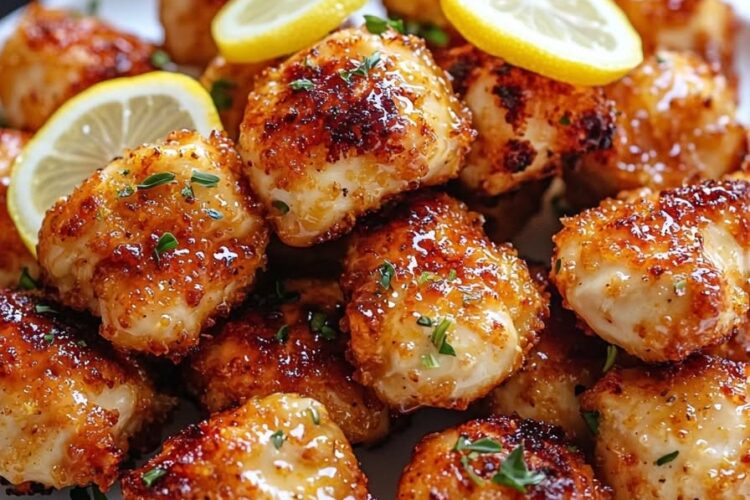
Tasty Lemon Garlic Chicken Bites – Recipe
Introduction & Background
Lemon Garlic Chicken Bites are a high-protein, flavor-forward dish designed around speed, simplicity, and maximum taste efficiency. This type of recipe is heavily influenced by Mediterranean home cooking, where basic pantry ingredients like lemon, garlic, olive oil, herbs, and salt are used to create deeply satisfying meals without complicated techniques or long cooking times.
What makes this dish especially popular in modern cooking is its adaptability. It can be cooked in a pan, oven, or air fryer, and it works equally well as a main dish, meal prep protein, or even a wrap filling. The chicken is cut into small bite-sized cubes, which is not just for convenience but for scientific cooking reasons—smaller pieces mean faster heat penetration, more surface area for seasoning, and better control over juiciness.
The lemon element provides brightness and acidity, which cuts through the richness of chicken, while garlic adds a deep aromatic base. Together, they create a flavor profile that feels fresh, savory, slightly tangy, and extremely addictive when balanced correctly.
This dish is also widely used in fitness-based meal plans because it is:
- High in protein
- Low in carbohydrates
- Easy to portion control
- Fast to cook and repeat daily
Chef’s Philosophy & Cooking Logic
This recipe is built on a core principle:
Small cuts of protein allow precision control over moisture, flavor, and texture.
When chicken is cooked in large pieces, heat takes longer to reach the center, which increases the risk of drying the outside before the inside is done. But when cut into bites, every piece cooks evenly and quickly, locking in juices before they escape.
The flavor system is also intentionally layered:
- Lemon works as both a flavor and tenderizer
- Garlic provides aromatic depth
- Oil ensures heat transfer and moisture retention
- Salt enhances natural meat flavor instead of masking it
The goal is not to overload the chicken but to enhance its natural profile while adding controlled intensity.
Core Culinary Systems (Deep Breakdown)
1. Protein Heat Response System
Chicken protein reacts quickly to heat. As temperature increases:
- Proteins tighten
- Moisture begins to escape
- Structure becomes firm
If overcooked:
- Fibers become dry
- Texture turns rubbery
- Juiciness is lost
The goal is to stop cooking at the exact point where:
- Protein is fully set
- But internal moisture is still retained
This is the key difference between dry chicken and juicy chicken bites.
2. Acid Tenderization System (Lemon Function)
Lemon juice plays a dual role:
- Flavor enhancement
- Mild protein breakdown
Acidity helps soften the outer layer of chicken slightly, allowing:
- Faster seasoning absorption
- Improved tenderness
- Brighter overall taste
However, excessive marination can break down protein too much, leading to mushy texture. Timing control is important.
3. Aromatic Infusion System (Garlic Function)
Garlic is not just seasoning—it is a heat-activated aroma system.
When cooked:
- Raw sharpness reduces
- Sweet, roasted notes develop
- Aroma spreads through oil and meat surface
Proper garlic distribution ensures every bite carries consistent flavor depth.
4. Moisture Retention System
Chicken naturally loses moisture during cooking. To prevent dryness:
- Oil coats the surface
- High heat is used briefly to seal exterior
- Cooking time is kept short and controlled
This creates a protective layer that traps internal juices.
5. Surface Browning System
Light browning is essential for flavor development. This is where:
- Maillard reaction occurs
- Natural sugars and proteins interact
- Deep savory flavor is formed
Air fryer or pan heat helps create slightly crisp edges while keeping the inside juicy.
Difficulty, Timing & Yield
Difficulty Level: Easy–Medium
Preparation Time: 15–20 minutes
Marination Time: 15–45 minutes (optional but recommended)
Cooking Time: 10–15 minutes
Total Time: ~40–60 minutes
Servings: 2–4 portions
Ingredients (Fully Expanded Functional Breakdown)
Main Protein System
- 500g boneless chicken breast or thighs (cut into even bite-sized cubes)
Function:
- Primary protein structure
- Absorbs marinade
- Provides bite texture
Thigh meat gives juicier results, breast gives leaner nutrition profile.
Lemon System (Acid + Brightness Layer)
- 2–3 tablespoons fresh lemon juice
- 1 tablespoon lemon zest
Function:
- Adds freshness
- Slightly tenderizes chicken
- Enhances aroma
Zest provides stronger citrus oil flavor than juice alone.
Garlic Aromatic System
- 4–6 garlic cloves (minced or finely grated)
Function:
- Builds savory depth
- Infuses oil base
- Enhances overall aroma
Fresh garlic is stronger than powdered versions.
Oil Moisture System
- 2–3 tablespoons olive oil
Function:
- Prevents dryness
- Helps browning
- Carries seasoning evenly
Oil is essential for texture control.
Seasoning System
- Salt (to taste)
- Black pepper
- 1 teaspoon paprika
- 1/2 teaspoon chili flakes (optional)
- 1 teaspoon dried oregano or Italian herbs
Function:
- Builds layered spice profile
- Balances acidity
- Enhances chicken flavor
Optional Crisp Enhancement System
- 1 teaspoon cornstarch
Function:
- Light crisp exterior
- Better browning in air fryer or pan
Step-by-Step Method (Deep Execution System)
Step 1: Chicken Cutting Phase
Cut chicken into evenly sized cubes.
Key rules:
- Same size pieces ensure even cooking
- Excess water should be removed with paper towel
- Clean surface improves marinade adhesion
This step defines final texture consistency.
Step 2: Marinade Construction Phase
In a bowl, combine:
- Lemon juice
- Lemon zest
- Garlic
- Olive oil
- Salt
- Pepper
- Paprika
- Herbs
Mix until fully emulsified.
This creates a flavor coating system for chicken.
Step 3: Marination Phase
Add chicken pieces into marinade.
Mix thoroughly so every piece is coated.
Rest for:
- 15–45 minutes
During this time:
- Lemon penetrates surface
- Garlic infuses aroma
- Oil locks moisture inside
Do not over-marinate to avoid texture breakdown.
Step 4: Air Fryer Cooking Phase (Primary Method)
Preheat air fryer to:
190°C
Place chicken in a single layer.
Cook for:
10–12 minutes
Shake basket halfway through.
During cooking:
- Exterior browns slightly
- Interior cooks evenly
- Juices lock inside protein structure
Alternative Pan Cooking Method
Heat pan with light oil.
Cook chicken on medium-high heat for:
- 8–10 minutes
Stir frequently for even browning.
Step 5: Final Rest Phase
Let chicken rest for 2–3 minutes.
This allows:
- Juices to redistribute
- Texture to stabilize
- Flavor intensity to settle
Texture & Flavor Profile
A perfectly cooked batch will have:
- Juicy interior with clean bite
- Light golden exterior edges
- Strong lemon-garlic aroma
- Balanced savory and citrus flavor
- Slight crispness on surface
Each bite should feel bright, tender, and satisfying.
Advanced Chef Techniques
- Use chicken thighs for higher juiciness
- Add lemon zest after cooking for stronger aroma
- Do not overcrowd air fryer basket
- Lightly dust with cornstarch for crisp finish
- Add butter at the end for richness boost
- Serve immediately for best texture
Common Mistakes & Fixes
Dry Chicken
Cause:
Overcooking or high heat
Fix:
Reduce cooking time by 1–2 minutes
Too Sour Flavor
Cause:
Excess lemon or long marination
Fix:
Balance with oil or reduce acidity
Weak Flavor
Cause:
Insufficient seasoning
Fix:
Increase garlic and herbs
Rubbery Texture
Cause:
Overcooking or uneven heat
Fix:
Use uniform pieces and controlled timing
Storage & Reheating System
- Refrigerate up to 3 days
- Reheat in air fryer for 2–3 minutes
- Avoid microwave (dries chicken)
- Best consumed fresh
Serving Suggestions
Lemon Garlic Chicken Bites pair well with:
- Rice bowls or garlic butter rice
- Pasta dishes
- Wraps and pita bread
- Salad bowls
- Yogurt or garlic sauce dips
Final Thoughts
Lemon Garlic Chicken Bites are a perfect example of how simple ingredients, when treated with proper technique and timing, can produce restaurant-level results at home.
They deliver:
- High protein, low complexity meal
- Bright citrus flavor balanced with garlic depth
- Juicy interior with lightly crisp exterior
- Fast preparation suitable for daily cooking
It is a dish that proves cooking excellence comes not from complexity, but from control, balance, and understanding how ingredients behave under heat.
