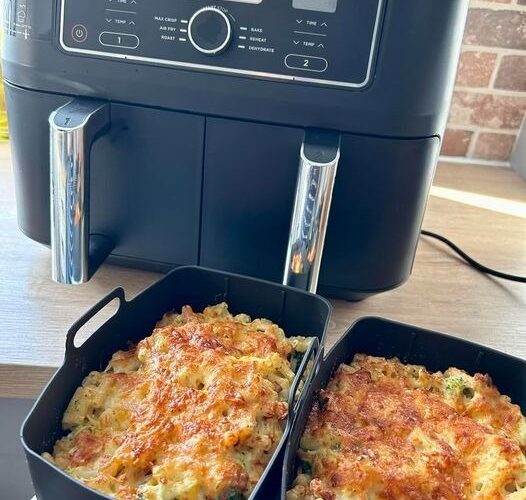
Macaroni Cheese – Recipe
Introduction & Background
Macaroni Cheese is one of the most universally recognized comfort dishes, yet behind its simplicity lies a deeply technical and historically rich culinary system. While many associate it with American home cooking, its roots stretch back to early European pasta traditions, particularly in Italy, where pasta and cheese combinations were common, and later in France, where the development of béchamel sauce introduced a new level of refinement.
In England, baked pasta with cheese became a structured dish, eventually evolving into what we now recognize as modern mac and cheese. When it reached North America, it transformed further into a staple comfort food, ranging from simple stovetop versions to elaborate baked casseroles.
At its highest level, macaroni cheese is not just “pasta with cheese.” It is a controlled emulsion-based sauce system combined with starch absorption and thermal finishing techniques.
The goal is to create a dish that achieves perfect balance between:
- Creaminess and structure
- Richness and lightness
- Softness and texture contrast
- Simplicity and depth of flavor
Chef’s Philosophy & Advanced Culinary Framework
To master macaroni cheese, you must shift your perspective from casual cooking to structured culinary thinking.
This dish operates on three interconnected systems:
- Sauce Emulsion System
- Pasta Absorption System
- Thermal Finishing System
Each system must be executed correctly, or the final result will fail in texture, flavor, or stability.
1. Sauce Emulsion System (The Core of the Dish)
A proper macaroni cheese sauce is an emulsion, meaning it is a stable mixture of fat, liquid, and protein.
This is achieved through three stages:
- Roux formation (butter + flour)
- Milk integration (creating béchamel)
- Cheese incorporation (forming cheese sauce)
If any stage is mishandled, the sauce will:
- Separate into oil and solids
- Become grainy
- Lose its smooth texture
The objective is to create a silky, cohesive sauce that coats pasta evenly without breaking.
2. Pasta Absorption System
Pasta is not just a passive ingredient. It actively interacts with the sauce.
During cooking:
- Pasta absorbs water
- Releases starch
- Later absorbs sauce
If pasta is overcooked initially, it will:
- Become mushy
- Lose structure
- Fail to hold sauce properly
If undercooked correctly (al dente), it will:
- Absorb sauce gradually
- Maintain bite
- Improve overall texture
3. Thermal Finishing System
Macaroni cheese can be finished in two ways:
- Stovetop (creamy and soft)
- Oven-baked (structured with crispy top)
The oven introduces:
- Moisture evaporation
- Surface browning
- Flavor concentration
This creates the classic contrast between creamy interior and golden crust.
Difficulty, Timing & Yield
Difficulty Level: Medium
Preparation Time: 20–25 minutes
Cooking Time: 25–30 minutes
Total Time: ~50–60 minutes
Servings: 4–6 portions
Ingredients (Comprehensive Breakdown)
Pasta Structure System
- 2 cups macaroni (elbow pasta preferred)
This provides:
- Shape for sauce adhesion
- Hollow structure for sauce capture
- Balanced bite texture
Roux Foundation System
- 4 tablespoons butter
- 4 tablespoons flour
This is the structural base of the sauce.
Functions include:
- Thickening liquid
- Stabilizing fat and water
- Creating smooth texture foundation
Dairy Integration System
- 2 to 2.5 cups milk (warm)
Milk determines:
- Creaminess level
- Sauce viscosity
- Smoothness
Warm milk integrates more easily and prevents lumps.
Cheese System (Flavor + Texture Core)
- 2 to 3 cups shredded cheese (cheddar base recommended)
Optional blends:
- Mozzarella for stretch
- Parmesan for sharpness
- Gouda for depth
Cheese provides:
- Fat for richness
- Protein for structure
- Flavor intensity
Seasoning System
- Salt
- Black pepper
- Optional paprika
- Optional mustard powder
These enhance:
- Flavor balance
- Depth
- Complexity
Optional Topping System
- Breadcrumbs
- Butter
- Extra cheese
Used for:
- Texture contrast
- Crisp surface formation
- Visual appeal
Step-by-Step Method
Step 1: Pasta Cooking Phase
Boil water with salt.
Add macaroni and cook until slightly underdone.
This ensures:
- Pasta retains structure
- Prevents over-softening later
- Allows absorption of sauce
Drain and set aside.
Step 2: Roux Formation Phase
Melt butter in a pan over medium heat.
Add flour and stir continuously.
Cook for 2–3 minutes.
During this phase:
- Flour absorbs fat
- Raw flour taste is removed
- Base thickening structure forms
The mixture should be smooth and slightly golden.
Step 3: Milk Integration Phase
Gradually add warm milk while whisking continuously.
This step must be slow and controlled.
Results:
- Smooth, lump-free sauce
- Even thickening
- Creamy base formation
Cook until sauce thickens enough to coat the back of a spoon.
Step 4: Cheese Emulsion Phase
Reduce heat to low or remove pan from heat.
Add shredded cheese gradually.
Stir gently until fully melted.
This prevents:
- Protein separation
- Oil release
- Grainy texture
The sauce should now be:
- Smooth
- Glossy
- Rich
Step 5: Pasta Integration Phase
Add cooked macaroni to sauce.
Mix thoroughly.
During this stage:
- Pasta absorbs sauce
- Starch interacts with cheese
- Texture becomes cohesive
Step 6: Baking Phase (Optional Advanced Layer)
Transfer mixture to baking dish.
Add topping layer.
Bake at 180°C for 20 minutes.
During baking:
- Surface moisture evaporates
- Cheese browns
- Crust forms
This creates a structured top layer.
Step 7: Resting Phase
Let dish rest for 5–10 minutes.
This allows:
- Sauce thickening
- Flavor settling
- Easier serving
Advanced Chef Techniques
- Use freshly grated cheese for best melt quality
- Add a small amount of pasta water for silkiness
- Control heat carefully during cheese stage
- Layer cheeses for complex flavor
- Use oven finishing for premium texture contrast
Common Mistakes & Technical Failures
Grainy or Oily Sauce
Cause:
Overheating cheese or adding it too quickly
Solution:
Add cheese off heat and slowly
Runny Sauce
Cause:
Insufficient roux or excess milk
Solution:
Cook longer or increase cheese
Dry Final Dish
Cause:
Overbaking or low sauce ratio
Solution:
Increase liquid content
Mushy Pasta
Cause:
Overcooking in boiling stage
Solution:
Cook pasta al dente
Storage & Reheating System
- Refrigerate up to 3 days
- Reheat with added milk
- Avoid high heat reheating
- Freeze possible but texture slightly changes
Serving Applications
Macaroni cheese can function as:
- Main comfort dish
- Side for grilled meats
- Base for loaded dishes
- Baked casserole centerpiece
Final Thoughts
Macaroni Cheese, when approached with proper technique, becomes more than comfort food—it becomes a fully engineered culinary system built on emulsification, starch interaction, and controlled heat application.
A perfectly executed version delivers:
- Smooth, velvety sauce
- Balanced richness without heaviness
- Structured yet creamy texture
- Deep, layered cheese flavor
- Optional crispy contrast
It demonstrates that even the simplest ingredients can produce a highly refined dish when guided by precision, patience, and understanding of cooking science.
