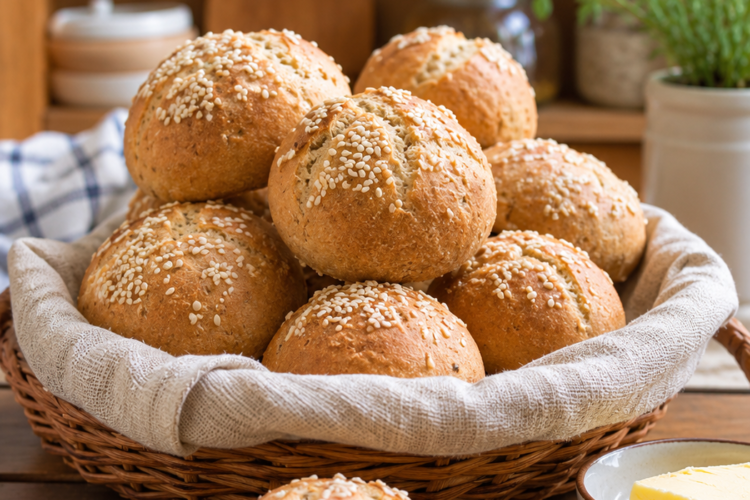
Giving up traditional bread does not mean giving up the comfort of a warm, freshly baked bun. These easy keto buns are designed for anyone following a low-carb or ketogenic eating plan who still wants something that feels like real bread.
They have a light interior, a pleasantly firm crust, and a mild flavor that works beautifully with burgers, sandwiches, breakfast fillings, or simply a little butter. Best of all, these homemade keto buns can be prepared and baked in about 30 minutes.
The texture is one of the most appealing things about this recipe. Many low-carb bread recipes can become heavy, dense, or overly moist, but the combination of almond flour, coconut flour, and psyllium husk helps create a more bread-like consistency.
The egg whites contribute structure while the whole egg adds richness without making the finished buns taste strongly of egg. Hot water brings the dough together and helps the grain-free flours absorb enough moisture to form workable buns.
Why These Keto Buns Work So Well
Traditional bread depends heavily on wheat flour and gluten to create its familiar elasticity and structure. Since those ingredients are not used here, the recipe relies on a different combination of ingredients to produce a satisfying bread substitute. Almond flour provides body and a subtle nutty flavor, while coconut flour absorbs moisture efficiently. Psyllium husk powder is especially useful because it helps bind the dough and gives the buns a more cohesive, bread-like texture.
Another advantage is the relatively quick preparation. There is no yeast proofing, long resting period, or complicated shaping technique. Once the ingredients are blended into a smooth mixture, the dough only needs a short resting period before it can be divided into portions. Wetting your hands before shaping makes the dough considerably easier to handle. After that, the buns simply go onto a parchment-lined baking sheet and into a preheated oven.
Almond Flour and Coconut Flour in Keto Baking
Almond flour and coconut flour behave very differently, which is why the proportions in this recipe are important. Almond flour adds substance and helps keep the buns tender, while coconut flour absorbs liquid and prevents the mixture from remaining excessively wet. Because coconut flour is highly absorbent, even a relatively small quantity can have a noticeable effect on the final dough.
It is best not to make casual substitutions between these two flours. Replacing coconut flour with almond flour in the same quantity, for example, would change the moisture balance considerably. Likewise, adding too much coconut flour could make the buns dry or crumbly. For the most reliable results, measure the ingredients accurately, preferably with a kitchen scale when weights are provided.
The Role of Psyllium Husk
Psyllium husk powder is an important ingredient in many successful low-carb bread recipes. It helps absorb moisture and gives the dough greater structure, which is particularly valuable when wheat flour and gluten are absent. As the mixture rests, the psyllium and low-carb flours absorb some of the liquid, allowing the batter to become firm enough to shape.
Both psyllium husk powder and whole psyllium husks are included in the original recipe with different measurements. If using the whole husks rather than powder, follow the stated quantity rather than converting the amount yourself. Psyllium products can vary in texture and absorbency, so the appearance of the dough is also a useful guide. The finished mixture should be firm enough to shape into buns without spreading like a liquid batter.
How to Make Homemade Keto Buns
Start by heating the oven to 180°C / 356°F. Preparing the oven before mixing the dough means the buns can go straight into a properly heated environment once they are shaped. Line a baking sheet with parchment paper so the buns are easy to remove after baking and the cleanup is minimal.
Combine the dry ingredients first. Place the almond flour, coconut flour, psyllium husk, baking powder, and sea salt together. Add the eggs and hot water, then blend the mixture in a food processor or with an electric blender until it becomes smooth. The original method calls for roughly 20 seconds of mixing, which is enough to combine everything without unnecessarily working the dough.
Avoid over-mixing. The goal is simply to create an evenly combined mixture rather than continuously processing it. Once the dough looks smooth, allow it to rest for a couple of minutes. This short pause is useful because the coconut flour and psyllium husk need a little time to absorb the available moisture. The mixture should become easier to shape after resting.
Divide the dough into four equal portions. Wet your hands before handling each portion because the mixture can be sticky. Shape each portion into a rounded bun and place them on the prepared baking sheet. If desired, sprinkle sesame seeds or another suitable seed over the tops. A shallow criss-cross cut on each bun gives them a traditional bread-roll appearance and also creates an attractive surface after baking.
Bake for approximately 25 minutes, or until the buns have developed a nicely browned exterior. The exact baking time can vary slightly depending on the oven and the size of the buns. Keep an eye on them toward the end of baking. If they become sufficiently brown before the full baking time has passed, loosely cover them with aluminum foil to protect the surface from excessive browning.
Getting the Best Texture
For light and airy keto buns, the consistency of the dough matters. It should be firm enough to form into four individual portions, but it should not be so dry that it becomes difficult to shape. If the mixture is too liquid after resting, add a little more almond flour and coconut flour until it reaches a workable consistency. Make adjustments gradually rather than adding a large amount at once.
Egg size can also affect the consistency. The original recipe was tested using medium eggs. If large eggs are used, the additional moisture can make the mixture looser. In that situation, approximately two additional tablespoons of almond flour may be needed. This is one reason measuring ingredients accurately and paying attention to the dough’s texture can make a meaningful difference.
Serving Ideas for Low-Carb Buns
These keto buns are versatile enough to use in several different meals. Slice one horizontally and fill it with cooked meat, cheese, lettuce, tomato, cucumber, or another preferred low-carb filling for a quick sandwich. They can also work as hamburger buns, making them useful for creating a more traditional burger-style meal without relying on conventional wheat rolls.
For breakfast, the buns can be served alongside eggs or other favorite low-carb foods. Their neutral flavor also makes them suitable for simple toppings. A warm bun with butter can be an uncomplicated side dish for soup, grilled meat, or roasted vegetables. Since each bun contains a relatively small amount of net carbohydrate according to the supplied nutrition information, they can fit into many low-carb meal plans when the overall daily carbohydrate intake is considered.
Keto-Friendly Baking Without Wheat
One of the biggest benefits of recipes like this is that they demonstrate how useful grain-free ingredients can be in home baking. Low-carb baking does not always produce an exact replica of conventional bread, but it can create foods with their own appealing qualities. These buns offer a soft interior and lightly crisp exterior while avoiding traditional wheat flour and grains.
They are particularly useful for people who miss having a bread-like component with meals. Instead of trying to recreate an artisan sourdough loaf exactly, this recipe focuses on producing a practical everyday bun that is quick, simple, and suitable for low-carb eating. That makes it a convenient option when you want homemade bread without spending hours preparing dough.
Notes for Consistent Results
For the most dependable results, use a kitchen scale whenever possible. Small differences in flour measurements can influence the moisture level because almond flour and coconut flour behave differently from traditional wheat flour. Accurate measuring is especially helpful when making the recipe for the first time.
The dough should not be excessively runny when it is ready to shape. If it is too loose, allow it to sit briefly so the flours and psyllium have additional time to absorb moisture. If it remains too liquid, gradually add more almond and coconut flour until it becomes firm enough to roll into individual buns.
If the tops brown faster than expected, aluminum foil can be placed over the buns during the remaining baking time. This allows the centers to continue cooking while reducing the chance of an overly dark crust. When doubling the recipe, expect the baking time to increase. The supplied instructions estimate that an additional five to ten minutes may be required, although ovens can vary.
The recipe provides a serving size of four buns, with the supplied nutritional information listing approximately 3.3g net carbohydrates per bun. Nutritional values can vary depending on the exact brands and sizes of ingredients used, so the figures should be treated as an estimate rather than a laboratory measurement.
Frequently Asked Questions
Can these keto buns be used as burger buns?
Yes. Their rounded shape and firm exterior make them suitable for burgers and other sandwich fillings. Allow them to cool enough to handle before slicing, then fill them with your preferred low-carb ingredients.
Why is my keto bun dough too wet?
The most common reason is variation in egg size or flour absorption. Large eggs can introduce additional moisture, while different brands of almond flour, coconut flour, or psyllium may behave slightly differently. Let the dough rest for a couple of minutes first. If it is still too loose, gradually add more almond and coconut flour until it becomes firm enough to shape.
Can I prepare these buns ahead of time?
Yes. Once baked and cooled, they can be prepared ahead for later meals. Store them appropriately and rewarm them before serving if you prefer a warmer, freshly baked texture.
Why should I wet my hands before shaping the buns?
The dough can be sticky because of the moisture and psyllium husk. Wet hands make it much easier to divide and shape the mixture without having large amounts of dough sticking to your fingers.
Can I double the recipe?
Yes. The supplied instructions indicate that a doubled batch may need approximately five to ten additional minutes of baking time. Monitor the buns during baking and judge doneness by their appearance and texture rather than relying only on the clock.
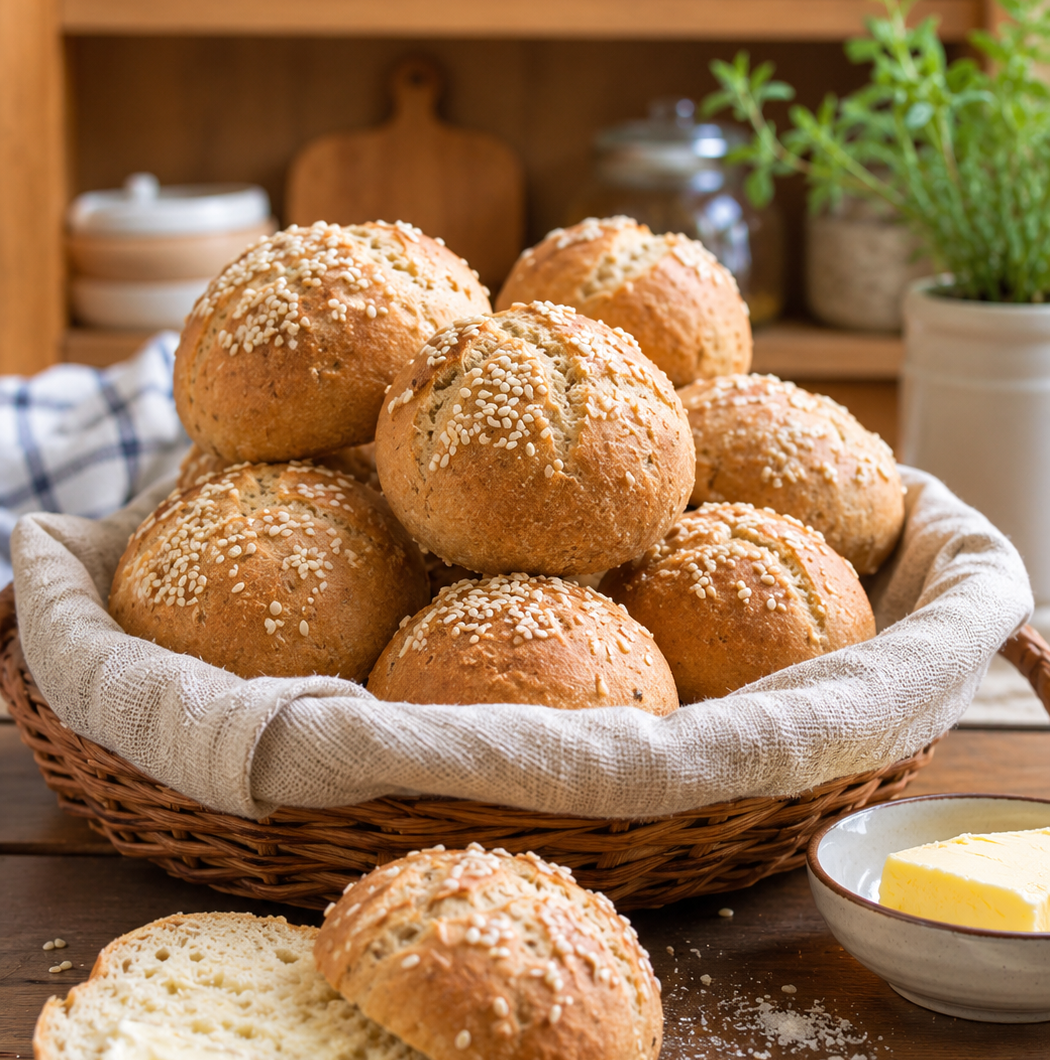
Keto Buns Recipe
Light and airy homemade keto buns with a gently crunchy crust. These quick low-carb buns use almond flour, coconut flour, psyllium husk, eggs, and a few basic ingredients to create a bread-style roll without traditional wheat flour.
4
servings5
minutes25
minutes109
kcal30
minutesIngredients
3 medium egg whites, at room temperature
1 medium whole egg, at room temperature
¼ cup (60 ml) hot water
¼ cup (25 g) almond flour
¼ cup (30 g) coconut flour
1 tablespoon psyllium husk powder, or 2 tablespoons whole psyllium husks
1 teaspoon baking powder
Pinch of sea salt
Sesame seeds, for sprinkling, optional
Directions
- Preheat the oven to 180°C / 356°F. Line a baking sheet with parchment paper.
- Mix the almond flour, coconut flour, psyllium husk, baking powder, and sea salt together.
- Add the egg whites, whole egg, and hot water. Process with a food processor or electric blender for approximately 20 seconds, just until smooth. Avoid over-mixing.
- Leave the dough for a couple of minutes so the coconut flour and psyllium husk can absorb the moisture.
- Divide the dough into four equal portions. Wet your hands to make handling easier, then shape each portion into a round bun.
- Arrange the buns on the parchment-lined baking sheet. Sprinkle sesame seeds over the tops if desired. Make a criss-cross cut across the top of each bun.
- Place in the preheated oven and bake for approximately 25 minutes, or until the buns are browned.
- If the buns become brown before they have finished baking, loosely cover them with aluminum foil to prevent excessive browning.
Notes
- Measuring the ingredients with a food scale is recommended for consistent results.
- The original recipe uses medium eggs. If using large eggs, increase the almond flour by approximately 2 tablespoons.
- If the dough is too liquid, gradually add more almond flour and coconut flour until it is firm enough to shape.
- Wet hands make the sticky dough easier to handle.
- If doubling the recipe, the baking time may increase by approximately 5–10 minutes.
- Sesame seeds are optional and can be omitted.
Nutrition Facts
- Total number of serves: 1
- Calories: 109kcal
- Fat: 5.5g
- Carbohydrates: 8.3g
- Fiber: 5g
- Sugar: 2g
- Protein: 7.3g
