
Mexican Baked Avocado Eggs are a delicious way to turn a few simple ingredients into a satisfying breakfast or brunch. This easy baked avocado recipe combines creamy avocado, perfectly baked eggs, fresh cherry tomato salsa, cilantro, lime juice, green onion, and crumbled feta cheese.
The eggs cook directly inside the avocado halves, creating a naturally gluten-free dish with plenty of flavor and texture. The fresh salsa adds brightness to every bite, while the feta brings a salty finish that works beautifully with the richness of the avocado.
Why This Baked Avocado Egg Recipe Works
There is something especially appealing about baking an egg inside an avocado. The avocado becomes warm and tender while the egg cooks gently in the center, giving you a combination of creamy, rich, and savory flavors in one serving. What makes this Mexican-inspired version different is the fresh salsa spooned over the finished eggs. Rather than letting the extra avocado go to waste after creating space for the egg, it becomes part of the topping along with tomatoes, cilantro, green onion, and lime juice.
This recipe is also wonderfully straightforward. You do not need complicated cooking equipment or a long list of ingredients. The avocado halves can be prepared in just a few minutes, and while the eggs are baking, there is enough time to prepare the fresh salsa. That makes Mexican Baked Avocado Eggs a practical choice for a relaxed weekend breakfast, a quick brunch, or any morning when you want something more interesting than ordinary scrambled eggs or toast.
Choosing the Right Avocados
The avocado is the foundation of this recipe, so selecting fruit with the right level of ripeness makes a noticeable difference. Look for an avocado that feels slightly soft when gently pressed but is not extremely soft or bruised. A ripe avocado should be easy to cut and scoop while still firm enough to hold its shape during baking. Very soft avocados may become difficult to handle and can collapse when the egg is added.
When preparing the avocado, cut it carefully in half and remove the pit. A spoon is the easiest tool for creating enough room for the egg without damaging the skin. Scoop out some of the flesh while leaving approximately a 1/2-inch layer next to the skin. The extra avocado should be saved rather than discarded because it becomes an important part of the fresh tomato salsa. This simple step also helps reduce food waste while giving the finished dish an even better texture.
How to Prepare the Avocado for Baking
After removing the pit, each avocado half needs a small hollow in the center. The opening should be large enough to hold the egg without spilling over the sides. Since avocados naturally vary in size, the amount you scoop out may need to be adjusted slightly. The important thing is to leave enough avocado around the edges so the shell remains sturdy during baking.
Place each prepared avocado half inside a ramekin before adding the egg. The ramekin provides support and helps prevent the avocado from tipping during preparation and baking. This is particularly useful because the rounded outside of the avocado does not naturally sit flat on a baking tray. If you are preparing several portions at once, small pieces of crumpled foil can also be used around the avocado halves to keep them steady.
Adding the Eggs
For this recipe, small eggs are especially convenient because they fit nicely into the avocado cavities. Crack each egg into a separate bowl first rather than cracking it directly into the avocado. This gives you much greater control and makes it easier to prevent broken shells from getting into the dish. Once the egg is in the bowl, carefully pour only the amount that fits comfortably inside the avocado half.
If you are using larger eggs, there may be more egg white than the avocado can hold. In that situation, simply pour enough egg into the avocado to fill the prepared space and leave any excess white behind. Trying to force a whole large egg into a small avocado cavity can cause the egg to overflow while baking. Working carefully also makes it easier to keep the yolk intact, which gives the finished dish an attractive appearance.
Baking the Avocado Eggs
Preheat the oven to 425ºF before preparing the final baking setup. Once the avocado halves contain the eggs, carefully transfer the ramekins to the oven. Take your time during this step because the liquid egg can easily spill if the avocado tips. A stable position is important not only for presentation but also for even cooking.
The eggs generally take about 20 minutes to bake, although the exact cooking time can vary depending on the size of the eggs, the size of the avocado cavities, and how well done you prefer the eggs. Begin checking before the full cooking time has passed. If you prefer a softer yolk, remove the eggs earlier, while those who enjoy a firmer yolk can allow them to continue cooking until they reach the desired consistency.
Making the Fresh Mexican-Style Salsa
The salsa is what gives these baked avocado eggs their fresh Mexican-inspired character. While the eggs are in the oven, quarter the cherry tomatoes and place them in a bowl. Add the coarsely chopped cilantro, finely minced white part of the green onion, fresh lime juice, and the leftover avocado pieces that were removed from the avocado halves.
Preparing the green onion finely helps distribute its flavor throughout the salsa. Trim away the roots first, then make two lengthwise cuts through the white section to divide it into smaller strips. Finally, cut across those strips to create a fine mince. This method makes the onion small enough to blend naturally with the tomatoes and avocado rather than overpowering individual bites.
When to Season the Salsa
Sea salt should be added to the salsa shortly before serving rather than too early in the preparation. Tomatoes naturally release liquid when they are salted, and allowing the mixture to sit for too long can make the salsa watery. Adding the sea salt near serving time helps the tomatoes maintain a fresher texture while allowing the other ingredients to remain distinct.
The lime juice provides acidity that balances the richness of the avocado and baked egg. Cilantro contributes a fresh herbal note, while green onion gives the salsa a mild savory bite. Together, these ingredients create a topping that feels light and refreshing even though the avocado and egg themselves are rich and filling.
The Role of Feta Cheese
Crumbled feta cheese adds a salty, tangy element to the finished dish. Its slightly crumbly texture contrasts with the soft baked avocado and egg, making each bite more interesting. Feta is also convenient because it is widely available and does not require any additional preparation beyond crumbling it over the finished avocado eggs.
For this particular recipe, the feta is added after baking rather than mixed into the egg. This keeps its texture distinct and allows its flavor to stand out against the fresh salsa. If you have access to crumbly Mexican Cotija cheese, it can also pair particularly well with the Mexican-inspired flavors. However, the recipe as written uses feta cheese, so the original ingredient list remains unchanged.
How to Serve Mexican Baked Avocado Eggs
These avocado eggs are best served immediately after they come out of the oven. Spoon the fresh tomato salsa over each baked egg, then finish with the crumbled feta cheese. Serving the salsa fresh keeps the contrast between the warm baked avocado and cool, crisp tomato mixture especially enjoyable.
The dish works well as a breakfast or brunch centerpiece because it combines several satisfying components in one portion. The avocado provides a creamy base, the egg adds protein and richness, and the tomato salsa brings freshness and acidity. The combination is simple enough for an ordinary morning but attractive enough to serve when you are preparing brunch for family or friends.
A Simple Recipe for Weekend Brunch
Mexican Baked Avocado Eggs are particularly suited to slow weekend mornings when you want something flavorful without spending a great deal of time in the kitchen. The preparation takes about 10 minutes, and the eggs bake while the salsa comes together. With a total cooking time of approximately 30 minutes, this recipe fits comfortably into a relaxed breakfast routine.
Because the ingredients are straightforward, the recipe can also be prepared without complicated cooking techniques. The most important details are creating a suitable cavity in each avocado, supporting the halves securely, controlling the amount of egg added, and watching the eggs toward the end of the baking period. Once those steps become familiar, the recipe is very easy to repeat.
Texture and Doneness Tips
The ideal texture of baked avocado eggs depends on personal preference. Some people enjoy a yolk that remains soft and creamy, while others prefer the egg to be cooked more thoroughly. Since oven temperatures and avocado sizes can vary, it is better to use the stated cooking time as a guide rather than treating it as an exact rule.
Start checking the eggs before the 20-minute mark. Look at the whites first because they should be set, while the yolk can remain softer if that is your preference. Remember that the eggs may continue cooking slightly from residual heat after they leave the oven. Removing them when they reach your preferred level of doneness helps prevent overcooking.
Notes for the Best Results
For the best results, use ripe but reasonably firm avocados, small eggs when available, and fresh cherry tomatoes. Keep the extra avocado pieces fairly chunky so they remain noticeable in the salsa. Prepare the salsa while the eggs are baking, but wait until just before serving to add the sea salt. This keeps the mixture fresher and prevents excess liquid from collecting at the bottom of the bowl.
Supporting the avocado halves is another important detail. A ramekin is ideal for individual portions because it keeps the avocado stable throughout the baking process. If you are making several baked avocado eggs, crumpled pieces of foil can be arranged around the halves to stop them from rolling. Handle the filled avocados carefully when transferring them to the oven.
Frequently Asked Questions
Can I use large eggs?
Yes, but large eggs may contain more white than the avocado cavity can accommodate. Crack each egg into a separate bowl and carefully pour only the amount that fits inside the avocado. Any excess egg white can be left behind rather than allowing it to overflow during baking. Small eggs are easier to use because they generally fit the avocado halves more naturally.
How long do avocado eggs take to bake?
The recipe provides approximately 20 minutes as the cooking time, with a total preparation and cooking time of about 30 minutes. However, start checking the eggs earlier because the final cooking time depends on the size of the eggs, the avocado cavities, and your preferred yolk consistency. Remove them when they reach the doneness you enjoy.
Can the salsa be prepared ahead?
The salsa can be assembled shortly before the eggs finish baking, which is the easiest approach for this recipe. It is especially helpful to add the sea salt immediately before serving because salt can draw moisture from the tomatoes and make the mixture watery if it sits for too long.
Is this recipe gluten-free?
The ingredients provided make this recipe naturally gluten-free, making it a useful option for people who are looking for a simple gluten-free breakfast. As with any packaged ingredient, anyone following a strict gluten-free diet should check product labels where appropriate, particularly for packaged cheese or other ingredients that may have additional processing.
Why You’ll Want to Make It Again
Mexican Baked Avocado Eggs bring together warm, creamy, fresh, and salty flavors without requiring a complicated preparation process. The baked egg and avocado create a rich foundation, while the tomato salsa cuts through that richness with lime, cilantro, green onion, and fresh tomato. The feta then adds a final savory touch that ties the whole dish together.
What makes this recipe especially useful is its balance between simplicity and presentation. The avocado halves can go directly from the oven to the table, topped with colorful salsa and crumbled cheese. Whether you are making breakfast for yourself or preparing a casual weekend brunch, these Mexican Baked Avocado Eggs offer a flavorful alternative to more traditional egg dishes while making excellent use of every part of the avocado.
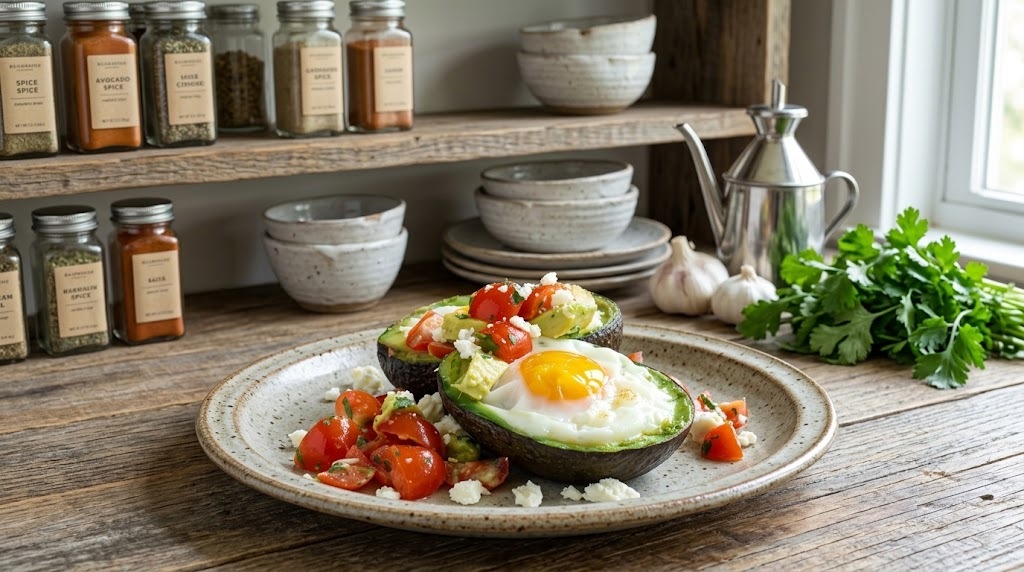
Mexican Baked Avocado Eggs
A simple Mexican-inspired baked avocado breakfast made with eggs cooked inside avocado halves and finished with fresh cherry tomato salsa, cilantro, green onion, lime juice, and crumbled feta cheese.
2
servings10
minutes20
minutes30
minutesIngredients
- For the baked avocado eggs
1 avocado, halved and pitted
2 small eggs
- For the salsa
4 ounces cherry tomatoes, quartered, measuring 1 cup
1 tbsp cilantro, coarsely chopped
1 green onion, white part only
1 tsp fresh lime juice
Leftover avocado from the egg part of the recipe, coarsely chopped
Sea salt to taste, 1/2–1 teaspoon
2 tbsp crumbled feta cheese
Directions
- Preheat your oven to 425ºF so it is fully heated before the avocado eggs go inside.
- Cut the avocado in half and remove the pit. Use a spoon to scoop out enough avocado from the center of each half to create room for an egg. Leave approximately 1/2 inch of avocado next to the skin. Reserve the removed avocado for the salsa.
- Place each avocado half inside a ramekin. Make sure each half is stable and will not tip when the egg is added.
- Crack one egg at a time into a separate bowl. Carefully pour the amount that fits into the prepared avocado cavity. If using large eggs, leave behind any excess egg white that does not fit. Small eggs should generally fit well.
- Carefully place the ramekins containing the avocado eggs into the preheated oven. Bake for approximately 20 minutes, but begin checking earlier and remove the eggs when they reach your preferred level of doneness.
- Trim the roots from the green onion. Make two lengthwise cuts through the white portion to quarter it, then slice crosswise into a fine mince.
- Combine the quartered cherry tomatoes, chopped cilantro, minced green onion, lime juice, and reserved chopped avocado in a bowl.
- Add sea salt to the salsa according to taste just before serving. Avoid seasoning too early because the tomatoes can release excess liquid.
- Remove the baked avocado eggs from the oven. Immediately top each portion with the fresh salsa and crumbled feta cheese. Serve warm.
