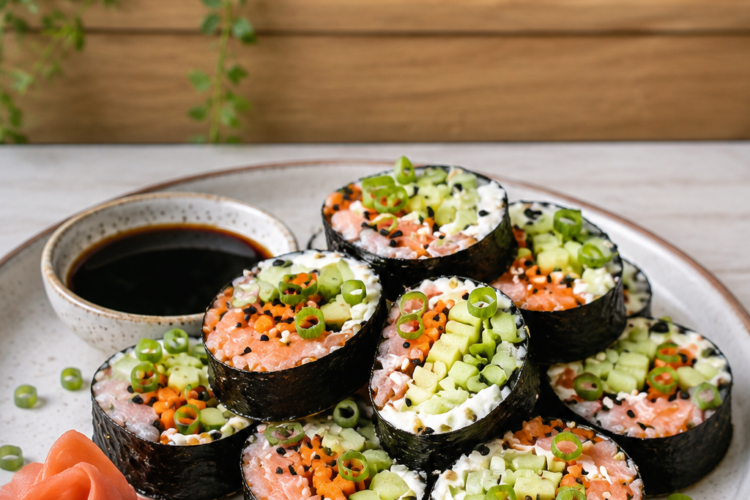
Sushi is one of those meals that can seem difficult to fit into a low carb lifestyle because traditional sushi rice contains a substantial amount of carbohydrates. Fortunately, you can still enjoy the fresh flavors, creamy textures, smoky salmon, crisp vegetables, and savory toppings associated with sushi without using rice.
This low carb keto sushi recipe offers a quick and simple alternative that takes only 15 minutes to prepare and requires no cooking. It is an excellent choice when you want an easy keto lunch, light dinner, party appetizer, or satisfying snack that feels fresh rather than heavy.
This homemade keto sushi uses large seaweed sheets, smoked salmon, cucumber, shredded carrots, lemon, and whipped cream cheese to create flavorful rolls without traditional sushi rice. The combination works especially well because each ingredient contributes something different.
The nori provides the familiar salty seaweed flavor, smoked salmon adds richness and protein, cucumber brings freshness and crunch, carrots add a mild natural sweetness, while cream cheese gives the rolls a smooth and creamy center. A little lemon brightens the overall flavor and keeps every bite refreshing.
Why This Keto Sushi Works
The biggest advantage of this keto sushi recipe is its simplicity. There is no rice to cook, cool, season, or spread across the nori, which makes the preparation considerably faster than conventional sushi. Instead, the fillings are arranged directly on the seaweed sheet and rolled tightly using a bamboo sushi mat. Because the ingredients are already prepared or require only simple cutting and shredding, you can have the rolls assembled and ready to slice in approximately 15 minutes.
This recipe is also naturally suited to people looking for low carb sushi options. Traditional sushi rolls often rely on seasoned white rice as their main ingredient, which can significantly increase the carbohydrate content of a meal. Removing the rice changes the structure of the roll while keeping the ingredients that make sushi enjoyable. The result is a lighter roll with a combination of salty, creamy, fresh, smoky, and slightly spicy flavors when served with wasabi.
Another reason to make this recipe at home is flexibility. The fillings can be arranged according to your preference while keeping the original ingredient list intact. You can make the rolls thinner or thicker, cut them into smaller appetizer-sized pieces, or serve them as part of a larger low carb meal. They are also convenient for casual entertaining because the rolls can be prepared quickly and arranged on a serving board before guests arrive.
Ingredients for Low Carb Sushi
The ingredient list is short, which makes this recipe particularly convenient for a quick meal. Large seaweed sheets, also known as nori, form the outside of the rolls and provide the characteristic savory taste associated with sushi. Smoked salmon supplies a rich, salty flavor and works naturally with cream cheese. Cucumber and shredded carrots provide contrasting textures, while extremely thin slices of lemon add a bright citrus note.
Whipped cream cheese is used as the creamy component of the filling. Starting with the cream cheese at the lower part of the nori helps create a stable base for the other ingredients. Water is also important because it helps seal the edge of the seaweed after the roll has been formed. For serving, green onions and sesame seeds add texture and visual appeal, while soy sauce and optional wasabi provide familiar sushi-style finishing flavors.
How to Make Keto Sushi
Prepare the Sushi Rolling Station
Start by placing a bamboo sushi mat on a clean, flat surface. Cover the mat with a piece of plastic wrap to make the rolling process easier and help prevent the ingredients from sticking to the mat. If you do not have plastic wrap available, a large plastic bag can also be used. The goal is to create a smooth surface that allows the finished roll to be shaped firmly without making the seaweed difficult to handle.
Place one large seaweed sheet on top of the prepared mat with the shiny side facing upward. Try to keep the sheet positioned evenly on the mat so that you have enough space to roll the filling without the ingredients shifting toward one side. Keeping the setup organized before adding the fillings makes the process much easier, especially if you are preparing more than one roll.
Arrange the Fillings
Layer the ingredients across the lower one-third of the seaweed sheet in a horizontal line. Begin with the whipped cream cheese, spreading or positioning it carefully so that it creates the foundation for the remaining fillings. Follow with the smoked salmon, cucumber strips, shredded carrots, and extremely thin sliced lemon. Keep the filling relatively compact rather than spreading it across the entire sheet.
The placement of the fillings matters because an overly large amount can make the roll difficult to close. Keeping everything in one horizontal line gives you enough room to fold the lower section of the seaweed over the filling and continue rolling. The vegetables should be cut into long, manageable pieces so they fit naturally inside the roll rather than poking out from different sides.
Roll the Sushi Tightly
Once the fillings are arranged, grab the bottom of the bamboo mat together with the seaweed and carefully roll it over the filling. Apply gentle but firm pressure as you roll. The objective is to create a compact roll that holds its shape when sliced. Continue rolling until you reach the end of the seaweed sheet, making sure the bamboo mat and plastic wrap stay outside the sushi rather than becoming wrapped around the filling.
Avoid rushing this part of the process. A steady motion gives you greater control and helps prevent the fillings from escaping through the sides. If the roll feels loose, gently tighten it with the mat before continuing. You do not need to press so firmly that the vegetables become crushed; the goal is simply to create enough tension for the roll to hold together.
Seal and Slice the Roll
After reaching the end of the seaweed sheet, dampen your fingers with a small amount of water and lightly moisten the edge of the seaweed. This helps the nori adhere to itself and keeps the roll closed. Once sealed, use a sharp knife to cut the sushi into individual pieces. A sharp blade is particularly helpful because it allows you to cut through the seaweed and fillings cleanly without compressing the roll.
For evenly sized pieces, cut the roll in half first. Then cut each half in half again, followed by cutting each quarter in half. This method produces eight pieces from one roll and makes the finished sushi look neat and consistent. If the knife begins to stick, keeping the blade clean and slightly damp can make slicing easier.
Serving Low Carb Keto Sushi
Once the rolls are sliced, arrange them on a plate or cutting board and finish them with sliced green onions and sesame seeds if desired. Serve the sushi with soy sauce and optional wasabi. The combination of smoky salmon, creamy cheese, crunchy vegetables, citrus, and savory nori provides plenty of flavor even without traditional sushi rice.
These rolls work well as a quick keto lunch, light dinner, or appetizer. They can also be served alongside other low carb dishes when you want to create a more substantial meal. Because the recipe requires no cooking, it is particularly useful on busy days when you want something homemade without spending a lot of time in the kitchen.
What Makes This Low Carb Sushi Keto Friendly?
The main change that makes this recipe different from conventional sushi is the absence of rice. Rice is usually the primary carbohydrate source in standard sushi rolls, while this version relies on nori and low-carb-friendly fillings instead. The provided nutritional information lists approximately 3 grams of total carbohydrates and 2 grams of net carbohydrates per serving, making it suitable for many people following a keto or low carb eating pattern.
It is worth remembering that nutritional values can vary depending on the specific brands and quantities used. Smoked salmon, cream cheese, soy sauce, and other packaged ingredients can have slightly different nutritional profiles. If you are carefully tracking carbohydrates, calories, sodium, or other nutrients, check the labels of the exact products you use and calculate the values according to your own portions.
Notes for Making Better Keto Sushi
Keep the Filling Compact
One of the easiest ways to make attractive sushi rolls is to avoid overfilling them. Too many ingredients can make the nori difficult to close and may cause the filling to spill out when the roll is sliced. A compact horizontal line of filling is enough to give every piece a balanced combination of salmon, vegetables, cream cheese, and lemon.
Use a Sharp Knife
A sharp knife makes a noticeable difference when cutting homemade sushi. Instead of pressing down heavily, use controlled movements to cut through the roll. This helps maintain the shape and prevents the filling from being pushed out. Cutting the roll into equal sections also makes the finished presentation look more polished.
Seal the Nori Properly
The final edge of the seaweed needs a little moisture to stick securely. Only a small amount of water is necessary. Wetting the entire sheet can make it softer and more difficult to handle, so concentrate the moisture on the edge that needs to seal.
Serve Immediately
For the best texture, serve the sushi soon after preparing and slicing it. The nori has a pleasant texture when freshly assembled, while the cucumber remains crisp and the smoked salmon and cream cheese retain their fresh flavor. If preparing the rolls ahead, keep them covered and chilled for a short period rather than leaving them exposed.
Frequently Asked Questions
Is sushi keto without rice?
Sushi can be made keto-friendly by removing traditional sushi rice and choosing lower carbohydrate fillings. This recipe uses nori, smoked salmon, cucumber, carrots, lemon, and cream cheese instead of rice. The provided nutritional information lists 2 grams of net carbohydrates, making these rolls a much lower carbohydrate option than many conventional rice-based sushi rolls.
Can I make keto sushi without a bamboo mat?
Yes. A bamboo sushi mat makes rolling easier, but it is not essential. The original method also allows the use of a large plastic bag as an alternative to plastic wrap over the rolling surface. The important part is to roll the seaweed firmly enough to hold the filling together while keeping the roll compact.
How do I stop keto sushi from falling apart?
The most important steps are to avoid overfilling the nori, roll the sushi tightly, and seal the final edge with a little water. Cutting with a sharp knife also helps preserve the structure. If the roll is loose before slicing, gently tighten it with the bamboo mat before cutting.
Is smoked salmon suitable for keto sushi?
Smoked salmon is used in this recipe and contributes protein and fat while providing the salty, savory flavor commonly associated with seafood sushi. However, packaged smoked salmon products can differ in their nutritional content, so checking the nutrition label is useful if you are following a strict carbohydrate target.
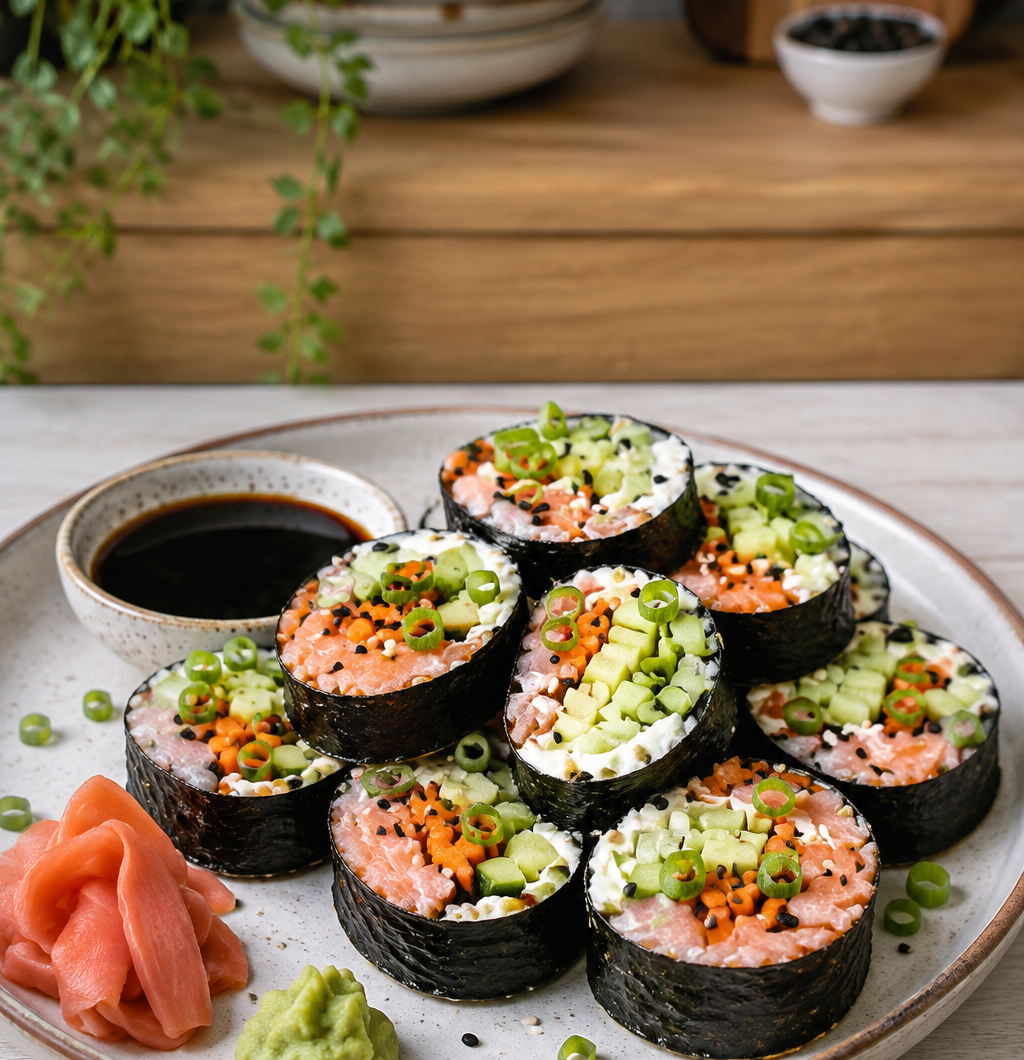
Low Carb Keto Sushi (Keto + Easy!)
This easy low carb keto sushi is made without traditional sushi rice and combines nori, smoked salmon, cucumber, shredded carrots, lemon, and whipped cream cheese.
2
servings15
minutes110
kcal15
minutesIngredients
- Sushi:
2 Large Seaweed Sheets (nori)
2 Large Seaweed Sheets (nori)
1/2 Cucumber cut into long skinny strips
1/2 Cup Carrots shredded
Extremely thin sliced lemon deseeded
1/4 Cup Cream Cheese whipped
Water
- Dip + Toppings:
Green Onions sliced
Sesame Seeds optional
Soy Sauce
Wasabi optional
Directions
- Place a bamboo sushi mat on a flat surface and cover it with a piece of plastic wrap. A large plastic bag can also be used as an alternative.
- Put one sheet of seaweed on top of the covered mat, keeping the shiny side facing upward.
- Arrange the ingredients across the lower one-third of the seaweed sheet in a horizontal line. Begin with the whipped cream cheese, followed by the remaining filling ingredients.
- Hold the bottom of the bamboo mat together with the seaweed and carefully roll it over the filling. Roll firmly enough to create a compact sushi roll that will stay together when sliced.
- Continue rolling until you reach the end of the seaweed sheet. Take care not to wrap the bamboo mat or plastic wrap into the sushi roll.
- Dampen your fingers with a little water and apply it to the edge of the seaweed. This helps seal the roll securely.
- Use a sharp knife to slice the sushi into pieces. For evenly sized pieces, cut the roll in half, then cut each half in half, and finally cut each quarter in half.
- Finish the sushi with sliced green onions and sesame seeds. Serve with soy sauce and optional wasabi.
Nutrition Facts
- Total number of serves: 1
- Calories: 110kcal
- Fat: 7g
- Carbohydrates: 3g
- Fiber: 1g
- Sugar: 2g
- Protein: 9g
