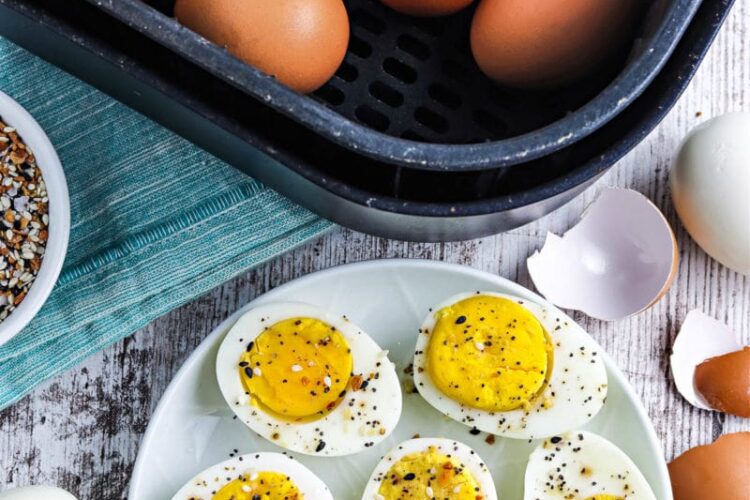
Air Fryer Hard Boiled Eggs are one of the easiest ways to prepare perfectly cooked eggs without ever needing to boil a pot of water. This simple cooking method takes the hassle out of traditional hard boiling by allowing the air fryer to do all the work. With almost no preparation required, it’s an excellent option for busy mornings, weekly meal prep, or anyone looking for a convenient way to cook eggs with consistent results.
The process couldn’t be more straightforward. Eggs go directly from the refrigerator into the air fryer basket and cook until they reach the desired level of doneness. Once they’re finished, transferring them immediately to an ice bath stops the cooking process and makes peeling much easier. The result is smooth, tender egg whites with creamy yolks and shells that slip away with minimal effort.
This method is ideal for preparing a single egg or a larger batch at once, making it perfect for snacks, breakfast, salads, sandwiches, or adding protein to meals throughout the week. After trying this simple air fryer technique, it may easily become the preferred way to make hard boiled eggs.
Why This Recipe Works
There are plenty of reasons why this air fryer method has become a favorite for cooking hard boiled eggs.
No Boiling Water Needed
One of the biggest advantages is that there’s no need to fill a saucepan with water or wait for it to reach a boil. The air fryer handles the entire cooking process, making preparation quicker and requiring less cleanup afterward.
Almost Completely Hands-Off
Once the eggs are placed inside the air fryer and the timer is set, there’s very little else to do. Unlike stovetop methods that require monitoring the water, this technique allows the eggs to cook without constant attention.
Reliable and Consistent Results
Every air fryer cooks a little differently, but once the ideal cooking time is found for a specific model, it becomes easy to achieve the same results every time. Whether soft, jammy, or fully hard boiled eggs are preferred, adjusting the cooking time makes it simple to reach the perfect texture.
Easy-to-Peel Eggs
An ice bath immediately after cooking helps cool the eggs quickly while making the shells much easier to remove. This simple step can save time and prevent damaged egg whites during peeling.
Perfect for Meal Prep
Hard boiled eggs store well in the refrigerator, making them a great choice for weekly meal preparation. They can be enjoyed as a quick breakfast, healthy snack, salad topping, or protein-packed addition to lunches throughout the week.
Ingredients
Only one simple ingredient is needed for this recipe.
Eggs
Large eggs were used to develop this recipe and provide the most consistent cooking times. Eggs that are around one to two weeks old generally peel much more easily than extremely fresh eggs, making them a great choice for hard boiling.
The complete ingredient quantities and cooking instructions can be found in the recipe card below.
How to Make Air Fryer Hard Boiled Eggs
Preparing hard boiled eggs in the air fryer is incredibly simple and requires very little effort.
Begin by placing the eggs directly from the refrigerator into the air fryer basket, leaving a little space between each egg so the hot air can circulate evenly during cooking.
Set the air fryer to 250°F and cook the eggs according to the preferred level of doneness. For traditional hard boiled eggs, cooking for approximately 15 to 17 minutes usually produces firm whites with fully cooked yolks.
As soon as the cooking time is complete, carefully transfer the eggs into a bowl filled with ice water. Allow them to cool completely before peeling. This step not only stops the cooking process but also helps loosen the shell, making peeling much easier.
Cooking times can be adjusted depending on personal preference, whether soft boiled, jammy, or fully hard boiled eggs are desired. Slight differences between air fryer brands and models are completely normal, so the exact timing may vary slightly.
Tips for Success
A few simple tips can help produce the best possible results every time.
Test the Timing First
Since every air fryer model performs a little differently, it’s a good idea to cook one or two eggs during the first attempt. Starting with around 15 minutes provides a good baseline for adjusting future batches.
Try Roast Mode if Needed
Some air fryers don’t allow temperatures as low as 250°F in standard air fry mode. If that’s the case, switching to the roast setting often works just as well.
Use Slightly Older Eggs
Eggs that have been refrigerated for one to two weeks generally peel much more cleanly than very fresh eggs.
Avoid Overcrowding
Arrange the eggs in a single layer without stacking them. Leaving a little space between each egg allows the hot air to circulate properly for more even cooking.
Don’t Skip the Ice Bath
Cooling the eggs immediately in ice water is one of the most important steps. It quickly stops the cooking process, helps maintain the ideal texture, and makes peeling significantly easier.
Doneness Guide
The cooking time can easily be adjusted depending on the desired texture.
- Soft Boiled: 9–11 minutes
- Jammy: 12–13 minutes
- Hard Boiled: 14–17 minutes
These times are intended as a general guide and may vary slightly depending on the size of the eggs and the specific air fryer model being used.
Serving Ideas
Air fryer hard boiled eggs are incredibly versatile and can be enjoyed in many different ways. They make a satisfying breakfast on their own with a sprinkle of salt and pepper, or they can be sliced over fresh salads, layered into sandwiches, added to wraps, or served alongside grain bowls.
They’re also perfect for preparing classic egg salad, potato salad, or deviled eggs. Keeping a batch in the refrigerator provides a convenient source of protein that’s ready whenever needed.
Storage
Proper storage helps keep hard cooked eggs fresh and ready to enjoy.
Unpeeled Eggs
Store unpeeled hard cooked eggs in the refrigerator for up to 1 week.
Peeled Eggs
Once peeled, place the eggs in an airtight container and refrigerate for 3 to 5 days for the best quality.
Keeping the eggs chilled until ready to serve helps maintain both freshness and texture.
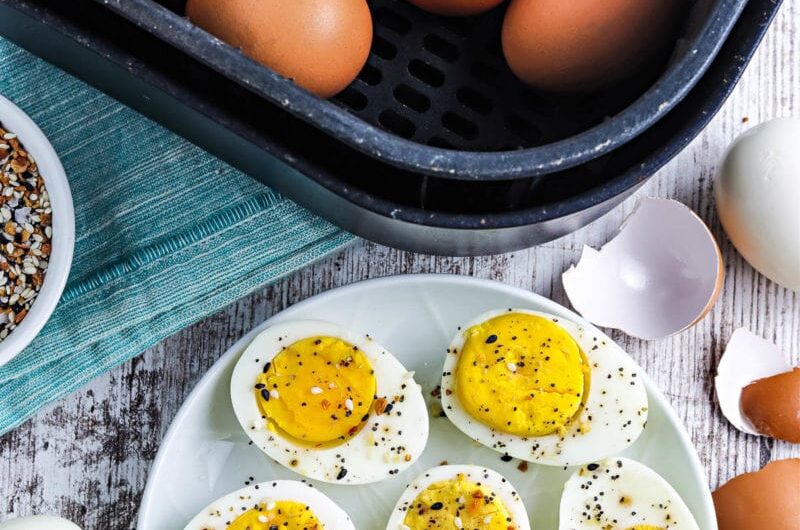
Air Fryer Hard Boiled Eggs
Course: Air Fryer RecipesCuisine: AmericanDifficulty: Easy6
servings5
minutes15
minutes25
kcal20
minutesAir fryer hard boiled eggs are a simple, mess-free way to make perfectly cooked eggs without the need to boil water. Just place the eggs in the air fryer, cook them at 250°F for around 15 minutes, then immediately transfer them to an ice bath. This method creates tender, evenly cooked eggs with shells that peel off effortlessly every time.
Ingredients
6 large eggs
Directions
- Arrange the eggs in a single layer inside the air fryer basket, making sure they are not stacked. Air fry for 14–17 minutes, adjusting the cooking time based on how soft or firm you prefer the yolks (see Note 1).
- As soon as the cooking time is complete, carefully transfer the eggs to a bowl filled with ice water. Let them chill for 5–10 minutes to stop the cooking process and make peeling much easier.
- Once cooled, gently peel the eggs and serve immediately, or refrigerate them in a covered container for later. Enjoy!
Notes
- Air Fryer Tip: Cooking times can vary slightly from one air fryer to another. If you’re making this recipe for the first time, try cooking 1–2 eggs for 15 minutes to find the ideal timing for your specific model.
Cooking Time Guide:
Soft-boiled: 9–11 minutes
Jammy yolks: 12–13 minutes
Hard-boiled: 14–17 minutes
Easy Peeling: Eggs that are 1–2 weeks old generally peel more easily than very fresh eggs. For the best results, place the cooked eggs into an ice bath immediately after they come out of the air fryer.
Storage: Keep unpeeled hard-boiled eggs refrigerated for up to 1 week in a covered container.
Scaling the Recipe: You can cook more or fewer eggs as needed, provided they fit comfortably in a single layer inside the air fryer basket without overlapping.
Nutrition Facts
6 servings per container
- Amount Per ServingCalories72
- % Daily Value *
- Total Fat
5g
7%
- Saturated Fat 2g 10%
- Trans Fat 0.02g
- Cholesterol 186mg 62%
- Sodium 71mg 4%
- Total Carbohydrate
0.4g
1%
- Total Sugars 0.2g
- Protein 6g 12%
- Calcium 28mg 3%
- Iron 1mg 6%
- Potassium 69mg 2%
- Vitamin A 270mcg 30%
* The % Daily Value tells you how much a nutrient in a serving of food contributes to a daily diet. 2,000 calories a day is used for general nutrition advice.
