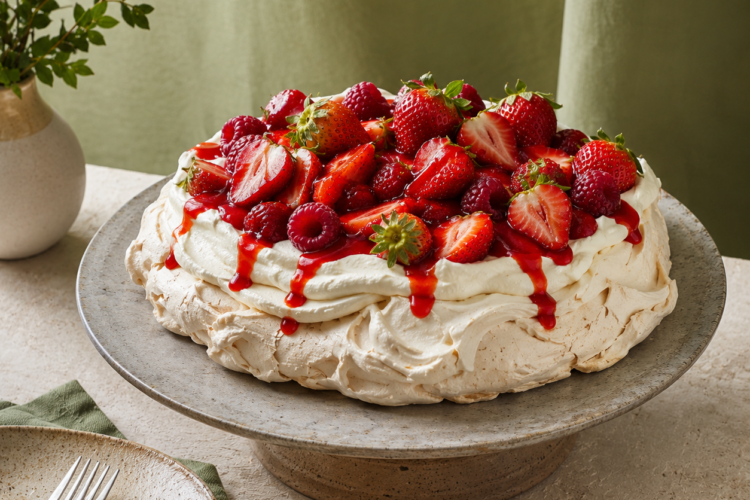
Strawberry Pavlova is a beautiful dessert that’s known for its crisp meringue shell, soft marshmallow-like center, and fresh fruit topping. Despite its elegant appearance, it’s surprisingly simple to make with a little patience and the right technique. Finished with layers of dulce de leche, freshly whipped cream, and juicy strawberries, this dessert offers the perfect balance of sweetness, freshness, and texture in every bite.
One of the things that makes this pavlova so memorable is the addition of walnuts folded into the meringue. They add a light crunch and a subtle nutty flavor that complements the crisp shell and creamy topping without overpowering the dessert. Combined with the fresh strawberries and rich dulce de leche, every layer contributes something different, creating a dessert that’s both light and indulgent.
Inspired by the famous strawberry pavlovas from Doña Posada and Piononos, this homemade version captures the same delicate flavors and impressive presentation while making it possible to recreate the experience at home. While the bakery versions are known for their beautifully arranged strawberries, perfection isn’t necessary. One of the charming qualities of pavlova is its naturally rustic appearance, where slight cracks and uneven edges simply add to its homemade appeal.
Whether prepared for birthdays, holidays, family celebrations, or simply as a special weekend dessert, this strawberry pavlova is guaranteed to stand out. Its crisp exterior, airy center, creamy topping, and fresh strawberries come together to create a dessert that looks impressive on the table while remaining surprisingly approachable to prepare
Why This Recipe Works
This recipe combines classic pavlova techniques with simple ingredients to create a dessert that’s crisp on the outside, soft in the center, and beautifully balanced with fresh toppings.
Light and Airy Texture
- The whipped egg whites form the foundation of the pavlova, creating its signature light texture. Baking at a low temperature allows the outside to become crisp while keeping the inside soft, airy, and marshmallow-like.
- The contrast between the crisp shell and tender center is one of the defining characteristics that makes pavlova so enjoyable.
A Perfect Balance of Flavors
- Every component plays an important role in balancing the sweetness of the dessert.
- The meringue provides a delicate sweetness, walnuts contribute a mild nutty flavor, dulce de leche adds rich caramel notes, whipped cream creates a light and creamy layer, and fresh strawberries bring natural sweetness along with a slight tartness that keeps the dessert from becoming overly rich.
- Together, these ingredients create a dessert that’s both elegant and satisfying.
Beautiful for Any Occasion
- Whether served as one large pavlova or prepared as individual portions, this dessert makes an impressive centerpiece.
- Its combination of bright strawberries, fluffy whipped cream, and crisp meringue creates an eye-catching presentation that’s perfect for birthdays, dinner parties, holidays, or other celebrations.
Simple Ingredients with Impressive Results
- Although the finished dessert looks elegant, it’s made with everyday ingredients that come together using straightforward techniques.
- With careful mixing and proper baking, it’s possible to create a bakery-style pavlova at home without complicated equipment or advanced baking experience.
Homemade with Bakery-Style Appeal
- Inspired by well-known bakery favorites, this homemade version delivers the same combination of crisp meringue, creamy topping, and fresh strawberries while allowing it to be prepared in any home kitchen.
- Its rustic appearance adds to its charm, proving that small cracks or slightly uneven edges don’t take away from either its flavor or presentation.
Tips for Success
A few simple techniques can help produce a pavlova with a crisp shell, soft center, and stable structure
Use Room-Temperature Egg Whites
- Room-temperature egg whites whip more easily and reach a greater volume than cold egg whites.
- Allowing them to warm slightly before mixing helps create a lighter, more stable meringue.
Keep the Bowl Completely Clean
- Any traces of grease, oil, or water can prevent the egg whites from whipping properly.
- Using a completely clean, dry mixing bowl helps achieve maximum volume and stable peaks.
Add the Sugar Slowly
- Rather than adding the sugar all at once, sprinkle it into the whipped egg whites one tablespoon at a time.
- This gradual addition allows the sugar to dissolve fully while creating a smooth, glossy meringue with excellent stability.
Check That the Sugar Has Dissolved
- Before shaping the pavlova, rub a small amount of the meringue between two fingers.
- If the mixture still feels gritty, continue beating until the sugar has completely dissolved. This helps produce the smooth texture and crisp shell that pavlova is known for.
Fold the Walnuts Gently
- Once the walnuts are added, fold them into the meringue using gentle motions.
- Overmixing can remove the air that was incorporated during whipping, resulting in a denser meringue.
Bake at a Low Temperature
- Pavlova benefits from slow, gentle baking.
- A low oven temperature allows the exterior to dry gradually while keeping the center soft and marshmallow-like.
- Higher temperatures can cause excessive cracking or uneven baking.
Cool Inside the Oven
- Once baking is complete, turn the oven off and leave the pavlova inside until it has cooled completely.
- Avoid opening the oven door during this time. Gradual cooling helps reduce the risk of the pavlova collapsing due to sudden temperature changes.
Assemble Just Before Serving
- The whipped cream, dulce de leche, and strawberries should be added shortly before serving.
- Adding the toppings too early can soften the crisp meringue shell as the moisture from the cream and fruit begins to absorb into it.
Troubleshooting
Even experienced bakers occasionally encounter small issues when making pavlova. Fortunately, most are easy to understand and often don’t affect the final flavor.
Cracks on the Surface
- Small cracks are completely normal and are considered part of pavlova’s rustic appearance.
- If the cracking is excessive, the oven temperature may have been slightly too high during baking.
Sticky Liquid or Weeping
- If liquid forms around the base of the pavlova, it may have been slightly underbaked or exposed to very humid conditions.
- Allowing sufficient baking time helps reduce the likelihood of this occurring.
Pavlova Collapses
- A collapsed pavlova may result from opening the oven door before it has completely cooled, or from under-whipping or over-whipping the egg whites.
- Taking time to whip the egg whites correctly and allowing gradual cooling inside the oven helps maintain the dessert’s structure.
Grainy Meringue
- A grainy texture usually means the sugar didn’t fully dissolve during mixing.
- Continuing to beat the mixture until it feels completely smooth between the fingers helps prevent this problem.
Soft or Soggy Pavlova
- Humidity is one of the biggest challenges when making pavlova.
- Preparing it on a dry day whenever possible and storing leftovers in an airtight container helps preserve its crisp exterior for as long as possible.
Ingredients
This Strawberry Pavlova is made with a handful of simple ingredients, each contributing to the dessert’s signature texture and flavor. From the crisp meringue base to the creamy topping and fresh strawberries, every ingredient has an important role in creating a balanced and elegant dessert.
- Egg Whites: Room-temperature egg whites form the foundation of the pavlova. When whipped, they trap air and create the light, airy structure that gives pavlova its delicate texture. Allowing the egg whites to come to room temperature before mixing helps them whip to a greater volume and produce a more stable meringue.
- Granulated Sugar: Granulated sugar sweetens the meringue while helping stabilize the whipped egg whites. As it dissolves during mixing, it creates the glossy texture needed for a crisp exterior and a soft marshmallow-like center.
- Walnuts: Walnuts add a subtle crunch and a mild nutty flavor that complements the sweet meringue. Folded gently into the mixture, they provide extra texture while giving this pavlova its distinctive character.
- Heavy Cream: Chilled heavy cream is whipped until soft peaks form, creating a light and creamy topping that balances the sweetness of the meringue and dulce de leche.
- Dulce de Leche: Dulce de leche adds a rich caramel flavor that pairs beautifully with the whipped cream and strawberries. It should be at room temperature before assembling the dessert, making it easier to spread over the delicate meringue without causing it to crack.
- Fresh Strawberries: Fresh strawberries are the finishing touch. Their natural sweetness and slight tartness provide a refreshing contrast to the rich cream and sweet meringue while adding vibrant color to the finished dessert.
How to Make Strawberry Pavlova
Prepare the Dulce de Leche
- If making homemade dulce de leche, prepare it ahead of time so it has plenty of time to cool completely.
- If using store-bought dulce de leche, simply allow it to come to room temperature before assembling the pavlova. A softer consistency makes it much easier to spread without damaging the delicate meringue.
Prepare the Baking Tray
- Preheat the oven to 285°F (140°C).
- Line a baking sheet with parchment paper.
- Using a 5-inch plate or cake pan as a guide, lightly trace circles onto the parchment paper before turning the paper over so the pencil marks remain underneath.
- This recipe can be shaped into seven individual 5-inch pavlovas or one large rectangular pavlova, depending on the preferred presentation.
Whip the Egg Whites
- Place the room-temperature egg whites into a completely clean, dry mixing bowl.
- Using an electric mixer, beat them on medium speed until soft peaks begin to form.
- The egg whites should become light, airy, and noticeably increased in volume before the sugar is added.
Add the Sugar Gradually
- Add the granulated sugar one tablespoon at a time while continuing to beat the egg whites.
- Continue mixing for about 6 to 8 minutes, or until the meringue becomes thick, glossy, and holds stiff peaks.
- To check whether the sugar has fully dissolved, rub a small amount of meringue between two fingers. If it still feels gritty, continue beating until completely smooth.
Fold in the Walnuts
- Add the walnuts to the finished meringue.
- Using a spatula, gently fold them into the mixture just until evenly distributed.
- Avoid overmixing, as this can remove the air from the meringue and reduce its light texture.
Shape the Pavlova
- Spoon the meringue onto the prepared parchment paper.
- Using the traced circles as a guide, spread the mixture into either seven individual pavlovas or one large rectangular pavlova.
- A spatula can be used to gently shape the edges while keeping the center slightly flatter to hold the toppings later.
Bake Slowly
- Place the baking tray into the preheated oven.
- Bake for 1 hour.
- Once the baking time is complete, turn the oven off and leave the pavlova inside until it has cooled completely.
- Do not open the oven door during the cooling process, as sudden temperature changes can cause the pavlova to crack or collapse.
Prepare the Whipped Cream
- While the pavlova cools, pour the chilled heavy cream into a cold mixing bowl.
- Beat until soft peaks form.
- The whipped cream should be light and smooth without becoming overly stiff.
Prepare the Strawberries
- Hull and slice the fresh strawberries into even slices.
- Preparing the fruit just before assembling the dessert helps keep it fresh and juicy.
Assemble the Pavlova
- Carefully transfer the completely cooled pavlova to a serving plate.
- Spread a layer of room-temperature dulce de leche over the surface, using a gentle touch to avoid cracking the delicate meringue.
- Next, spoon the whipped cream over the dulce de leche, spreading it evenly across the center.
- Finish by arranging the sliced strawberries generously over the top.
- The amount of strawberries can be adjusted depending on their size and the desired presentation.
Serve
- Once assembled, slice the pavlova carefully using a sharp knife and serve immediately.
- The dessert is at its best on the day it’s made, when the meringue remains crisp and the toppings are fresh.
- Every slice offers a combination of crisp meringue, soft marshmallow-like center, rich dulce de leche, light whipped cream, crunchy walnuts, and sweet strawberries, creating a dessert that’s both elegant and unforgettable.
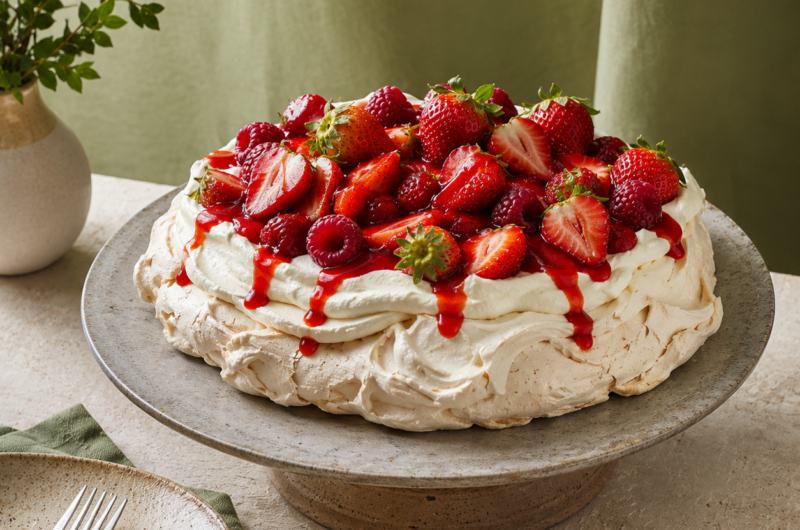
Strawberry Pavlova
Course: Desserts, Gluten Free RecipesCuisine: AmericanDifficulty: Easy7(1)
servings20
minutes40
minutes300
1
hourThis strawberry pavlova is a beautiful dessert inspired by the famous Key Biscayne pavlova, combining elegance with irresistible flavor. It features a crisp, delicate meringue shell that gives way to a soft, marshmallow-like center, while crunchy walnuts add a delightful contrast in texture. Light, festive, and beautifully balanced, this dessert is perfect for celebrations, special occasions, or simply enjoying life’s sweetest moments.
Ingredients
- For the Pavlova
4 egg whites, at room temperature
1 cup sugar (200g)
1 cup walnuts, chopped
- For the Toppings
2 cups heavy whipping cream
1 cup dulce de leche
4 cup strawberries, thinly sliced
Directions
- Prepare the dulce de leche ahead of time, either by making it yourself or using a store-bought version. If making it in an Instant Pot, allow about 40 minutes of cooking time, plus additional time for the pot to come to pressure and for the dulce de leche to cool completely. For the easiest spreading, make it a day in advance or ensure it has reached room temperature before assembling the pavlova.
- Preheat the oven to 285°F (140°C). Line a baking tray with parchment paper. Using a 5-inch plate or cake pan as a guide, lightly draw circles on the parchment if making individual pavlovas, then turn the paper over so the pencil markings are underneath. This recipe yields either seven individual 5-inch pavlovas or one large rectangular pavlova.
- Place the egg whites into a perfectly clean, dry, grease-free mixing bowl. Beat on medium speed until soft peaks begin to form.
- Gradually add the sugar, one tablespoon at a time, beating continuously until the meringue becomes thick, glossy, and holds stiff peaks. This usually takes 6–8 minutes. To check if the sugar has dissolved, rub a small amount of the mixture between your fingers. If it still feels grainy, continue beating.
- Using a spatula, gently fold the chopped walnuts into the meringue just until evenly distributed. Avoid overmixing, as this can cause the meringue to lose its volume.
- Spoon the meringue onto the prepared parchment, shaping it into either one large rectangle or seven 5-inch rounds. Smooth the tops and create a slight indentation in the center if desired to hold the toppings later.
- Bake for 1 hour. Once the baking time is complete, switch off the oven and leave the pavlova inside until it has cooled completely. Keep the oven door closed throughout the cooling process to help minimize cracking.
- While the pavlova cools, pour the heavy cream into a chilled mixing bowl and whip until soft peaks form.
- Wash and slice the strawberries, setting them aside until you’re ready to assemble the dessert.
- Carefully transfer the cooled pavlova to a serving platter. Spread the room-temperature dulce de leche gently over the surface without pressing too firmly, as the delicate meringue can crack. Spoon the whipped cream over the dulce de leche, then finish with a generous layer of sliced strawberries.
- Slice carefully with a sharp knife and serve immediately. Pavlova has the best texture and flavor when enjoyed on the day it is assembled.
