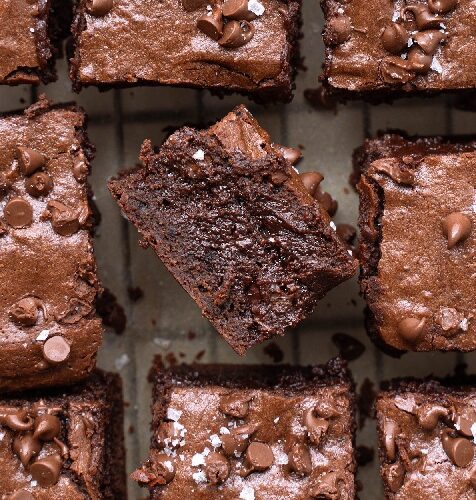
Sourdough Brownie Cookies – Recipes
Introduction & Background
Sourdough Brownie Cookies are a highly evolved hybrid dessert that merges three distinct baking worlds into one unified system: fermented sourdough baking, dense brownie engineering, and structured cookie formulation. This combination is not traditional—it is the result of modern experimental baking where texture science and flavor chemistry are intentionally layered to create complexity beyond standard desserts.
Sourdough baking itself dates back thousands of years, originating as a natural fermentation method using wild yeast and bacteria to leaven bread long before commercial yeast existed. Over time, sourdough became valued not only for its rise but for its distinct tangy depth, improved digestibility, and complex flavor profile.
Brownies, in contrast, are a relatively modern invention from early American baking culture, designed to sit between cake and fudge—dense, rich, chocolate-forward, and intentionally minimal in structure.
Cookies represent another pillar: portable, structured, and defined by crisp edges with soft centers.
This recipe fuses all three identities into a single dessert system:
- The fermentation complexity of sourdough
- The fudgy density of brownies
- The shape stability of cookies
The result is not just a baked good—it is a multi-layered flavor and texture architecture system.
Chef’s Philosophy & Culinary Framework
The philosophy behind Sourdough Brownie Cookies is:
Fermentation depth + fat-based chocolate structure + controlled heat transformation = multi-dimensional dessert engineering
Most cookies rely on sugar, butter, and flour alone. This system introduces a fourth dimension: biological fermentation influence.
Sourdough discard (unfed starter) acts as a flavor catalyst. It does not function like yeast in this recipe—it does not provide lift. Instead, it contributes:
- Organic acidity
- Subtle fermented tang
- Enzymatic flavor complexity
- Enhanced chocolate perception depth
When combined with brownie-style fat and cocoa density, the result is a cookie that feels:
- Rich but not overly sweet
- Deep but not heavy
- Soft but structurally stable
- Complex but still familiar
The guiding principle is:
“A dessert should not only taste sweet—it should evolve as you eat it.”
Core Culinary Systems (Ultra Deep Technical Breakdown)
1. Sourdough Fermentation Flavor Integration System
Sourdough discard contains a natural ecosystem of:
- Lactic acid bacteria
- Acetic acid compounds
- Enzyme byproducts from fermentation
In baking, these elements influence flavor perception rather than structure.
They create:
- Mild tang that balances sweetness
- Depth in cocoa flavor perception
- Reduced cloying sweetness sensation
This is why sourdough chocolate desserts often taste more “grown-up” and less sugary.
2. Chocolate Fat Matrix Engineering System
Brownie cookies rely heavily on fat structure rather than flour structure.
This system includes:
- Butter (fat base + softness control)
- Dark chocolate (cocoa solids + emulsified fat)
- Cocoa powder (dry chocolate intensity)
During baking:
- Butter melts → creates spread structure
- Chocolate melts → intensifies flavor
- Cocoa solids bind → deepen richness
This creates a dense, fudgy internal matrix instead of airy cookie structure.
3. Protein Network Stabilization System
Egg proteins act as structural stabilizers.
When heated:
- Proteins coagulate
- Dough sets into stable form
- Moisture becomes trapped in fat-protein matrix
This prevents collapse while maintaining softness.
The balance is critical:
- Too much egg → cakey texture
- Too little egg → spread failure
4. Gluten Suppression & Tenderization System
Flour typically creates gluten when hydrated and mixed.
However, in this system:
- Fat coats flour particles → reduces gluten formation
- Sourdough acidity weakens gluten strands
- Minimal mixing reduces activation
Result:
- Soft bite
- Controlled chew
- No bread-like elasticity
This ensures cookie identity is preserved.
5. Sugar Phase Transition System
Two sugars are used intentionally:
- Brown sugar → moisture retention + chewiness
- White sugar → crisp edge formation
During baking:
- White sugar caramelizes quickly at edges
- Brown sugar retains moisture in center
This creates a dual-zone texture structure:
- Crisp perimeter
- Soft interior core
6. Maillard Reaction Amplification System
The Maillard reaction is responsible for:
- Browning
- Roasted chocolate notes
- Deep flavor complexity
It is intensified here by:
- Egg proteins
- Cocoa solids
- Sugar presence
This reaction produces:
- Nutty undertones
- Toasted cocoa flavor
- Slight caramel bitterness balance
7. Moisture Redistribution Equilibrium System
Sourdough discard introduces extra hydration into dough.
This must be controlled through:
- Flour absorption
- Fat stabilization
- Resting period before baking
During baking:
- Water evaporates from edges first
- Center retains moisture longer
- Final structure stabilizes during cooling
This creates a layered moisture gradient.
8. Texture Layer Architecture System
Each cookie is designed with three functional layers:
- Outer shell → crisp, caramelized surface
- Middle zone → chewy brownie-like density
- Core → soft, almost molten chocolate center
This multi-zone structure is what makes the cookie feel dynamic rather than uniform.
Difficulty, Timing & Yield
Difficulty Level: Medium–Advanced
Preparation Time: 25–30 minutes
Chilling Time: 1–2 hours (recommended for best results)
Baking Time: 10–14 minutes
Cooling Time: 15 minutes
Total Time: ~2.5 hours
Yield: 12–16 cookies
Ingredients (Ultra Detailed Functional Breakdown)
Chocolate Structural System
- 120–150g dark chocolate (70% preferred)
- 1/2 cup unsalted butter
Function:
- Chocolate → cocoa intensity + fat structure
- Butter → softness + spread control
This is the base of brownie identity.
Fermentation Flavor System
- 1/2 cup sourdough discard (unfed starter)
Function:
- Adds acidity balance
- Deepens chocolate perception
- Enhances chew texture
This is the signature differentiator.
Dry Structural System
- 3/4 cup all-purpose flour
- 1/2 cup cocoa powder
- 1/2 teaspoon baking soda
- Pinch of salt
Function:
- Flour → structure
- Cocoa → flavor intensity
- Baking soda → controlled spread
- Salt → flavor amplification
Sweetness Engineering System
- 3/4 cup brown sugar
- 1/4 cup white sugar
Function:
- Brown sugar → chewiness + moisture
- White sugar → crisp edges
Binding & Aroma System
- 1 large egg
- 1 teaspoon vanilla extract
Function:
- Egg → structural binding
- Vanilla → aroma rounding
Optional Enhancement System
- Chocolate chips
- Sea salt flakes
Function:
- Chips → molten pockets
- Salt → flavor contrast spikes
Step-by-Step Method (Ultra Detailed Execution System)
Step 1: Chocolate Base Formation Phase
Melt butter and dark chocolate together slowly.
This creates:
- Smooth fat matrix
- Stable cocoa dispersion
- Unified flavor base
Cool slightly before next step.
Step 2: Sugar Integration Phase
Whisk in:
- Brown sugar
- White sugar
This step:
- Begins caramel base formation
- Creates glossy mixture
- Improves final texture consistency
Step 3: Fermentation Integration Phase
Add sourdough discard.
Mix thoroughly until fully incorporated.
This introduces:
- Tangy complexity
- Moisture adjustment
- Flavor depth layering
Step 4: Binding Phase
Add:
- Egg
- Vanilla
Whisk until smooth and emulsified.
This stabilizes mixture into structured batter.
Step 5: Dry Folding Phase
Sift and add:
- Flour
- Cocoa powder
- Baking soda
- Salt
Fold gently.
Avoid overmixing to prevent gluten formation.
Step 6: Dough Resting Phase (Critical Control Step)
Chill dough for 1–2 hours.
This allows:
- Fat solidification
- Flavor fusion
- Controlled spreading behavior
Skipping this reduces texture quality significantly.
Step 7: Portioning Phase
Scoop dough into uniform balls.
Place with spacing for expansion.
Step 8: Baking Phase
Bake at 175–180°C for 10–14 minutes.
During baking:
- Edges set and crisp
- Center remains soft and fudgy
- Chocolate aroma intensifies
Step 9: Cooling Stabilization Phase
Allow cookies to cool for 15 minutes.
This ensures:
- Structural setting
- Flavor stabilization
- Final texture formation
Texture & Flavor Profile
A perfectly executed Sourdough Brownie Cookie delivers:
- Crisp caramelized edges
- Fudgy brownie-like center
- Subtle fermented tang
- Deep dark chocolate intensity
- Slight chew with melt-in-mouth finish
Advanced Variations
Espresso Fudge Version
- Add espresso powder
Deepens chocolate bitterness and richness.
Sea Salt Elite Version
- Finish with flaky salt
Enhances contrast and complexity.
Triple Chocolate Version
- Add white + milk + dark chocolate chips
Creates layered chocolate profiles.
Nut Crunch Version
- Add walnuts or pecans
Adds structural crunch contrast.
Advanced Chef Tips
- Always chill dough before baking
- Use high-quality dark chocolate
- Do not overbake (center must stay soft)
- Measure sourdough discard carefully
- Let cookies rest before eating for full flavor development
Common Mistakes & Fixes
Cakey Texture
Cause:
Too much sourdough or flour
Fix:
Reduce moisture content slightly
Flat Cookies
Cause:
Warm dough or melted butter
Fix:
Chill longer before baking
Dry Cookies
Cause:
Overbaking
Fix:
Reduce bake time slightly
Weak Flavor Depth
Cause:
Low cocoa quality
Fix:
Use higher percentage dark chocolate
Storage & Reheating
- Store airtight up to 5 days
- Freeze dough for long-term use
- Warm slightly before serving for molten effect
Serving Suggestions
Serve with:
- Cold milk
- Espresso or coffee
- Vanilla ice cream
- Chocolate drizzle
Final Thoughts
Sourdough Brownie Cookies represent a complete fusion of fermentation science, chocolate fat engineering, and controlled baking physics.
They deliver:
- Deep chocolate intensity
- Subtle tangy complexity
- Fudgy brownie texture
- Crisp cookie structure
At their highest level, they demonstrate a core culinary principle:
When fermentation chemistry meets fat-based dessert architecture, a simple cookie evolves into a multi-layered sensory experience that changes with every bite
