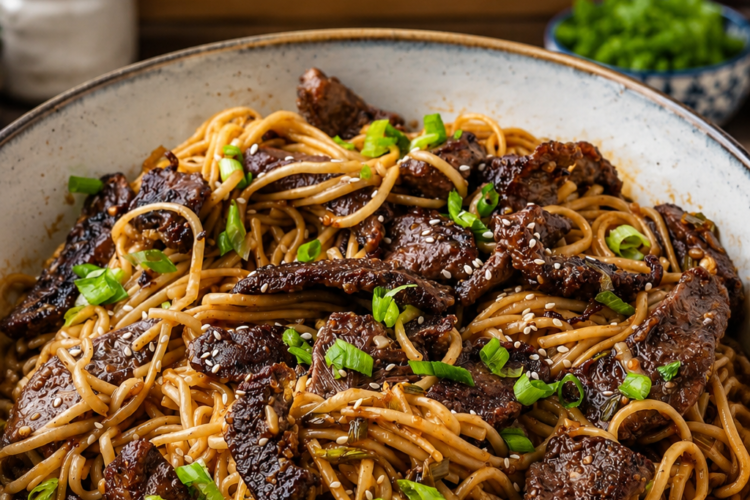
Mongolian Beef Noodles are a quick and satisfying dinner that brings together tender slices of steak, chewy lo mein noodles, and a rich homemade sauce in one skillet. The combination of sweet brown sugar, savory soy sauce, hoisin sauce, fresh garlic, ginger, and a touch of chili sesame oil creates the kind of bold flavor usually associated with your favorite takeout restaurant.
Best of all, this easy Mongolian beef recipe can be on the table in about 30 minutes, making it a practical choice for busy weeknights when you want something flavorful without spending hours in the kitchen.
This Mongolian Beef Noodles recipe is especially appealing because the beef and noodles are cooked separately at first and then brought together in the finished sauce. That simple method helps the steak develop a nicely browned exterior while allowing the noodles to absorb the sweet and savory sauce at the end.
The result is a hearty one-pan meal with plenty of texture and flavor in every bite. It is an excellent homemade alternative to takeout and can be served straight from the skillet for an easy family dinner.
Why You’ll Love This Easy Mongolian Beef Recipe
There are several reasons this beef noodle recipe works so well for a quick dinner. The first is speed. With only 10 minutes of preparation and about 18 minutes of cooking time, the entire meal comes together in roughly 28 minutes. That makes it much easier to fit into a busy evening than recipes that require long marinating times or several complicated cooking stages. The sauce also uses everyday ingredients that are easy to combine, so there is no need for a store-bought Mongolian sauce.
Another advantage is the texture. Thinly sliced flat iron steak or sirloin cooks quickly and becomes wonderfully tender when sliced against the grain. A light coating of cornstarch helps the beef brown during cooking and gives the finished sauce something to cling to. The lo mein noodles add a pleasant chewiness, while green onions provide a fresh contrast to the rich sauce. Together, these simple components create a complete and comforting dinner that feels much more elaborate than it actually is.
Choosing the Best Beef for Mongolian Beef Noodles
Flat iron steak is an excellent choice for this recipe because it has a naturally tender, slightly buttery texture and cooks quickly when cut into thin slices. Sirloin is another good option and can work particularly well when you want a straightforward beef noodle dinner. If using either cut, the most important detail is to slice the steak thinly against the grain. Cutting against the grain shortens the muscle fibers, which helps the cooked beef feel more tender and easier to chew.
Skirt steak and flank steak can also be used when desired. These cuts are flavorful and are commonly used in stir-fry-style dishes, but they should also be sliced thinly against the grain. Avoid cutting the beef into thick chunks because the quick cooking method is designed for thin slices. The goal is to get a browned exterior without overcooking the inside. Working in batches is also important because overcrowding the skillet can cause the steak to steam rather than sear.
The Secret to Flavorful Homemade Mongolian Sauce
The sauce is what gives this Mongolian beef recipe its distinctive sweet and savory character. Low-sodium soy sauce provides the salty, umami-rich base, while hoisin sauce adds depth and a slightly sweet, savory flavor. Light brown sugar brings sweetness and helps create the glossy quality associated with many restaurant-style beef dishes. Rice vinegar contributes a small amount of acidity, which balances the sweetness and keeps the sauce from tasting too heavy.
Garlic and fresh ginger give the sauce its aromatic backbone. Freshly minced garlic adds a strong savory note, while grated ginger provides warmth and a gentle spicy freshness. Chili sesame oil can be used for a little extra heat and sesame flavor, although regular sesame oil can be used when you prefer a milder result. Once the sauce reaches the skillet, it only needs a brief simmer before the beef and noodles are added, allowing the flavors to come together without requiring a long cooking time.
How to Prepare the Lo Mein Noodles
Start by cooking the 8 ounce package of lo mein noodles according to the package directions. It is important not to cook them significantly beyond the recommended time because they will return to the hot skillet later. Once they are cooked, rinse them under cold water to stop the cooking process. This also helps remove excess surface starch and prevents the noodles from becoming overly soft while you prepare the beef and sauce.
After rinsing, toss the noodles with a small amount of sesame oil or neutral oil to help prevent them from sticking together. Keep them aside while you prepare the steak. Since the noodles will spend another minute or two in the sauce at the end, slightly firm noodles are preferable to noodles that are already very soft. They will finish cooking as they absorb the homemade Mongolian sauce.
Getting a Good Sear on the Steak
Before the steak reaches the skillet, sprinkle it with the cornstarch and gently toss until the slices are evenly coated. This thin coating is useful for more than just thickening the sauce. It also encourages the surface of the beef to brown as it cooks, creating additional flavor and texture. Make sure the steak slices are separated enough to receive the coating rather than allowing large pieces to remain stuck together.
Heat a large skillet over medium-high heat and add one tablespoon of vegetable oil. Cook half of the beef in the hot skillet, allowing each side to sear for about one to two minutes. Avoid constantly moving the pieces around because the beef needs contact with the hot surface to develop color. Once the first batch is cooked, transfer it out of the skillet and repeat the process with the remaining beef and vegetable oil.
Cooking the steak in two batches is a small but important step. When too much beef is placed into the skillet at once, the temperature can drop quickly, resulting in pale, steamed meat instead of browned slices. A hot skillet and enough space between the pieces give the steak a better sear. Once both batches are cooked, remove the beef and reduce the heat to medium-low before starting the sauce.
Bringing the Sauce, Beef, and Noodles Together
The sauce comes together directly in the same skillet, which means the flavorful browned bits left behind by the beef become part of the finished dish. Whisk the soy sauce, hoisin sauce, water, brown sugar, rice vinegar, and chili sesame oil together in a small bowl before adding the mixture to the skillet. This ensures that the sugar and sauces are evenly distributed rather than adding each ingredient separately.
Add the minced garlic, grated fresh ginger, and sliced green onions to the skillet and let the mixture simmer gently for one to two minutes. This short cooking period is enough to warm the aromatics and allow their flavors to blend into the sauce. Keep the heat moderate so the sauce does not reduce too quickly or burn. The finished sauce should be flavorful and glossy, with a balance of salty, sweet, tangy, aromatic, and mildly spicy notes.
Once the sauce has simmered, return the cooked steak and prepared lo mein noodles to the skillet. Gently toss everything together so the sauce coats the noodles and beef evenly. Continue cooking for another one to two minutes, stirring carefully. The noodles will absorb some of the sauce while the beef warms through. Avoid stirring too aggressively, especially if the noodles are soft, because gentle tossing helps maintain their texture.
Serving Mongolian Beef Noodles
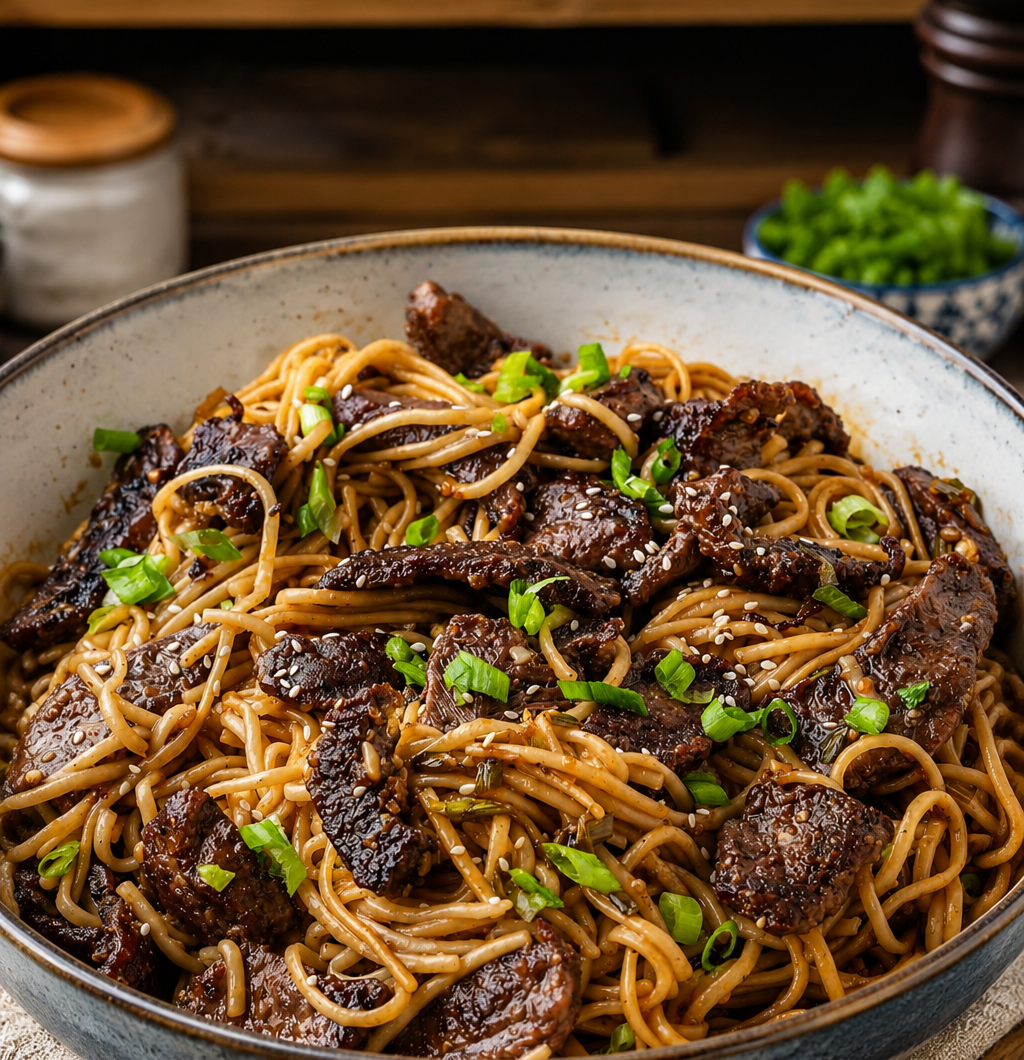
Serve the Mongolian Beef Noodles immediately while they are hot and glossy. Divide the noodles and steak between serving bowls, making sure each portion receives a good mixture of beef, noodles, sauce, and green onions. Extra sliced green onions make a fresh finishing touch, while sesame seeds add a subtle nutty flavor and a little crunch. These garnishes are optional, but they make the finished dish look especially inviting.
Because the recipe already combines protein, noodles, and a flavorful sauce, it can work as a complete main course without requiring several side dishes. If you want to add something alongside it, simple steamed vegetables can provide a fresh contrast to the rich noodles. Broccoli, snow peas, or another favorite vegetable would fit naturally with the sweet and savory flavors, although the recipe is satisfying on its own.
Notes for the Best Results
For the most tender Mongolian beef, take your time slicing the steak correctly. Look closely at the direction of the muscle fibers and cut across them rather than following them. Thin slices cook quickly and are ideal for this recipe. Keeping the steak cold before slicing can also make it easier to cut thinly and evenly, which helps all the pieces cook at approximately the same rate.
The skillet should be properly heated before the beef is added. A hot cooking surface encourages browning, while adding the steak to a lukewarm skillet can lead to excess moisture and less color. Cooking in two batches is worth the extra step because it gives each slice more direct contact with the skillet. Once the beef is browned, remove it rather than leaving it in the pan while the sauce is prepared.
The chili sesame oil is optional, so the recipe can easily be adjusted to suit different preferences for heat. Using it adds a mild spicy element along with sesame flavor. If you want a gentler version, use regular sesame oil instead. The original ingredient list already provides the flexibility needed to make either version without changing the rest of the recipe.
Can You Make Mongolian Beef Noodles Without Beef?
Yes, this recipe can be adapted if beef is not suitable for your meal. The original method notes that the steak can be left out for a meatless version, or ground beef can be used as a more economical alternative. When using ground beef, cook it thoroughly in the skillet and drain excess fat if necessary before proceeding with the sauce. The texture will be different from thinly sliced steak, but the sweet and savory sauce still pairs naturally with noodles.
For a meatless preparation, simply omit the beef and focus on the noodles and sauce. Because the beef contributes both flavor and texture, you may want to serve the noodles with vegetables to make the meal more substantial. The sauce itself remains the main flavor component, so the dish can still be satisfying even without steak.
Storage and Reheating
Leftover Mongolian Beef Noodles should be cooled and stored in a covered container in the refrigerator. When reheating, use a skillet or microwave and heat the food until it is hot throughout. If the noodles have absorbed a large amount of sauce while refrigerated, a small amount of water can help loosen them during reheating. Warm the leftovers gently to avoid making the beef unnecessarily tough or the noodles overly soft.
For the best texture, avoid repeatedly reheating the entire batch. If you expect leftovers, portion them into individual containers before refrigerating. This makes it easier to heat only what you plan to eat. The sauce tends to cling more tightly to the noodles after chilling, but gentle reheating helps restore some of the original texture and keeps the dish enjoyable the following day.
Why This Recipe Makes a Great Weeknight Dinner
Mongolian Beef Noodles combine the convenience of a one-pan meal with the bold flavor of homemade Asian-inspired takeout. The short ingredient list is straightforward, the preparation is manageable, and the cooking process does not require advanced techniques. The steak cooks quickly, the sauce takes only minutes to assemble, and the noodles bring everything together in the same skillet. For anyone looking for an easy beef dinner that feels special without being complicated, this recipe is a strong choice.
The balance of flavors is another reason this dish stands out. Sweet brown sugar, savory soy sauce, rich hoisin sauce, fresh ginger, garlic, and tangy rice vinegar work together rather than allowing one flavor to dominate. The lo mein noodles soak up the sauce, while the seared steak adds hearty texture. Finished with green onions and optional sesame seeds, the meal has the familiar appeal of restaurant-style Mongolian beef while remaining simple enough for a home kitchen.
Savory Mongolian Beef Noodles
2
servings10
minutes18
minutes949
kcal28
minutesIngredients
8 ounce package lo mein noodles
2 Tablespoons cornstarch
¾ pound flat iron steak or sirloin, thinly sliced against the grain
2 Tablespoons vegetable oil, divided
¼ cup low-sodium soy sauce
2 Tablespoons hoisin sauce
¼ cup water
2 Tablespoons light brown sugar
1 Tablespoon rice vinegar
1 teaspoon chili sesame oil, or regular for no heat, optional
3 cloves garlic, minced
1 Tablespoon grated fresh ginger, can use more or less to taste
¼ cup sliced green onions, plus more for garnish
Sesame seeds, optional, for garnish
Directions
- Bring a pot of water to a boil and cook the lo mein noodles according to the package directions. Drain and rinse them under cold water to stop the cooking process. Toss with a small amount of sesame oil or neutral oil to prevent sticking, then set aside.
- Place the thinly sliced flat iron steak or sirloin in a bowl and sprinkle with the cornstarch. Gently toss until all of the beef slices are evenly coated.
- Heat a large skillet over medium-high heat and add 1 tablespoon of vegetable oil. Add half of the coated beef and sear for approximately 1–2 minutes per side, or until cooked and browned. Remove the beef from the skillet.
- Add the remaining 1 tablespoon of vegetable oil and cook the second batch of steak in the same way. Remove the cooked beef and reduce the skillet heat to medium-low.
- In a small bowl, whisk together the low-sodium soy sauce, hoisin sauce, water, light brown sugar, rice vinegar, and chili sesame oil.
- Pour the sauce mixture into the skillet. Add the minced garlic, grated fresh ginger, and sliced green onions. Let the sauce simmer gently for 1–2 minutes.
- Return the cooked beef and prepared lo mein noodles to the skillet. Gently toss until the steak and noodles are thoroughly coated in the sauce.
- Continue cooking and stirring gently for another 1–2 minutes, allowing the noodles to absorb some of the sauce and the beef to warm through.
- Divide the Mongolian Beef Noodles between serving bowls. Top with additional green onions and optional sesame seeds, then serve immediately.
Nutrition Facts
- Total number of serves: 1
- Calories: 949kcal
- Fat: 34g
- Carbohydrates: 112g
- Fiber: 3g
- Sugar: 17g
- Protein: 46g
