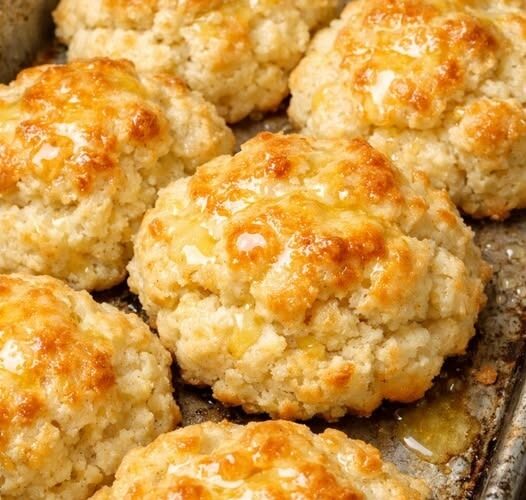
Homemade Drop Biscuits – Recipe
Introduction
Homemade Drop Biscuits are one of the easiest, softest, fluffiest, and most comforting baked breads you can prepare for breakfast, dinner sides, soups, holiday meals, or cozy homemade comfort food spreads. Combining buttery richness, tender crumb, golden crust, and soft fluffy texture, these biscuits create a warm bakery-style experience that feels hearty, rustic, comforting, and deeply satisfying without requiring rolling or complicated shaping.
Drop biscuits became especially popular across places like United States, Canada, and parts of Europe because they are:
- Quick to prepare
- Easy for beginners
- Soft and fluffy
- Rich and buttery
- Perfect with many meals
Unlike rolled biscuits, drop biscuits are made by simply scooping soft dough directly onto a baking tray, creating a more rustic texture and homemade appearance.
What makes Homemade Drop Biscuits truly special is the harmony between:
- Soft fluffy interior
- Buttery richness
- Golden crisp edges
- Tender crumb
- Warm homemade aroma
- Rustic bakery texture
A perfectly made Homemade Drop Biscuit should deliver:
golden buttery exterior → soft fluffy center → tender crumb texture → warm rich flavor → comforting homemade finish
This recipe focuses deeply on understanding:
- Biscuit texture science
- Butter incorporation
- Flour structure
- Moisture balance
- Leavening development
- Dough handling
- Baking expansion
because excellent biscuits depend heavily on balancing tenderness, fluffiness, richness, and moisture carefully.
The History of Biscuits
Biscuits became especially popular throughout the southern regions of United States where they became a staple comfort food served with:
- Breakfast
- Gravy
- Fried foods
- Soups
- Family meals
Drop biscuits later became loved because they offered:
- Faster preparation
- Easier technique
- Rustic homemade texture
without requiring cutting or rolling.
What Makes Drop Biscuits Different
Traditional rolled biscuits are:
- Rolled flat
- Folded
- Cut into shapes
Drop biscuits are simpler because the dough is:
- Softer
- Scooped directly
- Less handled
This creates:
- Rustic texture
- Craggy golden tops
- Tender crumb
Understanding Biscuit Texture
Excellent drop biscuits should feel:
- Soft
- Fluffy
- Tender
- Moist
without becoming:
- Dense
- Dry
- Tough
The ideal biscuit combines:
- Crisp edges
- Soft center
- Light airy crumb
Why Cold Butter Matters
Cold butter is one of the most important biscuit ingredients.
Cold butter creates:
- Steam pockets
- Flaky texture
- Tender crumb
- Rich flavor
During baking:
- Butter melts slowly
- Steam develops
- Dough lifts upward
This creates fluffiness and lightness.
Understanding Steam Pockets
When cold butter melts:
- Moisture turns into steam
- Tiny air spaces form
- Layers expand
This creates:
- Tender texture
- Soft crumb
- Light structure
The Importance of Baking Powder
Baking powder creates:
- Rise
- Airiness
- Soft structure
Without enough leavening, biscuits become:
- Heavy
- Flat
- Dense
Why Buttermilk Works So Well
Buttermilk contributes:
- Moisture
- Tanginess
- Tenderness
Its acidity also reacts with leavening to improve:
- Rise
- Fluffiness
- Soft texture
Understanding Dough Hydration
Biscuit dough should feel:
- Thick
- Soft
- Slightly sticky
without becoming:
- Wet and runny
or - Dry and crumbly
Balanced hydration creates softer biscuits.
Why Overmixing Is Dangerous
Too much mixing develops excessive gluten.
This creates:
- Tough texture
- Dense biscuits
- Reduced tenderness
Gentle mixing preserves softness.
Ingredients
Main Ingredients
- Flour
- Baking powder
- Butter
- Buttermilk or milk
- Salt
Optional Additions
- Cheese
- Garlic
- Herbs
- Honey
- Black pepper
- Green onions
Understanding Ingredient Functions
Flour
Provides:
- Structure
- Dough base
Butter
Provides:
- Richness
- Tenderness
- Flaky texture
Baking Powder
Provides:
- Rise
- Airiness
Buttermilk
Provides:
- Moisture
- Tender crumb
- Tangy flavor
Salt
Enhances:
- Flavor
- Butter richness
Preparing the Dough
Step 1: Combine Dry Ingredients
Mix:
- Flour
- Baking powder
- Salt
evenly.
Why Even Mixing Matters
Proper mixing ensures:
- Consistent rise
- Balanced flavor
- Uniform texture
Step 2: Add Cold Butter
Cut butter into the flour mixture.
Why Butter Texture Matters
The butter should remain:
- Cold
- Slightly chunky
Small butter pieces create:
- Better flakiness
- Softer crumb
- Rich texture
Understanding Crumb Formation
Butter-coated flour limits gluten development and helps create:
- Tenderness
- Softness
- Crumbly texture
Step 3: Add Buttermilk
Mix gently until dough just comes together.
Why Minimal Mixing Is Important
Overworking dough may create:
- Tough biscuits
- Dense structure
- Reduced rise
Gentle mixing keeps biscuits light.
Understanding Proper Dough Texture
The dough should feel:
- Soft
- Sticky
- Scoopable
A dry dough creates hard biscuits.
Shaping the Biscuits
Step 4: Drop Dough onto Baking Tray
Scoop portions directly onto the tray.
Why Rustic Shapes Work Well
Uneven surfaces create:
- Crispy golden edges
- More texture contrast
- Homemade appearance
Baking Process
Step 5: Bake Until Golden
Bake until:
- Puffy
- Golden brown
- Lightly crisp outside
Understanding Oven Spring
Early oven heat activates:
- Steam
- Butter melting
- Baking powder
This creates:
- Lift
- Air pockets
- Fluffy structure
Why Overbaking Causes Dryness
Overbaking removes moisture and creates:
- Dry texture
- Hard crust
- Crumbly interior
Biscuits are best when lightly golden only.
Texture Goals
Perfect Homemade Drop Biscuits should have:
Exterior
Golden slightly crisp crust
Interior
Soft fluffy tender crumb
Texture
Light buttery softness
Overall Experience
Warm homemade comfort
Flavor Profile
Butter Flavor
Rich and comforting
Texture
Soft fluffy tenderness
Finish
Warm bakery-style richness
Common Mistakes
Dense Biscuits
Cause
Overmixing
Fix
Mix gently and minimally.
Dry Biscuits
Cause
Too much flour or overbaking
Fix
Use balanced dough hydration.
Flat Biscuits
Cause
Warm butter
Fix
Keep butter cold.
Weak Flavor
Cause
Insufficient salt
Fix
Season properly.
Tough Texture
Cause
Overworked dough
Fix
Handle dough lightly.
Variations
Cheddar Drop Biscuits
Add cheddar cheese.
Garlic Herb Biscuits
Add garlic and herbs.
Honey Butter Biscuits
Brush with honey butter.
Spicy Biscuits
Add chili flakes or jalapeños.
Breakfast Biscuits
Add sausage or bacon pieces.
Storage
- Store airtight
- Reheat gently before serving
- Best enjoyed warm and fresh
Serving Suggestions
Serve with:
- Soup
- Gravy
- Butter
- Jam
- Fried chicken
They also pair beautifully with:
- Eggs
- Stew
- Chili
- BBQ dishes
Expert Tips
- Use cold butter
- Avoid overmixing
- Bake immediately after mixing
- Use fresh baking powder
- Keep dough soft and moist
- Serve warm for best texture
Why People Love Homemade Drop Biscuits
People love these biscuits because they combine:
- Soft fluffy texture
- Rich buttery flavor
- Easy homemade preparation
- Rustic bakery appearance
- Warm comfort-food satisfaction
while still feeling:
- Cozy
- Filling
- Homemade
- Deeply comforting
all at the same time.
Final Thoughts
Homemade Drop Biscuits prove that simple pantry ingredients can create extraordinary comfort food when butter temperature, dough hydration, flour structure, and baking balance are handled carefully. Through fluffy tender crumb, buttery richness, golden crust, and warm homemade aroma, these biscuits achieve comforting bakery-style texture that feels cozy, hearty, satisfying, and irresistibly delicious.
These biscuits deliver:
- Soft fluffy crumb
- Golden buttery crust
- Tender homemade texture
- Warm bakery aroma
- Rich comforting flavor
And most importantly:
Every bite combines fluffy tender texture, buttery richness, golden crisp edges, warm homemade aroma, and comforting bakery flavor into a bread that feels cozy, hearty, satisfying, and deeply delicious.
