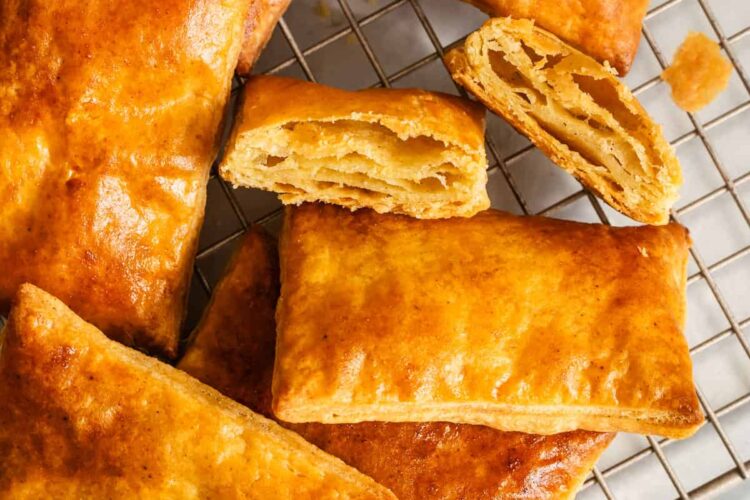
Gluten Free Puff Pastry – Recipe
Introduction
Gluten Free Puff Pastry is one of the most delicate, buttery, flaky, and technically impressive gluten-free doughs you can prepare in home baking. Famous for its crisp golden layers, airy rise, buttery richness, and delicate crunch, puff pastry transforms simple ingredients into an elegant dough capable of creating luxurious pastries, savory pies, desserts, tarts, turnovers, and baked appetizers.
Traditional puff pastry has long been associated with classic baking traditions across places like France, Austria, Germany, Italy, and the United Kingdom. However, creating a gluten-free version is especially challenging because gluten normally provides:
- Elasticity
- Stretch
- Structure
- Dough flexibility
Without gluten, puff pastry requires careful balancing of:
- Flour blends
- Fat layers
- Moisture
- Temperature
- Rolling techniques
- Dough stabilization
What makes Gluten Free Puff Pastry truly remarkable is its ability to still create:
- Crisp flaky layers
- Buttery richness
- Delicate lift
- Golden texture
- Light airy structure
without traditional wheat flour.
A perfectly made Gluten Free Puff Pastry should deliver:
crisp outer layers → buttery flaky texture → delicate airy lift → tender interior → rich golden finish
This recipe focuses deeply on understanding:
- Lamination science
- Gluten-free dough structure
- Butter layering
- Steam expansion
- Temperature control
- Flour balance
- Dough hydration
because exceptional puff pastry depends heavily on structure, precision, and careful layering.
The History of Puff Pastry
Puff pastry became famous throughout European baking traditions for its dramatic layered texture.
Classic puff pastry relies on repeated folding and rolling to create:
- Hundreds of thin dough layers
- Thin butter layers between dough sheets
During baking:
- Butter releases steam
- Steam lifts the layers
- The pastry expands dramatically
creating its signature flaky structure.
Why Puff Pastry Is Difficult Without Gluten
Traditional puff pastry depends heavily on gluten because gluten creates:
- Stretchability
- Elasticity
- Dough strength
Gluten-free dough lacks this natural elasticity.
Without proper balance, gluten-free pastry can become:
- Crumbly
- Fragile
- Dense
- Difficult to roll
Understanding Lamination
Lamination is the process of repeatedly folding butter into dough.
This creates:
- Thin butter layers
- Thin dough layers
During baking, steam separates these layers and creates flakiness.
Why Butter Is Essential
Butter contributes:
- Rich flavor
- Steam generation
- Flaky texture
- Tenderness
Cold butter is especially important because solid butter creates distinct layers.
Understanding Steam Expansion
When puff pastry bakes:
- Water inside butter turns to steam
- Steam pushes dough layers upward
This creates:
- Lift
- Flakiness
- Air pockets
Without steam, puff pastry becomes dense.
Why Temperature Control Matters
Warm butter melts into the dough instead of staying layered.
This destroys:
- Lamination
- Flakiness
- Rise
Cold dough and cold butter are critical for success.
Understanding Gluten-Free Flour Blends
Gluten-free flour blends often include:
- Rice flour
- Potato starch
- Tapioca starch
- Cornstarch
Each ingredient contributes different structural properties.
Why Starches Matter
Starches help create:
- Tenderness
- Lightness
- Crisp texture
However, excessive starch can create:
- Dryness
- Fragility
- Gummy texture
Balance is essential.
The Role of Xanthan Gum
Xanthan gum often replaces some functions of gluten.
It helps:
- Improve elasticity
- Reduce crumbling
- Stabilize dough structure
Without binders, gluten-free dough may fall apart easily.
Understanding Dough Hydration
Gluten-free flours absorb liquid differently than wheat flour.
Hydration affects:
- Flexibility
- Rollability
- Texture
Too little moisture creates:
- Cracking
- Dryness
Too much moisture creates:
- Sticky dough
- Weak structure
Ingredients
Main Ingredients
- Gluten-free flour blend
- Cold butter
- Xanthan gum
- Salt
- Ice water
Optional Additions
- Vinegar
- Sugar
- Egg wash
Understanding Ingredient Functions
Gluten-Free Flour Blend
Provides:
- Dough structure
- Base texture
Butter
Provides:
- Flakiness
- Richness
- Steam for lift
Xanthan Gum
Provides:
- Elasticity
- Stability
- Dough flexibility
Salt
Provides:
- Flavor enhancement
Ice Water
Provides:
- Hydration
- Dough formation
Why Ice Water Matters
Cold water helps maintain:
- Solid butter
- Dough temperature
- Layer separation
Warm water softens butter too quickly.
Preparing the Dough
Step 1: Combine Dry Ingredients
Mix:
- Gluten-free flour
- Xanthan gum
- Salt
evenly.
Why Even Mixing Matters
Proper distribution prevents:
- Weak spots
- Uneven hydration
- Inconsistent texture
Step 2: Add Cold Butter
Butter should remain cold and firm.
Why Cold Butter Creates Flakes
Cold butter stays in pieces within the dough.
During baking:
- Butter melts
- Steam forms
- Layers separate
creating flaky texture.
Step 3: Add Ice Water Gradually
Mix gently until dough forms.
Why Gentle Mixing Matters
Overworking gluten-free dough can create:
- Dense texture
- Sticky consistency
- Poor lamination
The dough should remain soft but manageable.
Resting the Dough
Step 4: Chill the Dough
Resting allows:
- Hydration
- Structure stabilization
- Butter firming
Cold dough rolls more cleanly.
Understanding Relaxation Time
Resting improves:
- Dough flexibility
- Moisture distribution
- Rolling consistency
Skipping rest periods often leads to cracking.
Lamination Process
Step 5: Roll and Fold
Roll dough carefully and fold repeatedly.
Why Folding Creates Layers
Each fold multiplies:
- Dough layers
- Butter layers
creating the classic puff pastry structure.
Understanding Layer Multiplication
Repeated folds dramatically increase layer count.
More layers create:
- Better flakiness
- Better rise
- More delicate texture
Step 6: Chill Between Folds
Refrigerate after folding.
Why Chilling Is Essential
Chilling:
- Prevents butter melting
- Maintains structure
- Improves rolling
Warm dough destroys layer definition.
Preparing for Baking
Step 7: Roll Final Dough
Roll carefully to desired thickness.
Why Thickness Matters
Too thick:
- Dense pastry
Too thin:
- Weak structure
Balanced thickness creates:
- Crispness
- Lift
- Proper flakiness
Step 8: Bake at High Heat
High heat rapidly creates steam.
Why High Heat Is Important
Fast steam generation helps:
- Separate layers
- Lift pastry
- Create crispness
Low heat may melt butter before steam develops properly.
Understanding Golden Browning
Golden color develops through:
- Butter browning
- Surface dehydration
- Sugar caramelization
This contributes:
- Flavor
- Crisp texture
- Aroma
Texture Goals
Perfect Gluten Free Puff Pastry should have:
Texture
Flaky, crisp, airy
Layers
Visible delicate separation
Flavor
Rich buttery balance
Overall Experience
Light crisp pastry with delicate crunch
Flavor Profile
Butter Flavor
Rich and warm
Texture
Crisp layered flakiness
Finish
Light airy buttery crunch
Common Mistakes
Dense Pastry
Cause
Butter melted into dough
Fix
Keep dough cold.
Cracking Dough
Cause
Insufficient hydration
Fix
Adjust moisture carefully.
Poor Rise
Cause
Insufficient lamination
Fix
Fold properly and chill between turns.
Greasy Texture
Cause
Butter leakage
Fix
Maintain cold temperatures.
Tough Pastry
Cause
Overhandling
Fix
Work gently.
Variations
Sweet Puff Pastry
Add slight sugar for desserts.
Savory Puff Pastry
Use for pies and appetizers.
Herb Puff Pastry
Add herbs into the dough.
Cheese Puff Pastry
Add Parmesan or cheddar layers.
Mini Pastry Shells
Create tart or appetizer bases.
Storage
- Refrigerate several days
- Freeze for longer storage
Serving Suggestions
Use Gluten Free Puff Pastry for:
- Fruit tarts
- Turnovers
- Savory pies
- Sausage rolls
- Cream pastries
- Appetizers
It pairs beautifully with:
- Chocolate
- Fruit fillings
- Cheese
- Cream sauces
Expert Tips
- Keep everything cold
- Chill between folds
- Avoid overworking dough
- Use quality butter
- Roll gently
- Bake fully for crispness
Why People Love Gluten Free Puff Pastry
People love Gluten Free Puff Pastry because it delivers:
- Crisp flaky texture
- Buttery richness
- Elegant presentation
- Versatile baking possibilities
- Delicate airy layers
while remaining suitable for gluten-free baking needs.
It allows gluten-free baking to still feel:
- Luxurious
- Classic
- Impressive
- Comforting
without sacrificing texture.
Final Thoughts
Gluten Free Puff Pastry proves that delicate flaky pastry can still achieve extraordinary texture and elegance without traditional wheat flour when lamination, hydration, butter temperature, and dough structure are balanced carefully. Through cold butter layers, steam expansion, gluten-free stabilization, and precise folding, this pastry achieves crisp airy flakiness that feels luxurious, delicate, buttery, and deeply satisfying.
This pastry delivers:
- Crisp flaky layers
- Rich buttery flavor
- Delicate airy structure
- Golden crunchy texture
- Elegant pastry versatility
And most importantly:
Every bite combines delicate flaky layers, buttery richness, crisp golden texture, airy lift, and soft tender pastry into a baking experience that feels elegant, luxurious, comforting, and irresistibly delicious.
