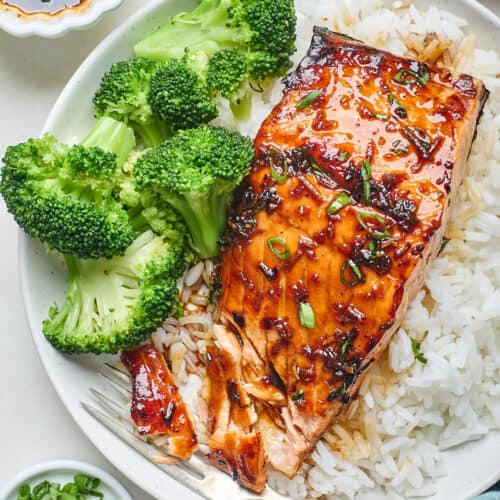
Honey Garlic Salmon – Recipe
Introduction & Background
Air Fryer Honey Garlic Salmon is a refined modern seafood dish that sits at the intersection of culinary tradition, flavor chemistry, and rapid cooking technology. Salmon itself has been a staple in coastal cuisines for centuries, especially in Nordic, Japanese, and Pacific regions, where it is valued for its rich oil content, tender texture, and natural umami depth.
In traditional cooking methods, salmon is usually pan-seared, grilled, or oven-baked. Each method requires careful heat management because salmon is a delicate protein—too little heat leaves it undercooked, while too much heat quickly dries it out and destroys its buttery texture.
The air fryer introduces a controlled environment where high-speed hot air circulation replaces pan oil or oven radiation, allowing salmon to cook quickly and evenly while still developing surface caramelization.
The honey garlic glaze is what transforms this dish from simple cooked fish into a layered culinary experience. It brings together:
- Natural sweetness (honey)
- Savory umami depth (soy sauce or seasoning base)
- Aromatic sharpness (garlic)
- Subtle acidity (optional lemon or vinegar)
The result is a dish that is:
- Moist and flaky inside
- Glossy and caramelized outside
- Balanced between sweet, savory, and aromatic notes
Chef’s Philosophy & Culinary Framework
The core philosophy behind this dish is:
Moisture preservation + controlled caramelization = premium texture without excess fat
Unlike frying or heavy saucing methods, this recipe relies on precision layering of flavor rather than quantity of ingredients.
Salmon is naturally rich in fat, which means:
- It does not require added oil for tenderness
- It naturally supports moisture retention during cooking
- It enhances flavor absorption from glaze
The goal is to respect the ingredient, not overpower it.
In this system:
- Heat creates structure
- Natural fat maintains moisture
- Glaze builds flavor complexity
Every component has a specific role in the final outcome.
Core Culinary Systems
1. Protein Fat Rendering & Moisture Lock System
Salmon contains a high percentage of omega-rich fats, which behave differently from lean meat proteins.
During air frying:
- Surface proteins begin to firm
- Internal fats gently render
- Moisture becomes trapped inside the protein matrix
This creates a self-basting effect, where the fish essentially cooks in its own natural oils.
The key is timing:
- Underheating → raw, soft texture
- Overheating → dry, flaky breakdown
- Precise heating → buttery, moist flake structure
2. Honey Caramelization & Sugar Transformation System
Honey is not just sweetness—it is a heat-reactive sugar matrix.
When exposed to high heat:
- Fructose and glucose begin caramelizing
- Water content evaporates
- Surface becomes sticky and glossy
This creates a glaze that:
- Clings to salmon surface
- Develops deeper amber flavor notes
- Forms a thin caramelized coating
However, honey is sensitive—if exposed too early to high heat, it burns quickly. That is why layering timing is critical.
3. Garlic Aromatic Volatilization System
Garlic acts as the aromatic backbone of the dish.
When cooked:
- Raw sulfur compounds break down
- Sharpness transforms into sweetness
- Aroma becomes rounded and savory
In glaze form, garlic:
- Infuses into honey base
- Spreads evenly over fish surface
- Enhances depth without overpowering
Proper garlic balance is what separates flat sweetness from complex savory-sweet flavor.
4. Air Fryer Convective Heat System
The air fryer operates through rapid convection:
- Hot air circulates at high speed
- Heat is evenly distributed
- Surface moisture evaporates quickly
For salmon, this results in:
- Slight exterior crisping
- Fast internal cooking
- Reduced oil dependency
Unlike pan-searing, there is no need for constant flipping or oil control.
5. Glaze Layer Adhesion & Coating Stability System
A glaze must perform three functions:
- Stick to surface protein
- Resist immediate runoff
- Maintain shine after cooking
This is achieved by:
- Applying glaze in thin layers
- Using balanced sugar-to-liquid ratio
- Allowing partial caramelization during cooking
Too much glaze too early leads to burning; too little results in weak flavor coating.
6. Thermal Gradient Cooking System
Salmon cooks from outside in.
During air frying:
- Outer layer heats first and firms
- Heat gradually penetrates center
- Internal proteins coagulate evenly
This gradient ensures:
- Exterior texture development
- Interior softness retention
- Controlled doneness
Difficulty, Timing & Yield
Difficulty Level: Easy–Medium
Preparation Time: 15–20 minutes
Cooking Time: 8–14 minutes
Resting Time: 3–5 minutes
Total Time: ~30 minutes
Servings: 2–4 portions
Ingredients (Ultra Detailed Functional Breakdown)
Salmon Protein Base System
- 2–4 salmon fillets (preferably skin-on)
Function:
- Primary protein source
- Natural fat provider
- Structural base for glaze adhesion
Skin-on fillets help:
- Retain moisture
- Prevent sticking
- Improve texture stability
Honey Garlic Glaze System
- 3–4 tablespoons honey
- 2–3 cloves garlic (finely minced)
- 2 tablespoons soy sauce
Function:
- Honey → sweetness + caramelization
- Garlic → aromatic depth
- Soy sauce → umami + salt balance
This combination forms the core flavor architecture.
Acid Balance System (Optional but Important)
- 1 teaspoon lemon juice or rice vinegar
Function:
- Cuts through sweetness
- Enhances brightness
- Prevents flavor heaviness
Oil & Surface Conditioning System
- 1 teaspoon olive oil
Function:
- Prevents sticking
- Helps surface browning
- Improves mouthfeel
Seasoning System
- Salt
- Black pepper
Function:
- Enhances natural salmon flavor
- Balances glaze sweetness
Step-by-Step Method (Ultra Detailed Execution System)
Step 1: Protein Surface Preparation Phase
Pat salmon completely dry.
This is essential because:
- Removes excess surface moisture
- Improves caramelization
- Enhances glaze adhesion
Lightly season with salt and pepper.
Let rest for 5 minutes to absorb seasoning.
Step 2: Glaze Construction Phase
In a small bowl, combine:
- Honey
- Minced garlic
- Soy sauce
- Optional lemon juice
Mix until fully emulsified.
This creates a balanced sweet-savory aromatic base.
Step 3: Initial Coating Phase
Brush salmon lightly with glaze.
Do not saturate.
This creates:
- Flavor foundation layer
- Early surface bonding
Step 4: Air Frying Phase (Primary Cooking Cycle)
Preheat air fryer to 180–200°C.
Place salmon skin-side down.
Cook for 8–14 minutes depending on thickness.
During this phase:
- Proteins begin coagulating
- Fats render gently
- Surface starts drying slightly for glaze grip
Step 5: Mid-Cooking Glaze Reinforcement Phase (Advanced Technique)
At halfway point:
- Apply second thin glaze layer
This builds:
- Stronger caramelized coating
- Deeper flavor intensity
- Glossy finish
Avoid thick application to prevent burning.
Step 6: Final Heat Caramelization Phase
In final 2–3 minutes:
- Glaze thickens
- Surface becomes sticky
- Edges lightly caramelize
This is where flavor complexity peaks.
Step 7: Resting Stabilization Phase
Remove salmon and rest for 3–5 minutes.
This allows:
- Internal juices to redistribute
- Texture to firm slightly
- Flavor to settle and intensify
Skipping this step leads to juice loss.
Texture & Flavor Profile (Professional Analysis)
A perfectly executed Air Fryer Honey Garlic Salmon delivers:
- Buttery, flaky interior
- Slightly crisp glazed exterior
- Sticky honey coating with caramel notes
- Balanced sweet and savory flavor layers
- Gentle garlic aroma without harshness
Each bite should feel rich, clean, and structured.
Advanced Variations
Spicy Honey Garlic Salmon
- Add chili flakes or hot sauce
Creates sweet-heat contrast profile.
Butter-Enhanced Version
- Add melted butter to glaze
Increases richness and mouthfeel.
Citrus Herb Version
- Add lemon zest and fresh dill
Creates fresh, aromatic brightness.
Low-Sugar Version
- Replace honey with sugar-free syrup alternative
Reduces sweetness intensity.
Advanced Chef Tips
- Always preheat air fryer for consistent cooking
- Use uniform fillet thickness for even results
- Apply glaze in layers, not all at once
- Avoid overcrowding air fryer basket
- Watch final minutes carefully to prevent burning
Common Mistakes & Fixes
Dry Salmon
Cause:
Overcooking or thin fillets
Fix:
Reduce cooking time slightly
Burnt Glaze
Cause:
Too much honey applied early
Fix:
Apply glaze in final stages
Weak Flavor
Cause:
Insufficient seasoning or glaze balance
Fix:
Increase soy-garlic ratio slightly
Uneven Cooking
Cause:
Inconsistent fillet sizes
Fix:
Use similar thickness cuts
Storage & Reheating
- Refrigerate up to 2 days
- Reheat in air fryer at low heat
- Avoid microwaving for best texture
Serving Suggestions
Serve with:
- Steamed jasmine rice
- Garlic butter noodles
- Roasted vegetables
- Fresh salad with citrus dressing
Final Thoughts
Air Fryer Honey Garlic Salmon is a modern example of how precision cooking techniques can elevate simple ingredients into restaurant-quality meals within minutes.
It delivers:
- Juicy, tender salmon
- Glossy honey garlic glaze
- Balanced sweet-savory complexity
- Fast, efficient cooking workflow
At its core, this dish demonstrates a key culinary principle:
When heat control, natural fat behavior, and layered glazing are properly synchronized, even minimal ingredients can produce maximum flavor impact
