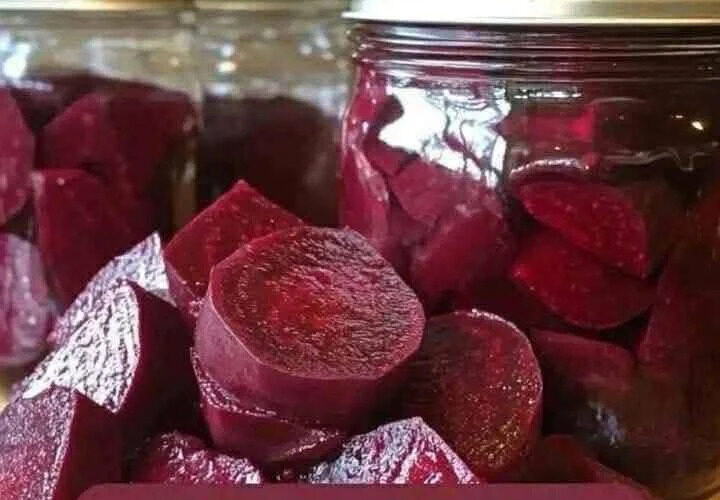
Pickled Beets – Recipe
Introduction & Background
Pickled Beets are one of the most iconic examples of how simple ingredients can be transformed through time, chemistry, and technique into something deeply flavorful and long-lasting. What begins as a dense, earthy root vegetable evolves into a vibrant, tangy-sweet preserved food with a completely different personality.
Beets have been cultivated for thousands of years, valued not only for their nutrition but also for their natural sugars and intense color. In traditional preservation cultures—especially across Eastern Europe, the Mediterranean, and later in regions like the United States—pickling became essential for survival through long winters.
Before refrigeration, pickling allowed people to:
- Extend shelf life of vegetables
- Preserve nutrients
- Add flavor variety to meals
- Prevent food waste
Pickled beets stood out among preserved foods because they offered:
- Natural sweetness (unlike many vegetables)
- Deep, vibrant red-purple color
- Smooth, tender texture after cooking
- Excellent absorption of flavors
This master recipe is designed not just to show you how to pickle beets, but to fully explain the science of preservation, flavor infusion, and structural transformation.
The goal is to produce pickled beets that are:
- Perfectly tender but not mushy
- Balanced between sweet and tangy
- Deeply infused with flavor
- Vibrant in color
- Stable and safe for storage
What This Dish Really Is (Structural Identity)
Pickled beets are a multi-phase preservation system involving heat treatment, acid infusion, and osmotic flavor exchange.
They undergo three major transformations:
1. Thermal Softening Phase
Beets are cooked to break down tough cell walls.
2. Acidification Phase
Vinegar lowers pH to preserve and flavor.
3. Diffusion Phase
Flavor compounds slowly penetrate the beet structure.
Unlike raw pickled vegetables:
- Beets must be cooked first
- Their dense structure requires pre-softening
- Flavor absorption happens gradually over time
This makes them:
a cooked root vegetable stabilized and transformed through controlled acidity and time
Core Texture & Flavor Goals (Professional Benchmark)
A perfectly executed batch of pickled beets should achieve:
- Smooth, tender texture with slight firmness
- No mushiness or breakdown
- Balanced sweet-acid flavor profile
- Deep internal flavor penetration
- Clean, juicy bite
The ideal taste experience is:
earthy sweetness + bright acidity + subtle spice depth
Ingredient System (Ultra Detailed Functional Breakdown)
1. Beets (Primary Structural Component)
- 5–8 medium beets (about 800g–1kg)
Function:
- Provides base structure
- Contains natural sugars
- Absorbs pickling liquid
Advanced Insight:
Beets contain betalains (pigments) and natural sugars, which contribute to both color and flavor.
2. Vinegar (Acidic Preservation Core)
- 1 to 1½ cups vinegar (white or apple cider)
Function:
- Lowers pH
- Prevents bacterial growth
- Adds tangy flavor
Scientific Role:
A pH below ~4.6 inhibits harmful microorganisms, making the food safe for storage.
3. Water (Dilution & Balance Control)
- 1 to 1½ cups water
Function:
- Softens acidity
- Balances sharpness
- Allows better flavor harmony
4. Sugar (Flavor & Preservation Support)
- ⅓ to ¾ cup sugar
Function:
- Balances acidity
- Enhances natural beet sweetness
- Supports preservation by reducing water activity
5. Salt (Flavor Enhancer & Stability Agent)
- 1–2 tsp salt
Function:
- Enhances flavor
- Supports preservation
- Balances sweetness
6. Aromatics & Spice System (Flavor Complexity Layer)
Optional but highly recommended:
- Garlic cloves
- Black peppercorns
- Bay leaves
- Mustard seeds
- Cloves
- Cinnamon stick
Function:
- Adds aromatic depth
- Creates layered flavor profile
- Enhances overall complexity
Deep Food Science Breakdown (Advanced Level)
1. Beet Cellular Structure Breakdown
Beets are dense and fibrous.
When cooked:
- Cell walls soften
- Pectin breaks down
- Texture becomes tender
This step is essential for flavor absorption.
2. Acid Penetration Mechanics
Vinegar molecules:
- Move into beet cells
- Lower internal pH
- Preserve structure
Acid also slightly firms plant tissue.
3. Osmosis & Diffusion System
After immersion:
- Water and dissolved compounds move between beet and liquid
- Sugars, acids, and spices diffuse inward
This process takes hours to days.
4. Preservation Science (pH Control)
Low pH environment:
- Inhibits bacteria and mold
- Slows enzymatic activity
- Extends shelf life
5. Sugar-Acid Balance System
Sugar and acid must be balanced:
- Too much acid → harsh taste
- Too much sugar → overly sweet
The ideal balance creates a rounded flavor profile.
6. Color Stability & Pigment Chemistry
Beets contain betalains:
- Sensitive to heat and pH
- Acid helps stabilize color
- Overcooking can dull color
7. Flavor Maturation Over Time
As beets sit:
- Flavors deepen
- Sharp acidity softens
- Aromatics infuse
Best flavor often develops after 2–3 days.
Step-by-Step Method (Ultra Detailed Execution)
Step 1: Selecting Beets
Choose:
- Firm
- Smooth skin
- Medium size
Avoid overly large or soft beets.
Step 2: Cleaning & Trimming
Wash thoroughly.
Trim stems, leaving small portion to prevent bleeding.
Step 3: Cooking Phase
Boil or roast beets:
- Boil: 30–45 minutes
- Roast: 180°C for 45–60 minutes
Cook until fork-tender.
Step 4: Cooling & Peeling
Let cool slightly.
Rub skins off gently.
Step 5: Cutting
Slice, cube, or wedge.
Uniform size ensures even pickling.
Step 6: Prepare Pickling Brine
In saucepan combine:
- Vinegar
- Water
- Sugar
- Salt
- Spices
Bring to gentle simmer.
Step 7: Packing Jars
Place beets into sterilized jars.
Add aromatics evenly.
Step 8: Pouring Brine
Pour hot brine over beets.
Ensure full submersion.
Step 9: Cooling Phase
Let cool to room temperature.
Step 10: Refrigeration & Maturation
Refrigerate for at least 24 hours.
Optimal flavor after 48–72 hours.
Texture & Flavor Profile
Perfect pickled beets deliver:
- Tender yet structured bite
- Juicy interior
- Sweet-tangy balance
- Slight spice undertones
- Bright, vibrant color
Common Mistakes & Fixes
Mushy Beets
Cause: Overcooking
Fix: Reduce cooking time
Too Sour
Cause: Excess vinegar
Fix: Increase sugar or water
Weak Flavor
Cause: Insufficient time
Fix: Let sit longer
Dull Color
Cause: Overcooking
Fix: Cook gently
Advanced Variations
Spiced Winter Beets
Add cinnamon, cloves, star anise.
Garlic Herb Version
Add garlic and herbs.
Roasted Flavor Version
Roast instead of boiling.
Keto Version
Use sugar substitutes.
Citrus Pickled Beets
Add orange zest or juice.
Storage & Shelf Life
- Refrigerator: 3–4 weeks
- Flavor improves over time
Always keep submerged in brine.
Serving Ideas
- Salads
- Sandwiches
- Grain bowls
- Cheese boards
- Side dish
Final Thoughts
Pickled Beets are more than just a preserved vegetable—they are a demonstration of how science and time work together to transform texture, flavor, and longevity. By understanding cooking, acidification, and flavor diffusion, you can consistently create pickled beets that are vibrant, balanced, and deeply satisfying.
They deliver:
- Long shelf life
- Bold flavor
- Nutritional value
- Versatile usage
At their core, they prove:
When heat softens structure, acid stabilizes it, and time allows flavors to penetrate, even a simple root vegetable can become a complex, vibrant, and long-lasting culinary creation.
