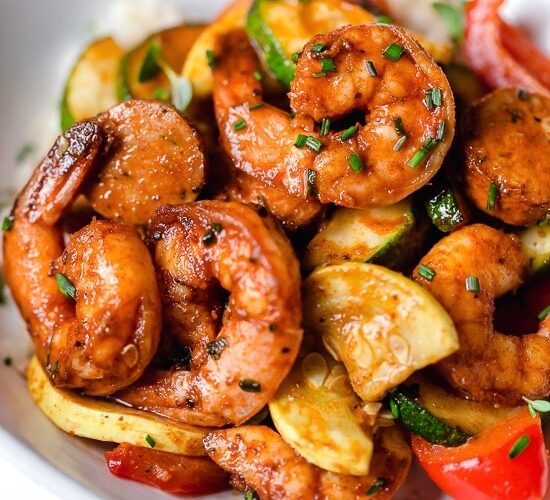
Cajun Shrimp – Recipe
Introduction & Background
Air Fryer Cajun Shrimp Dinner is a high-intensity, fast-execution seafood dish that represents the evolution of traditional Cajun cooking adapted for modern kitchen technology. Cajun cuisine originates from the Acadian settlers of Louisiana, where cooking traditions were shaped by necessity, local ingredients, and bold seasoning strategies designed to maximize flavor in simple dishes.
Shrimp has always been a central ingredient in coastal Cajun cooking due to its availability, quick cooking time, and ability to absorb strong spices. Traditionally, Cajun shrimp is pan-seared in cast iron skillets with heavy seasoning, butter, and aromatics. The air fryer version modernizes this process by replacing stovetop searing with high-speed convection heat, allowing the same depth of flavor with less oil, less effort, and more consistency.
This dish is not just about shrimp—it is a complete flavor system meal, often paired with rice, vegetables, or potatoes to form a balanced dinner plate. It delivers:
- Bold Cajun spice intensity
- Juicy, tender shrimp texture
- Light crisp exterior coating
- Fast preparation with minimal cleanup
At its highest level, this recipe is a study in speed cooking without sacrificing depth of flavor.
Chef’s Philosophy & Culinary Framework
The philosophy behind Air Fryer Cajun Shrimp Dinner is:
High heat precision + short cook window + layered seasoning = maximum flavor density with minimal ingredient complexity
Shrimp is one of the most sensitive proteins in cooking. Unlike beef or chicken, it does not forgive timing mistakes:
- Undercook → unpleasant texture and raw center
- Overcook → rubbery, dry, and chewy
- Perfect cook → tender, juicy, slightly springy bite
Cajun seasoning complements this perfectly because it is designed to deliver:
- Immediate flavor impact
- Smoky undertones
- Heat that builds gradually
- Aromatic depth from dried herbs
The air fryer amplifies this by creating a controlled environment where spice adhesion, moisture control, and rapid caramelization happen simultaneously.
The goal is not subtle cooking—it is controlled intensity with precision timing.
Core Culinary Systems (Ultra Deep Technical Breakdown)
1. Shrimp Protein Transformation System
Shrimp is primarily composed of fast-denaturing muscle proteins.
When exposed to heat:
- Proteins rapidly contract
- Moisture is released from internal structure
- Texture transitions from soft → firm → springy
The challenge is stopping at the exact moment before moisture loss becomes irreversible.
Perfect shrimp characteristics:
- Opaque white-pink color
- Slight “C” curl shape (not tight “O” curl)
- Juicy interior with light resistance
This transformation happens within minutes, making timing the most critical variable.
2. Cajun Spice Activation & Thermal Volatilization System
Cajun seasoning is not just a blend—it is a heat-reactive aromatic system.
Each component behaves differently under air fryer heat:
- Paprika → deepens color and develops smoky undertones
- Cayenne pepper → releases capsaicin heat intensity
- Garlic powder → becomes savory and rounded
- Onion powder → adds sweetness and depth
- Oregano & thyme → release earthy herbal oils
- Black pepper → sharpens overall perception
As temperature increases, volatile compounds are released, creating layered aroma perception rather than flat spice taste.
3. Oil-Spice Binding Adhesion System
Oil plays a structural role, not just a cooking medium.
When shrimp is coated in oil:
- It creates a thin hydrophobic layer
- Spice particles adhere evenly
- Surface browning is enhanced
Without oil:
- Spice falls off during cooking
- Texture becomes dry and uneven
- Flavor lacks cohesion
This system ensures every shrimp carries a uniform seasoning layer.
4. Air Fryer Convective Heat Acceleration System
The air fryer uses rapid convection to simulate deep frying without submersion in oil.
Mechanics:
- Hot air circulates at high speed
- Moisture evaporates from surface quickly
- Exterior dries and slightly crisps
For shrimp, this means:
- Faster cooking time than pan frying
- Even heat distribution
- Reduced risk of oil saturation
Unlike stovetop cooking, no constant flipping is required, reducing human error.
5. Moisture Retention Equilibrium System
Shrimp contains high internal water content.
During cooking:
- Surface moisture evaporates
- Internal moisture must remain trapped
Balance is achieved through:
- Short cooking duration
- High heat exposure
- Oil coating to slow dehydration
If equilibrium fails:
- Shrimp becomes dry and rubbery
- Flavor intensity drops
6. Flavor Layer Development System
Cajun shrimp flavor is not single-layered—it develops in stages:
Stage 1: Raw Coating Phase
Spices adhere to raw shrimp surface.
Stage 2: Heat Activation Phase
Spices release aromatic oils.
Stage 3: Caramelized Surface Phase
Light browning enhances smoky depth.
Stage 4: Resting Phase
Residual heat deepens seasoning penetration.
This creates a multi-phase flavor experience rather than a flat taste profile.
Difficulty, Timing & Yield
Difficulty Level: Easy–Medium
Preparation Time: 15–20 minutes
Cooking Time: 6–10 minutes
Resting Time: 3–5 minutes
Total Time: ~25–30 minutes
Servings: 2–4 portions
Ingredients (Ultra Detailed Functional Breakdown)
Shrimp Protein System
- 400–600g large shrimp (peeled and deveined)
Function:
- Primary protein source
- Rapid cooking medium
- Flavor absorption base
Best choice:
- Large shrimp for better juiciness
- Tail-on shrimp for structure and presentation
Cajun Spice Architecture System
- 1 tsp paprika
- 1/2 tsp cayenne pepper
- 1 tsp garlic powder
- 1 tsp onion powder
- 1/2 tsp oregano
- 1/2 tsp thyme
- Salt and black pepper
Function:
- Builds smoky-spicy profile
- Adds layered aroma complexity
- Creates signature Cajun identity
Oil Binding System
- 1 to 2 tablespoons olive oil
Function:
- Spice adhesion
- Surface crisping
- Moisture protection
Flavor Enhancement System (Optional Advanced Layer)
- 1 tsp lemon juice
- Pinch of smoked paprika
- Small pinch of sugar
Function:
- Balances spice heat
- Enhances caramelization
- Adds brightness and depth
Step-by-Step Method (Ultra Detailed Execution System)
Step 1: Protein Surface Drying Phase
Pat shrimp completely dry using paper towels.
This step is critical because:
- Removes excess surface moisture
- Improves spice adhesion
- Enhances browning effect
Dry shrimp ensures maximum flavor attachment.
Step 2: Spice Coating Integration Phase
In a mixing bowl, combine:
- Shrimp
- Cajun spice blend
- Olive oil
Toss thoroughly until:
- Every shrimp is evenly coated
- No dry spice pockets remain
- Surface has light oil sheen
This ensures uniform flavor distribution.
Step 3: Resting Infusion Phase
Let shrimp rest for 5–10 minutes.
During this time:
- Spices begin penetrating surface layer
- Oil binds seasoning to protein
- Initial flavor integration begins
This step significantly increases final taste depth.
Step 4: Air Frying Phase (Primary Heat Cycle)
Preheat air fryer to 190–200°C.
Place shrimp in a single layer.
Cook for 6–10 minutes depending on size.
Optional halfway step:
- Shake basket or flip shrimp once
During cooking:
- Protein denatures
- Spice oils activate
- Surface moisture evaporates
- Light crisp layer forms
Step 5: Doneness Precision Phase
Shrimp is perfectly cooked when:
- Fully opaque
- Pink with slight golden edges
- Firm but not rubbery texture
- Curled into loose “C” shape
Even 1–2 minutes over can drastically change texture quality.
Step 6: Flavor Bloom Resting Phase
Let shrimp rest for 2–3 minutes after cooking.
This allows:
- Internal juices to redistribute
- Spices to deepen in aroma
- Texture to stabilize
Resting is essential for full flavor expression.
Texture & Flavor Profile
A perfectly executed Air Fryer Cajun Shrimp Dinner delivers:
- Juicy, tender shrimp interior
- Lightly crisp, spice-coated exterior
- Smoky, savory Cajun aroma
- Balanced heat that builds gradually
- Subtle sweetness from paprika and shrimp natural sugars
Each bite should feel bold, warm, and slightly addictive.
Advanced Variations
Creamy Cajun Shrimp Version
- Add cream or garlic butter sauce after cooking
Creates rich, restaurant-style dish.
Cajun Lemon Shrimp Version
- Increase lemon juice and zest
Creates bright, fresh contrast.
Garlic Butter Cajun Shrimp
- Toss cooked shrimp in melted garlic butter
Adds richness and smooth finish.
Low-Oil Fitness Version
- Use spray oil instead of full coating
Reduces fat content while maintaining crispness.
Advanced Chef Tips
- Always dry shrimp before seasoning
- Do not overcrowd air fryer basket
- Use similar-sized shrimp for even cooking
- Adjust cayenne based on spice tolerance
- Serve immediately for best texture
Common Mistakes & Fixes
Rubbery Texture
Cause:
Overcooking
Fix:
Reduce cooking time slightly
Weak Flavor
Cause:
Insufficient spice coating
Fix:
Increase seasoning and oil balance
Uneven Cooking
Cause:
Overcrowded basket
Fix:
Cook in smaller batches
Dry Shrimp
Cause:
No oil or excessive air frying
Fix:
Ensure proper coating and timing
Storage & Reheating
- Best consumed fresh
- Refrigerate up to 24 hours
- Reheat briefly in air fryer (low heat)
Serving Suggestions
Serve with:
- Cajun rice
- Mashed potatoes
- Garlic butter pasta
- Roasted vegetables
- Lemon wedges
Final Thoughts
Air Fryer Cajun Shrimp Dinner is a perfect example of how precision timing, spice chemistry, and modern air circulation technology can transform a simple protein into a bold, restaurant-quality meal in under 30 minutes.
It delivers:
- Juicy, perfectly cooked shrimp
- Bold Cajun spice layering
- Light crisp exterior texture
- Fast, efficient cooking workflow
At its core, this dish demonstrates a key culinary principle:
When heat control, spice activation, and protein timing are perfectly synchronized, simplicity becomes intensity, and speed becomes quality
