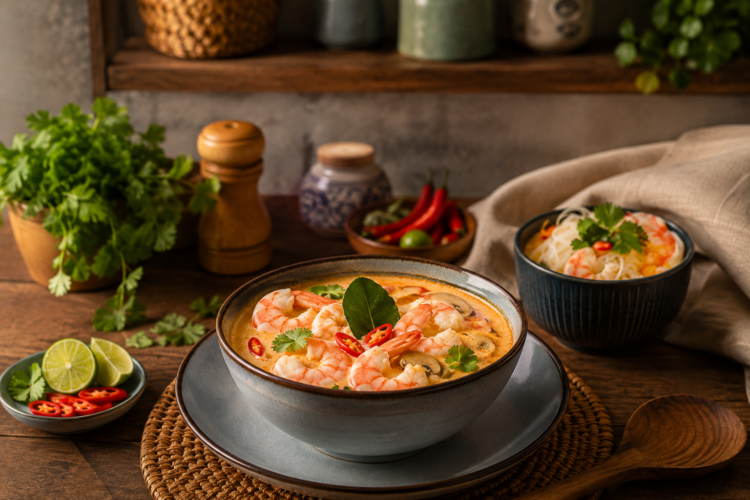
Tom Yum with prawns is one of the most popular Thai soup recipes for anyone who enjoys bright, aromatic, spicy, and satisfying food. This high protein Thai soup combines tender prawns, fragrant lemongrass, galangal, lime leaves, mushrooms, coconut milk, glass noodles, and a rich Thai chilli jam to create a bowl that is both comforting and full of character. The result is a delicious prawn soup with the familiar balance of hot, sour, salty, and savoury flavours that makes Thai cuisine so distinctive.
Unlike heavier creamy soups, this Thai prawn soup delivers a satisfying meal without relying on large amounts of cream, butter, or cheese. The prawns provide the main source of protein, while the aromatic ingredients build layers of flavour throughout the broth. Coconut milk adds a gentle richness, mushrooms contribute texture, and glass noodles make the dish substantial enough to serve as a complete lunch or dinner. It is an excellent option when you want a homemade soup that feels special but can still be prepared with straightforward cooking techniques.
This recipe serves two people, making it suitable for a simple dinner, a light weekend meal, or a shared lunch. However, it can also be scaled up when cooking for family members or guests. Because the preparation is based on a flavourful stock, increasing the quantities is relatively easy while keeping the same balance of ingredients. Whether you are searching for an authentic-style Thai soup, a high protein prawn recipe, or a warming noodle soup, this Tom Yum-inspired dish brings several popular qualities together in one bowl.
Why This High Protein Thai Soup Is So Satisfying
A bowl of soup can be surprisingly filling when it contains a good balance of protein, carbohydrates, vegetables, and flavourful liquid. In this recipe, prawns are the main protein ingredient, with each serving providing a substantial amount of protein. Protein is an important nutrient for many normal body functions and can also help make meals feel more satisfying. Combining prawns with glass noodles and mushrooms creates a meal that has both texture and substance rather than feeling like a simple starter soup.
Prawns are particularly useful in quick recipes because they cook rapidly. Once added to a simmering broth, they only need a few minutes to become tender and opaque. Overcooking can make them firm or rubbery, so adding them near the end of the cooking process helps preserve their delicate texture. Their naturally mild flavour also works beautifully with the bold ingredients commonly used in Thai cooking, allowing the aromatic broth to remain the star while the prawns add richness and protein.
The combination of protein and noodles makes this recipe especially useful as a complete meal. The glass noodles absorb some of the surrounding flavours while maintaining their characteristic chewy texture. Serving the noodles separately in the bowl before adding the soup also helps create an attractive presentation. Every spoonful brings together broth, prawns, mushrooms, herbs, and noodles, creating a varied and enjoyable eating experience.
The Classic Flavours Behind Tom Yum Soup
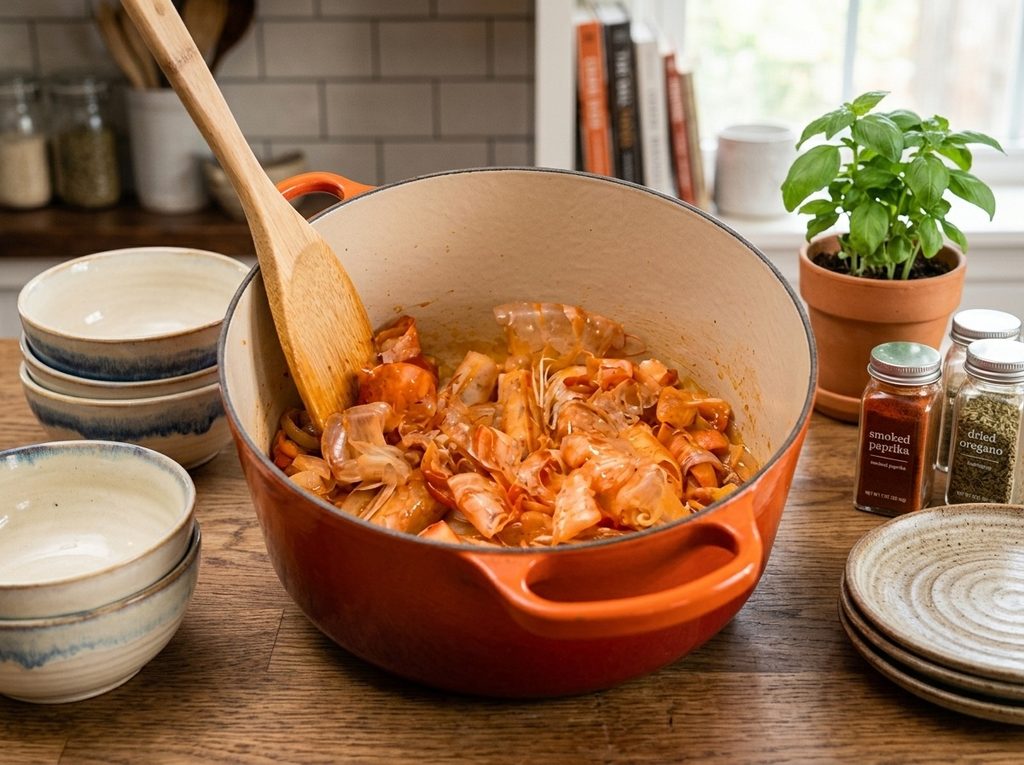
The distinctive character of Tom Yum comes from its carefully balanced flavour profile. A good Thai soup is not simply spicy or sour. Instead, several different ingredients work together to create contrast and depth. Lemongrass contributes a fresh citrus aroma, galangal provides a sharp and earthy fragrance, lime leaves add a distinctive perfume, fish sauce brings saltiness and savoury depth, and fresh lime juice gives the finished soup its bright acidity.
Fresh chilli introduces heat, while Nam Prik Pao adds another layer of complexity. This Thai chilli jam has a deeper and more rounded character than plain chilli sauce or chilli oil. Its flavour can include sweetness, savouriness, seafood notes, and roasted chilli character, depending on the variety used. A relatively small amount can transform the broth, giving the soup a richer taste without overwhelming the other aromatic ingredients.
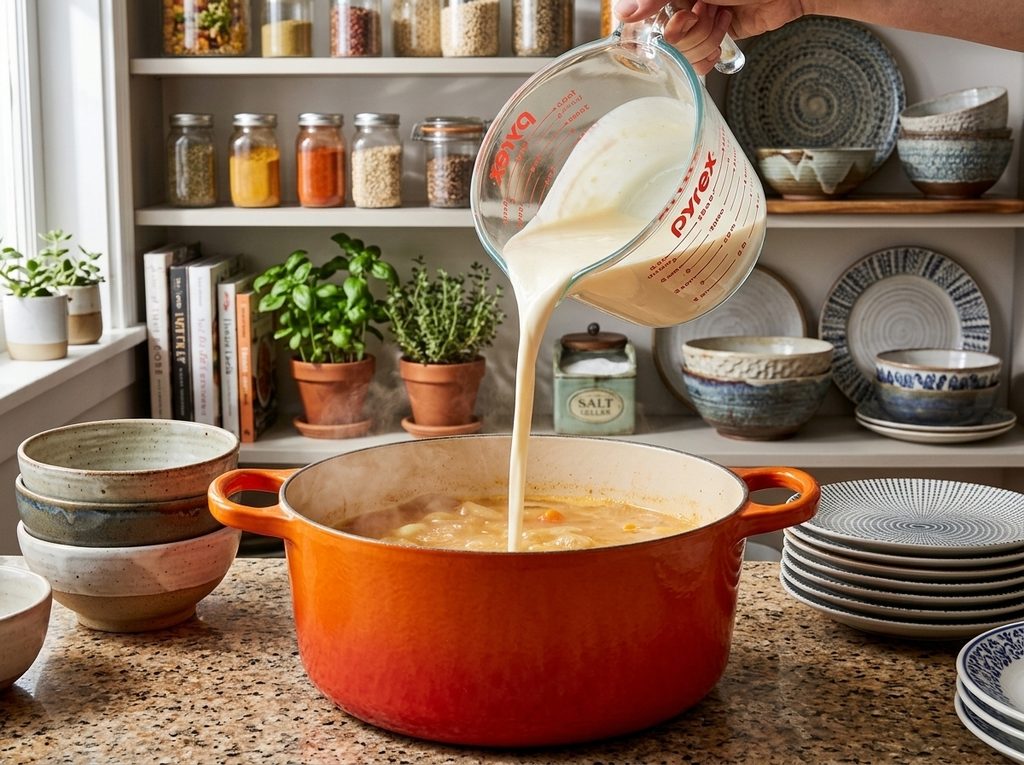
Coconut milk softens the sharper flavours and creates a slightly creamy texture. The amount used in this recipe is modest, so the finished soup remains broth-based rather than becoming a thick coconut curry. This balance is important because the lime, lemongrass, galangal, and chilli should still remain noticeable. The coconut milk simply rounds out the flavours and gives the broth a smoother finish.
Choosing the Best Prawns for Thai Soup
Raw peeled prawns are ideal for this recipe because they cook directly in the seasoned broth. Fresh or properly thawed frozen prawns can both work well. The most important step is to avoid cooking them for too long. Prawns cook quickly, and their texture changes significantly once they become overdone. Adding them after the broth has developed its flavour means they spend only a few minutes in the hot liquid.
Before cooking, make sure the prawns are properly prepared and cleaned according to the product instructions. If frozen prawns are being used, thaw them safely before adding them to the soup. Once they are in the simmering broth, keep an eye on them and cook until they are done rather than continuing to boil the soup unnecessarily. The gentle cooking time helps keep the prawns tender and allows them to absorb the aromatic flavours surrounding them.
The prawns work particularly well with the salty fish sauce and sharp lime juice. Their natural sweetness creates a pleasant contrast with the heat of the chilli and the sour notes of the lime. This is one reason why prawn Tom Yum remains a favourite variation of Thai soup. The seafood brings substance to the dish without requiring a long cooking time, making the recipe practical for busy evenings.
Understanding Galangal and Its Role in Thai Cooking
Galangal is one of the signature aromatics used in many Southeast Asian dishes. It is related to ginger but has its own distinct taste and aroma. Its flavour is often sharper, more citrus-like, and more peppery than ordinary ginger. When simmered in stock, galangal helps build the unmistakable aromatic foundation associated with traditional Thai soups.
The galangal slices in this recipe are used primarily to flavour the broth. Like the large pieces of lemongrass and lime leaves, they remain in the soup during cooking to release their aroma. These larger aromatic ingredients are generally not intended to be eaten directly. Instead, they work much like whole spices or bay leaves in other cuisines, contributing flavour to the liquid while remaining separate from the main edible ingredients.
Fresh galangal is often available from Asian grocery stores and specialist food markets. If fresh galangal cannot be found, a jarred or prepared version may sometimes be available. Ginger can also be used as an alternative when necessary, although the finished soup will have a different flavour. The substitution can still produce a tasty broth, but galangal offers a more recognisable Thai-style aroma.
Lemongrass and Lime Leaves Create a Fragrant Broth
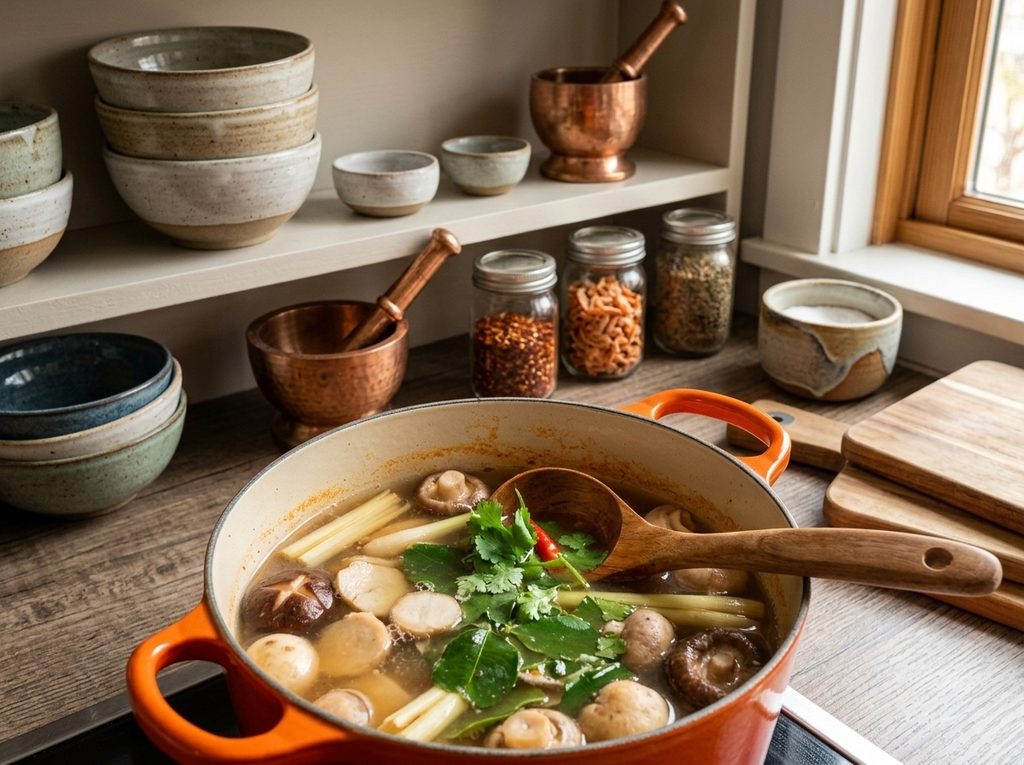
Lemongrass is another essential ingredient for creating a restaurant-style Thai soup at home. Its clean, citrus-like aroma adds freshness to the stock without relying on the acidity of lemon or lime juice. In this recipe, some of the lemongrass is sliced while the remaining portion is lightly crushed. Crushing helps release the aromatic oils, while the sliced pieces contribute additional flavour throughout the simmering process.
Lime leaves provide another distinctive layer of fragrance. When torn before being added to the pot, they release more of their aromatic oils into the broth. Their flavour is highly fragrant and different from simply adding extra lime juice. Together with lemongrass and galangal, they create the aromatic base that gives the soup its characteristic Thai identity.
Glass Noodles Make the Soup a Complete Meal
Glass noodles are an excellent addition to this high protein Thai soup because of their light appearance and pleasantly chewy texture. They are commonly made from starches such as mung bean or sweet potato starch and become translucent when cooked. Their delicate appearance allows the colourful prawns, mushrooms, herbs, and broth to stand out while still making the meal more substantial.
The noodles should first be soaked in room-temperature water until they begin to soften and become slightly transparent. They are then cooked in boiling water until fully translucent and tender. Preparing the noodles separately from the soup helps maintain the clarity and flavour of the broth. It also gives you greater control over their texture, which is useful because noodles can become too soft if left sitting in hot soup for a long period.
Mushrooms Add Texture and Savoury Depth
Brown mushrooms are a simple but important part of this Thai prawn soup. They absorb the flavours of the broth while adding an earthy taste and tender texture. Because mushrooms cook relatively quickly, they can be added after the aromatics have had time to flavour the stock. A short simmer allows them to soften without losing all of their structure.
The mild earthiness of mushrooms also balances the bright and spicy ingredients. Tom Yum contains several bold flavours, including chilli, lime, fish sauce, and aromatic herbs. Mushrooms provide a more subtle savoury element that helps connect those stronger flavours. They also make the finished bowl look more generous and satisfying.
Slice the mushrooms evenly so that they cook at approximately the same rate. They do not need to be cooked for a long period because they will continue to soften in the hot broth. Adding them alongside the coconut milk and Nam Prik Pao gives them enough time to absorb flavour before the prawns are introduced.
How to Build the Perfect Tom Yum Broth
The secret to a flavourful homemade Tom Yum broth is allowing the aromatics to infuse the stock before adding the more delicate ingredients. Start by bringing the fish or chicken stock to a gentle simmer. Once it is hot, add the galangal, lemongrass, fresh chilli, and torn lime leaves. Simmering these ingredients for several minutes gives them time to release their essential flavours into the liquid.
Nam Prik Pao and Why It Makes a Difference
Nam Prik Pao, often described as Thai chilli jam or chilli paste, is one of the ingredients that gives this recipe additional depth. It is not simply a source of heat. Depending on the product, it can contain dried shrimp, chillies, and other ingredients that create sweet, savoury, smoky, and spicy notes. This complexity helps give the broth a fuller flavour.
Asian grocery stores often stock different varieties of Nam Prik Pao. The flavour can vary between brands, so it is useful to read the ingredients and choose a product that suits your preferred balance of sweetness and spice. The recipe uses a relatively small amount, making it easier to control the intensity of the final dish.
If you enjoy spicy Thai food, the fresh chilli and Nam Prik Pao work together to create a noticeable warmth. However, the quantity can be adjusted when serving people with different preferences. The broth should have enough heat to complement the sour lime and savoury fish sauce rather than making every other flavour disappear.
Easy Ways to Serve This Thai Prawn Soup
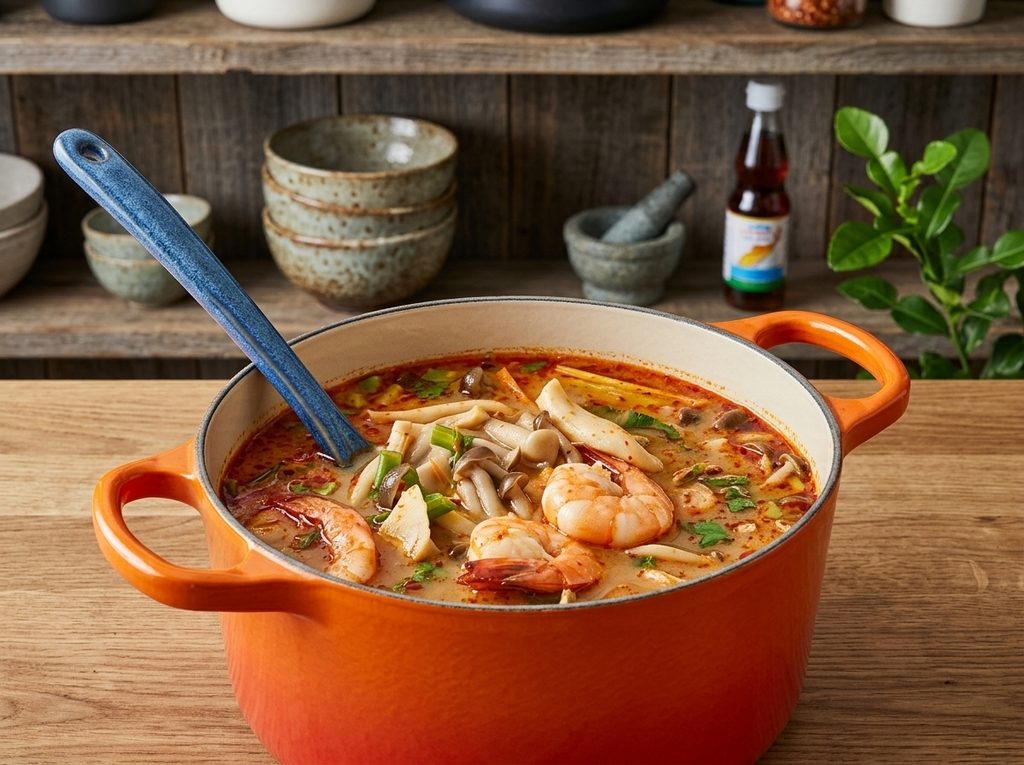
This Tom Yum with prawns is designed as a complete meal for two, but it can also be part of a larger spread. For a simple meal, serve the cooked glass noodles in individual bowls, ladle over the hot soup, and finish with fresh coriander. The bright green garnish adds colour and a fresh herbal note that complements the aromatic broth.
Storing and Reheating Leftover Soup
If you have leftovers, transfer the soup to an airtight container and store it in the refrigerator for up to three days. For the best texture, storing the noodles separately from the broth can be helpful because noodles continue to absorb liquid over time. This can make them softer and reduce the amount of broth remaining in the container.
When reheating, warm the soup gently until it is thoroughly hot. Avoid extended boiling, especially because the prawns have already been cooked and can become tough with repeated high heat. If the noodles have been stored separately, warm them as needed and combine them with the reheated soup when serving.
Fresh coriander can be added again just before eating to restore some of the fresh flavour and appearance. You may also wish to add a small squeeze of lime after reheating if the soup needs additional brightness. Always use proper food storage practices and discard leftovers that show signs of spoilage.
Notes and Ingredient Substitutions
If glass noodles are unavailable, rice noodles can be substituted in equal quantities and prepared according to the package directions. The texture and nutritional values may differ, but rice noodles can still provide a satisfying base for the soup. If following a gluten-free diet, always check the noodle packaging and stock ingredients to confirm that they meet your dietary requirements and to check for possible cross-contamination.
Fresh galangal, lemongrass, and lime leaves offer the most fragrant results, but frozen or jarred alternatives may be useful when fresh ingredients are not available. Ginger can replace galangal if necessary, although its flavour is different. These substitutions allow the recipe to remain practical while still keeping the main Thai-inspired flavour profile intact.
Canned coconut milk is usually found in the Asian or international food section of many supermarkets. It is generally unsweetened and commonly contains coconut and water, sometimes with stabilisers. Make sure to use the type specified in the ingredient list rather than a sweetened coconut beverage, as the two products have very different textures and uses in cooking.
Frequently Asked Questions About Tom Yum Prawn Soup
Can I Make This Thai Soup Less Spicy?
Yes. The amount of fresh chilli can be reduced if you prefer a milder soup. Nam Prik Pao also contributes heat, so its amount may affect the final spice level. Adjusting the chilli is an easy way to customise the recipe while keeping the important aromatic, sour, and savoury elements of the broth.
Should the Galangal, Lemongrass, and Lime Leaves Be Eaten?
These larger aromatic ingredients are primarily included to flavour the soup. They can remain in the pot and serving bowl, but they are generally not intended to be eaten. Their purpose is to release their distinctive flavour into the broth while the soup simmers.
Why Is the Lime Juice Added After Cooking?
Adding the lime juice after removing the soup from the heat helps preserve its fresh, bright flavour. You can start with the juice of the lime listed in the recipe and adjust according to personal taste. Some people enjoy a sharper sour flavour, while others prefer the coconut milk and savoury ingredients to be more prominent.
Can I Double This High Protein Soup Recipe?
Yes. This recipe can be increased to serve more people by multiplying the ingredient quantities while maintaining the same basic proportions. When cooking a larger batch, make sure there is enough room in the pot for the ingredients to simmer comfortably and cook the prawns carefully so they are not overdone.
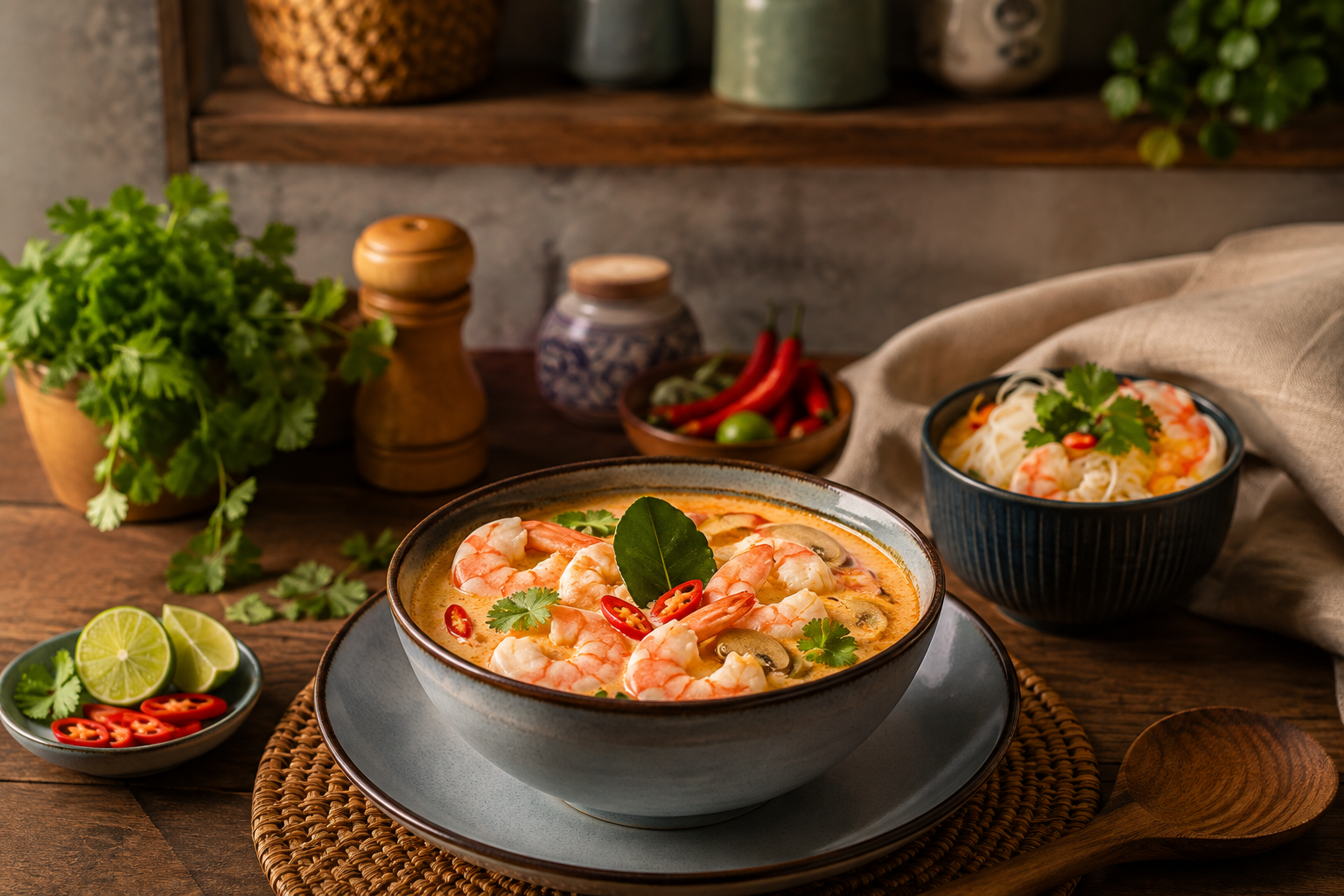
High Protein Thai Soup: Tom Yum with Prawns
A fragrant and satisfying Thai-inspired Tom Yum soup made with raw prawns, glass noodles, mushrooms, galangal, lemongrass, lime leaves, coconut milk, and Nam Prik Pao.
2
servings15
minutes15
minutes369
kcal30
minutesIngredients
100g glass noodles (see Notes)
900ml fish or chicken stock
4 slices galangal
2 stalks lemongrass, with half sliced and half lightly crushed
1 fresh chilli, sliced
2 kaffir lime leaves, torn
45ml canned coconut milk
6 brown mushrooms, sliced
1/2 tbsp Nam Prik Pao (chilli jam) (see Notes)
200g raw peeled prawns
4 tbsp fish sauce
1 lime, juiced
Fresh coriander, for garnish
Directions
- Place the glass noodles in room-temperature water and soak for approximately 15 minutes, or until they become slightly transparent. At the same time, bring a separate pot of water to the boil so the noodles can be cooked later.
- Pour the fish or chicken stock into another pot and bring it to a gentle simmer. Add the galangal slices, sliced and lightly crushed lemongrass, fresh sliced chilli, and torn kaffir lime leaves. Allow the ingredients to simmer for 5 minutes so their flavours can infuse the stock.
- Add the canned coconut milk, sliced brown mushrooms, and Nam Prik Pao to the aromatic broth. Continue simmering for approximately 3 to 4 minutes, allowing the mushrooms to soften and the chilli jam to blend into the soup.
- Add the raw peeled prawns and fish sauce to the pot. Continue cooking for about 3 minutes, or until the prawns are cooked through. Avoid overcooking them to maintain a tender texture.
- While the prawns are cooking, place the soaked glass noodles into the boiling water. Cook for approximately 3 to 4 minutes, or until fully transparent and tender. Drain well.
- Remove the Tom Yum soup from the heat. Squeeze in the juice from the lime, adjusting the amount to suit your preferred level of acidity. Adding the lime after cooking helps maintain its fresh flavour.
- Divide the cooked glass noodles between two bowls. Ladle the hot Tom Yum prawn soup over the noodles and garnish with fresh coriander. Serve immediately.
Nutrition Facts
- Calories: 369kcal
- Fat: 5.1g
- Carbohydrates: 49.9g
- Fiber: 5.4g
- Protein: 33.4g
