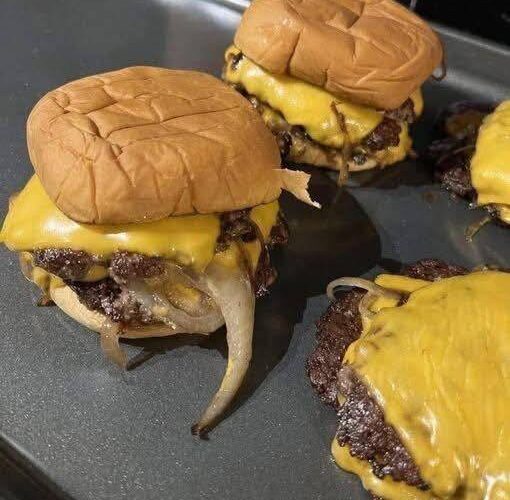
Hamburger In Air Fryer – Recipe
Introduction
The hamburger is one of the most iconic foods ever created. Few dishes around the world are as universally recognized and loved as a juicy beef burger served inside a soft toasted bun. From classic roadside diners in the United States to modern gourmet burger restaurants across United Kingdom, Australia, and Pakistan, hamburgers have evolved into a global comfort food that combines simplicity with incredible flavor complexity.
At first glance, a hamburger may appear straightforward:
- Ground beef
- Bread
- Sauce
- Toppings
But truly great burgers are built on a highly controlled balance of:
- Fat content
- Heat management
- Moisture retention
- Protein structure
- Surface caramelization
- Texture contrast
A properly cooked burger creates one of the most satisfying eating experiences in food because it combines multiple textures and flavor layers simultaneously:
- Crisp seared exterior
- Juicy tender beef center
- Soft toasted bun
- Fresh crunchy vegetables
- Rich melted cheese
- Tangy sauces
The Air Fryer Beef Hamburger takes this classic experience and adapts it to modern cooking technology. Instead of relying on outdoor grills, heavy frying pans, or large amounts of oil, the air fryer creates intense circulating heat that cooks burgers evenly while allowing fat to render naturally.
This produces burgers that are:
- Juicy but not greasy
- Crisp outside but tender inside
- Deeply savory
- Easy to prepare
- Faster to cook
- Cleaner and lighter than pan frying
This recipe is not simply about placing beef into an air fryer. It is about understanding:
- Meat composition
- Fat distribution
- Moisture science
- Heat circulation
- Patty structure
- Browning reactions
- Burger assembly
because a truly excellent hamburger depends on precision at every stage.
A perfect air fryer beef hamburger should deliver:
deep savory crust → juicy flavorful beef → melted creamy cheese → fresh toppings → soft toasted bun → balanced rich finish
The History of the Hamburger
The hamburger has roots connected to minced meat dishes that existed for centuries in Europe, particularly around the German city of Hamburg. Over time, immigrants brought these styles of prepared beef to the United States, where the modern hamburger eventually developed into the sandwich form recognized today.
As fast food culture expanded during the 20th century, hamburgers became:
- Affordable
- Portable
- Highly customizable
- Massively popular worldwide
Today burgers range from:
- Simple diner burgers
- Smash burgers
- Gourmet restaurant burgers
- High-protein fitness burgers
- Low-carb lettuce-wrap burgers
Despite all variations, the core goal remains the same:
create maximum flavor and juiciness inside a balanced structure
Why People Love Hamburgers
Hamburgers are loved because they combine nearly every satisfying food quality in one meal.
They provide:
- Rich umami flavor
- Tender juicy meat
- Crispy caramelized surfaces
- Creamy sauces
- Fresh vegetables
- Soft bread texture
A burger also offers strong contrast:
- Hot vs cool
- Crisp vs soft
- Juicy vs crunchy
- Rich vs fresh
This combination stimulates multiple textures and flavors at once, creating a deeply satisfying experience.
Why the Air Fryer Works So Well
The air fryer creates a miniature convection cooking environment.
Instead of heating from only one side like a pan, the air fryer surrounds food with:
- Rapidly circulating hot air
- Intense dry heat
- Consistent temperature flow
This helps burgers develop:
- Even browning
- Surface crisping
- Fat rendering
- Internal juiciness
At the same time, excess grease drips away from the meat instead of pooling around it.
This creates burgers that feel:
- Rich but not excessively oily
- Crisp but not burnt
- Juicy but not greasy
Understanding Burger Science
A hamburger is actually a highly technical cooking structure.
Several important processes occur during cooking.
1. Protein Tightening
When beef heats up:
- Muscle proteins contract
- Meat firms up
- Juices begin moving inward
If cooked too aggressively:
- Burger becomes tough and dry
If controlled properly:
- Burger stays tender and juicy
2. Fat Rendering
Fat is critical for burger quality.
As fat melts:
- Meat becomes juicy
- Flavor spreads through the patty
- Surface browning improves
Fat is one of the primary flavor carriers in beef.
3. Maillard Browning Reaction
The browned crust on a burger develops through a process called the Maillard reaction.
This occurs when:
- Proteins
- Sugars
- Heat
combine to create deep savory flavors.
This reaction creates:
- Brown crust
- Rich aroma
- Roasted flavor
Without proper browning, burgers taste flat.
4. Moisture Retention
Inside the burger:
- Water converts into steam
- Juices redistribute
- Fat melts through meat fibers
This creates the juicy interior texture people love.
Choosing the Right Beef
Beef selection is one of the most important decisions.
Best Fat Ratio
The ideal burger meat is usually:
80/20 Ground Beef
Meaning:
- 80% lean meat
- 20% fat
This ratio provides:
- Moisture
- Flavor
- Tenderness
- Better browning
Why Lean Beef Often Fails
Very lean beef:
- Dries quickly
- Lacks richness
- Produces dense burgers
Fat is essential for creating restaurant-style texture.
Freshly Ground Beef Advantage
Fresh ground beef usually offers:
- Better texture
- Better moisture retention
- Stronger beef flavor
Pre-packaged meat may lose some freshness over time.
Ingredients
For the Beef Patties
- 500g ground beef
- 1 teaspoon salt
- 1 teaspoon black pepper
- 1 teaspoon garlic powder
- ½ teaspoon onion powder
- 1 tablespoon Worcestershire sauce
Optional Flavor Additions
- Smoked paprika
- Mustard
- Chili flakes
- Finely minced onions
- Hot sauce
For the Burger Assembly
- Hamburger buns
- Cheese slices
- Lettuce
- Tomato slices
- Onion slices
- Pickles
- Burger sauce
Preparing the Meat
Step 1: Mixing the Ingredients
Place ground beef into a bowl.
Add:
- Salt
- Pepper
- Garlic powder
- Onion powder
- Worcestershire sauce
Mix gently with hands.
Do NOT aggressively knead.
Why?
Overmixing compresses proteins and creates:
- Dense texture
- Tough burgers
Gentle mixing preserves tenderness.
Step 2: Forming the Patties
Divide meat evenly.
Shape into patties slightly larger than buns.
Why larger?
Burgers shrink during cooking as proteins tighten.
Step 3: Create a Center Indentation
Press a small dent into the middle of each patty.
This prevents burgers from puffing upward during cooking.
Flat burgers cook more evenly and fit buns better.
Understanding Patty Thickness
Thickness changes texture dramatically.
Thin Patties
- Faster cooking
- More crispy edges
- Less juicy center
Medium Patties
- Best balance
- Juicy interior
- Good browning
Thick Patties
- More moisture retention
- Steak-like texture
- Longer cooking time
Preparing the Air Fryer
Step 4: Preheating
Preheat air fryer to:
190°C (375°F)
for about 5 minutes.
Preheating helps create:
- Immediate browning
- Better crust development
Cooking the Burgers
Step 5: Arrange Properly
Place patties into basket with space between them.
Do not overcrowd.
Air circulation is essential for:
- Even cooking
- Browning
- Fat rendering
Step 6: First Cooking Phase
Cook for:
8–10 minutes
depending on thickness.
Step 7: Flipping
Flip burgers halfway through cooking.
This ensures:
- Balanced browning
- Even internal cooking
Step 8: Cheese Melting
Add cheese during final 1–2 minutes.
Residual heat melts cheese beautifully.
Burger Doneness Levels
Medium
Slight pink center with high juiciness
Medium-Well
Minimal pink with balanced moisture
Well-Done
Fully cooked with firmer texture
Toasting the Buns
Step 9: Toasting
Toast buns lightly.
This improves:
- Flavor
- Texture
- Structural strength
Untoasted buns become soggy faster.
Why Burger Assembly Matters
Good burgers require structural balance.
Poor layering causes:
- Sliding toppings
- Soggy buns
- Uneven bites
Recommended Burger Layering
- Bottom bun
- Sauce
- Lettuce
- Burger patty
- Cheese
- Tomato
- Onion
- Pickles
- Top bun
This structure protects the bun from moisture.
Texture Goals
Perfect air fryer hamburgers should have:
Exterior
Deeply browned with slight crust
Interior
Juicy and tender
Flavor
Rich beef-forward savory taste
Overall Experience
Balanced between softness, crunch, and juiciness
Common Mistakes
Dry Burgers
Cause
Overcooking or lean meat
Fix
Use 80/20 beef and monitor carefully.
Dense Texture
Cause
Overmixing
Fix
Mix gently.
Burger Shrinking
Cause
No center dent
Fix
Indent center slightly.
Uneven Cooking
Cause
Uneven thickness
Fix
Shape patties carefully.
Greasy Burgers
Cause
Excess fat ratio
Fix
Use balanced beef blend.
Advanced Variations
Classic Cheeseburger
Add:
- Cheddar
- American cheese
- Swiss cheese
Spicy Burger
Add:
- Jalapeños
- Chili sauce
- Pepper jack cheese
BBQ Burger
Add:
- BBQ sauce
- Crispy onions
- Smoked cheese
Mushroom Swiss Burger
Add sautéed mushrooms and Swiss cheese.
Double Smash-Style Burger
Use two thinner patties for:
- Extra crust
- More caramelization
Low-Carb Burger
Replace buns with:
- Lettuce wraps
- Grilled vegetables
Storage
Cooked patties can be refrigerated for:
- Up to 3 days
Reheat in air fryer for best texture.
Expert Tips
- Use beef with proper fat content
- Never overmix
- Preheat air fryer
- Avoid overcrowding
- Toast buns
- Let burgers rest briefly before serving
Why Air Fryer Hamburgers Are So Popular
People love air fryer burgers because they combine:
- Convenience
- Fast cooking
- Reduced grease
- Easy cleanup
- Excellent texture
The air fryer creates burgers that feel indulgent while still lighter than many traditional fried versions.
Final Thoughts
Air Fryer Beef Hamburgers prove that exceptional burgers are created through proper control of fat, heat, moisture, and texture. When every stage is handled correctly—from beef selection to patty shaping to airflow management—the result is a burger that feels juicy, flavorful, balanced, and deeply satisfying.
This burger delivers:
- Rich beef flavor
- Deep caramelized crust
- Tender juicy center
- Soft toasted buns
- Balanced toppings
- Restaurant-style texture at home
And most importantly:
Every bite combines juicy beef, savory crust, melted cheese, fresh toppings, and soft toasted bread into a perfectly balanced burger experience that feels comforting, indulgent, and incredibly satisfying.
