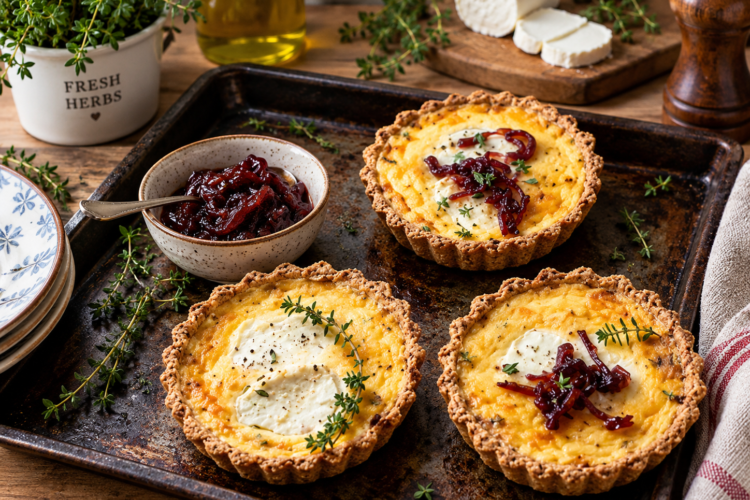
Keto Goat Cheese Tarts with Caramelized Onion are an elegant low-carb appetizer made with a crisp almond flour and Parmesan crust, creamy goat cheese, rich caramelized red onion, and a silky savory custard filling. They have the kind of presentation that makes them suitable for a dinner party, holiday table, brunch, or special weekend meal, yet the preparation is straightforward once you have the tart shells ready.
The combination of tangy goat cheese, naturally sweet onion, fresh thyme, and nutty Parmesan creates a balanced flavor that feels indulgent without relying on a traditional wheat-based pastry crust.
These keto tarts are especially appealing if you are looking for a low-carb appetizer that feels more substantial than a simple cheese board or vegetable platter. Instead of regular flour, the crust uses almond flour and finely grated Parmesan cheese, giving it a firm, savory texture and plenty of flavor.
The filling is made with eggs, egg yolks, heavy whipping cream, seasonings, goat cheese, and thyme. A layer of balsamic caramelized onion sits between the crust and creamy filling, bringing a subtle sweetness that works beautifully with the sharp, creamy character of goat cheese.
Why These Keto Goat Cheese Tarts Work So Well
The secret to these tarts is the contrast between the different ingredients. The almond flour and Parmesan crust provides a rich and slightly crisp base, while the filling becomes soft and creamy after baking. Goat’s cheese contributes a distinctive tang that cuts through the richness of the cream and eggs. The caramelized red onion adds another dimension, becoming sweet and concentrated as it cooks slowly with balsamic vinegar, Swerve or erythritol, and thyme.
Although the recipe has several steps, none of them are particularly complicated. The onions simply need time to soften and reduce into a concentrated mixture, while the crust is pressed directly into the tart tins rather than rolled like conventional pastry. This makes the recipe practical for home cooks who want a homemade keto tart without having to work with a delicate traditional dough. The crust can be slightly sticky, so properly spraying the tart tins is an important step for easier removal after baking.
These tarts also make a useful option when you want a make-ahead low-carb recipe. Once baked, they can be covered and refrigerated for up to four days. They can be served warm or prepared ahead of time and gently reheated when needed. Their individual size makes them particularly convenient for entertaining because each guest can receive a neatly portioned tart without the need for slicing and serving a large quiche or tart at the table.
How to Make the Caramelized Onion Layer
Start by slicing the two small red onions as thinly and evenly as possible. Thin slices soften more quickly and produce the concentrated texture needed for the topping. Heat the extra virgin olive oil in a frying pan and add the sliced onions. Cook them over medium-high heat until they become soft. At this stage, the goal is not to brown them heavily. You want the onions to soften first so that they can gradually develop their sweet, rich flavor during the next stage of cooking.
Once the onions have softened, add the balsamic vinegar, Swerve or erythritol, and fresh thyme. Reduce the heat to medium-low and continue cooking, stirring from time to time. The mixture will gradually reduce as moisture cooks away, leaving behind a richer and sweeter onion mixture. This caramelized onion layer is important because it adds flavor without overwhelming the goat cheese. Set aside a small amount for garnishing the finished tarts.
Cooking the onions patiently is worthwhile. If the heat is too high throughout the process, the outside can become overly dark before the onions have developed the desired soft texture. Medium-low heat gives them time to reduce properly and allows the balsamic vinegar and sweetener to coat the onions. The finished mixture should be rich and concentrated rather than watery.
Preparing the Low-Carb Parmesan Crust
While the onions are cooking, preheat the oven to 170 °C/340 °F using a fan-assisted oven, or 190 °C/375 °F for a conventional oven. Place the almond flour, finely grated Parmesan cheese, egg whites, and sea salt into a bowl. Mix everything thoroughly until the ingredients come together into a workable dough.
The crust mixture is different from ordinary pastry because it does not contain wheat flour or a traditional pastry-making process. Rather than rolling it out, you press it directly into the tart tins. This makes it easier to shape and allows you to control the thickness around the bottom and sides. Spray the tart tins generously with olive oil before adding the dough because the mixture can become somewhat sticky during cooking.
The dough can be divided between four 12 cm/5 inch mini tart pans or up to eight smaller mini tart pans. Press the mixture firmly and evenly into each tin, paying particular attention to the corners and sides. An even crust helps each tart cook consistently. If you prefer one larger tart, the dough can also be used in a regular 23 cm/9 inch pan.
Prick the base of each crust with a fork before baking. This helps prevent excessive puffing while the crust cooks. Bake the shells for 10 minutes, then remove them from the oven and allow them to cool. At this point, reduce the oven temperature to 160 °C/320 °F for a fan-assisted oven or 180 °C/355 °F for a conventional oven.
Making the Creamy Goat Cheese Filling
The filling comes together quickly. Add the eggs, reserved egg yolks, heavy whipping cream, salt, pepper, and nutmeg to a bowl. Whisk until the ingredients are well combined and the mixture looks smooth. The additional egg yolks contribute richness and help create the soft, custard-like texture that makes these tarts so satisfying.
Nutmeg is used in a small amount, but it adds a warm background note that complements both the cream and goat cheese. Be careful not to over-season the filling because the Parmesan and goat’s cheese already provide a good amount of savory flavor. The finished custard should taste balanced, allowing the caramelized onion and goat cheese to remain the main flavors.
Once the crusts have cooled enough to handle, spoon a layer of the caramelized onion over each base. Keep a little onion aside for finishing the tarts. The onion should form an even layer rather than a thick mound because this helps distribute its flavor throughout every bite.
Next, slice the soft goat’s cheese into even rounds and arrange the slices over the caramelized onion. Try to distribute the cheese evenly so that every tart contains a good balance of cheese, onion, and custard. Finally, use a small cup measure to pour the egg and cream mixture evenly into the tart shells.
Baking the Keto Tarts
Place the filled tarts into the oven and bake for approximately 25 minutes, or until the filling is just set. Avoid overbaking because the custard should remain creamy and tender rather than becoming dry or rubbery. The center should be set enough to hold its shape while retaining a soft texture.
Once baked, remove the tarts from the oven and allow them to rest briefly. Serve them warm with the reserved caramelized onion and additional fresh thyme. The contrast between the warm creamy filling, tangy goat cheese, and sweet onion makes these tarts especially enjoyable shortly after baking.
For a larger tart, cut it into eight portions. For the smaller individual tarts, each serving is based on half of a small tart. This makes the recipe flexible for both family meals and entertaining. Individual mini tarts are particularly attractive when served as a starter because they can be plated without additional cutting or preparation.
Serving Ideas and Occasions
Keto Goat Cheese Tarts with Caramelized Onion can be served as an appetizer, light lunch, brunch dish, or side for a special dinner. Their rich flavor means they pair well with simple salads and lightly dressed greens. A fresh salad can provide a crisp contrast to the creamy filling and buttery almond-Parmesan crust.
For entertaining, arrange the individual tarts on a serving platter and finish them with a small spoonful of caramelized onion and fresh thyme. This simple garnish adds color and reinforces the flavors inside the tart. They are also suitable for holiday meals when you want a low-carb alternative to conventional pastry appetizers.
If you are preparing food for guests, the tarts can be made in advance and stored covered in the refrigerator for up to four days. This makes them useful for meal planning and entertaining because the preparation does not necessarily have to happen immediately before serving.
Notes for the Best Results
Grease the tart tins thoroughly before pressing in the crust mixture. Almond flour and Parmesan behave differently from traditional pastry, and the cooked crust can stick if the tins are not adequately coated. Press the dough firmly and evenly into the tins, particularly around the edges, so the finished tart has a sturdy shell capable of holding the creamy filling.
Give the onions enough time to reduce properly. Their flavor becomes much more concentrated as they cook, and rushing this step can leave them watery instead of rich and jammy. Keep the heat lower after adding the balsamic vinegar and sweetener, and stir occasionally to prevent sticking.
The crust should be baked before the filling is added. This short initial bake gives it enough structure to support the custard. Pricking the base with a fork also helps keep the crust more even. Once the filling has been added, bake only until it is just set. Overbaking is one of the easiest ways to lose the delicate creamy texture of a custard-based tart.
Fresh thyme is used both in the onion mixture and as a garnish. Its herbal flavor works naturally with goat cheese and caramelized onion, so it is worth using fresh thyme where possible. A small amount is enough because the other ingredients already provide plenty of character.
Are These Tarts Keto-Friendly?
These Goat Cheese Tarts are designed as a low-carb and keto-friendly recipe, with almond flour replacing conventional wheat flour and Swerve or erythritol used in the caramelized onion mixture. The provided nutrition information lists 3.8g net carbs per serving, making the recipe suitable for many people following a ketogenic or low-carbohydrate eating pattern.
As with any keto recipe, individual nutritional needs and daily carbohydrate targets can vary. If you are following a strict ketogenic diet, check the labels of packaged ingredients such as almond flour, Parmesan, heavy cream, goat’s cheese, and the chosen sweetener because nutritional values can differ between brands. The stated nutrition information should therefore be treated as an estimate rather than a universal value.
Storage and Reheating
Once cooled, cover the baked tarts and store them in the refrigerator for up to four days. Keeping them covered helps protect the crust and filling from absorbing other refrigerator odors while also preventing the surface from drying out. For the best texture, serve them warm rather than directly from the refrigerator.
These tarts are particularly convenient for meal preparation because they can be portioned individually. When you need a quick low-carb breakfast, lunch, appetizer, or snack, a prepared tart can be taken from the refrigerator and gently warmed before serving. Avoid excessive reheating because the egg-based filling can become firmer if exposed to too much heat.
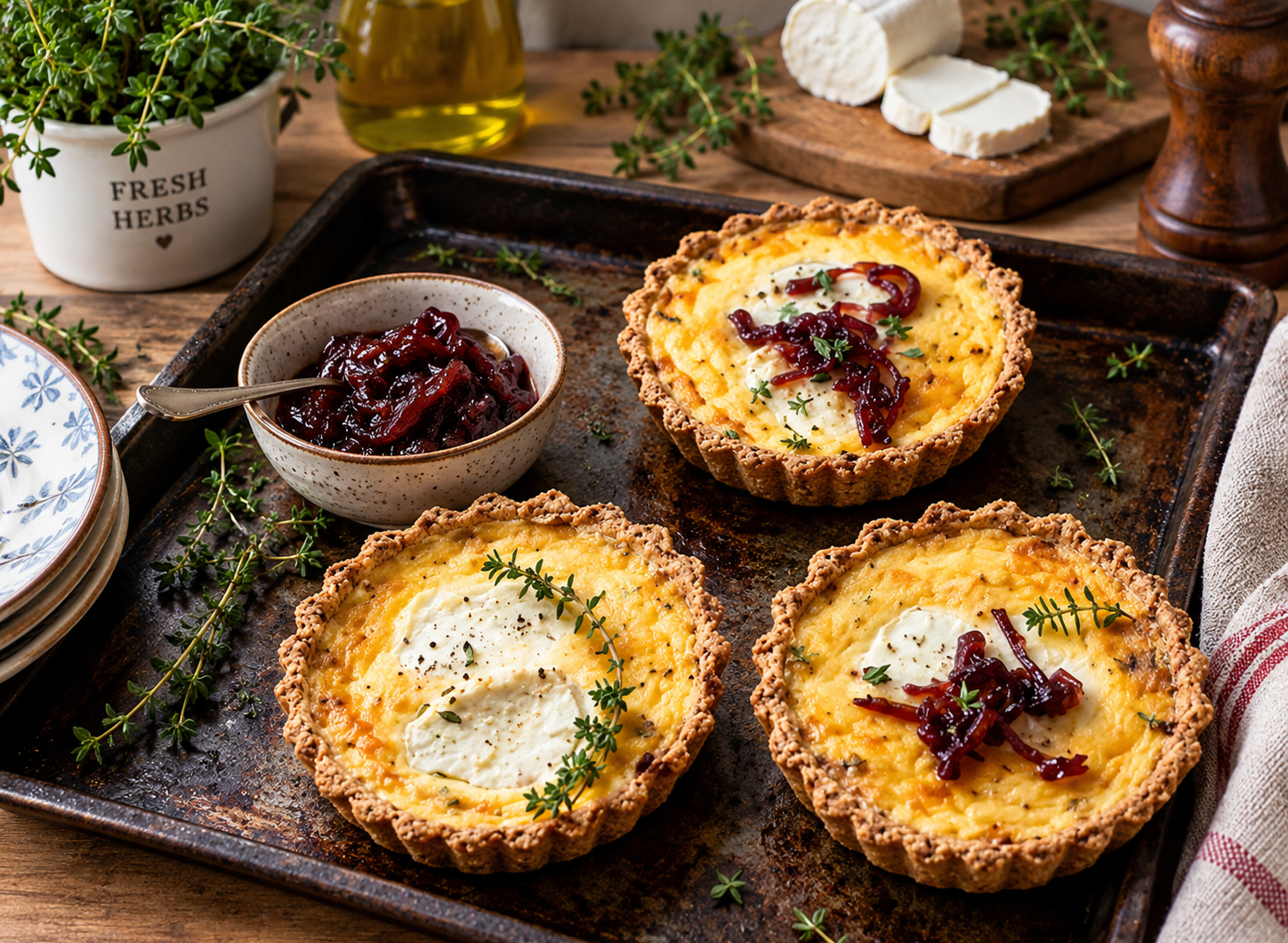
Keto Goat Cheese Tarts with Caramelized Onion
A rich and savory low-carb tart featuring a crisp almond flour and Parmesan crust, creamy goat cheese filling, sweet balsamic caramelized red onions, and fresh thyme.
8
servings15
minutes40
minutes345
kcal55
minutesIngredients
- European-Inspired
1 cup almond flour (100 g/ 3.5 oz)
1 cup + 2 tbsp finely grated Parmesan cheese or other Italian hard cheese (100 g/ 3.5 oz)
2 large egg whites (reserve yolks for filling)
pinch of sea salt
- Filling
2 small red onions, sliced (120 g/ 4.2 oz)
2 tbsp extra virgin olive oil (30 ml)
1 tbsp balsamic vinegar (15 ml)
2 tbsp Swerve or Erythritol (20 g/ 0.7 oz)
2 large eggs
2 large yolks
3/4 cup heavy whipping cream (180 ml/ 6 fl oz)
pinch of salt and pepper
pinch of nutmeg
1 pack soft goat’s cheese (200 g/ 7.1 oz)
1/2 tsp fresh thyme, with extra for garnish
Directions
- Thinly slice the red onions.
- Heat the extra virgin olive oil in a frying pan. Add the onions and cook over medium-high heat until softened. Avoid browning them heavily at this stage.
- Add the balsamic vinegar, Swerve or erythritol, and thyme. Lower the heat to medium-low and cook, stirring occasionally, until the onions have reduced into a rich, sweet mixture.
- Meanwhile, preheat the oven to 170 °C/340 °F for a fan-assisted oven or 190 °C/375 °F for a conventional oven.
- Combine the almond flour, Parmesan cheese, egg whites, and sea salt in a bowl. Mix until a dough forms.
- Spray four individual tart tins or one large tart tin thoroughly with olive oil. The dough can become sticky during cooking, so proper greasing is important.
- Divide the dough between four 12 cm/5 inch tart pans, or use up to eight smaller mini tart pans. Press the dough evenly and firmly into the tins. A regular 23 cm/9 inch tart pan can also be used.
- Prick the crust bases with a fork. Bake for 10 minutes.
- Remove the crusts from the oven and set them aside to cool. Reduce the oven temperature to 160 °C/320 °F for a fan-assisted oven or 180 °C/355 °F for a conventional oven.
- In a bowl, whisk together the eggs, reserved egg yolks, heavy whipping cream, salt, pepper, and nutmeg until smooth and well combined.
- Spoon a layer of the caramelized onion over the base of each tart. Reserve a small amount of onion for garnishing.
- Slice the soft goat’s cheese into even rounds and arrange the slices over the onion layer.
- Pour the egg and cream mixture evenly into each tart using a small cup measure.
- Bake for approximately 25 minutes, until the filling is just set.
- Remove from the oven and serve warm. Finish with extra fresh thyme and a spoonful of the reserved caramelized onion.
- Store covered in the refrigerator for up to 4 days.
Nutrition Facts
- Total number of serves: 1
- Calories: 345kcal
- Fat: 94.4g
- Carbohydrates: 5.3g
- Fiber: 1.5g
- Sugar: 2.6g
- Protein: 15.2g
