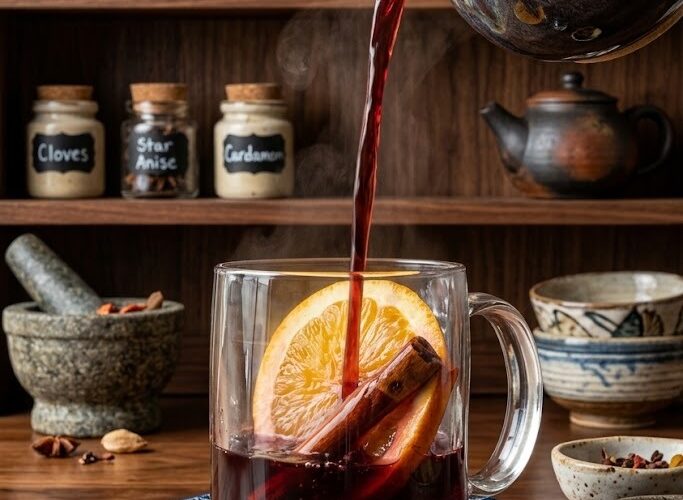
Keto mulled wine is a warm, fragrant holiday drink made with red wine, citrus, cinnamon, cloves, star anise, cardamom, and a low-carb sweetener. It has everything you want from a cozy winter beverage: rich flavor, warming spices, a beautiful ruby-red color, and a comforting aroma that fills the kitchen while it simmers.
Traditional mulled wine often contains a generous amount of sugar, but this keto-friendly version uses allulose or another preferred sweetener to keep the carbohydrate content lower without losing the pleasant sweetness that makes mulled wine so enjoyable.
What Is Keto Mulled Wine?
Keto mulled wine is a lower-carb adaptation of traditional European mulled wine. Instead of relying on regular sugar, this version uses allulose or another suitable low-carb sweetener. The wine is gently heated with oranges and aromatic spices, allowing the flavors to blend into a rich and warming drink. Brandy is added toward the end, giving the finished beverage additional depth and a stronger festive character.
Mulled wine is known by several names around the world, including glühwein, gløgg, and vin chaud. While recipes vary from one region to another, the basic idea remains similar: red wine is infused with spices and citrus and served warm. This keto mulled wine keeps that classic character while making a few practical changes for people who are reducing their carbohydrate intake.
Why This Keto Mulled Wine Works
The appeal of this recipe comes from its balance of fruity red wine, fresh orange, warming spices, sweetness, and brandy. Cinnamon provides a familiar holiday aroma, while cloves and star anise bring a deeper, slightly sweet spice profile. Lightly crushed cardamom pods add another layer of fragrance without overpowering the wine.
Orange is particularly important because it brightens the flavor of the red wine. Rather than using large quantities of orange juice, which can add more carbohydrates, this recipe focuses on orange slices and carefully peeled orange rind. Removing as much of the white pith as possible helps prevent unwanted bitterness and keeps the citrus flavor clean and fragrant.
The final addition of brandy gives the drink a fuller, warmer finish. Since brandy is added at the very end, its character remains noticeable instead of being cooked away during the longer simmering stage.
Is Mulled Wine Keto Friendly?
Mulled wine can fit into a keto lifestyle when portions, wine selection, and added sweeteners are considered carefully. Red wine naturally contains carbohydrates, so it is not a zero-carb beverage. The amount of carbohydrate can vary depending on the wine, serving size, and sweetener used.
For this reason, keto mulled wine should be enjoyed in moderation rather than treated like a completely carb-free drink. Choosing a suitable red wine and using allulose or another low-carb sweetener instead of regular sugar can help keep the recipe more compatible with a ketogenic eating pattern.
The original nutritional information for this recipe lists approximately 5 grams of carbohydrates per serving. However, the actual carbohydrate amount can vary depending on the specific wine, brandy, sweetener, and serving size used. If you are following a strict keto diet, checking the nutrition label of your chosen wine and sweetener is a sensible step.
Choosing the Right Red Wine
The wine you choose makes a noticeable difference in the finished mulled wine. A red wine with some fruitiness works particularly well because the wine needs enough character to stand up to the citrus and spices. Merlot is a popular option because it tends to offer a smooth, fruit-forward flavor that works nicely in a warm spiced drink.
Malbec can also be a good choice if you prefer a richer red wine with a deeper flavor. There is no need to spend a great deal of money on the bottle because the wine will be combined with several strongly aromatic ingredients. A reasonably priced bottle that you would happily drink on its own is generally a practical choice.
When selecting wine for keto mulled wine, pay attention to the amount of residual sugar. Very sweet wines can add unnecessary carbohydrates, while an extremely dry wine may produce a less rounded result. A balanced, fruit-forward red wine usually gives the best combination of flavor and drinkability.
The Role of Orange and Citrus
Orange gives this recipe its bright, festive edge. One orange is sliced for serving, while the rind of the second orange is peeled and added to the pot. The key is to remove the colored outer peel without taking too much of the white pith underneath.
The white pith can contribute a strong bitter flavor, particularly when it is simmered for an extended period. Using a vegetable peeler makes it easier to collect thin pieces of orange rind while avoiding most of the white layer. A small paring knife can also be used if you prefer more control.
The orange slices reserved for serving provide a fresh visual finish. Placing a slice in each mug makes the drink look especially inviting and adds a gentle citrus aroma as you drink it.
Understanding the Warming Spices
The spice combination is what gives mulled wine its unmistakable holiday personality. Cinnamon sticks provide a sweet, woody aroma and work beautifully with red wine. Cloves contribute a more intense, warm flavor, so only a small amount is needed. Star anise brings a subtle licorice-like note that adds complexity.
Cardamom is optional in this recipe, but lightly crushing the pods before adding them helps release their aromatic oils. Because cardamom can be quite distinctive, using it is a matter of personal preference. If you enjoy fragrant, spice-forward drinks, it is a worthwhile addition.
These spices should be allowed enough time to infuse into the wine. A gentle 30-minute simmer gives the ingredients an opportunity to blend without requiring complicated preparation.
How to Make Keto Mulled Wine
Start by preparing the oranges. Slice one orange and keep the slices aside for garnish. Take the second orange and carefully remove the outer orange-colored rind using a peeler or small knife. Try to avoid the white pith beneath the rind because it can make the finished drink taste bitter.
Next, add the red wine and spices to a non-reactive pot. A Dutch oven works well because it distributes heat evenly and provides enough room for the ingredients. Add the sweetener and stir gently so that it begins to dissolve into the wine.
Bring the mixture to a boil briefly, then immediately reduce the heat. The wine should continue cooking at a gentle simmer rather than being aggressively boiled. Let the mixture simmer for approximately 30 minutes, allowing the cinnamon, cloves, star anise, cardamom, and orange rind to infuse the wine.
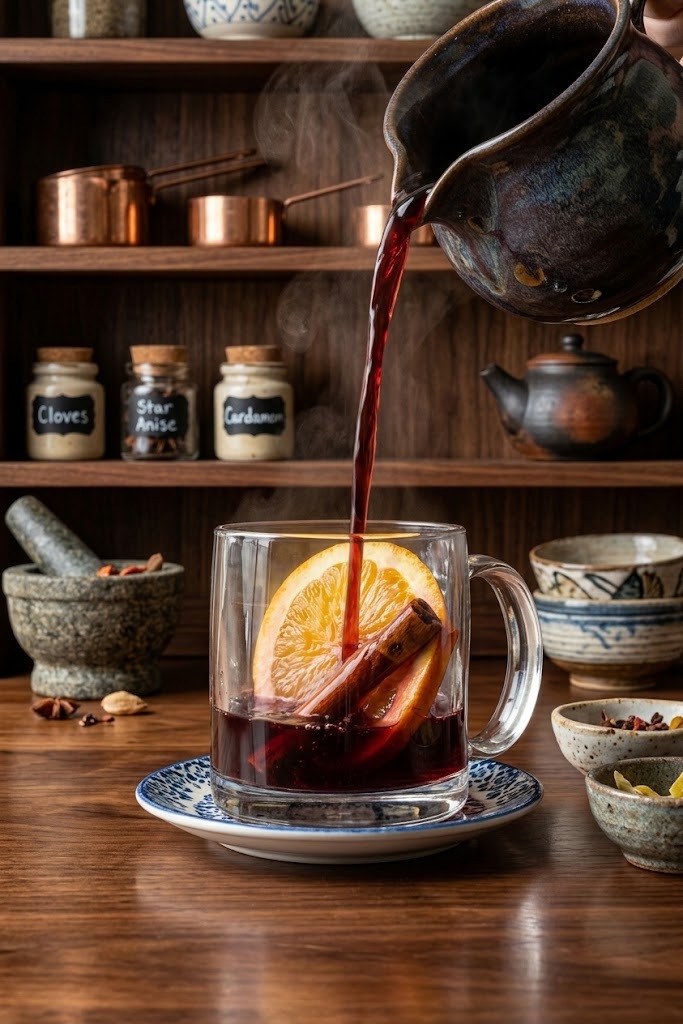
Add the brandy at the very end. Stir gently to combine, then remove the pot from the heat. Pour the warm mulled wine into heatproof mugs or glasses. Garnish each serving with an orange slice and, if desired, a cinnamon stick.
How to Keep the Flavor Balanced
Sweetness is one of the easiest parts of this recipe to adjust. Start with the smaller amount of allulose or preferred sweetener and taste the mixture before adding more. Everyone has a different preference for sweetness, and the natural fruitiness of the wine will also affect how much sweetener feels necessary.
If your red wine is already fairly fruit-forward, you may need less sweetener. A more acidic or dry-tasting wine may benefit from a little additional sweetness. Adding the sweetener gradually gives you much better control than putting the full amount into the pot immediately.
The spices can also be adjusted according to taste, but it is best to make changes gradually. Cinnamon, cloves, star anise, and cardamom are all powerful ingredients. Too much of one spice can easily dominate the wine and make the drink taste unbalanced.
Why You Should Avoid Overboiling
Mulled wine is intended to be warmed and infused rather than aggressively boiled for a long period. Excessive boiling can change the character of the wine and cause some of the alcohol to evaporate. Since this recipe includes brandy as well, keeping the heat controlled helps preserve the intended flavor.
Once the mixture reaches a boil, lowering the heat to a gentle simmer is the better approach. The goal is to warm the wine while allowing the spices and citrus to release their aromas. A slow infusion produces a smoother and more harmonious drink.
Adding the brandy after the simmering period is another important part of the process. It helps retain the character of the spirit and ensures the finished drink has the warming quality expected from a traditional festive mulled wine.
Serving Suggestions
Keto mulled wine is best served immediately while it is still warm. Use heatproof mugs or glasses designed for hot beverages. A simple orange slice makes an attractive garnish, while a cinnamon stick adds an extra touch of holiday presentation and can be used as a natural stirrer.
This drink works particularly well during cold-weather gatherings, holiday dinners, Christmas celebrations, and relaxed evenings at home. Its warm spice aroma makes it especially suitable for festive occasions where a comforting seasonal drink is part of the experience.
If you are serving guests who are following different diets, you can keep the sweetener adjustable. This allows each person to choose a serving that suits their preferred level of sweetness while keeping the recipe simple.
Notes for Making the Best Keto Mulled Wine
Use a non-reactive pot such as stainless steel or an enameled Dutch oven when preparing the drink. This helps prevent unwanted reactions between the acidic wine and the cookware. Avoid allowing the mixture to boil aggressively for the full cooking period because the purpose of the recipe is gentle warming and spice infusion.
Peel the orange carefully and remove as much white pith as possible. This small step can make a surprisingly noticeable difference in the final flavor. If you want a stronger citrus aroma, focus on using thin pieces of the colored orange rind rather than adding large quantities of juice.
Start with less sweetener and adjust after tasting. The recipe allows between 1/4 and 1/2 cup, giving you room to tailor the sweetness. Allulose is particularly useful for a lower-carb version, but the recipe specifies a sweetener of choice, so select one that suits your dietary needs and taste preferences.
Cardamom is optional, so you can leave it out if you prefer a more traditional cinnamon-and-clove profile. If using it, lightly crush the pods before adding them so their flavor can infuse more easily into the wine.
Can You Add Other Ingredients?
Mulled wine recipes are flexible, and the spice profile can be changed to suit your preferences. However, when maintaining a keto-friendly recipe, it is important to consider the carbohydrate content of anything added. Ingredients such as sweetened fruit juices or large amounts of dried fruit can increase the carbohydrate count considerably.
Fresh cranberries can be used in some versions, but they may require additional sweetener to balance their tartness. If you experiment with additions, introduce them carefully and taste as you go. The goal is to complement the red wine rather than hide its flavor beneath a large amount of fruit or spice.
Can You Make It Ahead?
Mulled wine is generally most enjoyable when served warm soon after preparation. If you need to prepare it for a gathering, you can make the spiced wine mixture ahead of time and gently reheat it before serving. Avoid bringing it to a vigorous boil during reheating.
If preparing ahead, keep the mixture covered and refrigerated once it has cooled, then warm it gently when needed. Add the brandy at the appropriate stage rather than cooking it for an extended period. This helps maintain the intended flavor and aroma of the finished drink.
(Refined Sugar Free!) Keto Mulled Wine
A cozy keto mulled wine made with red wine, orange rind, cinnamon, cloves, star anise, optional cardamom, low-carb sweetener, and brandy.
8
servings5
minutes30
minutes149
kcal35
minutesIngredients
2 large oranges
1 bottle red wine, such as Merlot
1/4–1/2 cup allulose or sweetener of choice, to taste*
2 cinnamon sticks
4 cloves
2 star anise
3 cardamom pods, lightly crushed (optional)
1 cup brandy
Directions
- Slice one of the oranges into rounds and reserve the slices for garnishing the finished drinks.
- Using a vegetable peeler or paring knife, remove the colored outer rind from the second orange. Carefully avoid the white pith underneath, as it can introduce bitterness into the mulled wine.
- Place the red wine and prepared orange rind into a non-reactive pot. Add the cinnamon sticks, cloves, star anise, and lightly crushed cardamom pods if using.
- Add 1/4 cup of allulose or your preferred sweetener and stir. Taste later during the cooking process and add more sweetener if desired, up to the stated 1/2-cup amount.
- Bring the mixture to a boil, then immediately reduce the heat to a gentle simmer.
- Allow the wine and spices to simmer for approximately 30 minutes. Keep the heat controlled rather than allowing the mixture to boil vigorously.
- Add the brandy at the very end of the cooking time and stir gently to combine.
- Pour the hot mulled wine into heatproof mugs or glasses. Garnish each serving with an orange slice and an optional cinnamon stick.
- Serve warm and enjoy immediately.
Nutrition Facts
- Total number of serves: 1
- Calories: 149kcal
- Carbohydrates: 5g
- Sugar: 1g
- Protein: 1g
