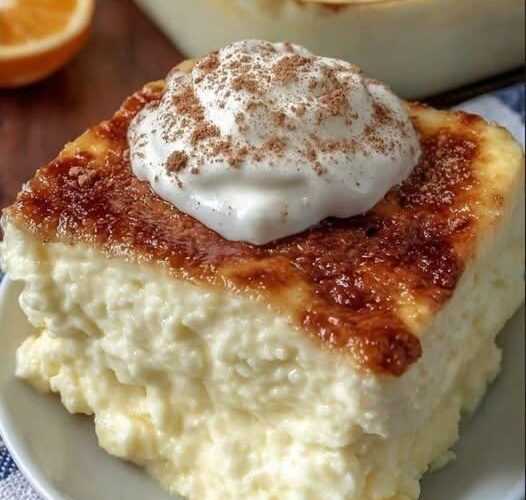
Old-Fashioned Custard Pie – Recipe
Introduction
Old-Fashioned Custard Pie is one of the purest examples of classic comfort baking. It is simple, elegant, nostalgic, and deeply rooted in traditional home kitchens where desserts were created from basic pantry ingredients and careful technique rather than complicated decorations or elaborate fillings. Despite its simplicity, custard pie is actually one of the most technically delicate desserts because it relies heavily on precision, temperature control, and proper understanding of how eggs behave under heat.
For generations, custard pies have been baked in homes across United States, United Kingdom, and many parts of France, where baked custards became symbols of warmth, hospitality, and traditional family desserts. Long before highly processed desserts became common, custard pie represented something important:
- Affordable ingredients
- Gentle homemade sweetness
- Comforting texture
- Elegant simplicity
At its core, custard pie is created from only a few ingredients:
- Eggs
- Milk or cream
- Sugar
- Vanilla
- A pastry crust
Yet through careful baking, these simple ingredients transform into a dessert with a texture that feels luxurious, silky, and smooth.
A perfectly made custard pie should never feel:
- Rubbery
- Grainy
- Overly sweet
- Heavy
- Watery
Instead, it should feel:
- Light yet creamy
- Soft but fully set
- Delicate and smooth
- Rich without heaviness
- Gentle and comforting
The ideal bite should deliver:
flaky buttery crust → silky smooth custard → warm vanilla aroma → gentle sweetness → delicate creamy finish
This recipe focuses deeply on understanding:
- Egg coagulation
- Custard chemistry
- Moisture balance
- Heat management
- Crust protection
- Cooling stabilization
because custard is not a forgiving dessert. Small temperature mistakes can dramatically change the final texture.
The History of Custard Pie
Custard-based desserts have existed for centuries. Variations appeared throughout medieval European cooking, especially in regions where eggs and dairy were common household ingredients. Over time, baked custards evolved into pies and tarts that became staples in traditional baking.
In the United States, old-fashioned custard pie became especially popular because it was:
- Affordable
- Easy to prepare
- Filling
- Made from pantry staples
Families during earlier generations often relied on simple desserts that could stretch ingredients while still feeling comforting and satisfying.
Custard pie became associated with:
- Family dinners
- Holiday tables
- Farmhouse kitchens
- Traditional Sunday meals
Even today, it remains one of the most nostalgic desserts in classic baking.
What Makes Custard Pie Special
Custard pie is unique because it transforms a liquid mixture into a delicate semi-solid structure through controlled protein coagulation.
Unlike cakes, which rely heavily on:
- Flour
- Air incorporation
- Gluten structure
custard relies mostly on:
- Eggs
- Gentle heat
- Moisture balance
This creates a texture completely different from cake or pudding.
Custard pie should feel:
- Smooth
- Silky
- Soft
- Delicate
- Creamy
without feeling dense or heavy.
Understanding Custard Science
Making excellent custard requires understanding several important cooking systems.
1. Egg Protein Coagulation
Eggs are the structural foundation of custard.
When eggs heat up:
- Proteins unfold
- Proteins reconnect
- Liquid thickens
- Structure forms
This process is called coagulation.
The challenge is that eggs are extremely temperature sensitive.
Too Little Heat
Custard stays liquid and unstable.
Too Much Heat
Proteins tighten excessively, causing:
- Curdling
- Grainy texture
- Rubbery consistency
- Cracks
The goal is gentle controlled setting.
2. Milk and Cream Function
Milk provides:
- Moisture
- Smoothness
- Soft texture
Cream provides:
- Richness
- Silkier mouthfeel
- Fuller body
The balance between milk and cream changes the final texture dramatically.
More Milk
Lighter custard
More Cream
Richer, denser custard
3. Sugar’s Structural Role
Sugar does far more than sweeten.
It helps:
- Slow protein coagulation
- Protect texture
- Improve smoothness
- Reduce curdling risk
This is why custard with proper sugar balance feels smoother.
4. Heat Control
Custard demands gentle baking temperatures.
Aggressive heat causes:
- Fast protein tightening
- Overcooked edges
- Cracked surfaces
Slow baking creates:
- Even texture
- Smooth consistency
- Stable structure
5. Moisture Balance
Custard is mostly liquid.
That means moisture control is critical.
Perfect custard should feel:
- Moist
- Soft
- Creamy
but not:
- Wet
- Loose
- Runny
Understanding the Pie Crust
The crust is not simply a container.
It provides:
- Structural support
- Texture contrast
- Buttery richness
- Crispness
The contrast between flaky crust and soft custard is one of the most satisfying parts of the pie.
Why Blind Baking Matters
Custard filling is liquid-heavy.
Without pre-baking:
- Moisture soaks into crust
- Bottom becomes soggy
Blind baking helps maintain crisp texture.
Ingredients
For the Pie Crust
- 1 pie crust (homemade or store-bought)
For the Custard Filling
- 3 large eggs
- 2 cups whole milk
- ½ cup sugar
- 1 teaspoon vanilla extract
- ¼ teaspoon salt
- Nutmeg for topping
Optional Rich Additions
- Heavy cream
- Cinnamon
- Lemon zest
- Orange zest
Preparing the Crust
Step 1: Fit the Crust
Place dough into pie dish carefully.
Press gently into edges without stretching.
Stretching causes shrinkage during baking.
Step 2: Chill the Dough
Cold dough maintains better structure.
Warm dough melts too quickly in oven.
Step 3: Blind Bake
Pre-bake crust lightly before filling.
This helps:
- Prevent sogginess
- Improve crispness
- Strengthen structure
Preparing the Custard Filling
Step 4: Whisk the Eggs
Whisk eggs gently until combined.
Avoid excessive whipping.
Too much air creates bubbles and uneven texture.
Custard should remain smooth and calm.
Step 5: Add Sugar and Salt
Mix sugar and salt into eggs.
Sugar begins interacting with egg proteins immediately.
Step 6: Warm the Milk Slightly
Slightly warm milk before combining.
This helps:
- Improve blending
- Reduce baking shock
- Create smoother texture
Do not boil.
Step 7: Combine Milk and Eggs Slowly
Pour milk gradually while whisking gently.
This prevents sudden overheating of eggs.
The goal is smooth integration.
Step 8: Add Vanilla
Vanilla provides warmth and aroma that defines classic custard flavor.
Understanding Foam Prevention
Foam is undesirable in custard.
Too many bubbles create:
- Uneven texture
- Rough surface
Gentle mixing creates silkier custard.
Assembling the Pie
Step 9: Pour Custard Into Crust
Pour carefully into prepared crust.
Avoid splashing to minimize bubbles.
Step 10: Add Nutmeg
Sprinkle fresh nutmeg lightly over top.
Nutmeg contributes:
- Warm aroma
- Traditional flavor
- Visual appeal
The Baking Process
Step 11: Bake Gently
Bake at:
160–170°C (320–340°F)
for:
- 40–55 minutes
depending on oven behavior.
Understanding Custard Setting
During baking:
- Eggs slowly coagulate
- Liquid thickens
- Structure stabilizes
The center should still jiggle slightly when removed.
Why?
Residual heat continues cooking after removal.
Overbaking Dangers
Overbaked custard becomes:
- Rubbery
- Grainy
- Dry
- Cracked
Custard should remain delicate.
Cooling and Stabilization
Step 12: Cool Slowly
Cooling is part of the cooking process.
During cooling:
- Structure finishes setting
- Moisture redistributes
- Texture stabilizes
Cutting too early causes:
- Runny slices
- Broken structure
Texture Goals
Perfect old-fashioned custard pie should have:
Top
Light golden surface with nutmeg aroma
Custard
Smooth, silky, creamy interior
Crust
Flaky, buttery, lightly crisp
Overall Feel
Soft delicate melt-in-the-mouth texture
Flavor Profile
Sweetness
Gentle and balanced
Creaminess
Rich yet light
Aroma
Warm vanilla and nutmeg
Texture
Silky smooth with delicate structure
Common Mistakes
Curdled Custard
Cause
Excessive heat
Fix
Bake at lower temperature.
Cracked Surface
Cause
Overbaking
Fix
Remove while center still jiggles slightly.
Rubbery Texture
Cause
Proteins tightened too much
Fix
Gentler heat and shorter baking.
Watery Filling
Cause
Undercooking
Fix
Bake until mostly set.
Soggy Crust
Cause
Skipping blind bake
Fix
Pre-bake crust lightly.
Grainy Texture
Cause
Eggs overheated
Fix
Slow gentle baking.
Variations
Coconut Custard Pie
Add shredded coconut.
Cinnamon Custard Pie
Replace nutmeg with cinnamon.
Maple Custard Pie
Use maple syrup for deeper sweetness.
Lemon Custard Pie
Add lemon zest for brightness.
Caramel Custard Pie
Drizzle caramel over finished pie.
Dairy-Free Version
Use plant milk alternatives.
Storage
- Refrigerate up to 4 days
- Best served chilled or slightly cool
Serving Suggestions
Serve with:
- Whipped cream
- Fresh berries
- Coffee
- Tea
Custard pie pairs beautifully with lightly bitter drinks because they balance sweetness.
Expert Tips
- Use fresh eggs
- Avoid overmixing
- Warm milk slightly
- Bake gently
- Never rush cooling
- Remove before fully firm
Why People Love Old-Fashioned Custard Pie
People love custard pie because it feels:
- Nostalgic
- Gentle
- Comforting
- Traditional
- Elegant in its simplicity
It proves that basic ingredients can create extraordinary texture and flavor when treated carefully.
Final Thoughts
Old-Fashioned Custard Pie is a perfect example of classic baking science and timeless comfort food. Through careful heat control, proper egg handling, and balanced moisture, a few humble ingredients transform into a silky smooth dessert that feels delicate, rich, and deeply satisfying.
This pie delivers:
- Silky creamy custard
- Buttery flaky crust
- Warm vanilla aroma
- Balanced sweetness
- Soft melt-in-the-mouth texture
And most importantly:
Every bite combines smooth creamy custard, delicate sweetness, warm vanilla, and flaky buttery crust into a dessert that feels nostalgic, elegant, comforting, and timeless.
