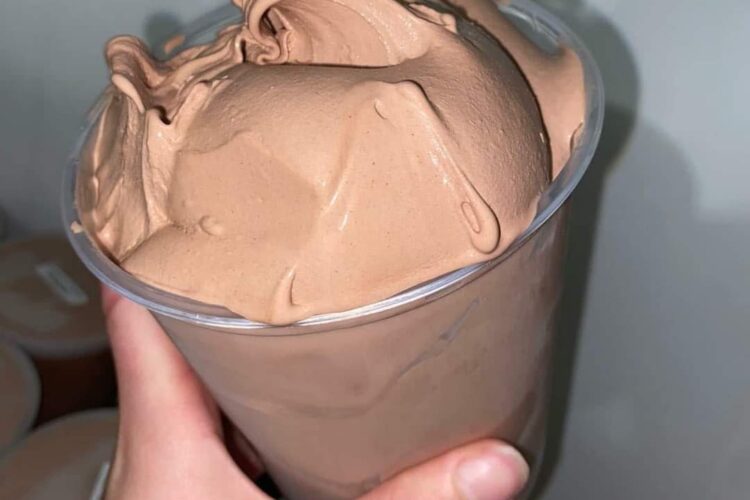
High-Protein Cottage Cheese Chocolate Mousse – Recipe
Introduction & Background
Chocolate mousse is one of the most refined and iconic desserts in culinary history—traditionally crafted with whipped cream, eggs, and chocolate to create a light, airy, melt-in-the-mouth experience. Its signature texture depends on carefully incorporated air and fat, creating a delicate balance between richness and lightness.
This High-Protein Cottage Cheese Chocolate Mousse completely redefines that structure using modern nutritional principles. Instead of relying on heavy cream and sugar, it uses protein-rich dairy, controlled emulsification, and precision blending to recreate a mousse-like texture while delivering significant nutritional benefits.
In modern food culture—especially in places like the United States—high-protein desserts have evolved into a science-driven category where texture engineering is just as important as flavor.
This recipe is designed to produce a mousse that is:
- Ultra-smooth and silky
- Thick yet airy
- Deeply chocolatey
- High in protein
- Balanced in sweetness and richness
What This Mousse Really Is (Structural Identity)
This is not a traditional mousse—it is a protein-emulsified, aerated dairy system.
It combines:
- A casein-based protein matrix (from cottage cheese)
- A fat-water emulsion system
- A fine-particle dispersion process
- A controlled aeration mechanism
Instead of whipped cream forming the structure, the mousse relies on micro-blended proteins and emulsified fats to create a stable, creamy texture.
Core Texture Goals (Professional Standard)
A perfectly executed cottage cheese chocolate mousse should deliver:
- Completely smooth, lump-free consistency
- Velvety, spoon-coating texture
- Light aeration without collapsing
- Rich but not heavy mouthfeel
- Stable structure that holds shape
It should resemble:
classic French mousse + chocolate ganache cream + cheesecake filling
Ingredient System (Ultra Detailed Functional Breakdown)
1. Primary Protein Base (Foundation Matrix)
- 1½ to 2 cups cottage cheese
Function:
- Provides structural protein (casein)
- Forms the base matrix
- Holds water and fat together
- Creates cream-like consistency when blended
Critical Insight:
Blending transforms curds into microscopic particles, creating a smooth base indistinguishable from cream.
2. Chocolate System (Flavor + Structure Driver)
- 2–4 tbsp cocoa powder OR 80–120g melted dark chocolate
Function:
- Provides chocolate flavor
- Contributes solids that thicken mixture
- Adds bitterness balance
Technical Difference:
- Cocoa powder → lighter, more protein-dominant
- Melted chocolate → richer, more fat-based structure
3. Sweetening System (Flavor Engineering Layer)
- 2–5 tbsp sweetener (honey, maple syrup, or low-carb sweetener)
Function:
- Balances cocoa bitterness
- Enhances perceived chocolate intensity
- Improves mouthfeel
4. Hydration System (Consistency Control)
- 2–6 tbsp milk
Function:
- Adjusts viscosity
- Controls thickness
- Enables smooth blending
5. Fat Enrichment System (Luxury Texture Layer)
- 1–3 tbsp peanut butter, cream, or butter
Function:
- Adds richness
- Improves silkiness
- Enhances mouth-coating effect
6. Flavor Enhancers
- 1 tsp vanilla extract
- Pinch of salt
Function:
- Amplifies chocolate notes
- Balances sweetness
7. Optional Structural Enhancers
- 1 scoop protein powder
- 1–2 tbsp Greek yogurt
Function:
- Increases protein density
- Thickens mousse
- Stabilizes structure
Deep Food Science Breakdown (Advanced Level)
1. Casein Protein Matrix Formation
Cottage cheese contains casein proteins, which:
- Form a stable network when blended
- Hold moisture effectively
- Create creamy consistency
Unlike whey, casein is slow-digesting and structurally stable.
2. Emulsion Formation (Fat + Water Integration)
The mousse is an emulsion of:
- Water phase (milk, dairy moisture)
- Fat phase (chocolate, butter, optional fats)
- Protein phase (casein + eggs if used)
Blending disperses fat into microscopic droplets, creating smoothness.
3. Particle Size Reduction (Critical Process)
Blending reduces curd size to near-microscopic level.
This results in:
- Smooth texture
- No graininess
- Cream-like mouthfeel
Insufficient blending leads to a gritty texture.
4. Aeration Mechanics
Air incorporation occurs through:
- High-speed blending
- Whipping action
This introduces micro air bubbles that:
- Lighten texture
- Increase volume
- Mimic traditional mousse
5. Viscosity Control System
Viscosity depends on:
- Protein concentration
- Fat content
- Liquid ratio
Balance determines whether mousse is:
- Thick and dense
- Light and airy
- Runny or firm
6. Chocolate Flavor Chemistry
Chocolate flavor is influenced by:
- Cocoa solids (bitterness)
- Fat (richness)
- Sugar (balance)
Salt enhances all three.
7. Cooling & Structural Stabilization
Chilling allows:
- Fat to solidify slightly
- Protein matrix to firm
- Air bubbles to stabilize
This creates final mousse texture.
Step-by-Step Method (Ultra Detailed Execution)
Step 1: Pre-Blend Cottage Cheese
Add cottage cheese to blender.
Blend for 1–2 minutes until:
- Completely smooth
- No visible curds
- Cream-like consistency
This is the most critical step.
Step 2: Add Chocolate Component
Add cocoa powder or melted chocolate.
Blend until:
- Fully incorporated
- Uniform color achieved
Step 3: Sweetening Phase
Add sweetener gradually.
Blend and taste to adjust.
Step 4: Controlled Hydration
Add milk slowly:
- Blend continuously
- Stop when desired thickness is reached
Step 5: Add Fat Enhancers
Add peanut butter or cream.
Blend until silky.
Step 6: Flavor Enhancement
Add vanilla and salt.
Blend briefly.
Step 7: Aeration Phase
Blend at high speed for 1–2 minutes.
This introduces air for mousse texture.
Step 8: Chilling & Setting Phase
Transfer to container.
Refrigerate for 1–3 hours.
This step:
- Thickens mousse
- Enhances flavor
- Stabilizes structure
Texture & Flavor Profile
Perfect mousse delivers:
- Velvety smooth texture
- Rich chocolate intensity
- Balanced sweetness
- Light yet creamy feel
- Clean finish without heaviness
Common Mistakes & Fixes
Grainy Texture
Cause: Poor blending
Fix: Blend longer
Too Thick
Cause: Low liquid
Fix: Add milk
Too Runny
Cause: Excess liquid
Fix: Chill longer or add protein
Too Bitter
Cause: Excess cocoa
Fix: Add sweetener
Flat Texture (No Airiness)
Cause: No aeration
Fix: Blend longer
Advanced Variations
Chocolate Peanut Butter Mousse
Add extra peanut butter.
Mocha Espresso Mousse
Add espresso powder.
Dark Chocolate Intense
Use high-percentage chocolate.
Chocolate Berry Mousse
Top with berries.
Layered Dessert Jars
Layer with yogurt or granola.
Storage & Shelf Life
- Fridge: 3–4 days
- Keep covered
- Stir lightly before serving
Serving Ideas
- Dessert cups
- Post-workout snack
- Cake or crepe filling
- Parfait layers
- With nuts or fruit
Approximate Nutrition
- High protein
- Moderate fat
- Controlled carbs
- Very filling
Final Thoughts
High-Protein Cottage Cheese Chocolate Mousse is a perfect example of how culinary science can transform a classic dessert into a nutritionally optimized experience. By understanding emulsification, protein structure, and aeration, you can create a mousse that rivals traditional versions in texture while delivering superior nutritional value.
It delivers:
- Silky smooth consistency
- Rich chocolate flavor
- High protein content
- Adaptability for different diets
At its core, it proves:
When protein, fat, and air are carefully balanced and refined through precise blending, even a traditionally indulgent dessert like chocolate mousse can be recreated in a healthier, high-performance form without sacrificing texture or satisfaction.
