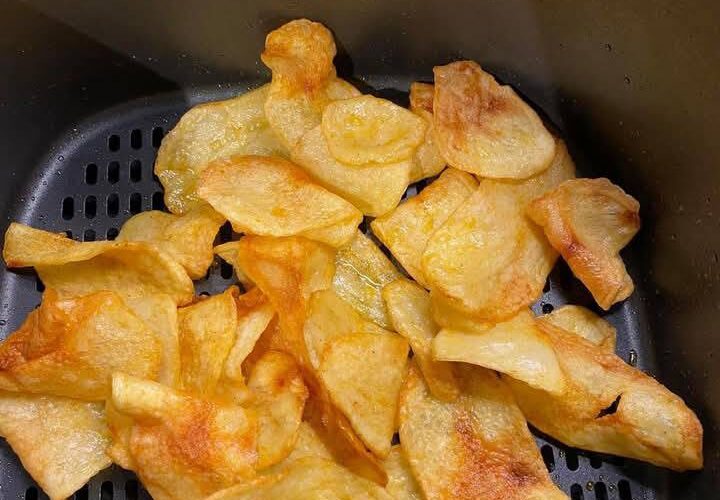
Air Fryer Potato Chips – Recipe
Introduction & Background
The Air Fryer Potato Chips are a modern evolution of one of the most iconic snack foods ever created. Potato chips, also known as crisps in many parts of the world, originated in the 19th century and quickly became a global sensation due to their addictive crunch, salty flavor delivery system, and satisfying texture contrast.
Traditionally, chips are made by deep-frying thin slices of potato in hot oil. This method produces extreme crispiness but also results in high oil absorption and heavy calorie density.
The invention of the air fryer changed the entire concept of chip-making.
Instead of submerging potatoes in oil, air frying uses rapid hot air circulation to replicate frying results with significantly less oil. This introduces a completely different approach to chip creation—one that relies more on moisture control, starch transformation, and controlled dehydration than oil cooking.
The Air Fryer Potato Chips are not just a “healthier version” of chips—they are a precision crisp engineering system where every step affects final crunch quality.
When done correctly, they deliver:
- Glass-like crisp texture
- Light oil coating instead of deep fry heaviness
- Clean potato flavor with seasoning control
- Perfect golden coloration
- Addictive crunch without greasiness
Chef’s Philosophy & Advanced Crisp Engineering System
This recipe is built around a single principle:
👉 Crispiness is a result of water removal + starch restructuring, not frying itself.
Potatoes are naturally composed of:
- High water content (~80%)
- Starch granules
- Cell structure that breaks down under heat
To turn this into chips, we must carefully control:
- Moisture evaporation
- Surface dehydration
- Starch gelatinization
- Oil surface activation
1. Moisture Elimination Engineering (Core Foundation System)
Moisture is the biggest enemy of crisp texture.
If water remains inside potato slices:
- Steam forms during cooking
- Texture becomes soft or chewy
- Chips lose structural rigidity
So the process is designed around:
- Soaking to remove starch
- Drying to remove surface water
- Air frying to remove internal moisture
Each stage reduces water step-by-step until crisp formation becomes possible.
2. Starch Transformation & Structural Hardening
Potatoes contain starch granules that behave like a gel when heated.
During cooking:
- Starch absorbs heat
- Gelatinization occurs
- Structure expands
- Then hardens as moisture escapes
This creates the rigid chip structure.
If starch is not properly managed, chips become:
- Soft
- Sticky
- Or unevenly cooked
3. Air Fryer Heat Dynamics (Convective Crisp System)
Air fryers operate using:
- High-speed hot air circulation
- Even surface exposure
- Continuous moisture removal
This results in:
- Uniform browning
- Reduced oil dependency
- Crisp exterior shell formation
Unlike deep frying, where oil is the heat medium, here air is the cooking engine.
4. Oil Micro-Film Engineering (Crisp Activation Layer)
Oil in this recipe is not for frying—it is for:
- Surface browning activation
- Flavor carrier system
- Crisp texture enhancement
Only a thin layer is needed.
Too much oil:
- Blocks dehydration
- Creates soggy chips
Too little oil:
- Leads to dry, pale chips
Balance is key to golden crisp perfection.
5. Flavor Absorption Layer System
Potatoes are neutral in flavor, making them ideal for seasoning systems.
Flavor is built in layers:
- Base salt layer
- Oil-bound spice layer
- Post-cook finishing seasoning layer
This allows chips to taste deeper and more complex without overpowering the natural potato flavor.
Difficulty, Timing & Yield
Difficulty Level: Easy–Medium (precision slicing + moisture control required)
Preparation Time: 20–25 minutes
Cooking Time: 15–20 minutes
Total Time: ~45 minutes
Servings: 2–4 portions
Ingredients (Fully Expanded Gourmet Breakdown)
Main Potato Structure System
- 2 large starchy potatoes (Russet or similar)
Function:
- Structural base
- Starch source for crisp formation
- Flavor neutral canvas
Starchy potatoes are preferred because they:
- Crisp better
- Contain less moisture density variation
- Form stronger chip structure
Oil Activation System (Micro-Coating Layer)
- 1–2 tablespoons olive oil or neutral oil
Function:
- Heat conduction support
- Browning activation
- Seasoning adhesion layer
Oil must be distributed evenly as a thin film.
Core Seasoning System
Basic:
- Salt (to taste)
Advanced layering options:
- Paprika → smoky depth
- Garlic powder → savory base tone
- Onion powder → sweetness enhancement
- Chili flakes → heat layer
- Black pepper → aromatic sharpness
- Parmesan → umami crisp finish
Crisp Enhancement System (Optional Advanced Layer)
- Cornstarch (1 teaspoon) → extra crunch shell formation
- Vinegar soak (optional) → flavor brightness + texture firmness
- Ice water soak → starch extraction efficiency
Step-by-Step Method (Ultra Precision Crisp Engineering Process)
Step 1: Precision Slicing Phase
Slice potatoes extremely thin:
- 1–2 mm thickness ideal
This is critical because:
- Thin slices = faster dehydration
- Even slices = uniform crisp
- Thick slices = soft center risk
Use mandoline slicer for consistency.
Step 2: Starch Extraction Soaking Phase
Place sliced potatoes in cold water.
Soak for:
- 20–40 minutes
During this phase:
- Excess starch is released
- Surface stickiness is reduced
- Crisp potential increases
Water may turn cloudy—this is normal.
Step 3: Drying & Moisture Removal Phase (Most Critical Step)
Drain water completely.
Then dry using:
- Kitchen towel
- Air drying method
Potatoes must be completely dry before oiling.
Any leftover moisture will turn into steam and ruin crispiness.
Step 4: Oil & Seasoning Coating Phase
Place dried slices in a bowl.
Add:
- Oil
- Salt
- Optional spices
Mix thoroughly until:
- Every slice is lightly coated
- No excess oil pooling exists
This ensures balanced crisp formation.
Step 5: Air Fryer Preheating Phase
Preheat air fryer to:
180°C (356°F)
Preheating ensures:
- Instant crisp sealing
- Reduced sticking
- Even heat distribution
Step 6: Air Frying Transformation Phase
Arrange potato slices in a single layer.
Do NOT overlap.
Cook for:
15–18 minutes total
Shake basket halfway through cooking.
During this phase:
- Water evaporates fully
- Starch hardens
- Surface browns
- Crisp structure forms
Step 7: Crisp Finalization Phase
Once golden brown:
Remove and place on cooling rack.
Let rest for:
- 2–5 minutes
This allows:
- Final moisture escape
- Crunch intensification
- Texture stabilization
Advanced Chef Tips (Professional Optimization System)
- Always use starchy potatoes for best crisp
- Drying stage is more important than cooking itself
- Do not overcrowd air fryer basket
- Shake basket for even browning
- Add salt immediately after cooking for best adhesion
- For ultra crisp, double air fry for 2–3 extra minutes
Common Mistakes & Failure Analysis
1. Soft or Soggy Chips
Cause:
- Moisture not fully removed
Fix:
- Dry thoroughly before air frying
2. Uneven Browning
Cause:
- Overlapping slices
Fix:
- Cook in smaller batches
3. Burnt Edges
Cause:
- Too high temperature or very thin slices
Fix:
- Reduce heat slightly
4. No Crunch Effect
Cause:
- Under-cooking or too much oil
Fix:
- Extend cooking time and reduce oil quantity
Storage & Reheating System
- Best consumed fresh
- Airtight container storage: 1–2 days
- Reheat in air fryer: 2–3 minutes at 160°C
- Do NOT microwave (destroys crisp structure completely)
Serving Suggestions (Flavor Expansion System)
Air fryer potato chips can be elevated into multiple formats:
- Classic salted snack
- Spicy chili-lime chips
- Garlic parmesan chips
- BBQ seasoning chips
- Cheese dusted gourmet chips
- Dip pairing: ketchup, mayo, ranch, cheese sauce
Final Thoughts
The Air Fryer Potato Chips are not just a snack—they are a starch dehydration and crisp engineering system designed for maximum crunch efficiency with minimal oil input.
When executed correctly, they deliver:
- Ultra thin crisp structure
- Golden bakery-level browning
- Light, non-greasy texture
- Intense crunch sound profile
- Highly customizable flavor system
This recipe proves that even the simplest ingredient—potato—can become a premium snack when treated as a controlled cooking and moisture transformation system rather than just food
