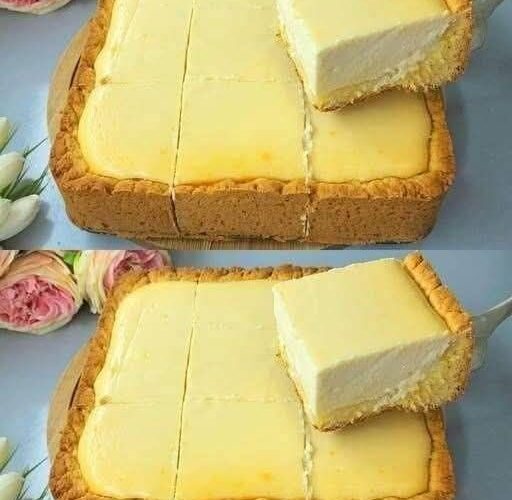
Yummy Torta Della Nonna – Recipe
Introduction & Historical Background
Torta Della Nonna, literally translated as “Grandmother’s Cake,” is one of the most iconic traditional desserts from Tuscany, Italy. Unlike modern desserts that rely on heavy decoration or complex techniques, this cake represents a deeply rooted Italian baking philosophy: simple ingredients, precise technique, and emotional comfort in food form.
Historically, Torta Della Nonna emerged from rural Italian households where ingredients were limited but creativity was not. Families relied on pantry staples such as flour, eggs, milk, sugar, and seasonal nuts. From these humble components, they created desserts that were both nourishing and celebratory.
The cake became especially popular in Tuscan bakeries during the 20th century and eventually spread across Italy. It is now considered a classic pastry in Italian cuisine, often served in restaurants as a representation of traditional home-style baking.
At its core, this dessert is a custard-filled tart with a shortcrust pastry shell, topped with pine nuts and dusted with powdered sugar. Despite its simple structure, it delivers an extremely refined eating experience because of the contrast between textures and temperatures.
What makes it unique is not complexity, but harmony:
- A crisp pastry shell that holds structure
- A silky vanilla custard that melts in the mouth
- Toasted pine nuts that add subtle crunch and aroma
- A light sugar finish that balances richness
This combination creates a dessert that feels comforting, elegant, and timeless all at once.
Chef’s Philosophy & Deep Culinary Thinking
Torta Della Nonna is a masterclass in restraint.
Modern desserts often try to impress through layers of flavor, decoration, or technical complexity. This dessert does the opposite—it removes everything unnecessary and focuses only on what matters.
The philosophy behind this recipe is:
“If every element is perfect, nothing else is needed.”
There are three essential pillars:
1. Structural Discipline
The pastry shell is not just a container—it is a structural system. It must:
- Hold the custard without collapsing
- Stay crisp even after baking
- Maintain integrity when sliced
This requires correct fat-to-flour balance and careful handling.
2. Custard Precision
The custard is the heart of the dessert. It must be:
- Smooth
- Thick but not rubbery
- Stable but soft
Custard is a sensitive system where small mistakes (like overheating) can completely change texture.
3. Controlled Contrast
The magic of this dessert comes from contrast:
- Crisp vs creamy
- Warm aroma vs cool serving temperature
- Nutty crunch vs smooth filling
Without contrast, the dessert becomes flat and uninteresting.
Core Structural Systems (Advanced Breakdown)
1. Shortcrust Stability System (Pastry Engineering)
The pastry (pasta frolla) is built using a high-fat dough system.
Its function is:
- Prevent moisture leakage
- Provide crisp texture
- Act as edible container
Butter is critical here because:
- It coats flour particles
- Prevents gluten overdevelopment
- Creates tenderness instead of toughness
The dough must be handled minimally to avoid elasticity development.
2. Custard Gelation System
Custard is a controlled protein-starch gel.
During cooking:
- Egg proteins unfold and bond
- Cornstarch swells and thickens liquid
- Heat transforms mixture into stable cream
The key is temperature control:
- Too low → runny custard
- Too high → scrambled eggs
Perfect custard sits in a narrow temperature range where it thickens smoothly without breaking.
3. Moisture Migration Control System
One of the biggest challenges in this dessert is moisture movement.
Risks include:
- Custard soaking pastry base
- Loss of crispness over time
This is controlled by:
- Fully cooling custard before assembly
- Proper blind-baking (optional technique)
- Controlled baking temperature
4. Aromatic Layering System
Flavor is built in layers:
- Vanilla → base aroma
- Lemon zest → brightness
- Pine nuts → roasted depth
- Egg custard → richness
No single flavor dominates; instead, they work together.
Difficulty, Timing & Yield
Difficulty Level: Medium–Advanced (due to custard control)
Preparation Time: 40–50 minutes
Chilling Time (Dough Rest): 30–60 minutes
Baking Time: 40–55 minutes
Cooling Time: 1.5–2 hours
Total Time: ~3.5 to 4 hours
Servings: 8–10 slices
Ingredients (Expanded Functional Breakdown)
Pastry Shell System (Pasta Frolla)
- 2 cups all-purpose flour
- 1/2 cup cold unsalted butter (cubed)
- 2/3 cup sugar
- 2 egg yolks
- 1 whole egg
- Zest of 1 lemon
- 1 teaspoon vanilla extract
- Pinch of salt
Functional Roles:
- Flour → structure
- Butter → tenderness and crumble texture
- Eggs → binding and richness
- Sugar → sweetness and slight crisping
- Lemon zest → aromatic brightness
Custard Filling System
- 2 cups whole milk
- 4 egg yolks
- 1/2 cup sugar
- 1/4 cup cornstarch
- 1 teaspoon vanilla extract
- Optional: lemon peel strip
Functional Roles:
- Milk → creamy liquid base
- Egg yolks → richness and color
- Cornstarch → stabilizer
- Vanilla → flavor depth
- Lemon → aromatic balance
Topping System
- Pine nuts (generous layer)
- Powdered sugar (finishing dust)
Functional Roles:
- Pine nuts → crunch + roasted aroma
- Sugar → visual contrast + sweetness balance
Step-by-Step Method (Ultra Detailed Execution System)
Step 1: Dough Formation Phase
Mix flour, sugar, and salt in a bowl.
Add cold butter cubes.
Rub butter into flour until mixture resembles fine breadcrumbs.
Add:
- Eggs
- Vanilla
- Lemon zest
Combine gently until dough forms.
Important control points:
- Do not overmix
- Do not warm butter excessively
- Maintain crumbly texture
This ensures a tender pastry after baking.
Step 2: Dough Resting Phase
Wrap dough in cling film.
Refrigerate for 30–60 minutes.
This process:
- Stabilizes fat structure
- Reduces elasticity
- Improves rolling consistency
Skipping this step results in shrinking pastry.
Step 3: Custard Cooking Phase
Heat milk with vanilla and lemon peel (do not boil aggressively).
In separate bowl whisk:
- Egg yolks
- Sugar
- Cornstarch
Slowly temper with warm milk while whisking continuously.
Return mixture to low heat.
Stir constantly until:
- Thickened
- Smooth
- Creamy
Critical rule:
Never allow boiling.
Step 4: Cooling Phase (Critical Stabilization Step)
Cool custard completely before assembly.
This ensures:
- No pastry sogginess
- Stable filling structure
- Clean slicing later
Step 5: Pastry Shell Formation
Roll out chilled dough.
Line tart pan evenly.
Press gently into corners.
Trim excess edges.
Prick base lightly with fork.
This prevents:
- Air bubbles
- Uneven rising
Step 6: Filling Phase
Pour cooled custard into pastry shell.
Spread evenly using spatula.
Step 7: Topping Phase
Sprinkle pine nuts evenly across surface.
They should form a light, natural layer.
Step 8: Baking Phase
Bake at:
170–180°C
For:
40–55 minutes
During baking:
- Pastry turns golden brown
- Custard sets fully
- Pine nuts toast and release aroma
Step 9: Cooling & Maturation Phase
Let cake cool for 1.5–2 hours.
During this time:
- Custard firms up
- Flavors develop deeper
- Texture stabilizes
Best results come after resting longer or overnight refrigeration.
Texture & Flavor Profile (Final Result Analysis)
A perfectly executed Torta Della Nonna delivers:
- Crisp, buttery pastry shell
- Smooth, silky vanilla custard
- Light roasted pine nut crunch
- Subtle citrus aroma
- Balanced sweetness without heaviness
Every bite should feel structured yet soft, rich yet light.
Advanced Professional Techniques
- Blind bake pastry for extra crispness
- Strain custard for ultra-smooth texture
- Toast pine nuts lightly before adding
- Use high-fat milk for richer custard
- Chill overnight for best slicing structure
Common Mistakes & Fixes
Soggy Base
Cause:
Hot custard or underbaked shell
Fix:
Cool custard completely and pre-bake shell
Lumpy Custard
Cause:
High heat or poor whisking
Fix:
Use low heat and constant stirring
Cracked Surface
Cause:
Overbaking
Fix:
Reduce temperature slightly
Tough Pastry
Cause:
Overmixing dough
Fix:
Handle dough minimally
Storage & Serving
- Refrigerate up to 3 days
- Serve chilled or slightly room temperature
- Best flavor after resting overnight
- Dust powdered sugar just before serving
Final Thoughts
Torta Della Nonna is not just a dessert—it is a representation of traditional Italian baking philosophy.
It proves that:
- Simplicity can be elegant
- Technique matters more than ingredients count
- Texture balance defines quality
When done correctly, it delivers a perfect harmony of crisp pastry, creamy custard, and nutty aroma—making it one of the most timeless desserts in European cuisine.
