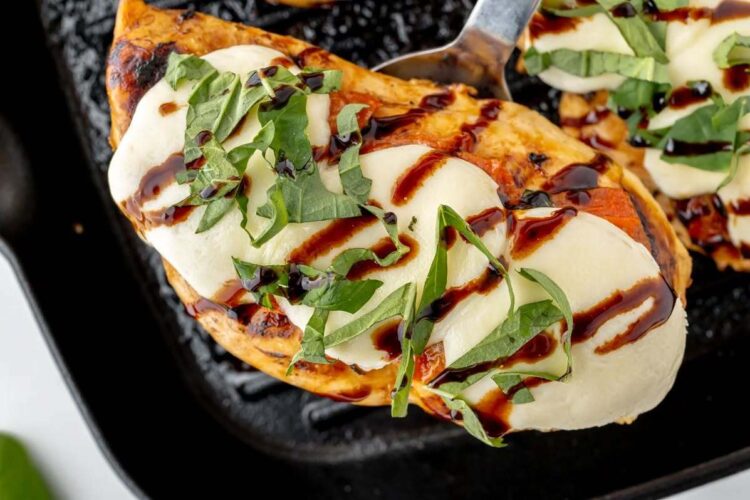
Tasty Caprese Chicken in Air Fryer – Recipe
Introduction & Background
Air Fryer Caprese Chicken is a modern high-protein reinterpretation of the classic Italian Caprese concept. The original Caprese salad comes from the Campania region of Italy and is built on a very strict philosophy of simplicity: fresh tomatoes, fresh mozzarella, basil leaves, olive oil, and salt. It represents the Italian culinary idea that when ingredients are high quality, you don’t need complicated cooking methods to create something memorable.
This recipe takes that minimalist Italian foundation and transforms it into a complete main dish by adding chicken as a protein base and using the air fryer as the cooking method. The air fryer is particularly effective here because it allows controlled heat circulation, which cooks chicken evenly while gently melting cheese and softening tomatoes without destroying freshness.
Unlike heavy baked chicken dishes or creamy casseroles, Caprese Chicken is intentionally designed to feel light, clean, and structured. Every ingredient remains distinct, but together they create a balanced eating experience that feels both nourishing and indulgent.
The final dish delivers a combination of:
- Juicy seasoned chicken
- Melted creamy mozzarella
- Slightly roasted sweet tomatoes
- Fresh aromatic basil
- Optional balsamic sweetness and acidity
This is not just a recipe—it is a controlled layering system of temperature, texture, and freshness.
Chef’s Philosophy & Culinary Logic
The philosophy behind this dish is based on one central idea:
Preserve freshness while applying controlled heat transformation.
Caprese Chicken is not about heavy cooking or intense spice layering. Instead, it focuses on how heat changes ingredients at different rates:
- Chicken needs sustained heat to cook fully
- Mozzarella needs gentle heat to melt smoothly
- Tomatoes need short heat exposure to soften without collapsing
- Basil should avoid heat entirely to maintain aroma
The challenge is synchronizing all these elements in one cooking environment (air fryer) without losing the identity of each ingredient.
The goal is to create:
- Structural harmony (everything stays in place)
- Flavor clarity (nothing gets masked)
- Textural contrast (soft, juicy, creamy, fresh)
This is what separates a simple chicken dish from a refined Caprese-style preparation.
Core Culinary Systems (Deep Technical Breakdown)
1. Protein Juiciness Preservation System
Chicken breast is naturally lean and prone to drying out. To prevent this, this recipe uses:
- Controlled temperature cooking
- Oil-based surface coating
- Two-stage cooking method
During air frying:
- Outer surface firms up first
- Internal moisture is sealed inside
- Proteins set gradually without squeezing out juices
The key is avoiding aggressive heat that forces moisture out too quickly.
2. Cheese Melt Behavior System
Mozzarella is chosen because of its unique melting profile:
- Low acidity
- High moisture content
- Elastic protein structure
When exposed to air fryer heat:
- It softens evenly
- Spreads gently over chicken
- Creates a creamy binding layer
If overcooked, mozzarella can become oily or rubbery, so timing control is critical.
3. Tomato Moisture & Acid Regulation System
Tomatoes are complex because they contain both:
- Water (moisture release during cooking)
- Natural acids (flavor brightness)
In this recipe:
- Heat softens tomatoes slightly
- Juices enhance chicken flavor
- Acidity balances richness of cheese
The key is preventing tomatoes from fully breaking down into sauce.
4. Basil Volatile Aroma Protection System
Basil contains delicate aromatic oils that evaporate under heat.
To preserve its freshness:
- It is never cooked directly
- It is always added after cooking
- It acts as a finishing aromatic layer
This keeps its flavor sharp and noticeable.
5. Layered Flavor Construction System
Instead of mixing everything together, ingredients are stacked:
- Chicken = base structure
- Tomato = acidity and juiciness layer
- Mozzarella = creamy fat layer
- Basil = aromatic finish layer
- Balsamic = optional sweet-acid glaze layer
This prevents flavor confusion and ensures clarity in every bite.
Difficulty, Timing & Yield
Difficulty Level: Medium
Preparation Time: 15–20 minutes
Cooking Time: 14–18 minutes
Total Time: ~35–40 minutes
Servings: 2–4 portions
Ingredients (Fully Expanded Functional Breakdown)
Chicken Structural Base
- 2 large chicken breasts (butterflied or lightly pounded)
Function:
- Primary protein structure
- Must cook evenly
- Serves as platform for toppings
Flattening ensures:
- Faster cooking
- Even heat distribution
- Better texture consistency
Seasoning & Flavor Base System
- 1–2 tablespoons olive oil
- Salt (to taste)
- Black pepper
- 1 teaspoon garlic powder
- 1 teaspoon paprika
- Optional: Italian herbs (oregano, thyme, basil flakes)
Function:
- Builds savory base flavor
- Enhances browning
- Prevents dryness during cooking
Caprese Layer System
- 1 cup cherry tomatoes (halved) or sliced ripe tomatoes
- 1 cup fresh mozzarella (sliced or shredded)
- Fresh basil leaves
Function:
- Tomatoes → juicy acidity and freshness
- Mozzarella → creamy melt structure
- Basil → aromatic finishing layer
Finishing System (Optional but Recommended)
- Balsamic glaze
- Extra virgin olive oil drizzle
- Sea salt flakes
Function:
- Adds sweetness-acidity balance
- Enhances visual appeal
- Adds restaurant-style finish
Step-by-Step Method (Deep Execution System)
Step 1: Chicken Preparation Phase
Pat chicken completely dry using paper towels.
If thick:
- Butterfly or lightly pound
This ensures:
- Even cooking speed
- Better heat penetration
- Juicier final texture
Dry surface is essential for proper seasoning adhesion.
Step 2: Seasoning Phase
Coat chicken with olive oil.
Then season evenly with:
- Salt
- Black pepper
- Garlic powder
- Paprika
- Optional herbs
This creates a protective flavor layer that:
- Enhances taste
- Locks moisture
- Helps browning in air fryer
Step 3: Air Fryer Preheating Phase
Preheat air fryer to:
180°C
Preheating ensures:
- Immediate heat contact
- Even cooking from start
- Better surface sealing
Step 4: Initial Cooking Phase (Protein Setting Stage)
Place chicken in air fryer basket in a single layer.
Cook for:
8–10 minutes
During this stage:
- Outer layer firms
- Internal structure begins to set
- Juices start to lock in
Do not overcook at this stage.
Step 5: Caprese Assembly Phase
Remove chicken briefly.
Layer on top:
- Mozzarella slices
- Tomato slices
Add light seasoning if needed.
Return to air fryer.
Step 6: Final Cooking Phase (Melting Integration Stage)
Cook for:
4–6 minutes
During this stage:
- Mozzarella melts fully
- Tomatoes soften slightly
- Flavors integrate naturally
Avoid overcooking to preserve freshness.
Step 7: Basil Finishing Phase
Remove from air fryer.
Immediately top with:
- Fresh basil leaves
Do NOT cook basil.
Step 8: Final Drizzle Phase
Optional finishing:
- Balsamic glaze drizzle
- Olive oil drizzle
- Pinch of salt flakes
This enhances final flavor balance.
Texture & Flavor Profile
A properly executed Caprese Chicken delivers:
- Juicy, tender chicken base
- Creamy melted mozzarella layer
- Soft, slightly roasted tomatoes
- Fresh basil aroma on top
- Sweet-acid finish from balsamic glaze
Each bite feels layered, fresh, and balanced rather than heavy or overwhelming.
Advanced Techniques (Professional Level)
- Use room-temperature chicken for even cooking
- Do not overload toppings (prevents sogginess)
- Add mozzarella in slices instead of thick blocks for faster melt
- Use fresh basil only (dried basil loses aroma impact)
- Rest chicken briefly before final plating for juice stability
- Add balsamic glaze in thin lines, not heavy pours
Common Mistakes & Fixes
Dry Chicken
Cause:
Overcooking initial stage
Fix:
Reduce first cooking time slightly
Watery Dish
Cause:
Too many tomatoes or overripe tomatoes
Fix:
Use moderate tomato quantity
Rubbery Cheese
Cause:
Overcooking after mozzarella melts
Fix:
Limit final cooking time
Basil Losing Flavor
Cause:
Cooking basil inside air fryer
Fix:
Always add basil after cooking
Storage & Reheating System
- Refrigerate up to 2–3 days
- Reheat in air fryer at 160°C for 3–4 minutes
- Add fresh basil after reheating
- Avoid microwave to preserve texture
Serving Suggestions
Air Fryer Caprese Chicken pairs well with:
- Pasta (especially garlic or olive oil pasta)
- Rice bowls or quinoa
- Fresh green salad
- Roasted vegetables
- Crusty bread
Final Thoughts
Air Fryer Caprese Chicken is a perfect example of how simple ingredients can become a refined dish when cooking technique is applied correctly.
It delivers:
- Clean, structured flavor layers
- Juicy and tender protein base
- Fresh Italian-inspired profile
- Balanced richness and brightness
- Fast and efficient cooking method
It proves that culinary excellence does not require complexity—it requires precision, timing, and respect for how each ingredient behaves under heat.
