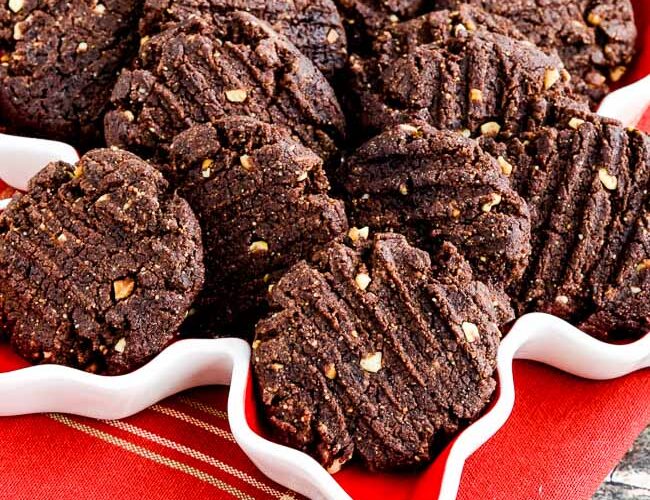
Peanut Butter Chocolate Cookies – Recipe
Introduction & Background
Peanut Butter Chocolate Cookies (Flourless, Sugar-Free) represent a modern shift in baking where simplicity, nutrition, and indulgence meet in a single formulation. Unlike traditional cookies that rely heavily on refined flour and sugar, this recipe is built on a minimalist ingredient system that removes unnecessary components while preserving texture, flavor, and satisfaction.
Historically, peanut butter cookies became popular in early American baking because peanut butter itself acts as both a fat and structural ingredient, reducing the need for large amounts of flour. Chocolate was later introduced as a complementary flavor, creating one of the most universally loved dessert combinations.
In this flourless, sugar-free version, the cookie is transformed into a low-carb, high-fat, protein-supporting dessert system. The absence of flour shifts structure to fats and proteins, while sugar substitutes provide sweetness without glucose spikes.
This is not just a “healthier cookie”—it is a re-engineered cookie architecture designed to function without traditional baking pillars.
Chef’s Philosophy & Culinary Framework
The philosophy behind these cookies is:
Fat-based structure + protein binding + controlled sweetness = flourless cookie stability system
Traditional cookies rely on:
- Flour → structure
- Sugar → sweetness + spread control
This version replaces those roles with:
- Peanut butter → structure + fat + protein
- Eggs → binding and stabilization
- Sugar-free sweeteners → controlled sweetness
The key idea:
“When flour is removed, fat becomes the structure, and protein becomes the glue.”
These cookies are designed to deliver:
- Soft, slightly chewy centers
- Rich peanut butter depth
- Chocolate contrast
- Controlled sweetness without heaviness
Core Culinary Systems (Ultra Deep Technical Breakdown)
1. Peanut Butter Structural Matrix System
Peanut butter is the primary ingredient and acts as:
- Fat source
- Protein contributor
- Structural base
When heated:
- Fats soften and spread
- Proteins firm up
- Oils redistribute
This creates a self-supporting cookie structure without flour.
The natural thickness of peanut butter replaces dough formation entirely.
2. Egg Protein Binding System
Eggs are critical in flourless baking.
During baking:
- Egg proteins denature
- Form a stable network
- Bind fats and ingredients together
This prevents:
- Cookie collapse
- Excess spreading
- Crumbling texture
Eggs act as the structural glue of the cookie.
3. Sugar-Free Sweetener Stability System
Instead of sugar, keto-friendly or natural sweeteners are used:
- Erythritol
- Monk fruit
- Stevia blends
These provide:
- Sweetness without glycemic impact
- Reduced caramelization
- Controlled browning
Because they behave differently from sugar, they must be balanced to avoid:
- Cooling aftertaste
- Dry texture
4. Chocolate Integration Contrast System
Chocolate chips or chunks provide:
- Texture contrast
- Flavor depth
- Slight bitterness to balance sweetness
During baking:
- Chocolate softens
- Slightly melts into cookie structure
- Creates rich pockets of flavor
5. Fat Melt & Spread Control System
Peanut butter contains natural oils.
During baking:
- Oils melt and spread
- Cookie flattens slightly
- Edges set while center remains soft
The absence of flour means spread must be controlled through:
- Egg binding
- Chilling (optional)
- Proper portioning
6. Moisture Retention Soft-Center System
These cookies rely on internal moisture balance:
- Peanut butter retains oils
- Eggs retain water content
- Sweeteners affect moisture perception
This creates:
- Soft center
- Slightly chewy texture
- Non-dry mouthfeel
7. Surface Crust Formation System
Even without sugar, a light crust forms due to:
- Protein browning
- Fat caramelization
- Heat exposure
This produces:
- Slightly firm outer layer
- Soft interior contrast
8. Cooling Stabilization System
After baking:
- Cookies are soft and fragile
- Structure firms as they cool
- Oils redistribute evenly
Cooling is essential for final texture development.
Difficulty, Timing & Yield
Difficulty Level: Easy
Preparation Time: 10–15 minutes
Baking Time: 10–12 minutes
Cooling Time: 10–15 minutes
Total Time: ~30 minutes
Yield: 10–12 cookies
Ingredients (Ultra Detailed Functional Breakdown)
Core Structural System
- 1 cup natural peanut butter
Function:
- Primary structure
- Fat base
- Flavor foundation
Binding System
- 1 large egg
Function:
- Structure formation
- Ingredient binding
- Stability during baking
Sweetness System
- 1/3 cup sugar-free sweetener (erythritol or monk fruit)
Function:
- Sweetness without sugar
- Texture influence
- Browning support
Flavor Enhancement System
- 1/2 teaspoon vanilla extract
- Pinch of salt
Function:
- Flavor depth
- Balance sweetness
- Enhance peanut butter notes
Chocolate System
- 1/3 cup sugar-free chocolate chips
Function:
- Flavor contrast
- Texture variation
- Rich chocolate pockets
Step-by-Step Method (Ultra Detailed Execution System)
Step 1: Base Mixing Phase
In a bowl, combine:
- Peanut butter
- Egg
- Sweetener
- Vanilla
- Salt
Mix until smooth and cohesive.
This forms the cookie base matrix.
Step 2: Chocolate Integration Phase
Fold in chocolate chips evenly.
Ensure distribution without overmixing.
Step 3: Portioning Phase
Scoop dough into small balls.
Place on lined baking tray.
Flatten slightly with fork or fingers.
Step 4: Baking Phase
Bake at 175–180°C for 10–12 minutes.
During baking:
- Oils melt and spread
- Egg proteins set structure
- Chocolate softens
- Surface firms slightly
Cookies should look slightly soft in center.
Step 5: Cooling Stabilization Phase
Let cookies cool for 10–15 minutes.
During this time:
- Structure firms
- Texture stabilizes
- Flavor deepens
Texture & Flavor Profile
Perfect Peanut Butter Chocolate Cookies deliver:
- Soft, chewy center
- Slightly crisp edges
- Rich peanut butter flavor
- Melty chocolate pockets
- Balanced sweetness without heaviness
Advanced Variations
Double Chocolate Version
- Add cocoa powder
Creates deeper chocolate profile.
Crunchy Peanut Cookies
- Use chunky peanut butter
Adds texture contrast.
Protein Boost Version
- Add protein powder
Increases nutritional density.
Sea Salt Finish
- Sprinkle salt on top
Enhances flavor contrast.
Advanced Tips
- Use natural peanut butter for best texture
- Do not overbake—cookies firm up after cooling
- Flatten slightly before baking
- Let cool fully before handling
- Adjust sweetness to taste
Common Mistakes & Fixes
Cookies Too Soft
Cause:
Undercooked
Fix:
Bake slightly longer
Too Dry
Cause:
Too much sweetener or overbaking
Fix:
Reduce sweetener or bake time
Too Oily
Cause:
Peanut butter separation
Fix:
Stir peanut butter well before use
Crumbly Texture
Cause:
Insufficient egg binding
Fix:
Ensure proper mixing and egg size
Storage & Reheating
- Store in airtight container for 3–4 days
- Refrigerate for longer shelf life
- Warm slightly before eating for soft texture
Serving Suggestions
Serve with:
- Milk or almond milk
- Coffee
- Protein shake
- Ice cream (keto-friendly if needed)
Final Thoughts
Peanut Butter Chocolate Cookies (Flourless, Sugar-Free) prove that traditional baking ingredients are not mandatory for achieving rich, satisfying desserts.
They deliver:
- Simple ingredient system
- Balanced sweetness
- Soft, chewy texture
- Rich flavor depth
At their core, they demonstrate:
When flour and sugar are removed, structure and flavor can still thrive through fat, protein, and controlled baking science
