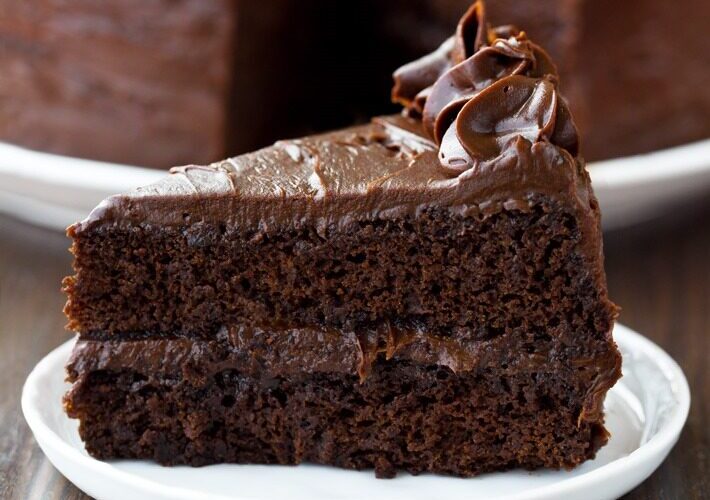
Keto Flourless Chocolate Cake – Recipe
Introduction & Background
The Keto Flourless Chocolate Cake is one of the purest expressions of chocolate in dessert form. Stripped of flour and traditional sugar, it relies entirely on fat, cocoa solids, and egg structure to create a dense, luxurious, and intensely flavored cake. Unlike conventional cakes that depend on flour for structure and air for lightness, this cake embraces density, richness, and controlled softness as its defining qualities.
Historically, flourless chocolate cakes trace back to European culinary traditions—particularly in French and Italian baking—where minimalism in ingredients was used to highlight the depth of chocolate. These cakes were often served in high-end restaurants as elegant, small-portion desserts due to their richness.
In modern times, especially in places like the United States, the rise of ketogenic and low-carb lifestyles has brought renewed attention to flourless desserts. The keto adaptation replaces sugar with low-carb sweeteners while preserving the essential structure and indulgence.
This master recipe is not just about making a cake—it is about understanding and controlling:
- Fat emulsification
- Egg protein coagulation
- Chocolate structure dynamics
- Moisture retention
- Thermal transformation
The goal is to produce a cake that is:
- Deeply rich and chocolate-forward
- Smooth, dense, and fudgy
- Moist without being undercooked
- Structurally stable yet soft
- Elegant enough for fine dining
What This Cake Really Is (Structural Identity)
This cake is best understood as a chocolate-fat custard hybrid with a stabilized protein network.
It is composed of three major systems:
- Fat-Chocolate Matrix
- Egg-Based Structural Network
- Controlled Thermal Setting Process
Unlike traditional cakes:
- There is no gluten formation
- There is minimal air incorporation
- There is no starch backbone (or extremely little)
Instead, the structure comes from:
- Chocolate solidification
- Egg protein bonding
- Fat stabilization
This makes the cake:
dense, smooth, sliceable, and truffle-like rather than fluffy
Core Texture Goals (Professional Benchmark)
A perfectly executed keto flourless chocolate cake should achieve:
- A slightly firm outer edge
- A soft, dense, almost molten interior
- A smooth, uniform crumb (no graininess)
- A rich, melt-in-the-mouth consistency
- Clean slicing without crumbling
It should resemble:
a fusion of chocolate truffle + fudge brownie + baked ganache
Ingredient System (Ultra Detailed Functional Breakdown)
1. Chocolate System (Primary Structural & Flavor Core)
- 200–250g high-quality dark chocolate (85–95% cocoa, sugar-free)
Function:
- Provides dominant flavor
- Supplies cocoa solids for structure
- Contributes fat for texture
- Determines richness level
Technical Insight:
Chocolate contains both cocoa solids and cocoa butter. When melted and cooled, it helps form a semi-solid matrix that stabilizes the cake.
2. Fat System (Texture & Moisture Controller)
- ½ to ¾ cup butter
Function:
- Softens texture
- Prevents dryness
- Enhances mouthfeel
- Supports emulsification
Advanced Insight:
Fat coats cocoa particles, reducing friction and creating a smoother texture perception.
3. Egg System (Primary Structural Network)
- 4–5 large eggs
Function:
- Provides structure through protein coagulation
- Binds fat and chocolate
- Retains moisture
Scientific Behavior:
Egg proteins unfold and reconnect when heated, forming a firm but flexible network.
4. Sweetener System (Flavor Balance Without Sugar)
- ½ to ¾ cup powdered erythritol, monk fruit, or allulose
Function:
- Balances bitterness
- Mimics sugar sweetness
- Affects texture and moisture
Important Note:
Powdered sweetener prevents grainy texture.
5. Cocoa Powder (Flavor Intensifier & Minor Structure)
- 2–4 tbsp unsweetened cocoa powder
Function:
- Deepens chocolate intensity
- Slightly thickens batter
- Adds dryness to balance fat
6. Flavor Enhancers
- 1–2 tsp vanilla extract
- ¼ tsp salt
Function:
- Enhances chocolate notes
- Balances sweetness
- Adds depth
7. Optional Enhancements
- Espresso powder (flavor enhancer)
- Almond flour (slight structure variation)
- Cream (extra richness)
Deep Food Science Breakdown (Advanced Level)
1. Emulsion Formation (Critical Foundation Step)
When chocolate and butter are melted together:
- Fat and cocoa solids form an emulsion
- Smooth texture develops
- Stability improves
If poorly mixed → separation occurs.
2. Egg Integration & Stability
Eggs must be added gradually to:
- Prevent scrambling
- Maintain emulsion
- Ensure smooth batter
3. Protein Coagulation During Baking
As temperature rises:
- Egg proteins denature
- Bonds form
- Structure sets
This replaces flour entirely.
4. Chocolate Recrystallization
As the cake cools:
- Cocoa butter solidifies
- Structure becomes firm
- Texture becomes sliceable
5. Moisture Retention System
Fat + eggs create a moisture-locking system:
- Prevents dryness
- Maintains fudgy consistency
6. Thermal Gradient & Baking Control
During baking:
- Edges cook first
- Center remains softer
- Heat gradually stabilizes structure
7. Cooling & Structural Stabilization
Cooling allows:
- Chocolate to set
- Proteins to firm
- Moisture to redistribute
Skipping this step ruins texture.
Step-by-Step Method (Ultra Detailed Execution)
Step 1: Preheat Oven
Preheat to 165–170°C (330–338°F).
Prepare pan with parchment.
Step 2: Melt Chocolate & Butter
Use double boiler or microwave:
- Melt slowly
- Stir continuously
- Ensure smooth mixture
Step 3: Cool Mixture Slightly
Let cool until warm—not hot.
Step 4: Add Sweetener
Whisk in sweetener until dissolved.
Step 5: Add Eggs Gradually
Add eggs one at a time:
- Mix gently
- Maintain smooth consistency
Step 6: Add Cocoa & Flavoring
Add cocoa powder, vanilla, and salt.
Mix until uniform.
Step 7: Pour Batter
Transfer into pan.
Tap lightly to remove air pockets.
Step 8: Baking Phase
Bake for 22–30 minutes.
Check for:
- Set edges
- Slight jiggle in center
Step 9: Cooling Phase (Non-Negotiable)
Cool for at least 1–2 hours.
Texture & Flavor Profile
Perfect cake delivers:
- Intense chocolate richness
- Dense, fudgy texture
- Smooth, creamy mouthfeel
- Balanced sweetness
- Slightly crisp edge contrast
Common Mistakes & Fixes
Dry Cake
Cause: Overbaking
Fix: Reduce bake time
Grainy Texture
Cause: Coarse sweetener
Fix: Use powdered sweetener
Collapsed Center
Cause: Underbaking or rapid cooling
Fix: Bake slightly longer
Oily Surface
Cause: Overheating chocolate
Fix: Melt gently
Advanced Variations
Ganache-Coated Version
Top with keto ganache.
Salted Chocolate Cake
Add flaky salt on top.
Nut-Enhanced Version
Add almond flour or nuts.
Espresso Chocolate Cake
Add espresso powder.
Peanut Butter Swirl Cake
Swirl keto peanut butter into batter.
Storage & Shelf Life
- Fridge: 4–6 days
- Freezer: up to 2 months
Flavor improves after 24 hours.
Serving Ideas
- With whipped cream
- With berries
- With keto ice cream
- As small rich slices
Final Thoughts
Keto Flourless Chocolate Cake is one of the most refined examples of how baking can function without flour. By relying entirely on fat, chocolate, and egg proteins, it creates a dessert that is both indulgent and structurally sophisticated.
It delivers:
- Deep chocolate intensity
- Fudgy, smooth texture
- Low-carb indulgence
- Elegant presentation
At its core, it proves:
When chocolate, fat, and eggs are precisely balanced and carefully baked, you can create a dessert that rivals the richness and texture of the finest traditional cakes—without relying on flour at all.
