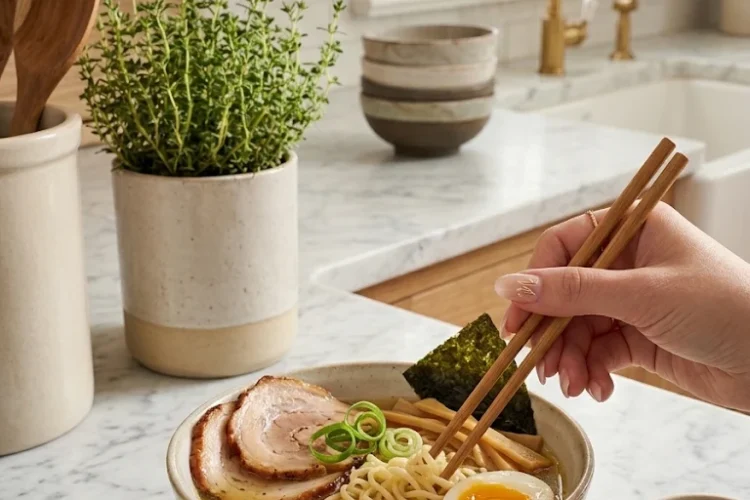
Homemade ramen is a comforting meal that brings together flavorful broth, tender noodles, fresh vegetables, and delicious toppings in one satisfying bowl. This gluten-free ramen recipe is an excellent choice when you want something warm, nutritious, and easy to prepare without spending hours in the kitchen. Ready in approximately 25 minutes, it combines garlic, fresh ginger, mushrooms, carrots, and spinach with a savory chicken broth. A perfectly soft-boiled egg adds protein and makes every serving even more satisfying.
Traditional ramen recipes commonly contain wheat-based noodles and regular soy sauce, which means they are not suitable for people avoiding gluten. Fortunately, preparing gluten-free ramen at home is simple when you choose suitable ingredients. Gluten-free ramen noodles and certified gluten-free soy sauce provide the familiar taste and texture of a traditional ramen-inspired meal while keeping the recipe free from gluten-containing ingredients.
One of the best things about this easy gluten-free ramen soup is its flexibility. You can follow the original recipe for a light vegetable-filled dinner or use it as a starting point for your favorite additions. Whether you enjoy mushrooms, leafy greens, carrots, chicken, shrimp, or tofu, there are plenty of ways to customize your bowl. The combination of fresh ingredients and warm broth makes this a wonderful option for lunch or dinner.
What Makes This Gluten-Free Ramen Special?
This homemade gluten-free ramen stands out because it delivers plenty of flavor without complicated preparation. The broth gets its savory character from gluten-free soy sauce, garlic, ginger, and seasonings. Meanwhile, the vegetables add freshness, natural sweetness, and different textures that make the soup enjoyable from the first spoonful to the last.
Another advantage is the short cooking time. You do not need to prepare a complicated stock or spend hours developing flavors. Low-sodium chicken broth provides a convenient base, while the garlic and ginger add depth as the broth simmers. The vegetables cook quickly, and the noodles need only a few minutes in boiling water.
The soft-boiled eggs are another important feature. Their creamy centers complement the savory broth and tender noodles, creating a satisfying combination. Fresh green onions add a mild sharpness and a little crunch, while optional crushed red pepper flakes bring gentle heat.
This recipe is also naturally dairy-free because it does not require milk, butter, cream, or cheese. It is a practical choice for anyone looking for a dairy-free and gluten-free dinner that uses accessible ingredients.
Understanding Gluten-Free Ramen Noodles
Regular ramen noodles are usually made with wheat flour, which contains gluten. Even though ramen broth and toppings may contain vegetables, meat, or eggs, the noodles themselves can make a traditional bowl unsuitable for a gluten-free diet.
Gluten-free ramen noodles offer an alternative for people who want to enjoy ramen-inspired meals without wheat. These noodles are available in different varieties, including rice-based noodles and other gluten-free noodle blends. Their cooking times and textures can vary, so always follow the package instructions when preparing them.
For this recipe, choose two individual cakes of gluten-free ramen noodles weighing approximately 160 grams in total. Look for noodles designed to resemble traditional ramen so they hold their shape and work well with the hot broth.
It is important not to overcook gluten-free noodles. Some varieties become soft very quickly, particularly when they are left sitting in hot liquid. Cooking them until tender but still slightly firm helps maintain a pleasant texture after the broth is added.
How to Make Gluten-Free Ramen at Home
Preparing homemade gluten-free ramen involves three main stages: cooking the noodles, softening the vegetables, and preparing the broth. Keeping these components separate until serving helps preserve their individual textures. It also prevents the noodles from absorbing too much liquid before the meal reaches the table.
Cook the Gluten-Free Noodles
Start by bringing a medium-sized pot of water to a full boil. Add the gluten-free ramen noodle cakes once the water is bubbling steadily. Cook them for approximately three minutes, or follow the timing recommended on the package if it differs.
Watch the noodles carefully because gluten-free varieties can become soft faster than traditional wheat noodles. They should be tender enough to separate easily but should not fall apart. Overcooking at this stage can leave you with noodles that become excessively soft once they are combined with the hot broth.
Drain the noodles thoroughly and rinse them under cold water. This stops the cooking process and removes excess surface starch. Drain again and set them aside while you prepare the remaining ingredients.
Sauté the Vegetables and Aromatics
Place a large frying pan over medium heat and add the extra virgin olive oil. Once heated, add the sliced carrots, mushrooms, and baby spinach. Stir in the minced garlic and grated fresh ginger, allowing everything to cook gently.
The vegetables should become slightly tender without losing their natural texture. Mushrooms will begin to shrink, spinach will wilt, and carrots will soften while remaining a little firm. Avoid cooking them for too long because they will receive additional heat when combined with the hot broth.
Once the vegetables reach the desired consistency, remove them from the frying pan and place them in a separate dish. Keeping them aside makes it easier to prepare the broth in the same pan.
Prepare the Savory Ramen Broth
Use the same frying pan to prepare the broth so that the remaining flavors from the vegetables and aromatics can contribute to the liquid. Pour in the low-sodium chicken broth and add the gluten-free soy sauce, onion powder, salt, and ground black pepper.
Bring the mixture to a boil, then reduce the heat and allow it to simmer gently for approximately five minutes. This short simmering time helps the seasonings combine and gives the broth a pleasant savory taste.
Once the broth has simmered, remove the pan from the heat. Taste it carefully if desired, remembering that the soy sauce and salt already provide plenty of seasoning.
Assemble the Ramen Bowls
Divide the cooked gluten-free noodles evenly between two serving bowls. Pour the hot broth over the noodles, making sure each bowl receives an equal amount.
Arrange the cooked carrots, mushrooms, and spinach over the noodles. Finish each serving with one soft-boiled egg cut in half and a tablespoon of sliced green onions. If you enjoy spicy food, sprinkle a little crushed red pepper flakes over the top.
Serve immediately while the broth is hot and the vegetables are fresh. The combination of tender noodles, savory liquid, colorful vegetables, and creamy egg makes this homemade ramen a satisfying meal.
How to Make Perfect Soft-Boiled Eggs for Ramen
A soft-boiled egg can make a simple ramen bowl feel like a complete restaurant-style meal. The goal is to cook the white until firm while keeping the yolk soft and slightly creamy. Although the technique is straightforward, paying attention to the cooking time makes a noticeable difference.
Begin by bringing a pot of water to a boil. Carefully lower the eggs into the water using a slotted spoon to avoid cracking their shells. Let them cook for approximately seven to eight minutes, depending on the desired yolk consistency.
Once the cooking time is complete, transfer the eggs immediately into a bowl filled with ice water. Leave them in the ice bath for three to four minutes. This stops the cooking process and makes the eggs easier to handle.
Gently remove the shells and cut each egg in half lengthwise. Place the halves on top of the ramen just before serving. The creamy yolk blends beautifully with the warm broth and adds a rich texture to the finished dish.
Delicious Ways to Customize Your Ramen
One of the most convenient features of this gluten-free ramen recipe is that it works with many different toppings. The original combination of carrots, mushrooms, spinach, and eggs already creates a balanced bowl, but you can add other ingredients when you want more variety.
Add Extra Protein
Chicken, shrimp, and tofu are excellent additions for anyone who wants a more filling meal. Cooked grilled chicken can be sliced and arranged over the noodles, while properly cooked shrimp adds a delicate seafood flavor. Tofu provides a plant-based option that pairs nicely with ginger, garlic, and savory broth.
Try Different Vegetables
You can use several vegetables alongside or instead of your preferred ramen toppings when making a customized version. Bok choy, broccoli, snap peas, and other suitable vegetables work well with ramen-style broth. Adding vegetables is also a convenient way to use small portions of produce already available in your refrigerator.
Include Extra Toppings
Nori sheets, gluten-free rice dumplings, and crispy gluten-free tempura vegetables can introduce different textures and flavors. Always check labels before using packaged toppings, particularly sauces and prepared products.
For additional heat, drizzle a little sriracha or chili oil over your bowl. Gluten-free teriyaki sauce is another possible addition when you want a sweeter and more complex flavor. Make sure any sauce you choose is specifically labeled gluten-free.
Tips for the Best Homemade Gluten-Free Ramen
Avoid Overcooking the Noodles
Gluten-free noodles can become mushy when cooked for too long. Boil them until tender, drain them promptly, and rinse with cold water to stop the cooking process. This simple technique helps them retain their texture when hot broth is poured over them.
Check Every Ingredient Label
Always confirm that your noodles, chicken broth, soy sauce, and additional toppings are gluten-free. Check packaging for cross-contact warnings, especially when preparing food for someone with celiac disease.
Prepare the Components Separately
Cooking the noodles, vegetables, and broth separately makes the final assembly easier. It also prevents the noodles from sitting in hot liquid for too long, which can affect their texture.
Keep the Vegetables Slightly Firm
Do not cook the vegetables until they become completely soft. Carrots should retain a little bite, mushrooms should remain tender, and spinach should be wilted rather than overcooked.
Frequently Asked Questions
Can I Make This Gluten-Free Ramen Vegetarian?
The original recipe uses low-sodium chicken broth, so it is not vegetarian as written. However, vegetable broth can be used as an alternative when adapting the recipe. You can also add tofu for extra protein and make sure the remaining ingredients meet your dietary requirements.
Can I Use Tamari Instead of Gluten-Free Soy Sauce?
Yes. Certified gluten-free tamari is a suitable alternative to gluten-free soy sauce. Both provide a savory umami flavor that works well in ramen broth. Check the product label to confirm that the particular brand is gluten-free.
Why Should I Rinse the Noodles After Cooking?
Rinsing the noodles with cold water stops the cooking process and helps remove excess starch from their surface. This is particularly useful for gluten-free noodles because some varieties become soft quickly. It also helps prevent the noodles from sticking together while you prepare the broth.
Can I Prepare the Broth in Advance?
Yes. You can prepare the broth ahead of time and store it in an airtight container in the refrigerator. Reheat it thoroughly before serving, then pour it over freshly prepared or properly stored noodles.
What Can I Serve with Gluten-Free Ramen?
This ramen is satisfying as a complete meal, but you can serve it with a simple vegetable salad, gluten-free dumplings, or other suitable side dishes. Keep additional sauces and toppings gluten-free to maintain the dietary requirements of the meal.
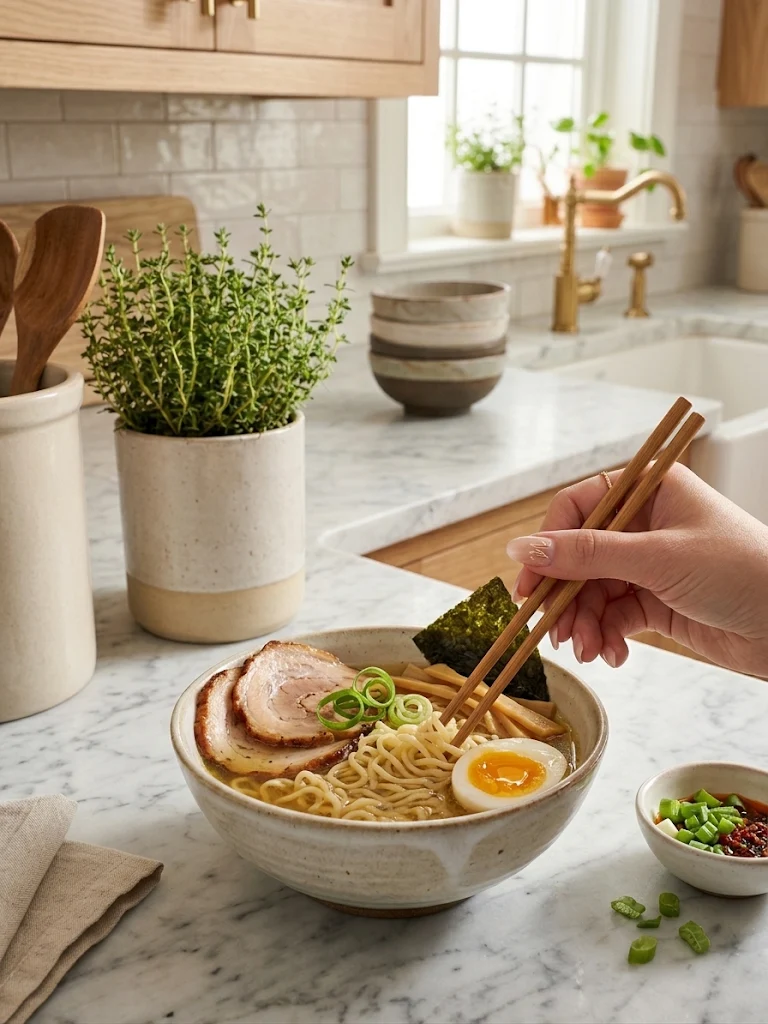
Gluten-Free Ramen
This easy homemade gluten-free ramen features tender gluten-free noodles, savory chicken broth, fresh vegetables, garlic, ginger, and perfectly soft-boiled eggs. A comforting dairy-free dinner ready in just 25 minutes.
2
servings10
minutes15
minutes521
kcal25
minutesIngredients
2 (160 g) cakes gluten-free ramen noodles
1 large carrot, peeled and sliced into long thin strips
1 cup (70 g) cremini or button mushrooms, sliced
1 cup (30 g) baby spinach leaves, packed
1 tablespoon (15 ml) extra virgin olive oil
2 teaspoons (6 g) minced garlic
½ teaspoon (1 g) grated fresh ginger
2 cups (480 ml) low-sodium chicken broth
1 tablespoon (15 ml) gluten-free soy sauce
½ teaspoon (1.5 g) onion powder
½ teaspoon (3 g) salt
¼ teaspoon (0.5 g) ground black pepper
2 soft boiled eggs, peeled and sliced in half
2 tablespoons (12 g) sliced green onions
¼ teaspoon (0.25 g) crushed red pepper flakes, optional
Directions
- Bring a medium pot of water to a full boil. Add the gluten-free ramen noodles and cook for approximately 3 minutes, or until fully cooked but not mushy.
- Drain the noodles, rinse them under cold water, and drain again. Set aside.
- Heat the extra virgin olive oil in a large frying pan over medium heat. Add the carrots, mushrooms, spinach, minced garlic, and grated ginger.
- Sauté until the vegetables begin to soften. The mushrooms should shrink slightly, the spinach should wilt, and the carrots should remain a little firm.
- Remove the vegetables from the frying pan and set aside.
- In the same pan, combine the chicken broth, gluten-free soy sauce, onion powder, salt, and ground black pepper.
- Bring the broth mixture to a boil, then reduce the heat and simmer gently for 5 minutes.
- Remove the pan from the heat.
- Divide the cooked ramen noodles evenly between two serving bowls.
- Pour the prepared broth over the noodles, distributing it equally between both bowls.
- Add the sautéed vegetables to each bowl.
- Garnish with the soft-boiled egg halves, sliced green onions, and optional crushed red pepper flakes. Serve hot.
Notes
- Cook gluten-free noodles until just tender to prevent them from becoming mushy.
- Rinse the noodles with cold water immediately after draining to stop further cooking.
- Check all ingredient labels to ensure they are gluten-free, including cross-contamination warnings.
- For storage, keep noodles, broth, and vegetables in separate airtight containers in the refrigerator for 3–4 days.
- For reheating, warm the broth and vegetables on the stovetop, then add the noodles when serving.
- Prepare soft-boiled eggs by simmering them for 7–8 minutes before transferring them to ice water for 3–4 minutes.
Nutrition Facts
- Total number of serves: 2
- Calories: 521kcal
- Fat: 25g
- Carbohydrates: 56g
- Sugar: 4g
- Protein: 21g
