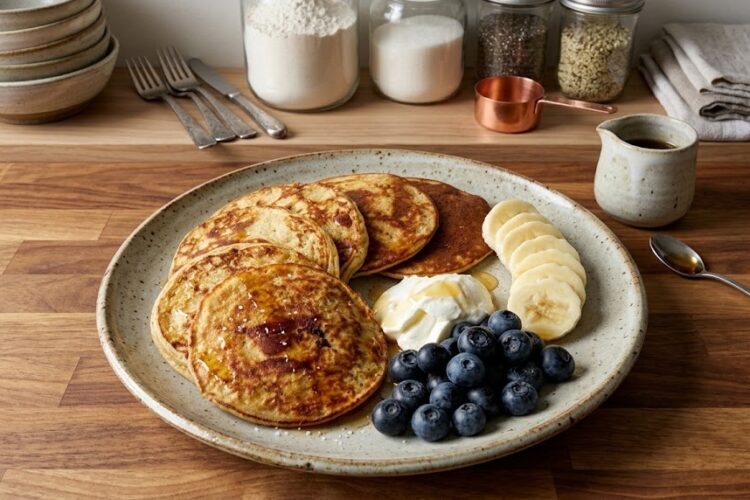
High-protein pancakes are an easy way to make breakfast more filling without spending much time in the kitchen. This simple three-ingredient pancake recipe uses ripe banana, eggs, and protein powder to create a quick breakfast with a naturally sweet flavor and a satisfying amount of protein.
The batter takes only a few minutes to prepare, and the pancakes cook quickly in a frying pan, making them especially useful for busy mornings.
Unlike traditional pancakes, this recipe does not use flour, grains, or added sugar. The banana provides natural sweetness while also helping give the batter its structure, and the eggs add richness and protein.
Protein powder brings even more protein to the finished stack. Depending on the protein powder used and the exact quantities, one serving provides about 34 grams of protein, making these banana protein pancakes a practical option for anyone looking to increase their protein intake at breakfast.
Why These Protein Pancakes Are Worth Making
A good breakfast does not need a long ingredient list or complicated preparation. These healthy protein pancakes are built around three basic ingredients that are easy to combine. Banana, eggs, and protein powder are blended into a smooth batter, then cooked gently until golden. The result is a breakfast that feels more substantial than a very light snack while still being straightforward enough to prepare on a weekday morning.
The combination of eggs and protein powder makes these pancakes particularly useful when protein is a priority. Protein is an important nutrient that contributes to normal growth and maintenance of muscle and helps support a satisfying meal. Including protein-rich foods at breakfast can also make it easier to build a balanced eating pattern throughout the day. These pancakes offer a convenient way to include protein without relying on a complicated breakfast recipe.
What Makes This Recipe Different from Classic Pancakes
Traditional pancakes are often made with flour, milk, eggs, and a raising agent, then served with syrup or other sweet toppings. This recipe takes a different approach. There is no flour in the batter, and the banana supplies natural sweetness. Because the ingredients are different, the finished pancakes will not have exactly the same texture as a classic diner-style pancake, but they have their own soft, tender character.
The lack of flour also makes this a useful recipe for people who prefer grain-free breakfast ideas. When using ingredients that are appropriate for your dietary requirements, the recipe can also fit into a gluten-free eating pattern because there is no wheat flour in the ingredient list. However, protein powders vary considerably, so anyone who needs to avoid gluten should check the product label carefully before using it.
Choosing the Right Banana
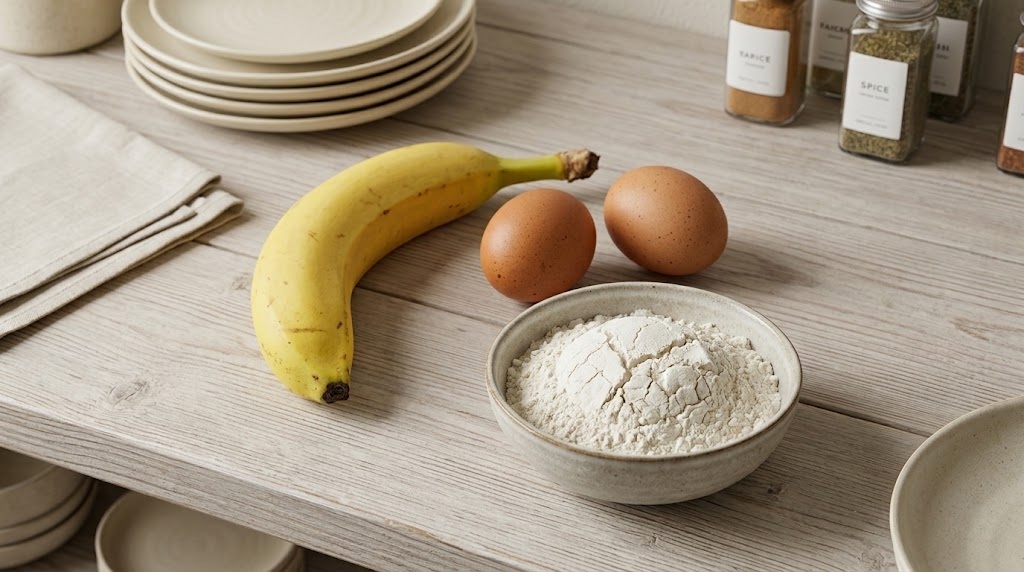
A ripe yellow banana works particularly well in this recipe. Look for a banana that is soft enough to mash easily and has developed a naturally sweet flavor. Very firm, underripe bananas can be less sweet and may not blend as smoothly. On the other hand, an extremely overripe banana can make the batter noticeably sweeter and softer, so a ripe yellow banana around the specified amount is a good starting point.
The banana does more than provide sweetness. Once blended with the eggs and protein powder, it becomes part of the pancake batter and helps create a pourable consistency. This is one reason the amount of banana matters. Using significantly more or less can change the texture, so keeping the quantity close to the recipe’s specified amount will give you a more predictable result.
Picking Pea or Whey Protein Powder
The recipe allows either pea protein powder or whey protein powder. Both can work, although different brands and varieties can behave differently when mixed with liquid ingredients. Some protein powders absorb more moisture than others, which means the batter may occasionally need a small adjustment before cooking.
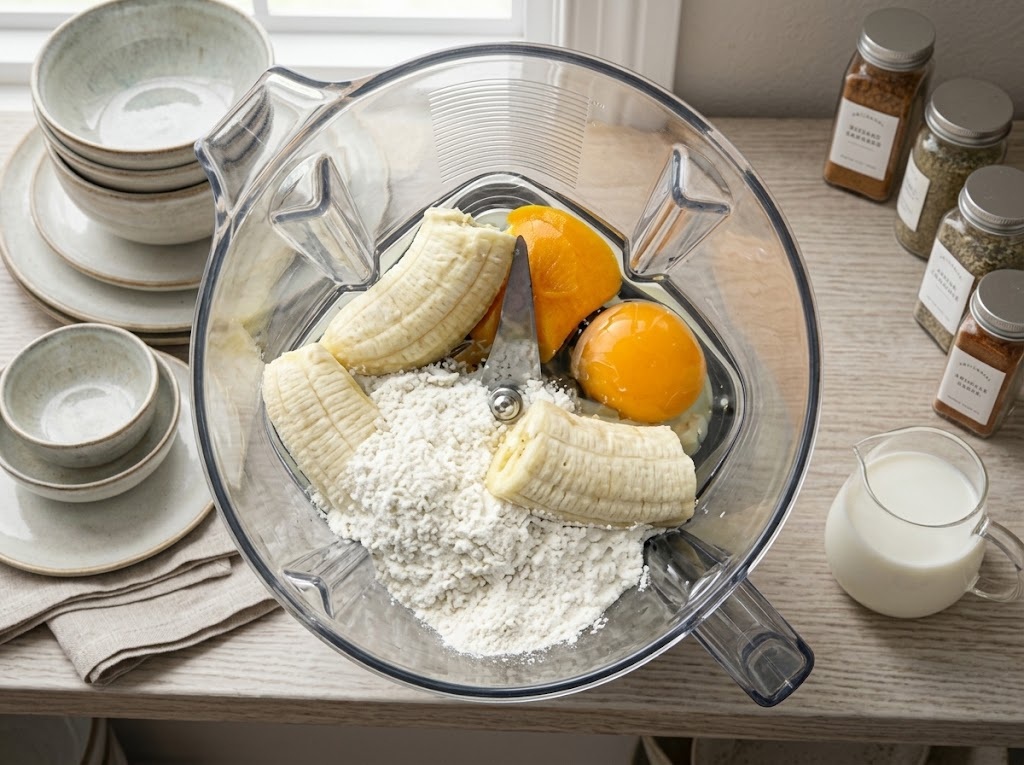
Start with the recommended three tablespoons of protein powder and blend it with the banana and eggs. Check the consistency before adding anything else. You want a thick but pourable mixture. If the batter is too stiff, a small splash of water or milk can loosen it. If it is too thin, adding a little more protein powder can help thicken it.
Getting the Batter Consistency Right
Batter consistency is one of the most important details in this easy protein pancake recipe. The mixture should be thick enough to hold some shape when poured into the pan but loose enough to flow naturally. A batter that is extremely thick can produce dense pancakes, while a batter that is too thin can spread too far and become difficult to flip.
Think of the desired texture as a middle ground. When poured into the pan, the batter should spread slightly rather than immediately running across the entire surface. Because protein powders differ in how they absorb moisture, it is better to adjust gradually instead of adding a large amount of liquid or protein powder at once.
Why Low and Slow Heat Matters
Cooking temperature makes a noticeable difference with protein pancakes. A medium-low pan allows the outside of the pancake to develop a golden color while giving the center enough time to cook. If the heat is too high, the surface may brown or burn before the middle has properly set.
This is especially important because these pancakes contain banana and protein powder rather than a conventional flour-based batter. They can behave differently from standard pancakes in the pan. Keep the heat controlled and allow the pancake to cook until it looks sufficiently set and golden before attempting to flip it. Patience during this short cooking stage usually produces a better result.
Preparing the Frying Pan
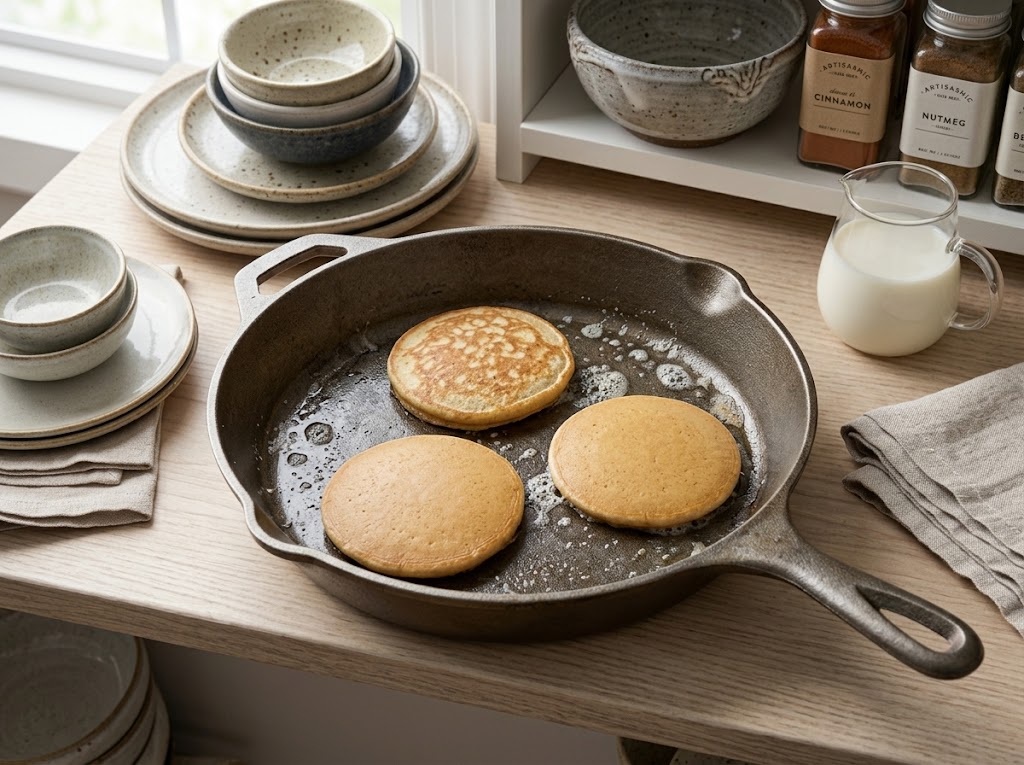
Before adding the batter, heat the frying pan over medium-low heat and grease it well with oil or butter. A properly greased pan helps prevent the pancakes from sticking and makes flipping much easier. Even if you are using a nonstick pan, a small amount of grease can still make the cooking process smoother.
Avoid overheating the pan while you prepare the batter. If the surface becomes excessively hot, the first pancake may brown too quickly. A gentle, steady temperature is preferable. If you notice the outside becoming dark before the center is ready, reduce the heat and give the next batch more time to cook.
Using a Milk Jug for Easier Pancake Shapes
Pouring the prepared batter into a milk jug is a simple technique that can make these pancakes easier to shape. The narrow pouring spout gives you better control than pouring directly from a mixing bowl or blender container. You can pour a smaller amount into the pan and create more even circles.
This step is optional, but it can be helpful if presentation matters. It also allows you to control the size of each pancake more easily. Since the recipe makes one serving, you can make several smaller pancakes or a few larger ones depending on the size of your frying pan and your preferred serving style.
How to Cook the Pancakes
Once the pan is hot and greased, pour the batter into the pan. Depending on the size of your pan, you may need to cook the pancakes in more than one batch. Give each pancake enough space so you can slide a spatula underneath it without disturbing the neighboring pancake.
Let the pancake cook until it becomes golden and looks set enough to turn. The exact cooking time can vary according to pancake size, pan material, and heat level. Avoid repeatedly moving the pancake while it cooks. Allowing the first side to develop a stable surface makes flipping much easier and reduces the chance of the pancake breaking apart.
The Best Way to Flip Protein Pancakes
Flipping is often the moment when pancakes can go wrong, particularly when the batter is softer than a traditional flour-based mixture. Wait until the pancake is sufficiently cooked and can be lifted easily with a spatula. Slide the spatula underneath in one confident movement, then turn the pancake gently.
If the pancake resists the spatula, give it a little more time. Trying to flip it too early can cause it to tear or fold. The goal is not to rush the process. Once the first side is golden and the pancake has enough structure, the second side usually cooks relatively quickly.
Simple Serving Ideas
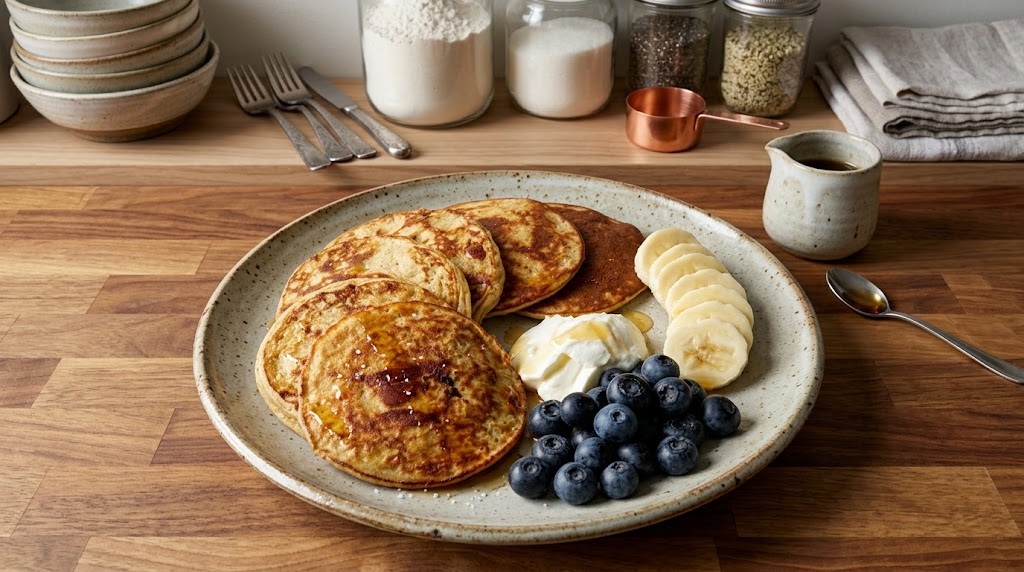
These banana protein pancakes have a naturally sweet flavor, so they can be enjoyed without complicated toppings. If you want additional texture or flavor, you can serve them with toppings that complement banana and protein powder. Fresh fruit, yogurt, nut butter, seeds, or a small amount of your preferred pancake topping can all work depending on your dietary preferences.
Because the recipe already contains a substantial amount of protein, consider what you add when building the rest of your breakfast. A serving of fruit can provide freshness, while yogurt or nut butter can add another layer of flavor and texture. The pancakes are versatile enough to work as the central part of a simple breakfast plate.
A Convenient Breakfast for Busy Mornings
One of the strongest features of this recipe is its short preparation time. With only two minutes of preparation and approximately eight minutes of cooking, these pancakes can fit into a busy morning routine. There is no need to prepare a complicated batter, measure several dry ingredients, or wait for dough to rest.
The ingredients are also easy to recognize. Banana, eggs, and protein powder form the base, with a splash of water or milk available if the batter requires adjustment. This simplicity makes the recipe approachable for beginner cooks as well as anyone who wants a quick protein breakfast.
Protein Powder Pancakes Without Flour
For people searching for flourless protein pancakes, this recipe provides a straightforward alternative to traditional pancake batter. The absence of flour changes the texture, but it also keeps the ingredient list short. The banana and eggs provide the foundation, while the protein powder helps create the thickness needed for cooking.
It is worth remembering that protein powder is not identical from one product to another. Whey and pea protein can produce different textures, and flavored protein powders can alter the overall taste. If you are making the recipe for the first time, use a protein powder you already enjoy and adjust the batter gradually if necessary.
Notes for Better Results
For the most consistent pancakes, use a ripe yellow banana, measure the protein powder reasonably closely, and check the batter before cooking. The finished mixture should be thick and pourable rather than watery. A small splash of water or milk is enough when the batter needs loosening, while a little additional protein powder can help when it is too thin.
The cooking temperature deserves just as much attention as the ingredients. Medium-low heat gives the pancakes time to cook through without scorching the outside. Keep the pan well greased and resist the temptation to turn the heat higher simply to make breakfast faster. A few extra moments of gentle cooking can make the difference between evenly cooked pancakes and a browned exterior with an undercooked center.
Can You Make These Pancakes Ahead?
These pancakes are designed for quick preparation and are best enjoyed soon after cooking. Since the recipe makes one serving and takes only a few minutes, preparing them fresh is generally the simplest option. If you do have leftovers, store them appropriately and reheat them gently rather than using very high heat, which can make protein-rich foods firmer.
For meal preparation, it is also useful to prepare the ingredients in advance rather than blending the batter far ahead of time. Having the banana, eggs, protein powder, pan, and cooking utensils ready can reduce the amount of work required in the morning while preserving the freshly cooked texture of the pancakes.
Are These Healthy Protein Pancakes?
These pancakes can be a useful choice within a balanced diet, particularly for people looking for a breakfast that provides a significant amount of protein. The recipe contains eggs and protein powder and uses banana for natural sweetness instead of adding sugar to the batter. The nutritional profile is approximately 350 calories, 30 grams of carbohydrates, 34 grams of protein, and 12 grams of fat per serving.
Nutritional values can vary depending on the exact protein powder and other ingredients used. Different protein powders have different calorie, carbohydrate, fat, and protein contents. For the most accurate nutritional information, check the label of the specific protein powder you use and calculate the final recipe based on that product.
Why These Pancakes Can Keep Breakfast Satisfying
A breakfast containing protein can be more satisfying than one based primarily on refined carbohydrates. These pancakes combine protein from eggs and protein powder with carbohydrates from banana. The result is a more balanced starting point than a breakfast made entirely from a sweet topping or refined grain.
Of course, individual nutritional needs differ. Some people may want a larger breakfast, while others may prefer a smaller meal. The single-serving recipe provides a convenient base that can be paired with fruit, yogurt, or another preferred food if you need additional energy or variety.
Flourless Banana & Protein Powder Pancakes (35g+ Protein)
These easy high-protein pancakes are made with banana, eggs, and pea or whey protein powder.
1
servings2
minutes8
minutes350
kcal10
minutesIngredients
3 Tbsp pea or whey protein powder, or more to reach a thick pourable consistency
1 ripe yellow banana, around ⅓ cup mashed
2 large eggs
Optional: A splash of water or milk, to adjust batter consistency if needed
Directions
- Heat a frying pan over medium-low heat. Grease the pan well with oil or butter to help prevent the pancakes from sticking.
- Add the banana, eggs, and protein powder to a blender and blend until combined. Check the batter carefully. It should be thick but still easy to pour.
- If the mixture is too thick, add a small splash of water or milk and blend again. If it is too runny, add a little more protein powder until the desired consistency is reached.
- Transfer the batter to a milk jug if desired. The pouring spout makes it easier to create neat, evenly shaped pancakes in the pan.
- Pour the batter into the heated pan. Depending on the size of your frying pan, cook the pancakes in batches if necessary.
- Allow each pancake to cook over medium-low heat until golden and sufficiently set to flip. Do not increase the heat too much, as the outside may cook or burn before the center is ready.
- Carefully turn each pancake with a spatula and cook the second side until golden and cooked through.
- Repeat with the remaining batter and serve the pancakes warm.
Nutrition Facts
- Total number of serves: 1
- Calories: 350kcal
- Fat: 12g
- Carbohydrates: 30g
- Protein: 34g
