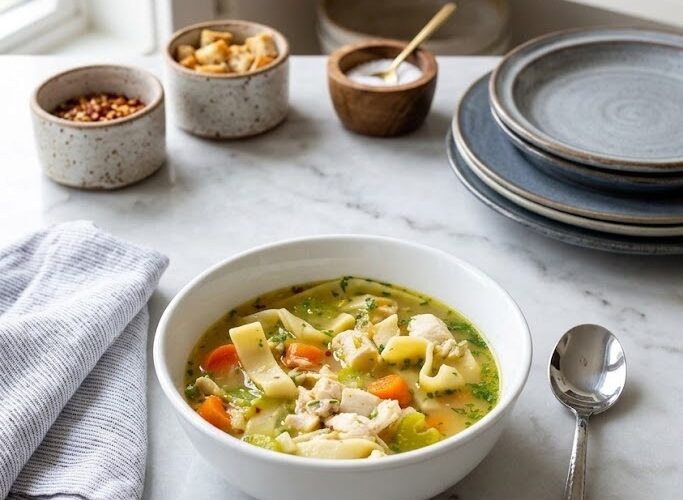
Homemade Chicken Noodle Soup is one of those classic comfort foods that never goes out of style. A warm bowl filled with tender chicken, soft vegetables, flavorful broth, and hearty egg noodles makes an easy family dinner, especially when the weather turns cool. While canned soup can be convenient, making chicken noodle soup from scratch gives you a much richer taste and allows every ingredient to shine.
This recipe combines simple vegetables, seasoned chicken stock, rotisserie chicken, and noodles to create a satisfying soup that can be served for lunch, dinner, or whenever you want something warm and comforting.
Why Make Chicken Noodle Soup From Scratch?
There is a noticeable difference between homemade chicken noodle soup and many ready-made versions. When you prepare the soup yourself, you can control the seasoning, texture, amount of chicken, and type of noodles. The vegetables are lightly sautéed before the broth is added, which helps develop their flavor rather than simply boiling everything together. The result is a flavorful chicken soup with tender vegetables and noodles that hold their shape.
Another advantage is that this recipe is practical for busy households. Rotisserie chicken provides ready-to-use meat, while the leftover chicken bones can be used to prepare homemade chicken stock. If you already have homemade stock in the refrigerator or freezer, this chicken noodle soup becomes even quicker to prepare. Store-bought chicken stock can also be used when you need a convenient weeknight meal, so there is no need to make the entire recipe complicated.
The Secret to Flavorful Chicken Noodle Soup
The foundation of a good chicken noodle soup is the broth. A flavorful chicken stock gives the soup depth and makes the finished dish taste much more satisfying. Homemade chicken stock is particularly useful because it can be prepared with a leftover rotisserie chicken carcass and bones. The slow extraction of flavor from the chicken creates a hearty base that works beautifully with vegetables, herbs, noodles, and shredded chicken.
If homemade stock is not available, choose a good-quality chicken stock or broth. The recipe also uses a small amount of chicken-flavored bouillon to strengthen the flavor when needed. Since different brands of chicken stock contain different amounts of salt, it is important to taste the broth before adding additional salt. This simple step helps prevent the finished soup from becoming overly salty while allowing you to adjust the seasoning to your preference.
How to Build the Soup
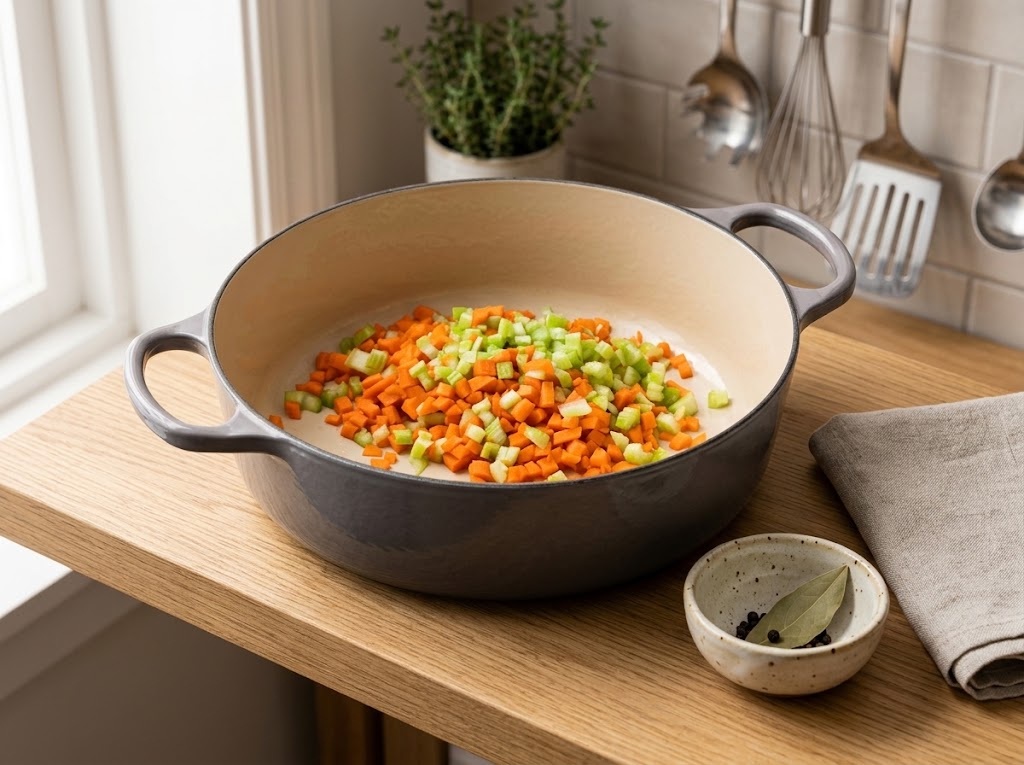
The cooking process begins with the vegetables. Butter is added to a large stock pot over medium-high heat, followed by diced celery and carrots. These vegetables are sautéed for about three minutes, giving them a chance to soften slightly and release their natural flavors. Garlic is then added and cooked briefly. Because minced garlic can burn quickly, it only needs about thirty seconds before the chicken stock is poured into the pot.
Once the stock is added, the soup is seasoned with rosemary, thyme, crushed red pepper flakes, salt, and freshly ground black pepper. These seasonings give the broth a gentle herbal flavor with a small amount of warmth from the red pepper flakes. The bouillon can be added according to taste, especially if the stock needs additional chicken flavor. It is best to taste the broth as you go rather than relying only on the measurements.
Choosing the Right Noodles
Egg noodles are a traditional choice for homemade chicken noodle soup because they cook relatively quickly and have a pleasant, soft texture. Homemade egg noodles can be used when you want a more traditional from-scratch soup, while dry store-bought egg noodles provide an easier option for everyday cooking. The recipe also allows farfalle or another bite-size pasta, giving you flexibility based on what you already have in your pantry.
The most important point when cooking the noodles is to avoid overcooking them. Add the noodles to the boiling broth and cook only until they are al dente. As soon as they reach that stage, remove the pot from the heat. The residual heat in the soup will continue cooking the pasta even after the burner is turned off. Removing the soup promptly helps prevent the noodles from becoming excessively soft or mushy.

Adding the Chicken
Rotisserie chicken makes this homemade chicken noodle soup especially convenient. Since the chicken is already cooked, there is no need to prepare raw chicken separately before making the soup. Simply use the chicken meat in the recipe once the noodles have reached the desired texture. The tender chicken blends naturally into the seasoned broth and makes the soup filling enough to serve as a complete meal.
Using rotisserie chicken also gives you an opportunity to make the most of the entire chicken. The meat can be reserved for the soup, while the carcass and bones can be used to prepare homemade chicken stock. This approach adds value to the chicken and can give the broth a deeper flavor. If you prefer to use another type of cooked chicken, the important thing is to ensure that the meat is fully cooked before adding it to the finished soup.
Making This Recipe for a Family Meal
This easy chicken noodle soup recipe makes eight servings, making it suitable for a family meal or for preparing several portions ahead of time. It can be served on its own because the combination of chicken and noodles makes it fairly satisfying, but it also pairs well with bread. A slice of crusty bread, homemade dinner roll, or simple side salad can turn the soup into a complete and comforting dinner.
The soup is also a useful recipe to keep in your regular meal rotation because most of the preparation involves basic ingredients. Carrots, celery, garlic, chicken stock, noodles, and cooked chicken are all familiar ingredients that work well together. The seasoning remains simple, allowing the natural chicken flavor to stay at the center of the dish rather than overwhelming it with too many spices.
How to Get the Best Texture
Texture is just as important as flavor when preparing chicken noodle soup. The carrots and celery should become tender without completely falling apart. Sautéing them briefly before adding the stock helps them begin cooking while maintaining enough structure for the finished soup. The noodles should be cooked until just tender, and the chicken should remain moist rather than being cooked repeatedly for a long period.
For this reason, the chicken is added after the noodles have cooked. This keeps the already-cooked rotisserie chicken from spending unnecessary time boiling in the broth. It also allows the soup to come together quickly once the noodles are ready. After adding the chicken, taste the broth again and adjust the seasoning if necessary.

Notes for Better Homemade Chicken Soup
For the most flavorful result, homemade chicken stock is worth preparing when you have the time. A rotisserie chicken is particularly useful because you can use the meat for the soup and save the carcass and bones for stock. However, a quality store-bought chicken stock or broth is perfectly suitable when convenience is more important.
Salt should always be added carefully because chicken stock and bouillon can already contain a considerable amount of sodium. Taste the broth before adding extra salt, then adjust gradually. Freshly ground black pepper provides a sharper flavor than pre-ground pepper, while the small amounts of dried rosemary and thyme give the soup its familiar herbaceous character.
If you are using store-bought noodles, keep an eye on the cooking time. Different pasta brands and shapes can cook at different speeds. The safest approach is to check the noodles before the package’s expected cooking time has completely passed. Once they are barely tender, take the soup off the heat so they do not continue cooking excessively.
Storing Leftover Chicken Noodle Soup
Leftover chicken noodle soup should be transferred to an airtight container and refrigerated. According to the supplied recipe, leftovers can be stored in the refrigerator for four to five days, depending on the freshness of the chicken used. Allowing the soup to cool appropriately before refrigeration and keeping it covered helps maintain its quality.
One thing to remember is that noodles can absorb broth while the soup sits in the refrigerator. As a result, leftover soup may become thicker than it was when freshly prepared. When reheating, warm the soup gently and add a little additional broth if necessary to reach your preferred consistency. Always make sure leftovers are heated thoroughly before serving.

Frequently Asked Questions
Can I use store-bought chicken stock?
Yes. Although homemade chicken stock can provide a deeper flavor, a good-quality store-bought chicken stock or broth works well in this recipe. The chicken bouillon included in the ingredients can also be adjusted according to taste if the broth needs a stronger chicken flavor.
Can I use dry egg noodles?
Yes. The recipe specifically allows homemade egg noodles or four cups of dry egg noodles, farfalle, or another bite-size pasta. When using dry noodles, watch them closely and remove the soup from the heat as soon as they are al dente.
Can I use leftover cooked chicken?
Yes. Rotisserie chicken is recommended because it is convenient and flavorful, but other fully cooked chicken can also be used. Make sure the chicken is properly cooked and suitable for use before adding it to the soup.
How do I stop the noodles from becoming mushy?
The best way is to avoid overcooking them. Cook the noodles only until they are al dente, then immediately remove the pot from the heat. The noodles will continue cooking in the hot broth after the pot is removed from the burner.
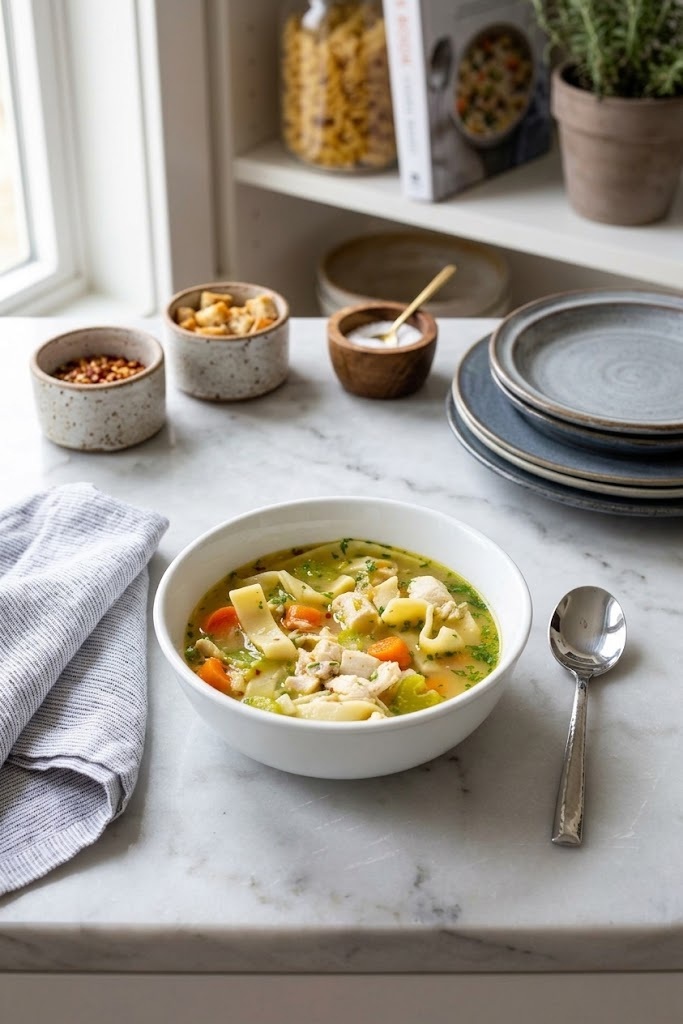
Chicken Noodle Soup
A comforting homemade Chicken Noodle Soup made with flavorful chicken stock, tender carrots and celery, garlic, herbs, egg noodles, and rotisserie chicken.
8
servings20
minutes20
minutes206
kcal40
minutesIngredients
- For the Soup:
1/2 Tablespoon butter
2 ribs celery, diced
3-4 large carrots, diced
1 clove garlic, minced
10 cups chicken stock, or broth
1 teaspoon salt, to taste
½ teaspoon freshly ground black pepper, to taste
1/8 teaspoon dried rosemary, or more, to taste
1/8 teaspoon dried thyme
1/8 teaspoon crushed red pepper flakes
1 batch homemade egg noodles, or 4 cups dry egg noodles, farfalle or other bite-size pasta
3 cups rotisserie chicken
1 teaspoon better than bouillon chicken flavor, or more, as needed, or chicken bouillon granules
Directions
- Place a large stock pot over medium-high heat and add the butter. Add the diced celery and carrots, then sauté for approximately 3 minutes until the vegetables begin to soften.
- Add the minced garlic to the pot and cook for another 30 seconds. Stir continuously so the garlic becomes fragrant without burning.
- Pour the chicken stock or broth into the pot. Add rosemary, thyme, crushed red pepper flakes, salt, and freshly ground black pepper. Taste the broth before adding additional salt.
- Add the better than bouillon chicken flavor or chicken bouillon granules as needed. Stir well and adjust the seasoning according to taste.
- Bring the seasoned broth to a boil. Add the uncooked homemade egg noodles or dry store-bought pasta.
- Cook the noodles until they are just al dente. Avoid cooking them for too long because they will continue to soften in the hot soup after the pot is removed from the heat.
- Once the noodles are barely tender, remove the pot from the heat immediately.
- Add the chicken meat from the rotisserie chicken and stir gently to distribute it throughout the soup.
- Taste the broth one final time. Add more seasoning if needed, then serve the Chicken Noodle Soup while hot.
Nutrition Facts
- Total number of serves: 1
- Calories: 206kcal
- Fat: 6g
- Carbohydrates: 14g
- Fiber: 1g
- Sugar: 6g
- Protein: 23g
