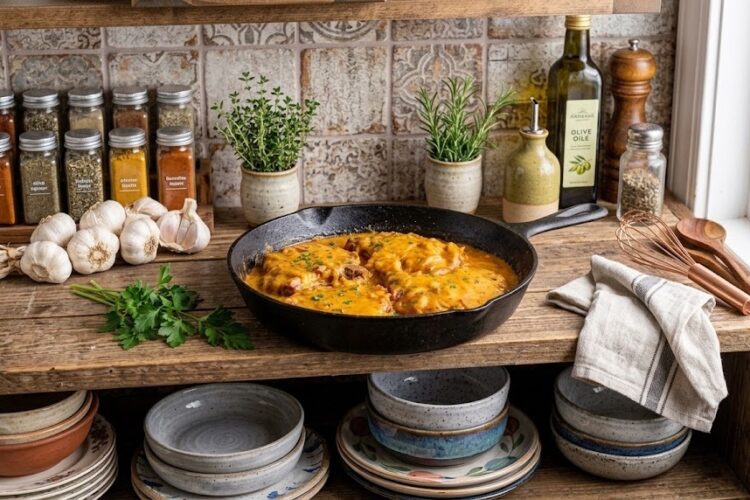
Parmesan Crusted Tilapia is an easy baked fish recipe that brings together tender tilapia fillets, freshly grated Parmesan cheese, paprika, parsley, and a touch of olive oil.
The fish develops a flavorful, lightly crisp cheese coating while remaining moist and flaky inside. With only a few minutes of preparation and about 10 to 12 minutes in the oven, this Parmesan crusted fish makes a practical choice for a quick weeknight dinner, family meal, or simple date-night menu.
Why This Parmesan Crusted Tilapia Works So Well
The appeal of this baked Parmesan tilapia comes from its balance of simplicity and flavor. Tilapia has a mild taste, making it a good option for people who do not usually choose fish. Instead of relying on a complicated sauce or a long list of seasonings, this recipe uses Parmesan cheese, paprika, parsley, salt, and olive oil to create a savory crust. The Parmesan becomes golden and flavorful as the fish bakes, giving every bite a satisfying contrast between the tender fish and seasoned topping.
Another advantage is the short cooking time. Many people avoid making fish at home because they assume it requires special techniques or lengthy preparation. Tilapia is particularly convenient because the fillets cook relatively quickly in a hot oven. When the fish is prepared correctly, the thickest part becomes opaque and flaky without requiring complicated kitchen equipment. That makes this Parmesan crusted tilapia recipe especially useful when you need dinner on the table without spending a lot of time in the kitchen.
What Makes Tilapia a Good Choice for Baked Fish
Tilapia is a mild white fish with a delicate texture and relatively neutral flavor. That quality allows stronger ingredients such as Parmesan cheese and paprika to stand out without overpowering the fish itself. For home cooks who are still becoming comfortable with seafood, tilapia can be an approachable ingredient because its mild flavor works well with many different seasonings, sauces, and coatings.
For this recipe, the tilapia fillets are coated rather than heavily sauced. This keeps the preparation straightforward and allows the Parmesan mixture to form a flavorful layer on the surface. The result is a baked fish dish that feels more substantial than plain oven-baked tilapia while still being quick enough for an ordinary weeknight.
How to Make Parmesan Crusted Tilapia
The preparation begins by heating the oven to 400ºF and lining a baking sheet with foil. This small step makes cleanup easier and provides a ready surface for the coated fish. Since the cooking time is short, preheating the oven before preparing the tilapia is important. A properly heated oven helps the fish begin cooking immediately and allows the Parmesan coating to develop its characteristic baked texture.
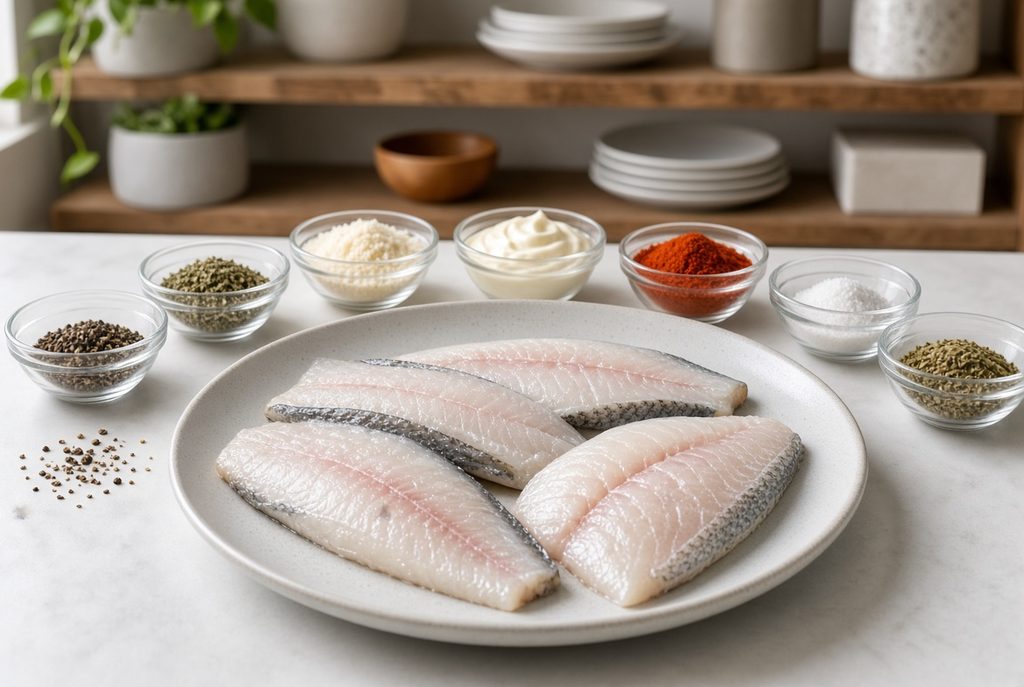
The Parmesan coating is made by combining freshly grated Parmesan cheese with paprika, chopped parsley, and salt. These ingredients are mixed in a shallow bowl so the tilapia can be coated easily. Freshly grated Parmesan provides the main savory flavor and forms the foundation of the crust. Paprika contributes color and a gentle seasoned taste, while parsley adds freshness to the mixture.
Once the cheese mixture is ready, the tilapia fillets are lightly drizzled with extra virgin olive oil. The oil helps the Parmesan mixture adhere to the fish while also contributing moisture and richness during baking. Each fillet is then placed into the Parmesan mixture and coated on the appropriate surfaces. If needed, the coating can be pressed lightly with your fingers so it stays attached while the fish is transferred to the baking sheet.
The prepared tilapia is arranged on the lined baking sheet and placed into the preheated oven. The fish generally needs about 10 to 12 minutes of baking time. The exact cooking time can vary depending on the thickness of the fillets, so it is better to judge doneness by the appearance and texture of the fish rather than relying only on the clock.
How to Know When Tilapia Is Done
One of the most important parts of making baked tilapia is knowing when to remove it from the oven. The thickest portion of the fish should become opaque rather than translucent. Properly cooked tilapia should also have a tender, flaky texture. Because fish can become dry if overcooked, keeping an eye on it during the final few minutes is worthwhile.
The thickness of individual fillets can affect cooking time. A thinner fillet may reach doneness sooner, while a thicker piece can require additional time. For that reason, the stated 10 to 12 minutes should be treated as the recipe’s general baking range. Checking the thickest portion gives you a more reliable indication of whether the fish is ready to serve.
Getting a Better Parmesan Crust
A good Parmesan crust starts with an even coating. After drizzling the fish with olive oil, place it into the cheese mixture and gently press the Parmesan onto the surface. Avoid handling the fillets too aggressively because tilapia is delicate and can break apart before it reaches the baking sheet.
Freshly grated Parmesan is particularly useful for this preparation because it blends naturally with the paprika and parsley. The cheese provides both seasoning and texture as it cooks. Keeping the coating relatively even also helps prevent some areas from becoming heavily covered while other sections remain bare.
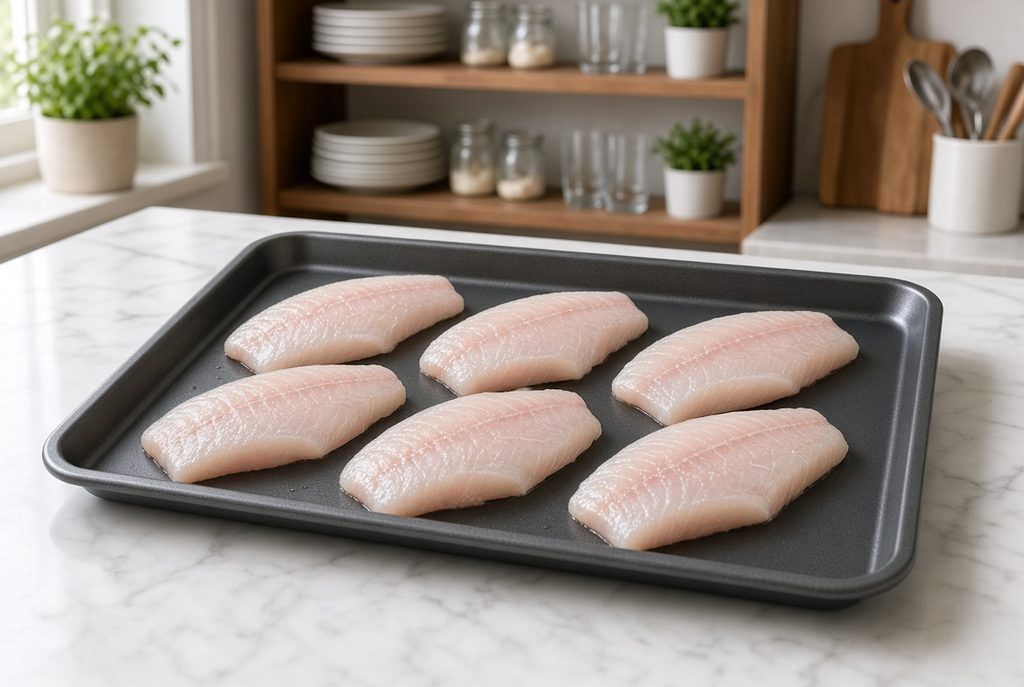
The foil-lined baking sheet is another useful part of the process. It helps make cleanup more manageable after the Parmesan and olive oil have baked onto the surface. Arrange the fillets with enough room around them so they cook evenly rather than overlapping.
Simple Serving Ideas
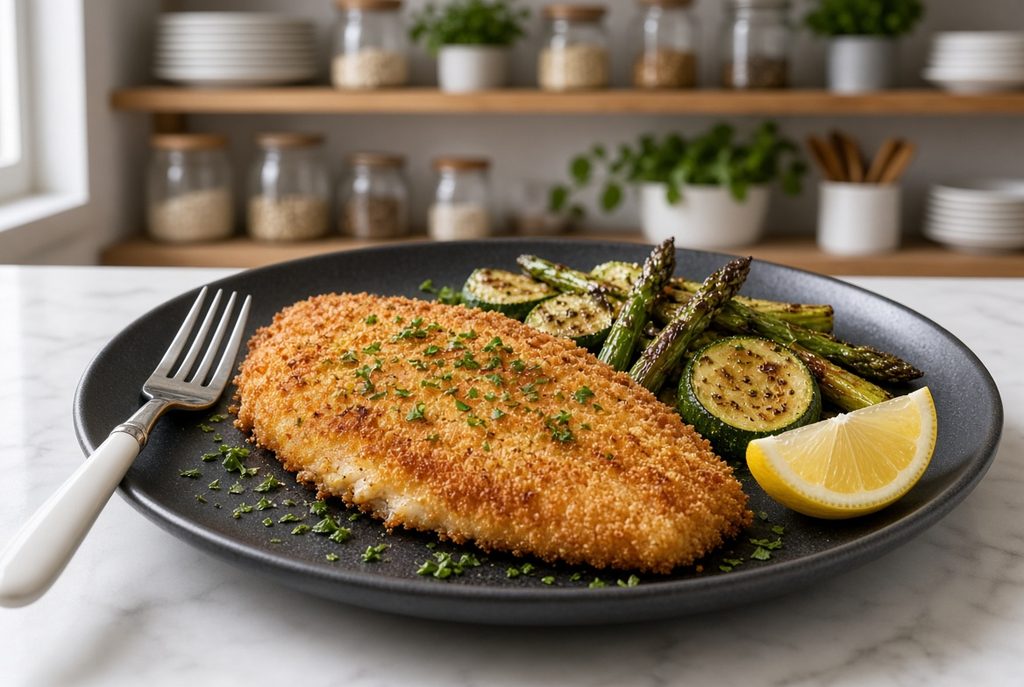
Parmesan crusted tilapia can be served with a variety of simple side dishes. Because the fish has a savory cheese coating and a mild flavor underneath, fresh vegetables, rice, potatoes, or a light salad can complement it nicely. Lemon wedges are included with the recipe and provide a bright finishing touch that cuts through the richness of the Parmesan.
For a quick family dinner, consider serving the fish with steamed vegetables and rice. If you want a lighter meal, a crisp green salad and roasted vegetables can work well. Mashed or roasted potatoes are another option when you want something more filling. The recipe is flexible enough to fit into different dinner styles without requiring changes to the fish itself.
Why Lemon Matters
Lemon wedges may seem like a small finishing detail, but they add a useful contrast to the Parmesan crust. A squeeze of lemon introduces acidity and brightness, helping balance the savory cheese and olive oil. Since tilapia has a mild flavor, lemon can also make the overall dish taste fresher without requiring a separate sauce.
Serve the lemon wedges alongside the cooked fish so everyone can add as much or as little as they prefer. This keeps the main recipe simple while allowing the finished dish to be adjusted at the table.

Common Mistakes to Avoid
One common mistake when making baked tilapia is overcooking the fish. Because tilapia fillets are usually relatively thin, they can move from perfectly cooked to dry in a short period. Begin checking the fish around the lower end of the suggested cooking range, particularly if the fillets are smaller or thinner than average.
Another mistake is using too much pressure when coating the fish. Tilapia is delicate, so pressing the Parmesan mixture gently is enough. The goal is to create an even coating rather than compressing the fillet. Keeping the preparation simple helps preserve the tender texture of the fish.
It is also important to preheat the oven fully before baking. Starting with a properly heated oven gives the fish a consistent cooking environment. If the oven has not reached 400ºF, the cooking time may not match the recipe’s expected range, and the Parmesan coating may not develop as intended.
Making This Recipe for a Weeknight Dinner
This Parmesan crusted tilapia is particularly well suited to busy evenings because the preparation is short and the ingredient list is uncomplicated. With five minutes of preparation and approximately 12 minutes of cooking, the recipe can fit easily into a dinner routine where there is little time for elaborate cooking.
The short ingredient list also makes planning easier. Parmesan cheese, paprika, parsley, salt, olive oil, tilapia, and lemon are all that are needed for the recipe as provided. There is no complicated marinade, extended resting period, or stovetop sauce to prepare separately. That simplicity makes it an appealing choice when you want homemade food without a lengthy cooking process.
Flavor and Texture
The finished fish combines several textures and flavors in one simple dish. The tilapia remains tender and flaky when cooked properly, while the Parmesan mixture creates a savory layer on the outside. Paprika adds a warm, seasoned note, parsley contributes a touch of herbal freshness, and lemon provides acidity when squeezed over the fish.
The flavor profile is mild enough for a broad range of diners. People who prefer stronger seafood flavors may enjoy adding more lemon at the table, while those who prefer subtle flavors can enjoy the fish with only a small amount of lemon. The Parmesan coating gives the tilapia enough character to stand on its own without requiring a heavy sauce.
Notes for the Best Results
For the best Parmesan crusted tilapia, use fillets that are reasonably similar in size and thickness so they cook at approximately the same rate. Freshly grated Parmesan is used in the original ingredient list and should be measured carefully so the coating remains balanced. When applying the mixture, gently press it onto the fish rather than packing it down firmly.
Keep the oven at the stated 400ºF temperature and begin checking the fish toward the end of the 10 to 12 minute baking period. The most reliable visual cue is that the thickest part of the fish should be opaque. Once cooked, serve the tilapia promptly with lemon wedges for the freshest texture and flavor.
Frequently Asked Questions
Can I use frozen tilapia?
Frozen tilapia can be used if it is completely thawed and properly drained before preparing the recipe. Excess moisture on the surface can make it more difficult for the Parmesan coating to adhere. Patting thawed fillets dry before applying the olive oil and cheese mixture can help produce a better coating.
How long does tilapia take to bake at 400ºF?
The recipe specifies approximately 10 to 12 minutes at 400ºF. The actual cooking time can depend on the thickness and size of the fillets. Rather than relying exclusively on time, check that the thickest part of the fish has become opaque and is properly cooked.
How do I keep Parmesan from falling off the fish?
Drizzle the tilapia with the olive oil before placing it into the Parmesan mixture. After coating the fish, gently press the cheese mixture onto the surface with your fingers if necessary. Handle the fillets carefully when transferring them to the baking sheet to help keep the crust intact.
What should I serve with Parmesan crusted tilapia?
Lemon wedges are the specified accompaniment and provide a bright contrast to the savory Parmesan coating. For a complete meal, the fish can also be paired with vegetables, rice, potatoes, or a simple salad. Choose sides based on whether you want a light dinner or a more filling meal.
Is Parmesan crusted tilapia good for beginners?
Yes. This is a straightforward baked fish recipe because it does not require complicated cooking techniques. The Parmesan mixture comes together quickly, and the fish cooks in the oven. The most important thing for beginners is to avoid overcooking the fillets and to check the thickest section for doneness.

Parmesan Crusted Tilapia
A quick and flavorful baked tilapia recipe featuring tender fish fillets coated with freshly grated Parmesan cheese, paprika, parsley, and a touch of olive oil.
4
servings5
minutes12
minutes214
kcal17
minutesIngredients
3/4 cup freshly grated Parmesan cheese
2 teaspoons paprika
1 tablespoon chopped parsley
1/4 teaspoon salt, optional
1 tablespoon extra virgin olive oil
4 tilapia filets, about 4 oz each
Lemon, cut into wedges
Directions
- Preheat the oven to 400ºF. Line a baking sheet with foil to make the cooking surface easier to clean afterward.
- Add the freshly grated Parmesan cheese, paprika, chopped parsley, and optional salt to a shallow bowl. Mix the ingredients together until they are evenly combined.
- Drizzle the tilapia fillets with the extra virgin olive oil. Place each fillet into the Parmesan mixture and coat it well. Gently press the cheese mixture onto the fish with your fingers if needed.
- Transfer the coated tilapia fillets to the prepared foil-lined baking sheet. Arrange them in a single layer so they can cook evenly.
- Place the baking sheet in the preheated oven. Bake the tilapia for approximately 10 to 12 minutes, or until the fish is opaque in the thickest part.
- Remove the cooked tilapia from the oven and serve immediately with lemon wedges. Squeeze fresh lemon over the fish according to taste.
Nutrition Facts
- Total number of serves: 1
- Calories: 214kcal
- Fat: 12g
- Carbohydrates: 1g
- Fiber: 0g
- Sugar: 0g
- Protein: 27g
