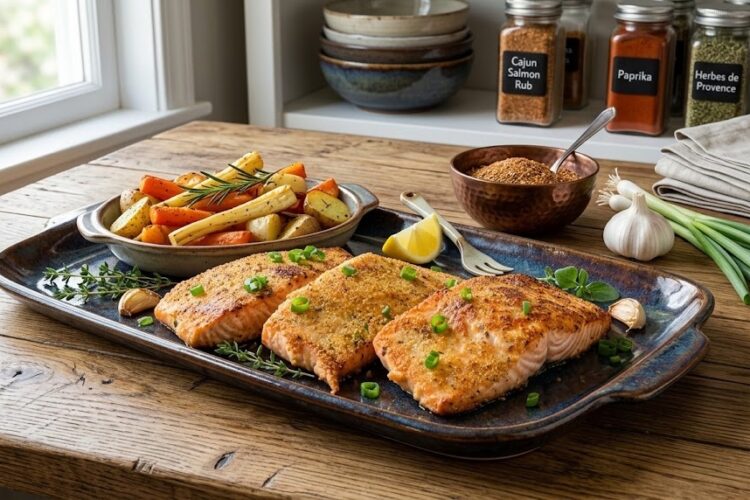
Low-Carb Cajun Salmon is a quick and flavorful dinner made with tender salmon fillets coated in a crisp almond flour and Cajun seasoning crust.
The combination of garlic, Cajun spices, sea salt, and salmon creates a savory dish with plenty of flavor while keeping the carbohydrate count low. Ready in about 20 minutes, this easy salmon recipe works well for busy weeknight dinners and fits keto, low-carb, gluten-free, grain-free, and Paleo-style meal plans.
Why This Cajun Salmon Recipe Works
This skillet Cajun salmon stands out because it delivers a crisp, seasoned coating without using traditional breadcrumbs or wheat flour. Instead, super fine almond flour creates a light crust around the salmon while helping keep the recipe low in carbohydrates. The Cajun seasoning adds warmth and spice, while crushed garlic gives the egg coating a savory flavor that works beautifully with the richness of the fish.
Salmon is also an excellent choice when you want a satisfying main course that cooks quickly. Individual fillets can be prepared and cooked in a single skillet, making this recipe especially convenient when you do not want to spend a lot of time in the kitchen. The finished salmon has a browned exterior and a tender center, giving you a pleasant contrast between the crunchy coating and flaky fish.
Choosing the Right Salmon
For the best results, choose boneless and skinless salmon fillets and cut them into serving-size pieces before coating. Fresh salmon is ideal, but properly thawed frozen salmon can also work well. If using frozen fish, thaw it completely and pat it dry with paper towels before starting. Removing excess moisture is important because a wet surface can make the almond flour coating less likely to adhere properly.
Salmon fillets can vary considerably in thickness, so cooking time may differ slightly from one piece to another. Thinner portions can cook faster, while thick pieces may need additional time. Rather than relying only on the clock, pay attention to the appearance and texture of the fish as it cooks. The coating should become browned and crisp, while the salmon itself should be cooked through and easy to flake.
The Cajun Coating
The coating is made from a simple combination of super fine almond flour, Cajun seasoning, and sea salt. Almond flour replaces traditional breadcrumbs, giving the salmon a naturally nutty flavor and helping create a golden crust in the skillet. Super fine almond flour is particularly useful because its smaller particles provide more even coverage over the surface of the fish.
Cajun seasoning is responsible for much of the character in this dish. Depending on the blend you use, it may contain spices such as paprika, garlic, onion, cayenne, black pepper, or other seasonings. Since commercial Cajun seasoning blends can vary in salt and heat, the finished flavor may be slightly different depending on the brand. The amount listed in the recipe can be adjusted according to your preferred level of spiciness without changing the other ingredients.
Checking Your Cajun Seasoning
When following a low-carb or keto diet, it is worth checking the ingredient label on packaged Cajun seasoning. Some commercially prepared spice blends can contain added sugar, starches, or other ingredients that may not suit your particular eating plan. Reading the label gives you a clearer idea of what you are adding to the recipe and helps you choose a seasoning blend that fits your dietary needs.
If you already have a favorite Cajun seasoning that you enjoy, it can be used here. A homemade blend is another option if you want greater control over the seasoning ingredients. However, the recipe itself does not require a complicated spice mixture. The purpose of the Cajun seasoning is simply to give the almond flour crust its distinctive spicy, savory character.
Preparing the Garlic Egg Mixture
The first step is to whisk the egg and crushed garlic together in a medium bowl. This mixture acts as the wet coating for the salmon. It helps the almond flour mixture adhere to the surface and also introduces a subtle garlic flavor to the fish.
Make sure the egg is thoroughly whisked so the white and yolk are evenly combined. When coating the salmon, turn each piece so both sides are covered. You do not need an excessively thick layer of egg. A light, even coating is enough to give the seasoned almond flour something to cling to.
Coating the Salmon Properly
Once the salmon has been coated with the egg mixture, transfer it to the bowl containing the almond flour, Cajun seasoning, and sea salt. Turn the fish carefully to coat both sides. Press the coating gently onto the surface with your fingers or the back of a spoon. This small step helps the crust stay attached when the salmon is transferred to the hot skillet.
Try to coat the pieces evenly rather than creating a very thick layer in one area. An even coating encourages consistent browning and helps prevent bare spots. If some of the coating falls away while transferring the salmon, gently press a little more onto those areas before placing the fish in the pan.
Cooking Cajun Salmon in a Skillet
Avocado oil is heated in a large skillet over medium-high heat before the coated salmon is added. The pan should be hot enough for the salmon to begin sizzling as soon as it touches the cooking surface. A properly heated skillet is important because it helps the almond flour coating brown rather than slowly absorb oil.
Avoid overcrowding the skillet. The salmon pieces should have enough space between them so they can cook evenly. If the fillets are touching each other, moisture and heat can become trapped between the pieces, making it more difficult for the coating to become crisp and golden.
Getting a Golden Brown Crust
The first side generally takes about 3 to 5 minutes, depending on the thickness of the salmon and the heat of the skillet. Watch the coating as it cooks. When it develops a rich brown color and appears crisp, the salmon can be turned carefully.
After turning the pieces, cook the second side for another 3 to 5 minutes or until the salmon is done. Try not to repeatedly flip the fish because the coating can loosen during handling. One careful turn is generally enough to brown both sides while keeping the crust intact.
How to Tell When Salmon Is Done
The exact cooking time depends on the thickness of the salmon pieces, so visual and texture cues are useful. Properly cooked salmon should become opaque and should flake easily when gently tested with a fork. If you use a food thermometer, the internal temperature can also be checked according to your preferred level of doneness and applicable food-safety guidance.
Because salmon continues cooking slightly after being removed from the heat, avoid leaving thin pieces in the skillet longer than necessary. Thick pieces may require a little more time. Keeping an eye on the fish during the final few minutes will help you achieve a moist center instead of an overly dry texture.
Serving Low-Carb Cajun Salmon
Once the salmon is cooked, transfer it to serving plates and finish with thinly sliced green onion if desired. The green onion adds a fresh appearance and a mild onion flavor that balances the spicy Cajun crust. Since the garnish is optional, the salmon can also be served without it.
This low-carb salmon recipe pairs naturally with vegetables and other simple side dishes. Steamed broccoli, roasted cauliflower, sautéed greens, zucchini, asparagus, or a fresh salad can complement the spicy fish without overpowering it. For a keto dinner, choosing low-carbohydrate sides allows the salmon to remain the centerpiece of the meal.
Making It Part of a Keto Meal
With only a small amount of carbohydrate per serving, this Cajun salmon can fit comfortably into many low-carb meal plans. The almond flour provides the crisp coating without traditional flour or breadcrumbs, while salmon contributes protein and fat. The result is a satisfying main course that can be combined with non-starchy vegetables for a complete dinner.
When planning a keto meal, pay attention to the Cajun seasoning you choose because seasoning blends can have different ingredient lists. The nutritional values provided with this recipe are based on the listed ingredients and may vary depending on the exact products used, portion sizes, and cooking methods.
Notes for Better Results
For the crispiest coating, make sure the salmon is dry before dipping it into the egg mixture. Excess water on the surface can interfere with the coating and cause it to slide off during cooking. Patting the fish dry is a simple preparation step that can make a noticeable difference in the final texture.
The skillet also needs to be properly heated before the salmon goes in. If the pan is not hot enough, the coating may absorb more oil and take longer to brown. The recipe specifically notes that the salmon should sizzle when it reaches the pan. If there is no immediate sizzle, allow the skillet to heat a little longer before adding the fish.
Notes on Spice Level
Cajun seasoning can range from relatively mild to quite hot, so the final heat level depends on the blend you use. The recipe allows the seasoning amount to be adjusted according to your preference. If you enjoy bold, spicy seafood, a stronger Cajun seasoning flavor can make the crust particularly vibrant. If you prefer milder food, use a less intense blend while staying within the listed ingredient.
Remember that seasoning blends can also differ in saltiness. Since sea salt is already included separately, checking the Cajun seasoning label can help you understand how the overall seasoning may affect the final taste. This is particularly useful if you are cooking for people with different preferences for salty or spicy food.
Why Almond Flour Is Used
Traditional breaded fish recipes often use wheat flour, breadcrumbs, or cornmeal to create a crunchy exterior. This recipe takes a different approach by using super fine almond flour. It provides enough texture to create a browned coating while helping the dish remain grain-free and low in carbohydrates.
Almond flour also has a mild flavor that works naturally with salmon and Cajun spices. Because it browns relatively quickly in a hot skillet, it is important to watch the heat and avoid letting the coating become too dark before the fish is cooked. Medium-high heat and careful timing help produce a flavorful crust without burning it.
Storage and Reheating Notes
If you have leftover Cajun salmon, allow it to cool appropriately and store it in a covered container in the refrigerator. For the best texture, reheat it gently rather than cooking it aggressively for a long period. Excessive reheating can cause salmon to become dry and can soften the crisp coating.
A skillet can help restore some of the exterior texture during reheating. Use moderate heat and warm the salmon until heated through. Because the coating can be delicate after refrigeration, handle the leftovers carefully when turning or transferring them.
Frequently Asked Questions
Is Cajun salmon keto-friendly?
This recipe is designed as a low-carb option and contains approximately 2 grams of net carbohydrates per serving according to the provided nutritional information. It uses almond flour instead of traditional breadcrumbs or wheat flour. However, individual nutritional needs vary, so check the labels of packaged ingredients, especially Cajun seasoning, when calculating carbohydrates for your own meal plan.
Can I use frozen salmon?
Yes, properly thawed frozen salmon can be used. Thaw the fillets completely and pat them dry before coating. Removing excess moisture is particularly important because the egg and almond flour coating needs a relatively dry surface to adhere well and develop a browned crust in the skillet.
Can I make the salmon less spicy?
Yes. The amount of Cajun seasoning can be adjusted depending on how much heat you prefer. Choosing a milder Cajun seasoning blend can also reduce the overall spiciness while maintaining the characteristic Cajun flavor. The recipe is flexible enough to accommodate different preferences without requiring changes to the remaining ingredients.
Why is my coating falling off?
The coating may loosen if the salmon is too wet, if the egg coating is uneven, or if the almond flour mixture is not pressed onto the fish. Pat the salmon dry, coat both sides with the egg mixture, then press the seasoned almond flour gently onto the surface. Handling the salmon carefully while transferring it to the skillet also helps.
What should I serve with Cajun salmon?
Low-carb vegetables are an excellent match. Broccoli, cauliflower, asparagus, zucchini, leafy greens, or a simple salad can all work well. These sides complement the spicy salmon while keeping the meal suitable for a low-carb style of eating.
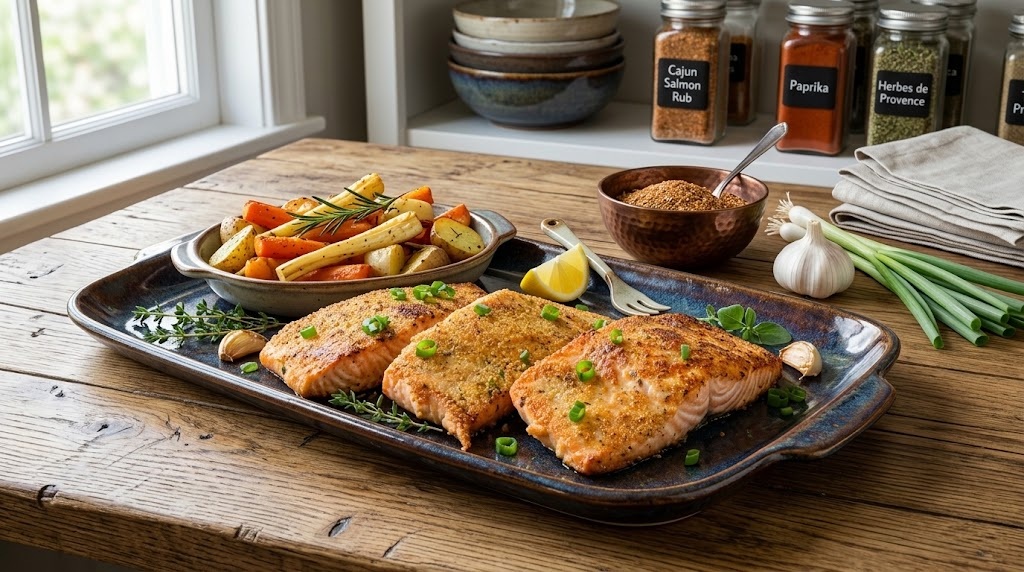
Low-Carb Cajun Salmon (Keto-Friendly)
Tender salmon fillets coated in a garlic-infused egg mixture and a spicy Cajun almond flour crust, then skillet-cooked until golden brown.
3
servings10
minutes10
minutes359
kcal20
minutesIngredients
1 large egg
1 clove garlic, crushed
1/2 cup super fine almond flour
2 teaspoons Cajun seasoning, more or less depending on desired spiciness
1/2 teaspoon sea salt
12 ounces salmon fillets, boneless and skinless, cut into serving-size pieces
1 tablespoon avocado oil, more or less depending on skillet
1 tablespoon green onion, thinly sliced, optional for garnish
Directions
- In a medium bowl, whisk the egg together with the crushed garlic until well combined.
- In a separate medium bowl, combine the super fine almond flour, Cajun seasoning, and sea salt. Stir until the dry ingredients are evenly distributed.
- Place a salmon piece into the egg mixture and turn it carefully so both sides are covered.
- Transfer the egg-coated salmon to the almond flour mixture. Turn to coat both sides, then gently press the coating onto the fish so it adheres properly. Repeat with the remaining salmon pieces.
- Heat the avocado oil in a large skillet over medium-high heat. Allow the skillet to become hot before adding the salmon.
- Carefully place the coated salmon fillets into the skillet, making sure the pieces do not touch. The salmon should sizzle when it reaches the pan.
- Cook for approximately 3 to 5 minutes, or until the coating on the first side becomes browned and crisp.
- Carefully turn each salmon fillet and continue cooking for another 3 to 5 minutes, or until the salmon is cooked through.
- Remove the cooked salmon from the skillet and sprinkle the thinly sliced green onion over the top as an optional garnish.
- Serve immediately with your preferred low-carb side dishes.
Nutrition Facts
- Total number of serves: 1
- Calories: 359kcal
- Fat: 26g
- Carbohydrates: 4g
- Fiber: 2g
- Sugar: 1g
- Protein: 30g
