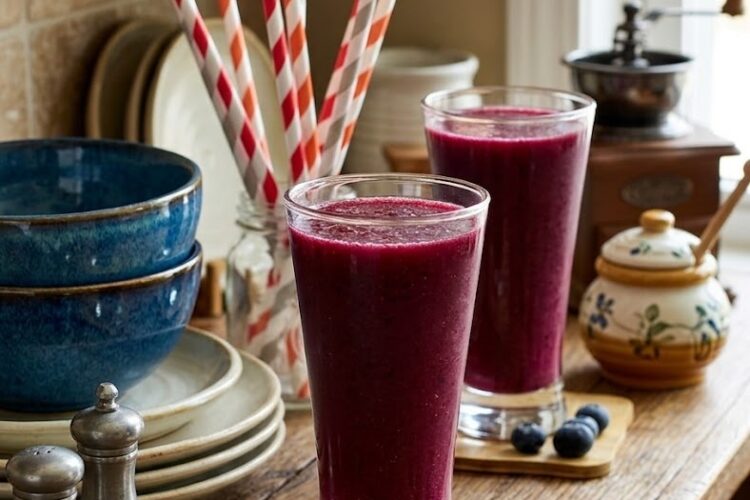
Fresh blueberry juice is a colorful and refreshing homemade drink made by blending ripe blueberries with apple, celery, beetroot, and a bright squeeze of lemon or lime. This easy blueberry juice recipe can be prepared with either a blender or a juicer, making it suitable for different kitchen setups. The combination creates a naturally flavorful drink with a balance of sweet fruit, crisp vegetables, earthy beetroot, and citrus freshness.
Blueberries are widely enjoyed for their naturally sweet-tart flavor and their nutritional profile. They contain dietary fiber and provide several vitamins and minerals, including vitamin C, vitamin K, vitamin B6, and manganese. When combined with fresh apple, celery, beetroot, cucumber, and lemon, blueberries become the base of a vibrant mixed fruit and vegetable juice that is easy to prepare at home.
One of the best things about this homemade blueberry juice is its flexibility. You can make it as a smooth blended drink, strain it for a lighter juice-like texture, or use a juicer for a quicker extraction process. The optional cucumber adds a clean, refreshing taste, while ice cubes make the finished drink especially enjoyable when served cold.
This recipe is also a practical way to use fresh produce in one serving. The apple contributes natural sweetness, celery adds a crisp and mild savory note, beetroot gives the juice its deeper color and earthy flavor, and lemon or lime brings everything together with a fresh citrus finish. The result is a homemade blueberry drink that looks impressive while requiring only simple ingredients and basic preparation.
Why This Blueberry Juice Recipe Is Worth Making
The deep blue and purple tones of blueberries combine beautifully with the rich color of beetroot. Depending on the exact quantity, ripeness, and blending method, the finished drink can develop a striking purple-red appearance. This makes the recipe visually appealing without relying on artificial colors, syrups, or complicated additions.
A colorful drink can also make everyday fruits and vegetables more interesting to serve. Instead of eating each ingredient separately, this recipe brings several fresh ingredients together in one glass. It works well as a refreshing drink during warm weather, as part of a breakfast spread, or whenever you want a homemade juice with a bold fruit-and-vegetable combination.
Naturally Balanced Flavor
Blueberries alone have a distinctive flavor that can range from mildly sweet to pleasantly tart. Apple helps round out that taste with natural sweetness, while celery introduces a fresh, crisp character. Beetroot has a stronger earthy flavor, so the small quantity used in this recipe adds depth without completely dominating the other ingredients.
The lemon or lime is particularly important because its acidity helps brighten the overall flavor. A final squeeze of citrus can make the juice taste fresher and more balanced. When served with ice, the drink becomes even more refreshing and is especially pleasant when the ingredients have been chilled before preparation.
Ingredients That Create the Best Flavor
Blueberries
Blueberries are the main ingredient and provide the signature flavor of this homemade juice. Fresh, ripe blueberries generally work best because they blend easily and offer a naturally fuller taste. Before using them, rinse them thoroughly and check for any damaged berries or remaining debris.
Their small size also makes blueberries convenient for both blending and juicing. In a blender, they quickly break down into a smooth puree when combined with water. In a juicer, they can be processed with the remaining fruits and vegetables to create a fresh mixed juice.
Apple
The apple adds natural sweetness and helps soften the sharper or earthier flavors of celery and beetroot. For the best texture, cut the apple into large pieces and remove the core before blending or juicing. The skin can remain unless you personally prefer to remove it.
Because the original recipe does not specify a particular apple variety, you can use the type available to you. A sweeter apple will create a sweeter drink, while a more tart variety will produce a sharper flavor. Either option can work well with the blueberries and lemon.
Celery
Celery brings a clean and slightly savory element to the recipe. Its crisp texture makes it easy to process in a blender or juicer after cutting it into manageable pieces. The flavor of celery is noticeable but becomes balanced when mixed with apple, blueberries, and citrus.
Using celery in a fruit and vegetable juice is also an easy way to create a more complex flavor. Instead of tasting like a simple berry drink, the finished juice has layers of sweetness, freshness, earthiness, and acidity. This combination gives the recipe a distinctive character.
Cucumber
Cucumber is optional, which makes this recipe easy to adjust according to your taste. When included, it adds extra freshness and a lighter flavor. It also blends well with celery and citrus, making the drink feel especially crisp when served cold.
If you choose to use cucumber, wash it thoroughly and cut it into large pieces before blending. There is no need to change any other ingredient when adding it. The cucumber simply becomes another refreshing element in the existing recipe.
Beetroot
Beetroot adds an earthy taste and contributes to the bold appearance of the juice. Only a small amount is used, helping prevent its flavor from becoming overwhelming. Peel the beetroot and cut it into small pieces before processing, particularly when using a blender.
Because beetroot is firmer than berries or cucumber, cutting it into smaller pieces helps the blender process it more easily. In a juicer, alternate it with softer ingredients for a smoother and more efficient process.
Lemon or Lime
A small amount of lemon or lime is squeezed over the finished juice. This final addition adds brightness and helps bring together the sweetness of the fruit and the stronger flavors of the vegetables. Fresh citrus generally provides the cleanest and most vibrant flavor.
You can choose lemon or lime according to availability and preference because both provide the desired acidic finish. Add the juice after blending and straining or after the ingredients have been processed through the juicer, then stir well before serving.
How to Make Blueberry Juice Using a Juicer
Set Up the Juicer
Place a clean glass or container beneath the juicer spout before you begin. Prepare all fruits and vegetables in advance so you can process them efficiently. Washing and cutting the ingredients before turning on the juicer makes the process more organized.
Once everything is ready, begin processing the fruits and vegetables. Alternating the ingredients can help keep the flavors evenly combined as the juice is extracted. Continue until all the blueberries, apple, celery, optional cucumber, and beetroot have been processed.
Add the Citrus and Ice
After juicing, squeeze the lemon or lime directly into the prepared drink and stir well. Fill serving glasses with the optional ice cubes and pour the fresh juice over them. This method creates a lighter consistency than the blended and strained version.
The juicer method is useful when you prefer a traditional juice texture and want to skip the separate blending and straining process. Both methods use the same original ingredients, allowing you to choose the preparation style that best suits your equipment and preferred texture.
Choosing Between a Blender and a Juicer
Blender Method
The blender method first creates a thick puree containing the liquid and fibrous parts of the ingredients. The mixture is then strained through a fine mesh strainer or cheesecloth to separate the juice from the pulp. This approach is useful when you do not own a juicer.
A blender also gives you more control over the texture. You can strain thoroughly for a clearer drink or leave some of the blended mixture unstrained if you prefer a thicker consistency. The recipe itself includes the straining process for a smoother juice-style result.
Juicer Method
A juicer separates much of the liquid from the pulp during processing, producing a drink with a lighter texture. This can be a convenient option when making fresh juice regularly or when you want to process several fruits and vegetables quickly.
The flavor profile remains based on the same ingredients, but the texture may differ slightly from the blender method. Choosing between the two methods is mainly a matter of convenience, available equipment, and personal preference.
Notes for the Best Homemade Blueberry Juice
The quality of the ingredients strongly influences the final flavor. Choose blueberries that look fresh and ripe, and use crisp celery and firm apple. Beetroot should be peeled and cut into smaller pieces, while all produce should be washed thoroughly before use.
Preparing everything before blending or juicing also makes the process faster. Once the ingredients are washed and cut, the recipe takes only a short time to complete. This makes it a convenient option when you want a freshly prepared drink without a complicated cooking process.
Adjust the Texture Through Straining
If you are using a blender, the strainer plays an important role in determining the final texture. A fine mesh strainer produces a smoother result, while cheesecloth can also be used when a metal strainer is unavailable.
Avoid pressing the puree too aggressively if you want a cleaner, lighter juice. Gentle pressure with a spatula is enough to collect the liquid. The remaining pulp can then be discarded according to the original preparation method.
Serve the Juice Cold
This blueberry, apple, celery, and beetroot juice tastes especially refreshing when chilled. You can use the optional ice cubes listed in the recipe and pour the finished drink into chilled glasses for an even colder serving temperature.
For the freshest experience, prepare the juice shortly before serving. Freshly squeezed citrus should be added at the end, followed by a quick stir. This simple finishing step gives the drink a bright flavor and completes the recipe without adding unnecessary ingredients.
Frequently Asked Questions About Blueberry Juice
Can I Make This Recipe Without a Juicer?
Yes. The recipe includes a complete blender method. Blend the water and blueberries first, add the remaining prepared ingredients, and blend until a smooth puree forms. Pour the puree through a fine mesh strainer or cheesecloth and gently press it to collect the juice.
This method makes the recipe accessible even if you only have a standard kitchen blender. The final step of adding lemon or lime and optional ice remains the same regardless of which preparation method you choose.
Is Cucumber Required?
No. The cucumber is optional in the original ingredient list. You can include it for a lighter and more refreshing flavor or leave it out if you do not have it available or simply prefer the taste without it.
The remaining ingredients still create a flavorful blueberry juice with apple, celery, beetroot, and citrus. Because cucumber is already listed as optional, omitting it does not require changing the quantities of the other ingredients.
Can I Use Lime Instead of Lemon?
Yes. The recipe specifically allows either lemon or lime. Both provide a fresh acidic flavor that complements the sweetness of the apple and blueberries while balancing the celery and beetroot.
Choose whichever citrus fruit is available and squeeze it over the prepared juice before stirring. The amount remains exactly the same as specified in the original ingredients.
What Can I Use Instead of a Fine Mesh Strainer?
Cheesecloth can be used when a fine mesh metal strainer is not available. Place it securely over a bowl and carefully pour the blended mixture through it to separate the liquid from the fibrous pulp.
The goal is to produce a smoother drink after blending. Whichever method you use, take your time and allow the liquid to pass through before gently pressing the remaining mixture.
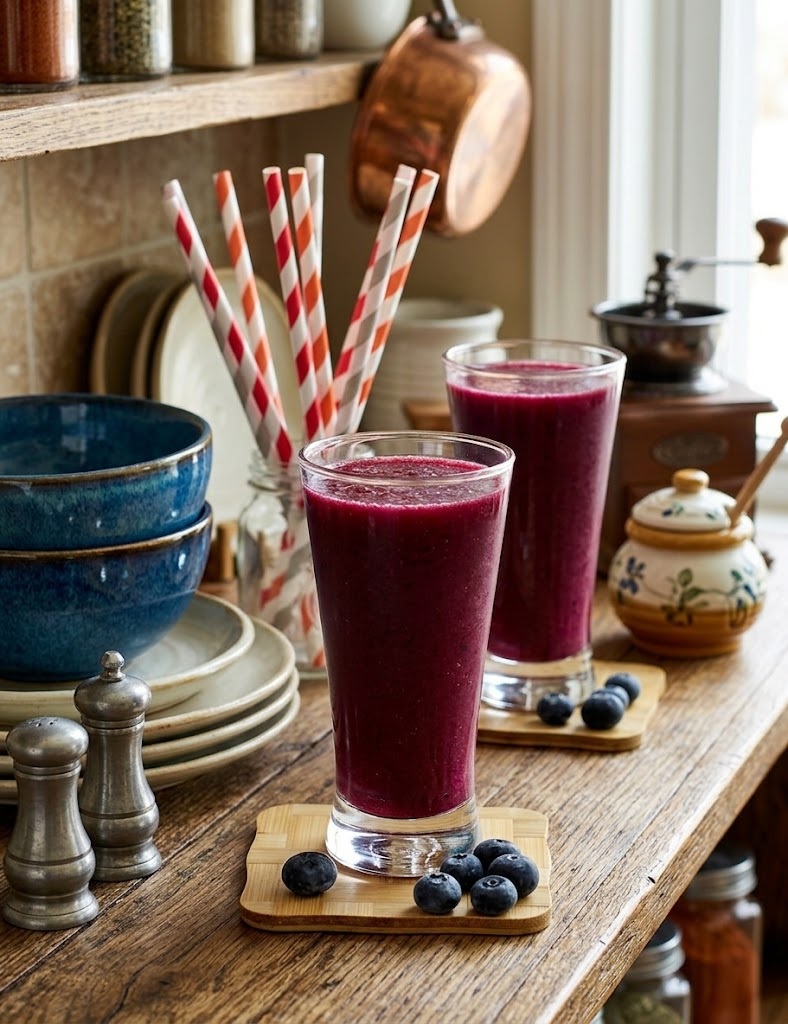
Healthy Soothing Blueberry Juice
A refreshing homemade blueberry juice made with ripe blueberries, apple, celery, optional cucumber, beetroot, fresh lemon or lime, water, and optional ice. It can be prepared using either a blender or a juicer.
2
servings10
minutes10
minutesIngredients
1 cup Blueberry
1 Apple
1 Celery Stalk
1/2 Cucumber, optional
1/4 Beetroot
1/4 Lemon or Lime
1/2 cup Water
2-3 Ice cubes, optional
Directions
- Rinse the blueberries, apple, celery, optional cucumber, and beetroot thoroughly with water to remove any debris.
- Cut the apple into large pieces and remove the core. Cut the celery and cucumber into large pieces. Peel the beetroot and cut it into small pieces.
- Add 1/2 cup water and the blueberries to a blender jar.
- Add the cucumber, apple, celery, and beetroot in the given order.
- Blend all the ingredients until a smooth puree forms.
- Place a fine mesh strainer over a large bowl. Pour the prepared puree into the strainer. Cheesecloth may also be used if a metal strainer is unavailable.
- Gently press the puree with a spatula to collect the juice. Discard the remaining fibrous pulp.
- Squeeze the lemon or lime over the prepared juice. Add the optional ice cubes, stir well, and pour into chilled serving glasses.
