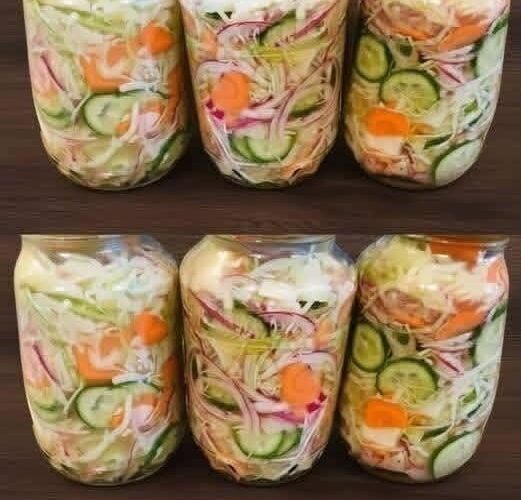
Classic Pickled Vegetable Slaw – Recipe
Introduction
Classic Pickled Vegetable Slaw is a vibrant, crunchy, tangy, refreshing, and deeply flavorful cold vegetable dish that combines crisp shredded vegetables with a bright pickling brine to create a salad that feels both refreshing and intensely satisfying. Unlike creamy slaws that rely heavily on mayonnaise, pickled vegetable slaw focuses on acidity, crunch, freshness, and balance.
This type of slaw has roots in many culinary traditions across places like Germany, Poland, United States, Korea, and parts of Eastern Europe where preserved vegetables, vinegar-based salads, and fermented side dishes became important components of traditional meals.
What makes Classic Pickled Vegetable Slaw so special is the contrast between:
- Crisp fresh vegetables
- Sharp vinegar tang
- Light sweetness
- Aromatic herbs and spices
- Refreshing crunch
- Bright colorful appearance
A perfectly made Pickled Vegetable Slaw should deliver:
fresh crunch → bright vinegar tang → light sweetness → aromatic spice notes → refreshing crisp finish
This recipe focuses deeply on understanding:
- Vegetable structure
- Pickling science
- Osmosis
- Acidity balance
- Texture preservation
- Flavor penetration
- Moisture control
because exceptional slaw depends heavily on balancing crispness, acidity, sweetness, and marination properly.
The History of Pickled Slaws
Pickled vegetable dishes have existed for centuries because they helped preserve vegetables before refrigeration became common.
Across many cultures, pickling served several purposes:
- Preservation
- Flavor enhancement
- Texture transformation
- Nutritional extension
Over time, quick-pickled slaws became popular because they:
- Required no long fermentation
- Could be prepared quickly
- Added freshness to rich meals
Today vinegar-based slaws are especially popular alongside:
- Barbecue
- Fried foods
- Sandwiches
- Grilled meats
- Picnic meals
because their acidity cuts through richness beautifully.
What Makes Pickled Slaw Different
Unlike creamy coleslaw, pickled slaw focuses on:
- Vinegar brightness
- Vegetable crunch
- Light texture
- Sharp refreshing flavor
The vegetables remain:
- Crisp
- Juicy
- Fresh
instead of becoming soft or heavily coated.
Understanding Vegetable Structure
Vegetables are made from:
- Water
- Fiber
- Cellulose
- Natural sugars
Their crispness comes from water pressure inside plant cells.
Maintaining that crunch is one of the main goals of this recipe.
Why Thin Slicing Matters
Thinly slicing vegetables helps:
- Improve flavor absorption
- Create better texture balance
- Allow even marination
Large chunks remain:
- Underseasoned
- Too rigid
- Unevenly pickled
Understanding Pickling Science
Pickling works through acidity and osmosis.
Vinegar changes:
- Flavor
- Texture
- Preservation properties
while salt helps:
- Draw moisture outward
- Soften vegetables slightly
- Improve seasoning penetration
What Is Osmosis?
Osmosis is the movement of water through cell membranes.
Salt pulls moisture from vegetables, which:
- Slightly softens them
- Concentrates flavor
- Improves brine absorption
Why Vinegar Is Essential
Vinegar provides:
- Tanginess
- Brightness
- Preservation
- Balance
Without sufficient acid:
- Slaw tastes flat
- Vegetables feel dull
Understanding Sweetness Balance
Small amounts of sugar are important because they:
- Balance acidity
- Enhance vegetable sweetness
- Round out sharp flavors
The goal is balanced brightness—not dessert sweetness.
Why Crunch Matters
Crunch creates freshness perception.
A good pickled slaw should feel:
- Crisp
- Light
- Refreshing
not soggy or limp.
Ingredients
Main Vegetables
- Green cabbage
- Red cabbage
- Carrots
- Bell peppers
- Red onion
For the Pickling Brine
- Vinegar
- Water
- Sugar
- Salt
- Black pepper
Optional Additions
- Celery seeds
- Mustard seeds
- Garlic
- Jalapeños
- Fresh herbs
- Chili flakes
Understanding Ingredient Functions
Cabbage
Provides:
- Crunch
- Structure
- Freshness
Carrots
Provide:
- Sweetness
- Color
- Texture contrast
Bell Peppers
Provide:
- Juiciness
- Bright flavor
- Color variety
Red Onion
Provides:
- Sharpness
- Aroma
- Savory depth
Vinegar
Provides:
- Tanginess
- Preservation
- Brightness
Sugar
Provides:
- Balance
- Flavor rounding
Preparing the Vegetables
Step 1: Wash Thoroughly
Clean vegetables carefully.
Fresh clean vegetables improve:
- Flavor
- Texture
- Shelf life
Step 2: Slice Thinly
Thin slicing ensures:
- Even marination
- Better texture
- Faster flavor penetration
Why Uniform Sizing Matters
Uneven cuts create:
- Inconsistent crunch
- Uneven pickling
- Poor texture balance
Step 3: Salt the Vegetables Lightly
Light salting begins:
- Moisture extraction
- Flavor enhancement
- Texture softening
Preparing the Pickling Brine
Step 4: Combine Vinegar, Sugar, and Seasonings
Mix until dissolved.
The brine should taste:
- Bright
- Slightly sweet
- Balanced
- Refreshing
Understanding Brine Balance
Perfect slaw brine balances:
- Acid
- Sweetness
- Saltiness
Too much vinegar:
- Harsh sourness
Too much sugar:
- Heavy sweetness
Optional Warm Brine Technique
Some recipes gently warm the brine.
This helps:
- Dissolve sugar faster
- Improve flavor infusion
Allow it to cool slightly before pouring over vegetables.
Step 5: Combine Vegetables and Brine
Pour brine evenly over vegetables.
Toss thoroughly.
Why Thorough Mixing Matters
Proper mixing ensures:
- Even seasoning
- Balanced texture
- Uniform pickling
Marination Process
Step 6: Refrigerate
Allow slaw to marinate before serving.
This helps:
- Soften vegetables slightly
- Deepen flavor
- Improve balance
Why Time Improves Flavor
As slaw rests:
- Vinegar penetrates vegetables
- Salt redistributes moisture
- Aromas develop
- Flavors balance
Freshly mixed slaw tastes sharp.
Rested slaw tastes integrated.
Texture Goals
Perfect Pickled Vegetable Slaw should have:
Vegetables
Crunchy yet slightly flexible
Flavor
Tangy, lightly sweet, refreshing
Appearance
Bright colorful glossy vegetables
Overall Experience
Fresh, crisp, and vibrant
Flavor Profile
Tanginess
Bright vinegar acidity
Sweetness
Balanced subtle sweetness
Savory Notes
Onion and spice depth
Freshness
Cool crunchy finish
Common Mistakes
Soggy Slaw
Cause
Over-marinating or too much salt
Fix
Reduce marination time.
Too Sour
Cause
Excess vinegar
Fix
Balance with sugar.
Weak Flavor
Cause
Insufficient seasoning
Fix
Taste and adjust brine carefully.
Uneven Texture
Cause
Vegetables sliced inconsistently
Fix
Slice uniformly thin.
Watery Slaw
Cause
Excess vegetable moisture
Fix
Drain lightly if necessary.
Variations
Spicy Version
Add jalapeños or chili flakes.
Asian-Inspired Version
Add sesame oil and ginger.
Herb Version
Add dill or parsley.
Garlic Version
Add fresh garlic slices.
Sweet-and-Spicy Version
Increase sugar slightly and add chili.
Storage
- Refrigerate several days
- Flavor intensifies over time
- Stir before serving
Serving Suggestions
Serve with:
- Barbecue
- Burgers
- Sandwiches
- Fried chicken
- Grilled meats
- Tacos
It also works beautifully as:
- Wrap filling
- Picnic salad
- Side dish
- Sandwich topping
Expert Tips
- Slice vegetables evenly
- Balance vinegar carefully
- Chill before serving
- Avoid excessive salt
- Use fresh crisp vegetables
- Taste the brine before mixing
Why People Love Pickled Vegetable Slaw
People love this slaw because it combines:
- Bright freshness
- Crunchy texture
- Tangy flavor
- Lightness
- Vibrant color
while remaining:
- Affordable
- Versatile
- Easy to prepare
Its refreshing acidity makes it especially satisfying alongside rich foods.
Final Thoughts
Classic Pickled Vegetable Slaw proves that simple vegetables can become vibrant and deeply flavorful when acidity, crunch, sweetness, and seasoning are balanced correctly. Through crisp cabbage, colorful vegetables, bright vinegar brine, and careful marination, this dish creates a refreshing slaw that feels light, crunchy, tangy, and deeply satisfying.
This slaw delivers:
- Crisp refreshing texture
- Bright tangy flavor
- Balanced sweetness
- Fresh vegetable crunch
- Light vibrant finish
And most importantly:
Every bite combines crunchy vegetables, bright vinegar tang, subtle sweetness, and refreshing crisp texture into a vibrant slaw that feels fresh, balanced, satisfying, and incredibly refreshing.
