
Ham and cheese puff pastry bites are one of those easy appetizer recipes that can turn a handful of simple ingredients into something that looks impressive on a party table. Crisp, golden puff pastry wraps around savory ham, melted cheddar cheese, and a light layer of Dijon mustard, creating small bites with flaky edges and a rich, cheesy center. They are quick enough for a busy afternoon but special enough for Christmas gatherings, game-day parties, family celebrations, and casual entertaining.
The beauty of this easy ham and cheese appetizer is that it does not require complicated preparation or a long ingredient list. Frozen puff pastry does most of the work, giving every bite a beautifully layered and buttery texture as it rises in the oven. The ham adds a salty, savory flavor, while cheddar cheese melts into the filling and Dijon mustard provides a gentle sharpness that keeps the pastry from tasting too rich. The result is a simple finger food that is easy to prepare and even easier to enjoy.
Why These Puff Pastry Bites Work So Well
Puff pastry is an excellent shortcut for homemade appetizers because it creates a crisp and flaky exterior without requiring you to make pastry dough from scratch. Once baked at a high temperature, the layers separate and puff around the filling, producing the golden texture that makes these ham and cheese bites so appealing. Since the pastry is already prepared, most of the effort goes into cutting, filling, folding, and baking the pieces.
The combination of ham and cheese is also naturally suited to puff pastry. Shaved ham brings a savory, slightly salty flavor, while shredded cheddar becomes soft and wonderfully melted during baking. Dijon mustard adds another layer of flavor without overpowering the filling. A small amount spread across each pastry square is enough to complement the ham and cheese while keeping the overall appetizer balanced.
An Easy Party Appetizer for Any Occasion
These puff pastry appetizers are especially useful when you need something quick for guests. They can be served at holiday parties, Christmas gatherings, brunches, birthdays, potlucks, or game-day celebrations. Because each piece is individually folded and baked, guests can simply pick one up and eat it without needing plates, knives, or forks. That makes them particularly convenient when you are preparing a larger buffet.
The recipe is also a smart way to use leftover cooked ham. Instead of serving the same ham in another meal, slice or shave it and tuck it inside puff pastry with cheese. The oven transforms those everyday leftovers into a warm and crispy snack. This makes the recipe practical as well as delicious, especially during the holiday season when leftover ham is often available.
Choosing the Right Puff Pastry
For the best results, use good-quality puff pastry and allow it to partially defrost before cutting. You do not want the pastry completely frozen because it can crack when folded, but it should still be cool and firm enough to handle easily. Warm puff pastry can become sticky and difficult to shape, particularly when you are working with multiple small squares.
The original recipe uses two sheets of puff pastry measuring approximately 25cm or 10 inches square. Cutting each sheet into 9cm or 3.5-inch squares provides enough room for the filling while leaving sufficient pastry around the edges for folding. Keeping the pastry chilled during preparation also helps maintain its structure, which is important for getting attractive layers and good puffing in the oven.
Preparing the Ham and Cheese Filling
The filling could hardly be simpler. Each pastry square receives approximately half a teaspoon of Dijon mustard spread diagonally across the pastry. The shaved ham is then placed over the mustard, followed by shredded cheddar cheese. This layering gives every bite a little of the three main flavors rather than leaving some pieces with mostly pastry and others with too much filling.
Shaved ham works particularly well because thin slices are easy to fold or arrange over the pastry. If your ham pieces are very large, you can gently tear them into smaller pieces so they fit within the pastry squares. The cheddar should be shredded so it melts evenly and quickly. The original ingredient list allows another melting cheese to be used instead, giving you some flexibility while keeping the basic character of the appetizer intact.
How to Fold the Pastry
Folding the pastry correctly helps keep the filling inside while the bites bake. After adding the mustard, ham, and cheese, brush one corner of each square with egg yolk. Fold the opposite corner over the filling first, then bring the egg-coated corner over it. Press the pastry together firmly so the egg helps seal the two corners.
It is worth taking a moment to press the joined pastry securely. If the edges are loose, melted cheese can escape during baking. Some filling may still bubble out, which is completely normal and can even create delicious crispy cheese around the edges, but a good seal helps keep most of the ham and cheese inside. Arrange each folded piece on a prepared baking tray with a little space between them.
Getting Golden, Flaky Puff Pastry
A hot oven is essential for successful puff pastry. Preheat the oven to 200°C/425°F, or 180°C in a fan-forced oven, before placing the pastry inside. The heat causes the moisture within the pastry layers to turn into steam, helping the layers expand and create that characteristic flaky texture. Starting with an oven that has already reached the correct temperature gives the pastry the best chance of rising properly.
Before baking, brush the tops with egg. This simple step gives the finished appetizers their attractive golden-brown surface and slightly glossy appearance. Bake the bites for approximately 15 minutes, watching for deep golden color and visible puffing. Oven temperatures can vary, so use the appearance of the pastry as an important guide. They should look well risen and richly golden rather than pale.
Serving Ham and Cheese Puff Pastry Bites
These appetizers are best served warm when the pastry is crisp and the cheese is still soft and melted inside. Give them a few minutes to cool after removing them from the oven, as the filling can be very hot. They are delicious on their own, but they can also be arranged on a serving platter alongside other finger foods such as vegetable sticks, dips, mini sandwiches, or additional baked appetizers.
For a holiday spread, place the golden pastry bites on a large platter and serve them while warm. Their small size makes them ideal for grazing, and the combination of flaky pastry, savory ham, melted cheese, and mustard makes them appealing to both adults and children. They also work nicely as a starter before a larger meal because they are satisfying without requiring a complicated presentation.
Notes for the Best Results
Keep the puff pastry cold and only partially defrosted when you begin cutting and folding it. If the pastry becomes soft or sticky while you work, place it back in the refrigerator for a short time before continuing. Cold pastry is easier to handle and tends to produce better-defined layers in the oven.
Do not overload the pastry squares with ham or cheese. It can be tempting to add extra filling, but too much can make the squares difficult to fold and may cause the filling to spill out during baking. The quantities in this recipe are designed to provide a good balance between flaky pastry and savory filling, so distributing the ingredients evenly is more useful than making each piece excessively full.
For the egg wash, the recipe specifies two egg yolks or one whole egg according to the original notes. Either option helps create color on the pastry surface. Brush the egg lightly over the top rather than allowing large amounts to pool around the pastry. A thin, even coating produces a more attractive finish.
Make-Ahead and Storage Ideas
If you are preparing these for a gathering, you can organize the ingredients and prepare your baking trays in advance so the final assembly is quick. Puff pastry is easiest to work with when it remains cool, so avoid leaving filled pieces sitting at room temperature for a long period before baking. For the best texture, bake them as close to serving time as practical.
Leftover baked bites can be stored in the refrigerator and reheated until warm. The pastry is generally best when reheated in an oven or air fryer because dry circulating heat helps restore some of its crispness. Microwaving can warm the filling quickly but may leave the pastry softer. For entertaining, however, freshly baked bites will always provide the crispest and most enjoyable texture.
Why This Recipe Is Great for Busy Cooks
One of the biggest advantages of these easy ham and cheese puff pastry bites is the short preparation time. With only a few ingredients and around 15 minutes of preparation, they are practical when unexpected guests arrive or when you need an appetizer without spending hours in the kitchen. The cooking time is also short, making this a useful recipe to keep available during busy holiday cooking.
The recipe is straightforward enough for beginner cooks but still produces an impressive finished dish. There is no homemade dough to knead, no complicated sauce to prepare, and no lengthy cooking process. The key is simply to work with chilled puff pastry, distribute the filling evenly, seal the pastry carefully, and bake until beautifully golden and puffed.
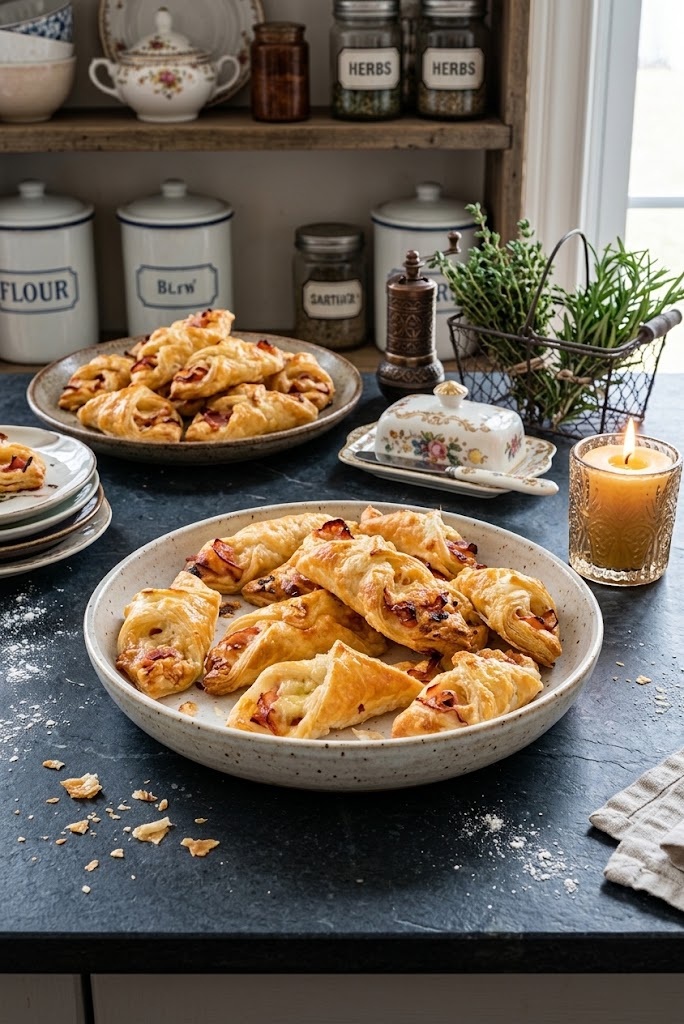
Ham and Cheese Puff Pastry
Crispy and golden ham and cheese puff pastry bites made with flaky puff pastry, savory shaved ham, melted cheddar cheese, and Dijon mustard.
4
servings15
minutes15
minutes116
kcal30
minutesIngredients
2 sheets puff pastry, 25cm/10″ square
4–5 tbsp Dijon mustard
8 oz/250g shaved ham
2 cups shredded cheddar cheese (or any other melting cheese) (Note 1)
2 egg yolks (or 1 egg – Note 2)
Oil spray
Directions
- Set the oven to 200°C/425°F, or 180°C fan-forced. Lightly spray two baking trays with oil or cover them with baking paper.
- Allow the puff pastry to partially defrost. Once it is flexible enough to cut without cracking, cut the pastry into 9cm/3.5-inch squares.
- Spread approximately ½ teaspoon of Dijon mustard diagonally across each pastry square.
- Place some shaved ham over the mustard and sprinkle with shredded cheddar cheese, keeping the filling reasonably centered so the pastry can be folded easily.
- Brush one corner of each square with egg yolk. Fold the opposite corner over the filling first, then bring the egg-coated corner over it. Press the pastry together firmly to seal.
- Transfer each folded pastry bite to the prepared baking tray, leaving some space between individual pieces. Repeat with the remaining pastry and filling.
- Lightly brush the tops of the pastry bites with egg.
- Place the trays in the preheated oven and bake for approximately 15 minutes, or until the puff pastry is deeply golden, crisp, and nicely puffed.
- Allow the bites to cool briefly, then serve warm while the pastry is crisp and the cheese is melted.
Nutrition Facts
- Total number of serves: 1
- Calories: 116kcal
- Fat: 7.8g
- Carbohydrates: 4.9g
- Protein: 6.2g
