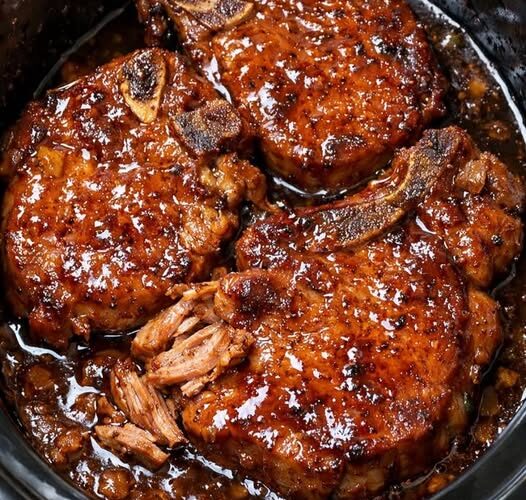
Slow Cooker Brown Sugar Pork Chops – Recipe
Introduction & Background
Slow Cooker Brown Sugar Pork Chops are a classic comfort-style main dish built on the principle of long-duration, low-temperature cooking that transforms simple ingredients into deeply developed flavor systems. This style of cooking is strongly associated with American home kitchens, especially the rise of slow cookers (crockpots), which became popular because they allowed working families to prepare meals in the morning and return home to fully cooked food.
At its core, this dish represents a balance between practicality and culinary transformation. Pork chops are naturally lean and relatively quick-cooking, but when handled incorrectly, they can become dry, chewy, or bland. The slow cooker method solves this by creating a controlled environment where heat is gentle, moisture is retained, and flavors have time to fully integrate.
The defining feature of this recipe is the use of brown sugar as a structural flavor agent, not just a sweetener. During long cooking, brown sugar dissolves into the cooking liquid, interacts with meat juices, and gradually transforms into a thick, glossy glaze that coats the pork chops. This creates a dish that is simultaneously savory, sweet, and deeply rich in aroma.
The final result is not just “pork chops with sauce”—it is a slow-developed flavor system where meat, sugar, seasoning, and moisture evolve together over time.
Chef’s Philosophy & Culinary Intent
This recipe is built on a fundamental culinary principle:
Time is an ingredient, not just a cooking condition.
In fast cooking methods, flavor is created through high heat reactions like searing or frying. In slow cooking, flavor is built through gradual transformation, where ingredients interact over hours instead of seconds.
The philosophy behind this dish is:
- Do not rush protein transformation
- Allow natural juices to become sauce
- Let sugar evolve into caramel depth
- Build flavor through layering, not intensity
Instead of forcing flavor, this dish allows it to emerge naturally over time.
This approach creates a very specific eating experience:
- Soft, tender meat that breaks easily
- Sauce that feels rich but not overpowering
- Balanced sweetness instead of sugary dominance
- Deep savory background that supports the glaze
Core Culinary Systems (Advanced Breakdown)
1. Protein Breakdown and Softening System
Pork chops contain muscle fibers and connective tissue that determine texture. In fast cooking, these fibers contract quickly, often causing dryness.
In slow cooking:
- Heat gradually denatures proteins
- Collagen breaks down into gelatin
- Meat fibers relax instead of tightening
This process produces a texture that is:
- Soft
- Moist
- Slightly shreddable in some cases
- Juicy even after long cooking
The key difference is controlled breakdown instead of shock cooking.
2. Sugar Transformation and Caramelization System
Brown sugar is not just a sweetener in this recipe—it is a liquid transformation agent.
During slow cooking:
- Brown sugar dissolves into liquid base
- Combines with pork juices
- Slowly thickens as moisture reduces
- Develops deeper molasses-like flavor notes
As heat continues:
- Light caramel notes form
- Sauce becomes glossy and sticky
- Sweetness becomes more complex, not just sugary
This evolution is what gives the dish its signature glaze.
3. Moisture Retention and Self-Basting System
One of the biggest advantages of slow cooking is moisture control.
Inside the slow cooker:
- Steam is trapped within sealed environment
- Meat continuously absorbs and releases juices
- Natural liquids circulate around pork chops
This creates a self-basting cycle, meaning:
- Meat does not dry out
- Sauce continuously enriches flavor
- Every part of the dish stays hydrated
4. Flavor Infusion and Diffusion System
Unlike quick cooking, where seasoning stays mostly on the surface, slow cooking allows:
- Deep penetration of salt and spices
- Full integration of garlic, onion, and seasoning powders
- Even distribution of flavor throughout meat structure
Over time:
- External seasoning becomes internal flavor
- Sauce becomes fully infused with meat essence
- No “separate layers” remain—everything merges
5. Sauce Thickening and Reduction System
As cooking progresses:
- Liquid reduces slowly
- Sugars concentrate
- Natural gelatin from pork enhances texture
If needed, final thickening can be adjusted using slurry, but often the slow cooker naturally creates a rich sauce without additional agents.
Difficulty, Timing & Yield
Difficulty Level: Easy
Preparation Time: 10–15 minutes
Cooking Time:
- Low setting: 5–7 hours
- High setting: 3–4 hours
Total Time: Up to 7 hours
Servings: 4–6 portions
Ingredients (Expanded Functional System Breakdown)
Primary Protein System
- 4–6 pork chops (bone-in preferred for juiciness)
Function:
- Structural base of dish
- Carries sauce and flavor
- Defines final texture outcome
Bone-in chops help retain moisture longer during slow cooking.
Sweet Flavor Development System
- 1/2 to 3/4 cup brown sugar
Function:
- Creates caramelized sauce base
- Balances salt and spice
- Develops deep molasses flavor over time
Brown sugar is responsible for the signature glaze texture.
Savory Foundation System
- 1 teaspoon salt
- 1/2 teaspoon black pepper
- 1 teaspoon garlic powder
- 1 teaspoon onion powder
- Optional smoked paprika
Function:
- Builds savory depth
- Prevents sweetness from overpowering dish
- Enhances pork flavor naturally
Liquid Transformation System
- 1/2 to 3/4 cup chicken broth
- 2 tablespoons soy sauce (optional)
- 1 tablespoon apple cider vinegar or mustard (optional)
Function:
- Provides cooking medium
- Balances sweetness with acidity
- Enhances umami depth
- Prevents burning of sugar
Optional Thickening System
- 1 tablespoon cornstarch + 2 tablespoons water (slurry)
Function:
- Adjusts final sauce thickness
- Creates glossy restaurant-style finish
Step-by-Step Method (Advanced Execution Breakdown)
Step 1: Protein Preparation Phase
Pat pork chops dry completely.
This ensures:
- Better seasoning adhesion
- Less excess liquid in slow cooker
- More controlled sauce development
Optional: Light pan sear before slow cooking for deeper flavor layering.
Step 2: Seasoning Layer Phase
Rub pork chops with:
- Salt
- Pepper
- Garlic powder
- Onion powder
- Paprika (optional)
This creates the foundational savory layer before slow transformation begins.
Step 3: Slow Cooker Assembly Phase
Place pork chops in slow cooker in a single or slightly overlapping layer.
Add:
- Brown sugar evenly on top
- Pour broth around edges
- Add soy sauce or vinegar if using
Do not aggressively mix. The layering is intentional.
This allows gradual flavor diffusion instead of immediate blending.
Step 4: Slow Cooking Transformation Phase
Cook on:
- LOW: 5–7 hours (optimal tenderness)
OR - HIGH: 3–4 hours (faster but slightly less depth)
During cooking:
- Meat fibers soften progressively
- Sugar dissolves and integrates
- Juices release and form base sauce
- Flavors deepen continuously
Avoid opening lid frequently as it disrupts thermal stability.
Step 5: Sauce Development Phase
Near the end of cooking:
If sauce is thin:
- Remove lid for 15–30 minutes to reduce liquid
OR - Add cornstarch slurry for controlled thickening
Goal texture:
- Thick
- Glossy
- Slightly sticky caramel glaze
Step 6: Final Stabilization Phase
Allow dish to rest for 10 minutes before serving.
This ensures:
- Sauce thickens slightly as it cools
- Meat reabsorbs juices
- Texture stabilizes for plating
Texture & Flavor Profile (Final Result Analysis)
A properly executed Slow Cooker Brown Sugar Pork Chop dish delivers:
- Extremely tender, juicy meat
- Deep caramelized sweetness
- Balanced savory backbone
- Slight tang from vinegar or mustard (if used)
- Thick, glossy sauce coating every bite
The experience should feel:
- Soft but structured
- Sweet but balanced
- Rich but not heavy
Advanced Cooking Techniques
- Use bone-in pork chops for moisture retention
- Add vinegar for complexity and balance
- Avoid over-sugaring to prevent cloying taste
- Sear meat before slow cooking for deeper flavor base
- Let dish rest before serving for full flavor development
Common Mistakes & Fixes
Dry Pork Chops
Cause:
Overcooking or very lean cuts
Fix:
Reduce cooking time or use bone-in chops
Overly Sweet Sauce
Cause:
Too much brown sugar
Fix:
Add vinegar or soy sauce to rebalance
Watery Sauce
Cause:
Too much liquid or uncovered cooking
Fix:
Reduce uncovered or use slurry
Tough Texture
Cause:
Undercooking
Fix:
Extend low heat cooking time
Storage & Reheating System
- Refrigerate up to 3–4 days
- Reheat slowly on stove or microwave
- Add small splash of broth when reheating
- Flavor improves after resting overnight
Serving Suggestions
This dish pairs well with:
- Mashed potatoes (classic pairing)
- Steamed rice
- Buttered noodles
- Roasted vegetables
- Dinner rolls or bread for sauce
Final Thoughts
Slow Cooker Brown Sugar Pork Chops are a clear example of how time-based cooking creates depth that cannot be achieved through fast methods.
They deliver:
- Tender, melt-in-mouth pork texture
- Deep sweet-savory caramel glaze
- Balanced moisture and richness
- Effortless preparation with long-term payoff
At its core, this dish demonstrates a fundamental culinary truth:
When heat is slow and controlled, ingredients don’t just cook—they transform.
